


BYD's story is not about cars, but batteries. Long before it entered the passenger vehicle space, the company was a world leader in battery technology. This background is reflected in the Atto 3, Seal and the new Sealion 7, which are built on the dedicated e-Platform 3.0 and 3.0 Evo. Unlike many competitors who retrofit EV systems into existing fossil fuel chassis, these cars maximise structural rigidity and cabin space.
In India, the brand moved to the retail passenger market in late 2021 with the e6 MPV (since replaced by the more advanced eMAX 7), followed by the breakthrough Atto 3 SUV in 2022. Despite import restrictions, BYD India has been steadily building its footprint and has more than 55 showrooms across India as of early 2026.
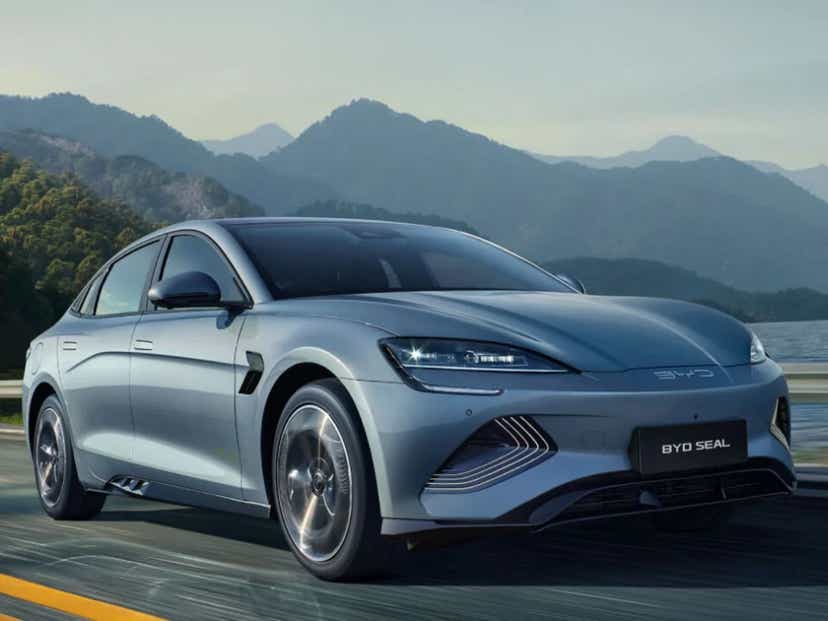
The brand is currently viewed as a value-driven premium EV player. It is concentrating on providing premium technical substance via the Blade Battery technology (LFP chemistry), well known for its safety and thermal stability. While the flagship Seal offers a claimed NEDC range of up to 650km, the wider range offers competitive efficiency and some of the industry's most generous battery warranties. Today, BYD cars in India have the greatest appeal to informed EV buyers.
The current BYD car models portfolio is all-electric vehicles, including SUV, sedan and MPV body styles:
| Model | Mileage / Range (Claimed) | Engine and Output | Ex-Showroom Price |
| BYD Atto 3 | 521 km | 60.48 kWh battery, 201 hp, 310 Nm | ₹24.99 – 33.99 lakh |
| BYD Seal | 580 km | 82.56 kWh battery, 523 hp AWD, 670 Nm | ₹41.00 – 53.15 lakh |
| BYD eMAX 7 | 530 km | 71.8 kWh battery, 201 hp, 310 Nm | ₹26.90 – 29.90 lakh |
| BYD Sealion 7 | 567 km | 82.56 kWh battery, ~530 hp AWD, ~670 Nm | ₹48.90 – 54.90 lakh |
The BYD cars in India range is small but clearly segmented, with each model serving a different use case rather than overlapping roles:
Urban and Mid-Size SUVs: The Atto 3 sits at the accessible end of the range. It comes in two battery versions, with an ARAI-claimed range of up to 521 km. It is best for city-heavy use with the occasional highway travel.
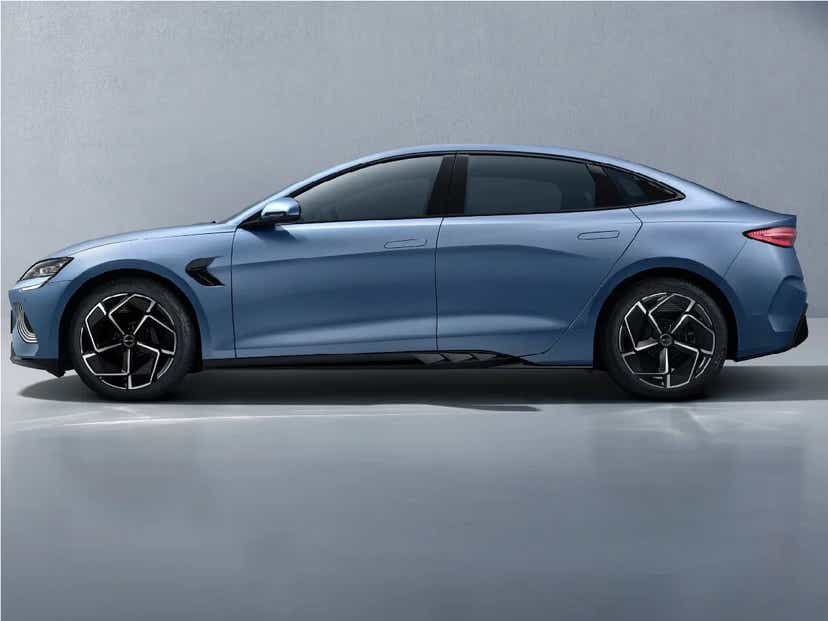
Premium Performance Sedans: The Seal is BYD's performance statement. Based on the e-Platform 3.0 and Cell-to-Body (CTB) technology, it has an AWD configuration with 523 bhp and a 0-100 km/h sprint in just 3.8 seconds. It is aimed at buyers who want the speed of EVs without a luxury price tag.
Electric MPVs: The eMAX 7 is filling a rare gap in the Indian EV market. Available in both 6-seat (captain seats) and 7-seat configurations, it is the successor to the e6 and has a greatly improved interior along with a claimed range of up to 530 km, making it one of the few dedicated electric family movers in its segment.
Flagship Electric SUVs: The Sealion 7 is a feature-packed, luxury electric SUV. Using the advanced e-Platform 3.0 Evo with a motor speed of 23,000 RPM and high-speed charging capabilities. It is targeted at buyers who are looking at higher-end EVs from Korean or German brands, but at a more controlled price point.
BYD interiors feel durable with seats providing good long-distance support, and an overall fit and finish that is consistent throughout the lineup. Noise insulation is well-controlled, especially at highway speeds, which is appropriate for the long-range nature of these vehicles, from the family-oriented eMAX 7 MPV to the high-performance Seal sedan.
Technology is one of the main characteristics of BYD cars in India. All models have the signature intelligent rotating infotainment screens and digital driver displays. While higher-end models such as the Seal and Sealion 7 come with sophisticated Windshield Head-Up Displays (W-HUD), all BYD vehicles have over-the-air (OTA) updates to keep the systems up-to-date. Safety tech is equally strong with the DiPilot ADAS suite, which includes adaptive cruise control and lane assist.
The trade-off is that ground clearance and suspension tuning can be conservative for rough urban roads. This is particularly apparent in the Seal, where the low 145mm clearance and sports-tuned dampers demand a cautious approach over large speed breakers.
BYD serves as a pure EV brand in India, which makes the powertrain discussion quite straightforward:
Electric Powertrains
The current BYD India Range, comprising Atto 3, Seal, eMAX 7 and Sealion 7, exclusively uses the proprietary Blade Battery (LFP Chemistry). Depending on the model and variant, battery capacities vary from 49.92 kWh in the entry-level SUV to 82.56 kWh in the flagship performance models. These packs provide a claimed NEDC/ARAI range of between 420 km and 650 km, so that even the base versions have more than enough range for urban and intercity commutes.
For propulsion, BYD India cars have highly efficient Permanent Magnet Synchronous Motors across their range. However, premium All-Wheel Drive (AWD) models of the Seal and the Sealion 7 use a sophisticated dual motor configuration that combines a permanent magnet motor with an Induction Asynchronous Motor on the front axle to maximise power and high-speed cruising capability. These are suitable setups for buyers who want predictable performance and low running costs without having to resort to petrol, diesel or hybrid alternatives.
With an all-electric portfolio, transmission options are simple and direct:
Single-speed automatic
The Single Speed Automatic is used on all BYD cars in India, with smooth, uninterrupted acceleration and no gear shifts. This configuration is equally suited to urban driving, highway cruising, and performance use. It adds refinement to the driving experience.
Electric ownership does tend to raise practical questions, and BYD cars India seems to approach this with clarity:
BYD vehicles only need servicing once every 20,000 km or 12 months, which is twice the servicing interval of most traditional cars. With fewer moving parts and no engine oil to change, routine maintenance costs are much lower than those of comparable ICE luxury vehicles. Battery warranties cover up to 8 years or 160,000 km, which offers good long-term protection against battery degradation.
Blade Battery technology is the key to BYD's reliability story. Its resistance to thermal runaway and high cycle life (tested for over 3,000 charge/discharge cycles) contributes to long-term confidence. Real-world feedback from across India indicates stable performance and little decay in range even after prolonged multi-year use.
Resale is still an emerging segment, not one that has been well established. As the volumes of BYD India increase and the used car market matures, values are likely to stabilise. Today, resale prices are highly dependent on certified battery health reports and a rapidly developing infrastructure of fast-charging networks in major cities.
BYD's next phase is about accessibility as opposed to expansion into unrelated segments:
BYD Atto 2 (Yuan Up)
Expected BYD car price in India: ₹17–25 lakh
Launch window: Mid 2026 (Expected May–June)
A small electric SUV built on the e-Platform 3.0, intended to bring BYD's premium EV technology to the masses of private buyers. Known globally as the Yuan Up, it is expected to have a 45.1 kWh Blade Battery with a claimed range of around 400km (NEDC). It will compete directly with the Tata Curvv EV and the upcoming Maruti Suzuki e-Vitara.
Electric vehicles in India are taxed under a much lower GST bracket than traditional internal combustion engine (ICE) vehicles, which is one of the main factors in the competitive pricing of BYD's lineup.
While most of BYD's current models in India, such as Atto 3, Seal, Sealion 7, and eMAX 7, are fully electric and enjoy the 5% GST concessions, buyers should be aware of hybrid models such as the Sealion 6, which are taxed at the regular rate for hybrid vehicles. For the pure EV models, the lack of high GST slabs and compensation cess helps to keep the on-road prices attractive for the premium buyers. This tax advantage, coupled with reduced long-term running costs, still makes BYD's electric range a good value proposition in the premium segment.
Once the use case is clear, it becomes easier to shortlist a BYD car.
Urban commuters: The Atto 3 is suitable for everyday use in the city, with a combination of range and comfort owing to its compact nature.
Families: The eMAX 7 is unique to those who require three-row seating without the need to move to a petrol MPV.
Performance-focused buyers: The Seal offers good acceleration and handling while beating many premium EV sedans in price.
Premium SUV buyers: The Sealion 7 is for those who are looking for a feature-packed electric SUV with good highway performance.
BYD cars make sense for buyers who go for electric cars with planning rather than impulse-based buying. The brand's emphasis on battery safety, usable range and depth of features gives it a solid technical foundation. For many, BYD cars in India are providing more equipment and range for every rupee than established luxury rivals.
That being said, there are still limitations. Service reach outside of major cities is still expanding and suspension tuning may not be suitable for rough roads in all areas. Resale confidence is growing, but not proven at scale. For buyers who are interested in engineering substance, predictable ownership, and long-range electric driving, BYD India offers some of the most convincing EVs currently available in the country.



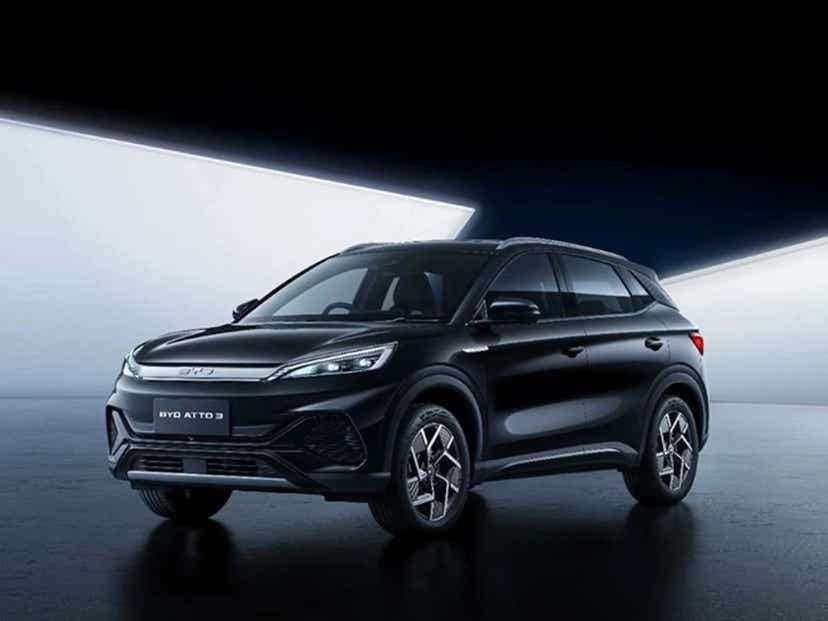



BYD India delivered over 700 Atto 3 units within first two months of the launch. It aims for 10,000 annual sales this year. However, total deliveries in 2023 remained just 2,300 units due to limited outlets and low demand. .
Yes. The BYD eMAX 7 MPV is offered in 6‑ and 7‑seater layouts in India.
Yes. BYD (Build Your Dreams) is a Chinese EV headquartered in Shenzhen, China.
BYD overtook Tesla in 2024 by selling over 4.27 million vehicles globally. Also, it is expected to lead EV sales throughout 2026 .
BYD positions itself as a premium carmaker. Its Sealion 7 and Seal offer strong performance and high-end features. However, it’s not as costly as brands like Mercedes or BMW.
BYD stands for Build Your Dreams. It is derived from the Chinese name Bǐyàdí.
Currently, Seal sedan and Sealion 7 are imported as CBUs. However, Atto 3 and eMax7 are locally assembled near Chennai.
Import duties and lack of local production adds to the final selling price. Thus, BYD is expensive in India as compared to many other countries.
Yes. BYD sells Atto 3, Seal, Sealion 7 and eMAX 7 through its Indian dealership network.
For those planning to buy a pre owned BYD car, a second hand BYD ATTO 3 could be the perfect choice, thanks to its long-term reliability, balanced looks and impressive performance.