
Expert review
Tata Punch EV Review: More Range, More Value, Few Compromises

Automotive Writer · 22 October 2026 at 12:21 pm
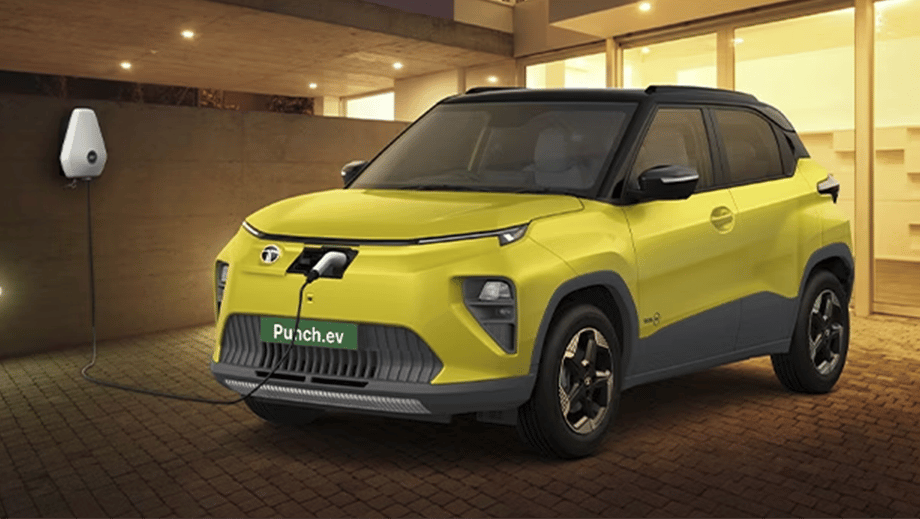
Not every electric car needs to make a statement. Some just need to get someone from home to their office and back without draining their bank balance along the way, and that has always been the Punch EV's job description. Tata's electric version of the Punch has spent close to two years becoming one of the best-selling electric cars in the country, and this year it received a mid-life refresh to keep the package competitive. New battery packs, a mildly revised face and a handful of feature tweaks make up the headline changes. I had the opportunity to spend some time up close with the facelifted Punch EV to understand whether it is still the best electric car for commuters on a tight budget.
KEY HIGHLIGHTS
- The recent facelift brings the Tata Punch EV a bigger battery, quicker charging and a mild visual refresh, while keeping most of what made the outgoing model one of India's best-selling electric cars.
- The larger 40kWh pack offers up to 355-335km while the 30kWh offers around 260-275km.
- A Battery-as-a-Service option drops the entry price below Rs 6.5 lakh, letting buyers pay for the battery separately as a running cost measured per kilometre.
- The facelifted car has already been through Bharat NCAP testing and come away with a 5-star rating, scoring 31.09 out of 32 for adult occupant protection.
SCORE BREAKDOW
| Category | Score |
| Exterior Design | 4 / 5 |
| Interior & Comfort | 3.7 / 5 |
| Infotainment & Technology | 4.3 / 5 |
| Performance | 4 / 5 |
| Ride & Handling | 4.3 / 5 |
| Range & Charging Efficiency | 4 / 5 |
| Safety | 4.5 / 5 |
| Ownership Cost | 4.5 / 5 |
EXTERIOR DESIGN - 4 / 5
Tata has kept the changes here deliberately modest, and unless you park the new car next to the old one, telling them apart takes a second look. The light bar that used to link the two DRLs is gone, having made way for a piano black strip, and those DRLs still pull double duty as turn indicators, minus the sequential flourish the previous car had. Lower down, the small air intake has shifted further into the bumper and picked up a set of vertical slats, and the front camera has been folded into the bumper design rather than sitting apart from it.
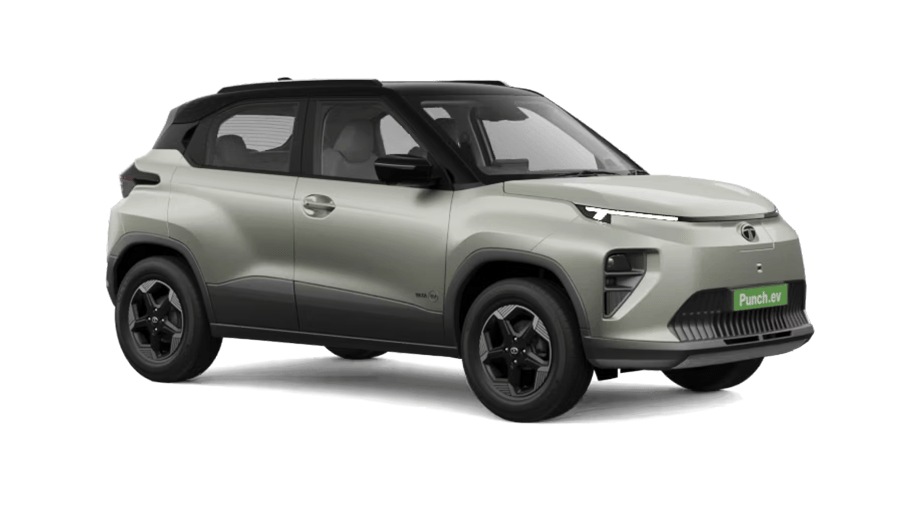
The bigger visual shift is a switch from black plastic cladding to grey across the body. At the back, the facelift borrows its connected LED tail lamp treatment directly from the combustion Punch, which makes the rear end noticeably easier to identify as the newer car than the front is. Length grows by 23mm to 3,880mm, and height drops 11mm to 1,622mm, while width holds at 1,742mm and the 2,445mm wheelbase stays exactly as it was.
INTERIOR & COMFORT - 3.7 / 5
Climb inside, and the layout will feel immediately familiar to anyone who has sat in the outgoing car, since the dashboard architecture hasn't changed in any meaningful way. What has changed is the colour scheme: a fresh white and grey combination takes over, and the effect is a space that feels noticeably brighter and airier. Build quality has taken a small step forward too, with better quality window switches, sturdier-feeling control stalks and a more convincingly textured dash plastic than before.
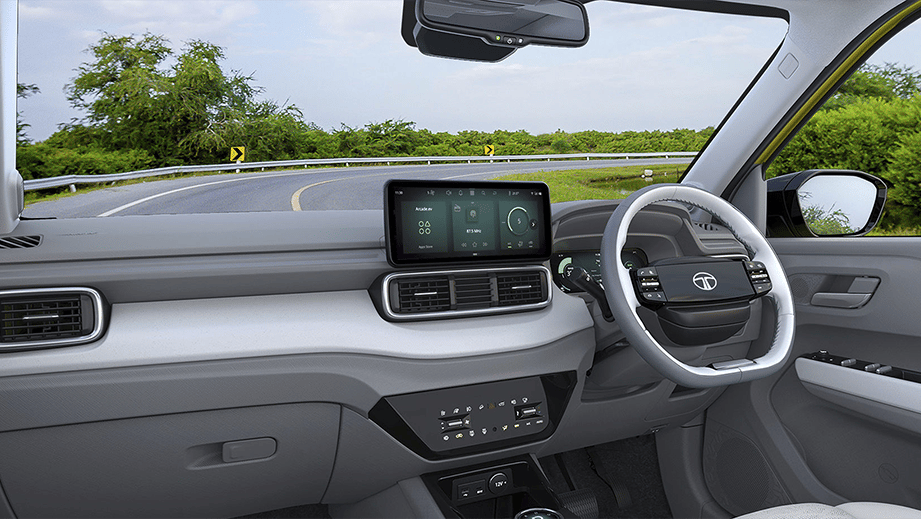
A couple of ergonomic quirks carry over unresolved, though. Reach for the horn on the two-spoke steering wheel, and there's a fair chance you'll clip one of the audio or call controls mounted right beside it instead. Below the touchscreen, the climate panel borrows its design from higher-end Tata models, and mixing physical toggles with capacitive touch zones makes it look sharper than it actually works when you're trying to adjust anything without glancing away from traffic.
Infotainment and Technology
For a car at this price, the equipment list is unusually generous. Step into the higher trims and you get twin 10.25-inch displays, a Harman-sourced touchscreen with a snappy interface and wireless smartphone connectivity, paired with a digital instrument cluster that can throw your phone's navigation directly into the driver's eyeline. Beyond the screens, there's an electrically operated sunroof, a built-in air purifier, an auto-dimming rearview mirror and a 360-degree camera system, along with ventilated front seats that feel like a small luxury at this end of the market.
NVH Levels
At low speed, the cabin is hushed in the way only an electric car can manage, with nothing to mask beyond the occasional whirr from the motor. Above 80 km/h, there’s a bit of wind, and road noise that creeps inside.
ONE THING BUYERS SHOULD KNOW
There's no physical spare wheel anywhere on the Punch EV, regardless of trim or battery size. Tata provides a puncture repair kit and an electric inflator instead, which works fine for a small nail through the tread but leaves you properly stuck after a sidewall blowout or a cut too large to seal. Anyone doing regular trips through areas with limited roadside assistance should factor this in before deciding.
PERFORMANCE & POWERTRAIN - 4 / 5
30 kWh
Best For: First-time EV buyers whose driving stays mostly within city limits
Power: 88 hp
Torque: 154 Nm
Drive Type: Single motor, front-wheel drive
This is the version aimed squarely at buyers who want the lowest possible way into a Punch EV, and it doesn't feel underpowered for what it's asked to do. Around town, response off the line is brisk enough to keep pace with traffic without any drama, and the smaller battery keeps the asking price as low as this lineup gets.
40 kWh
Best For: Buyers chasing the longest legs between charges, who don't mind paying a bit more upfront
Power: 129 hp
Torque: 154 Nm
Drive Type: Single motor, front-wheel drive
Peak torque doesn't budge from the smaller battery car's figure, and the extra power output here comes purely from a bigger motor. On the move, the calibration favours smoothness over drama, with acceleration that won't pin anyone back into their seat, but it's definitely quicker than most petrol hatchbacks. Three drive modes, Eco, City and Sport, are well judged and noticeably change the character of the throttle. Peak torque has actually dropped from the outgoing Punch EV's 190Nm to 154Nm here, a trade Tata has clearly made in favour of range and efficiency, and one that's unlikely to be noticeable in everyday driving.
RIDE & HANDLING - 4.3 / 5
This is where the Punch EV punches furthest above its size. The Acti.ev platform's added torsional rigidity has let Tata's engineers soften the damper tune despite the extra weight of a battery pack. The car absorbs potholes and broken tarmac with a composure that feels borrowed from something a size or two larger. Push on to highway speeds and that added weight works in the car's favour, helping it sit flat and stable at triple-digit speeds. Physics does reassert itself the moment you throw the car into a fast lane change, where the tall body leans over more than you'd expect, but it settles quickly and never feels close to tipping into anything scary.
Regenerative braking is adjustable across four levels through steering-mounted paddles, and the calibration feels natural enough that many owners will find themselves mostly relying on it in daily driving.
RANGE & EFFICIENCY - 4 / 5
| 30 kWh | 40 kWh | |
| MIDC Range (Claimed) | 375 km | 468 km |
| C75 Range (Real-World) | 260 – 275 km | 335 – 355 km |
| DC Fast Charging (20–80%) | 26 mins | 26 mins |
| 7.2 kW AC Charging (10–100%) | 4.5 hours | 5.3 hours |
Claimed MIDC figures stand at 375 kilometres for the 30kWh car and 468 kilometres for the 40kWh version, comfortably ahead of rivals like the Citroen eC3 at this price. Tata's own more grounded C75 estimate brings those numbers down to about 260 to 275 kilometres and 335 to 355 kilometres respectively, which is a fairer planning figure for daily use.
Charging speed has improved meaningfully over the outgoing car. Both packs now accept DC fast charging at up to 65kW, a jump from 50kW before, and Tata quotes roughly 26 minutes to go from a fifth to four-fifths full. Just 15 minutes plugged into a fast charger, the company claims, adds around 135 kilometres of real-world range back to the 40kWh car specifically. At home, a 3.3kW portable charger ships as standard, though the smarter spend for most buyers is the optional 7.2kW wall box, which trims a full 10 to 100 per cent session to somewhere around 4.5 hours on the smaller battery and 5.3 hours on the larger one. Tata Power's EZ Charge network remains one of the widest public charging footprints in the country, which helps take some of the anxiety out of longer trips.
Warranty terms carry an important nuance depending on which battery you pick. The 40kWh pack comes with a lifetime, unlimited-kilometre warranty for the first private owner, while the 30kWh version gets the more conventional 8-year or 1,60,000-kilometre cover. The vehicle itself, regardless of battery, carries Tata's standard 3-year or 1,25,000-kilometre warranty.
SAFETY - 4.5 / 5
Unlike some newly updated EVs still waiting their turn, the facelifted Punch EV has already gone through Bharat NCAP's test programme and come out the other side with a 5-star rating. Adult occupant protection landed at 31.09 out of 32 points, with child occupant protection at 45 out of 49.
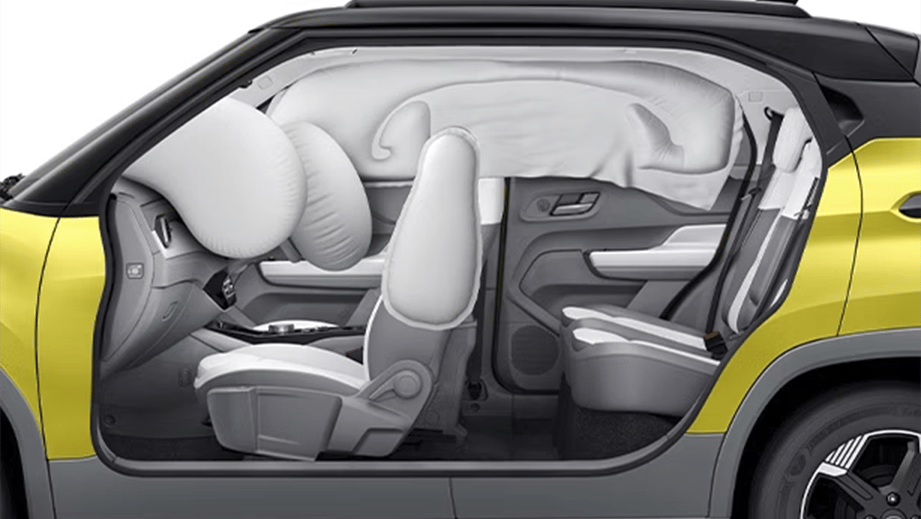
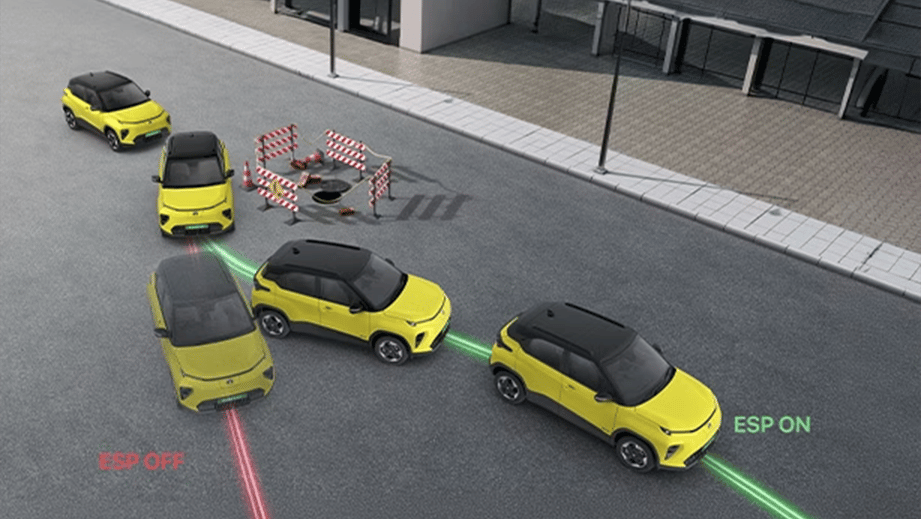
Base-spec Smart buyers aren't left short on safety kit: hill hold assist, ISOFIX mounts, ESP, ABS with EBD and six airbags are all standard from the entry trim upward. Climb the range, and a reverse parking camera or a 360-degree surround view system, blind spot monitoring and an auto-hold electronic parking brake join the list. A small but thoughtful addition to the facelift is a high-beam alert that gently chimes if you forget to dip your headlights at low city speeds for too long.
WHICH TATA PUNCH EV SHOULD YOU BUY?
| Variant | Battery | Best Suited For |
| Smart | 30 kWh | Safety-first city commuters seeking an accessible entry price |
| Smart+ | 30 kWh | Everyday buyers wanting factory-fitted infotainment touchscreen with steering controls, and other daily conveniences |
| Smart+ | 40 kWh | High-value buyers prioritising long range |
| Adventure | 40 kWh | Highway drivers seeking cruise control, push-button start, hill-descent assist, and more. |
| Empowered | 40 kWh | Buyers wanting a higher-tech suite including twin 10.25-inch displays, a 360-degree camera, and more |
| Empowered+ | 40 kWh | Feature-focused buyers desiring the full package with sunroof, ventilated seats, etc |
CARS24 EXPERT PICK
Smart+ 40
This trim hits the sweet spot for most buyers shopping the lineup. Here is what it brings:
- The bigger 40kWh battery and its considerably longer real-world range
- The lifetime, unlimited-kilometre battery warranty exclusive to the 40kWh pack
- Core safety kit
- 8-inch touchscreen infotainment system
- A meaningful step up in usability over the base Smart trim for a modest jump in price
Unless the styling flourishes or top-end convenience features on the Adventure and Empowered trims specifically appeal to you, this variant covers what most buyers actually need from a Punch EV without stretching the budget unnecessarily.
RIVALS
Citroen eC3
Similarly sized and similarly priced, the eC3 brings quirky French styling and a spacious cabin to the fight, but it has a notably smaller battery. Tata's far larger dealer and service network is the other significant point in the Punch EV's favour.
MG Comet EV
The Comet EV undercuts the Punch EV on price, but it's an altogether different proposition: a two-door, four-seat city car with a much smaller battery and a noticeably shorter range. It suits someone replacing a two-wheeler far better than it suits a small family, which keeps it out of direct contention with the Punch EV for most buyers.
Tata's Own Tiago EV
Buyers who don't need SUV styling and want to spend even less have the Tiago EV to consider. It undercuts the Punch EV meaningfully on price but comes as a conventional hatchback with a plainer feature list and lower range.
FINAL VERDICT
4.3 / 5
With zero emissions, low running costs and easy-to-use controls, the Punch EV makes a compelling case as a practical electric daily driver. It offers considerably more space and usability than smaller EVs such as the Comet and Tiago EV, while Tata’s wider service network gives it an advantage over rivals such as the Citroën eC3.
The facelifted Punch EV builds on the strengths of its predecessor without radically changing the formula. The increased range, quicker charging and more premium-feeling cabin make it a more complete package, while its strong safety credentials remain a major draw. The Battery-as-a-Service option is another significant advantage, bringing the upfront cost of EV ownership down to levels that would have been difficult to imagine a few years ago.
However, the Punch EV is not without its compromises. The lack of a spare wheel takes some shine off an otherwise strong safety package, while occasional software glitches can affect the day-to-day experience. Tata’s after-sales experience also remains inconsistent, with the quality of service often depending on the dealership you end up dealing with. None of these issues is a dealbreaker, but they are worth considering.
For buyers looking for a small electric SUV, the Punch EV remains one of the strongest value propositions on the market. Its combination of space, safety, range and low running costs is difficult to match at this price.
- Exterior
- 4.0 / 5
- Interior
- 3.7 / 5
- Performance
- 4.0 / 5
- Safety
- 4.5 / 5
What works
- Best for buyers making their first move to an electric car who want SUV-like looks, a strong crash safety score and the lowest running costs on offer, complete with premium amenities like ventilated seats.
Worth knowing
- Skip if you regularly carry three passengers in the back, consider a spare tyre non-negotiable, or occasional software niggles on a Tata product would bother you more than they would most owners.