
Expert review
Tata Punch Test Drive Review - Really Packs a Punch?

Automotive Writer · 13 October 2026 at 12:28 pm
Few products carry quite the sales weight as the Punch for Tata Motors. This is a car built for a segment that, strictly speaking, barely existed in any meaningful way before it arrived. Mahindra tried something similar with the KUV100 years earlier, and the idea never really caught on. The Punch did, rather emphatically too, regularly finishing amongst the top 10 best-selling cars, ahead of the Nexon and even some of Maruti's own bestsellers in recent months. With a proper facelift now in showrooms, bringing a turbo petrol engine into the mix for the first time, here's whether the formula still holds up against the Magnite, Kiger, Exter, and the hatchbacks it keeps quietly stealing buyers from.
KEY HIGHLIGHTS
- The Punch almost single-handedly pushed a segment to high popularity that Mahindra KUV100 and Maruti Suzuki Ignis tried and failed to build years earlier, and has been India’s best-selling car more than once since.
- Three powertrain choices - naturally aspirated petrol, CNG and turbo - petrol, give buyers more choice here than almost any rival of its size, including a segment-first CNG automatic.
- Six standard airbags and a 5-star Bharat NCAP rating make safety a real selling point.
- At 193mm, ground clearance and a boxy, cladded stance borrow cues straight from Tata's bigger SUVs, wrapped around hatchback money.
- Ride quality and steering feel remain its calling card, though the base petrol engine has anything but punch.
SCORE BREAKDOWN
| Category | Score |
| Exterior Design | 4.5 |
| Interior & Comfort | 4 |
| Infotainment | 3.5 |
| Performance | 3.5 |
| Ride & Handling | 4.5 |
| Fuel Efficiency | 4 |
| Safety | 4.5 |
| Ownership Cost | 4 |
EXTERIOR DESIGN - 4.5/5

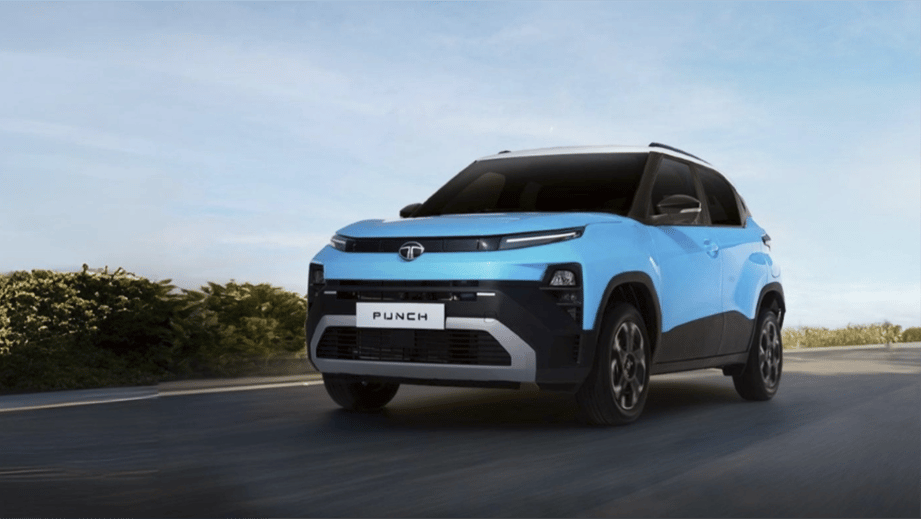
Tata never tried disguising the Punch as anything other than what it is: a hatchback footprint wearing SUV clothing, and it does that rather well. The tall stance, thick wheel arch cladding, and a nose set higher than its length would suggest all chase one goal: looking sturdy enough to matter to a buyer who has never owned an SUV before.
For a large share of first-time Indian buyers, an SUV silhouette remains an aspirational purchase, a step up from something like a Wagon R's honest but distinctly utilitarian tall boy shape, even when the actual footprint underneath isn't dramatically different.
The 2026 facelift raises ground clearance to 193mm, up from 187mm on the outgoing car, and pairs it with a front end visually borrowed from the Punch EV, along with new connected tail lamps and a fresh alloy wheel design.
Stand it next to a Nissan Magnite or a Renault Kiger and the Punch does look smaller and a shade less grown up, both of those rivals running longer, wider bodies that read as proper compact SUVs rather than micro ones. Put it next to a Hyundai Exter, though, and the Punch comes across as the more resolved design of the two, less fussy in its surfacing and easier to read at a glance.
INTERIOR & COMFRT - 4/5

Step inside and the cabin doesn’t feel built strictly down to a price, even if a few reminders of its budget roots linger. The facelift interior update leans on tech rather than a ground-up redesign, probably the right call given how well the old cabin was already received. Tata has reworked the seats for better thigh support, brought in a dual-tone black and grey scheme, and fitted a new two-spoke steering wheel with an illuminated badge.
Space holds up well for the car's size. Four adults fit without complaint, and scooping out the rear of the front seats frees up some knee room. It won't match a Magnite or Kiger for cabin width, but for four occupants the Punch manages just fine.
Seating position remains one of the Punch's strongest cards too. You sit noticeably higher than in any hatchback nearby, with a clear view over the bonnet that first-time buyers in particular tend to find reassuring in dense city traffic.
Infotainment and Technology
The updated 10.25-inch touchscreen, now paired with wireless Android Auto and Apple CarPlay, responds quicker than the unit it replaces. Higher trims add a 360-degree camera, a single-pane sunroof operable by voice command, and connected features through Tata's iRA platform.
NVH Levels
The naturally aspirated petrol keeps vibration well contained for a 3-cylinder engine, both at idle and once rolling, though the engine does get noisy at highway speeds, simply because of the effort it needs to maintain those speeds. Tyre noise starts creeping in past 80kph, and CNG runs marginally noisier than petrol, typical of any bi-fuel setup, though vibrations stay well insulated.
ONE THING BUYERS SHOULD KNOW
The climate control panel is touch-sensitive rather than physical, finished in gloss black that shows fingerprints almost immediately, and it demands a glance away from the road that buttons never would. It's a quirk shared with pricier Tata models too.
ENGINE & PERFORMANCE - 3.5 / 5

1.2 Naturally Aspirated Petrol
Best For: City Commuters and First-Time Buyers
- Power: 87 PS
- Torque: 115 Nm
- Transmission Options: 5-Speed Manual, 5-Speed AMT
This remains the volume engine, and for good reason. It's easy to drive, forgiving in traffic, and available across every trim. The three-cylinder thrum is noticeable, while the lack of grunt becomes obvious the moment you ask for a quick overtake or a quick highway run, though it never feels properly strained around town. The AMT is well sorted for stop-start traffic too, shifting smoothly enough that most buyers won't miss a proper automatic.
1.2 iCNG
Best For: High Mileage, Low Running Cost Buyers
- Power: 74.3 PS
- Torque: 103 Nm
- Transmission Options: 5-Speed Manual, 5-Speed AMT
Twin cylinders tucked beneath the boot floor keep luggage usable, and running costs undercut petrol by a wide margin. Tata remains the only brand pairing CNG with an automatic gearbox here, which is a handy combo for many drivers. The power drop is manageable around town but becomes more noticeable when overtaking on a highway.
1.2 Turbo Petrol
Best For: Buyers Who Actually Enjoy Driving
- Power: 120 PS
- Torque: 170 Nm
- Transmission Options: 6-Speed Manual only
This one is properly quick by segment standards, with 0 to 100kph coming in under 12 seconds. The catch, at least for now, is that Tata offers it only with a six-speed manual. Nissan and Renault's rival turbo units both pair with a CVT automatic, which will suit buyers who'd rather skip the clutch pedal.
RIDE & HANDLING - 4.5 / 5
Ride quality has long been one of the Punch's real strengths, and the facelift hasn't messed with that. The suspension deals with potholes, speed breakers and broken tarmac with composure that punches above its price bracket. And while there's some side-to-side movement over rougher patches at lower speeds, it settles down nicely once you build pace.
Highway Stability
The Tata Punch remains one of the more stable small cars at highway speed, holding a straight line confidently and staying composed through quick direction changes. The suspension absorbs expansion joints and undulations without unsettling the body, and the car feels genuinely planted around 100kph for something with this compact a footprint.
Handling
Push it into a corner, and there's noticeable body roll thanks to that tall stance, though grip levels hold up decently well. Steering stays light and easy at parking speeds, useful given how many Punch buyers are first-time drivers.
FUEL EFFICIENCY - 4 / 5
| Engine Options | Fuel Type | Transmission | ARAI Claimed Efficiency |
| 1.2L NA Petrol | Petrol | 5-Speed Manual | 20.09 kmpl |
| 1.2L NA Petrol | Petrol | 5-Speed AMT | 18.8 kmpl |
| 1.2L Turbo Petrol | Petrol | 6-Speed Manual | Not Certified |
| 1.2L iCNG | CNG | 5-Speed Manual | 26.99 km/kg |
| 1.2L iCNG | CNG | AMT | 26.99 km/kg |
ARAI figures for the naturally aspirated petrol are claimed somewhere around 19 to 20kmpl, which shoots up to 26.99 km/kg for the CNG.
SAFETY - 4.5 / 5

The Tata Punch facelift carries a 5-star Bharat NCAP rating, backing up the 5-star Global NCAP score the original car earned back in 2021, which made it one of the first budget-sized cars in India to manage that at launch. Standard safety kit across the entire range includes:
- 6 airbags
- ABS with EBD
- Electronic Stability Control
- Hill Descent Control
- Tyre pressure monitoring system
- ISOFIX child seat anchors
- Rear parking sensors
Higher trims add a 360-degree camera, rain-sensing wipers, rear wiper and washer, auto headlamps, and a blind spot monitor, though the rear camera's placement is lower than ideal.
WHICH TATA PUNCH SHOULD YOU BUY?
| Engine | Transmission | Trim Range | Best Suited For |
| 1.2L NA Petrol | 5-Speed Manual | Smart to Accomplished+ S | The cheapest way into any Punch, spanning the full trim ladder |
| 1.2L NA Petrol | 5-Speed AMT | Pure+ upward | City buyers wanting an easy automatic without stretching to the turbo |
| 1.2L Turbo Petrol | 6-Speed Manual | Adventure, Accomplished+ S only | Drivers who actually want to cover distance on highways |
| 1.2L iCNG | 5-Speed Manual | Smart to Accomplished | Buyers prioritising the lowest running cost |
| 1.2L iCNG | AMT (segment first) | Pure+ upward | CNG buyers who still want two-pedal convenience in city traffic |
CARS24 EXPERT PICK
The Pure Plus is the pick for strictly budget-conscious buyers. It offers a good balance of essential features and value, while keeping the need for aftermarket additions to a minimum. Priced at around ₹7 lakh (ex-showroom), it also gives buyers the option of an automatic transmission. If you want a more feature-loaded Tata Punch, the Accomplished and Accomplished+ variants are worth considering, since they offer a good price-to-feature ratio.
RIVALS
Nissan Magnite and Renault Kiger
Both are bigger and more grown-up looking, with their lengths stretching closer to 4 metres, and both offer turbo-petrol engines paired with proper CVT automatics, something the Punch turbo misses out on. The Punch counters with a stronger standard features list lower down its own range, which is where most buyers here actually shop.
Hyundai Exter
Hyundai's feature list is strong, and its four-cylinder 1.2-litre NA engine is superior; however, the Punch offers the more convincing SUV experience of the two in terms of design and driving position.
Traditional Hatchbacks (Swift, Grand i10 Nios, Baleno)
The higher seating position coupled with the elevated ground clearance makes the Punch a more compelling option for first-time car buyers. The hatchbacks from Maruti and Hyundai, though, offer a more potent NA engine.
FINAL VERDICT 4 / 5
The Tata Punch has the SUV-like stance and higher seating position buyers increasingly prefer, while also offering the safety credentials to match, all without straying too far past the price of a well-specced hatchback. Tata has priced it sensibly across the range too, with a genuine Punch for nearly every budget under 10 lakh rupees, including a segment-first CNG automatic.
The turbo-petrol engine also addresses one of the Punch's biggest shortcomings: performance. However, at its higher price point, the Punch begins to overlap with lower variants of larger sub-4-metre SUVs, which somewhat weakens its value proposition.
Still, for buyers who want a safe, compact and easy-to-drive SUV that will spend most of its time in the city, the Punch remains one of the strongest options in its segment.
- Exterior
- 4.5 / 5
- Interior
- 4.0 / 5
- Infotainment
- 3.5 / 5
- Ride
- 4.0 / 5
- Safety
- 4.5 / 5
What works
- Best for first-time car buyers who want an SUV's stance and street presence without an SUV-sized budget.
Worth knowing
- Skip if you need a proper automatic with real pace, since the quickest engine here is manual only.