
Expert review
Tata Sierra Expert Review - A Legend Reborn, With a Few Caveats
Automotive journalist · 22 October 2026 at 11:07 am
If there's one segment that Tata has managed to completely miss out on, it's the midsize SUV space. You would think a company that's got the Nexon and Punch running circles around the compact SUV end of the market wouldn't just sit out the segment above it, but that's exactly what's happened. Hyundai has the Creta, Kia’s got the Seltos, even Maruti hedged its bets with two cars, the Grand Vitara and Vitara. And that’s where the Tata Sierra comes in, banking on the nostalgia of the original, coupled with Tata’s new ARGOS platform and three engine options, two of them new.
There's certainly an emotional case to be made here, if you grew up wanting the original three-door Sierra. But nostalgia alone won't sell an SUV in India’s competitive market. We drove the new Sierra to find out if it actually earns the legendary name, or if it's simply borrowing the shine.
SCORE BREAKDOW
| Category | Score |
| Exterior Design | 4.3 / 5 |
| Interior & Comfort | 4 / 5 |
| Engine & Performance | 4 / 5 |
| Ride & Handling | 4.1 / 5 |
| Fuel Efficiency | 3.2 / 5 |
| Safety | 4.3 / 5 |
| Overall Verdict | 4.1 / 5 |
EXTERIOR DESIGN - 4.3 / 5
Park a Sierra next to a Creta and it's easy to see just how much thought has gone into making the Sierra look like something truly special. The upright stance, squared-off wheel arches, and thick blacked-out B-pillar are a deliberate throwback to the original Sierra's silhouette.
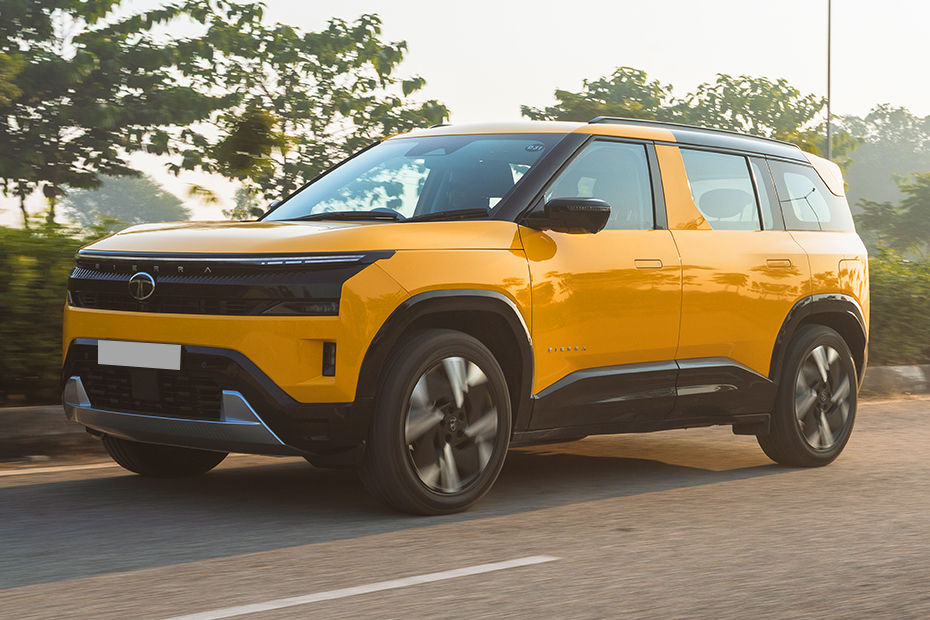
The best part is that it works better than most retro-inspired designs, even those from international markets. The "Light Saber" LED lightbar at the front and rear, the flush door handles, and the diamond-cut 19-inch alloys on the top trim are all genuinely fresh, rather than borrowed from other Tata cars. It all helps the Sierra feel like something far beyond what Tata has managed so far. There are real numbers to back up the Sierra’s road presence, too. It's the tallest and widest SUV in the segment, though the latest Kia Seltos is the longest. That said, the Sierra has a longer 2,730 mm wheelbase compared to the Seltos's 2,690 mm, giving the Tata SUV more interior space potential
However, there is a trade-off. Tata has used gloss-black cladding around the wheel arches, bumpers, and door sills, and while it looks upmarket when it’s new, it will gather swirl marks within a few months and end up looking dull. If you're the type of owner who winces at scratches, budget for PPF sooner rather than later.
INTERIOR & COMFORT - 4 / 5
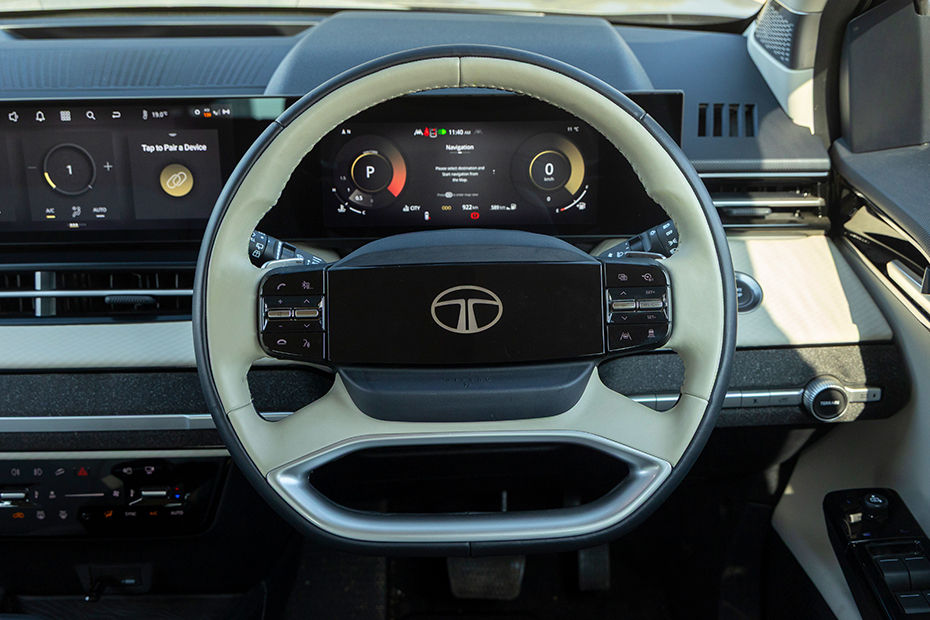
The Sierra will make you forget about every other Tata you’ve ever been. So far, this is the brand’s most impressive interior yet. Ever. The dashboard sits low enough to not affect outward visibility, and the top trim's triple-screen Horizon View setup - a 10.25-inch digital cluster flanked by two 12.3-inch touchscreens - looks like it belongs in a segment above.
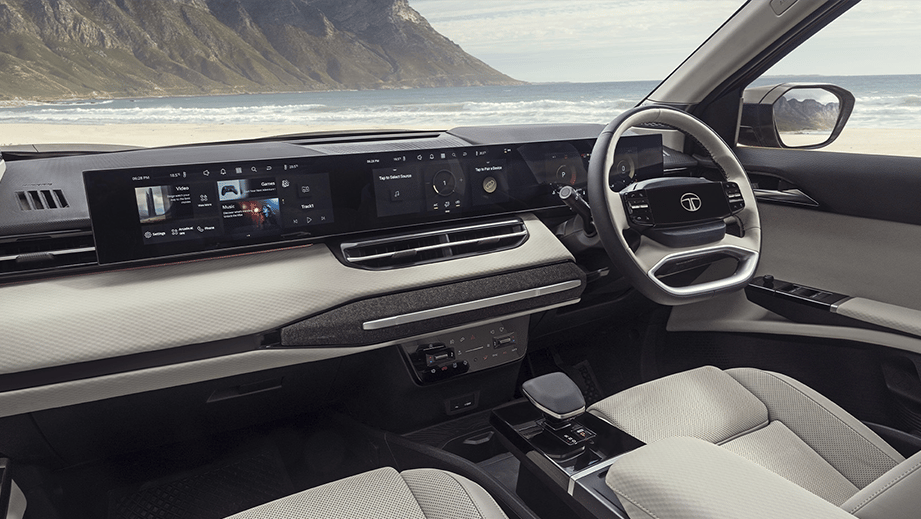
Seat comfort is a strong point. Both front seats get extendable under-thigh support, a segment-first, while ventilation on the higher variants is one of those features you can't live without once you get used to it. Rear knee room is generous enough for two six-footers to sit one behind the other without complaint. Further, the reclining backrest and boss-mode lever for the front passenger seat help the Sierra’s credentials to be chauffeur-driven.

Where the Sierra loses out is in long-term user-friendliness. Touch-sensitive controls, like for the climate control, are harder to use without glancing away from the road. There are also some inconsistencies in terms of quality of materials and finishes, but they’re minor enough to be able to live with.
ENGINE & PERFORMANCE - 4 / 5
1.5 Turbo-Petrol - Best for enthusiasts
- Power 160 PS
- Torque 255 Nm
- Transmission: 6-speed AT only
This is the engine to have if your budget allows it. The new Hyperion turbo-petrol is refined and builds power linearly, with a usable low end as well. It’s even capable of a 0-100 kmph time of just over 10 seconds, which is plenty quick. Sure, the torque converter doesn’t offer as snappy and quick gearshifts as some rivals’ DCT gearboxes but that’s not a dealbreaker considering paddle shifters help bridge the gap for sportier moods. The real catch is availability. This engine is locked into the top three variants only, plus there's no manual option.
1.5 Diesel- Best for high mileage users
- Power 118 PS
- Torque 260 Nm (MT), 280 Nm (AT)
- Transmission: 6-speed MT, 6-speed AT
The diesel is a known engine, essentially a reworked version of the unit already doing duty in the Nexon, and it shows both the strengths and limitations of its age. Power delivery is linear and long-legged, making it a comfortable cruiser on the highway. In the city too, power is metered out well making it easy to drive in traffic but you will notice that it’s a diesel. Engine noise and vibration are present at nearly every rev range. It’s something that will matter more to buyers upgrading from petrol hatchbacks or sedans, so your experience may vary.
1.5 Naturally Aspirated Petrol- Best for city commuters
- Power 106 PS
- Torque 145 Nm
- Transmission: 6-speed MT, 7-speed DCT
This engine is offered across the widest variant spread including the base trims. It runs on the more efficient Atkinson cycle and is the only engine paired with a dual-clutch automatic rather than a torque converter. It’s adequate for city use, remaining smooth and relaxed under regular driving conditions. Put your foot down and the lack of power shows through, often requiring downshifts for overtakes. The DCT, as in other Tata models, is tuned to offer smooth shifts over responsiveness, which could be mistaken for sluggishness when you’re in a hurry.
Across all three engines, the drive modes noticeably alter throttle response, and a set of terrain modes should help with putting down the power in less than ideal conditions. It hints at some light off-road ambition, useful given the 205mm of ground clearance, even if this is a strictly front-wheel-drive SUV for now.
RIDE & HANDLING - 4.1 / 5
Ride quality is where the Sierra really shines. Top variants get frequency-dependent dampers, which adjust their behaviour based on road input and speed. The technology earns its keep in how composed the car feels over imperfect road surfaces. It’s slightly firm at low speeds, no doubt thanks to the wheel and tyre combinations as well. And while the occasional sharp edge does filter through, the Sierra offers real comfort once you're moving, absorbing even larger potholes well.
Stability at highway speeds is also impressive. The Sierra holds its line without fuss, and body roll through corners is well controlled for an SUV. The steering is light and predictable, which should work for most people, even if it doesn’t offer a lot of feel for the more enthusiastic of drivers. Braking, courtesy of discs all around, is progressive and consistent, offering a good amount of initial bite to boost confidence.
FUEL EFFICIENCY - 3.2 / 5
This is Sierra's weakest scorecard entry. Unlike rivals such as the Maruti-Suzuki Victoris or Grand Vitara, there's no strong-hybrid option to lean on for efficiency. Official ARAI figures for the 1.5 turbo petrol are disheartening at 15.3 kmpl, while the 1.5 NA’s 16.9-17.4 kmpl is par for the course. The 1.5 diesel clocks in between 19.2-21.2 kmpl, as certified by ARAI. Real-world usage suggests single-digit mileage for the turbo-petrol under enthusiastic driving, and low-teens for the other powertrains.
SAFETY - 4.3 / 5
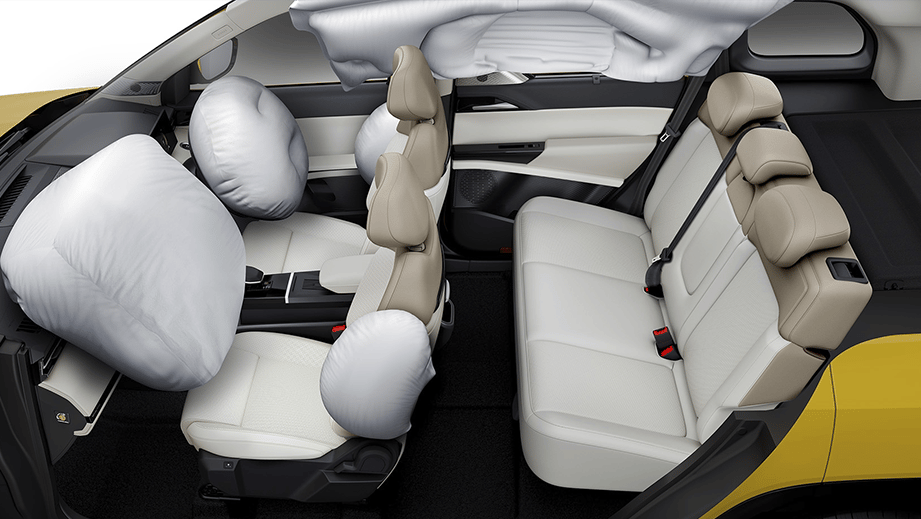
The Sierra is pretty comprehensively equipped, and has earned a 5-star Bharat NCAP crash test score. Six airbags come as standard, along with electronic stability control, a 360-degree camera system, hill-descent control, and Level 2 ADAS suite comprising 23 features including adaptive cruise control, lane-keep assist, and rear cross-traffic alert.
WHICH TATA SIERRA SHOULD YOU BUY?
The Sierra’s variant list of seven “Personas” takes a bit to unpack. The naturally aspirated petrol spans the widest range, from Smart+ up through Pure, Pure+, Adventure, Adventure+, and Accomplished with the manual, and a shorter Pure, Pure+, and Adventure list with the automatic.
The turbo-petrol is reserved strictly for Adventure+, Accomplished, and Accomplished+. The diesel sits in between, offered with the manual across almost the entire lineup and with the automatic from Pure upward.
Practically speaking, this means your engine choice narrows your variant choice as much as the other way around. Anyone who wants the turbo-petrol should budget for at least an Adventure+ trim, while NA petrol and diesel buyers have more flexibility to pick a variant based on features and their budget.
CARS24 PICK
1.5 Diesel Adventure+ AT
This is the variant we'd point most buyers toward. It has the frequency-dependent dampers that really improve ride quality, a strong enough features list, and the diesel's easy highway manners, all without stepping into Accomplished+ pricing territory. It's not the most exciting Sierra you can buy, that honour goes to the turbo-petrol, but it's the one that balances comfort, cost, and long-term usability most sensibly.
RIVALS
Hyundai Creta The segment benchmark for a reason, offering a wide engine spread and a proven track record. It plays it safer on design but you know everything else will just work.
Kia Seltos Bolder styling and an equally strong features list, though it commands a price premium and doesn't match the Sierra's ride comfort.
Maruti Grand Vitara and Victoris Both lean on strong-hybrid powertrains for superb efficiency and low running costs. They’re worth cross-shopping if fuel economy sits at the top of your priority list.
Toyota Hyryder Mechanically related to the Grand Vitara, with the added reassurance of Toyota's after-sales reputation and warranty.
Honda Elevate Comfortable and practical, but limited to a naturally aspirated petrol only, so it can't match the Sierra's turbo-petrol punch or diesel range.
FINAL VERDICT - 4.1 / 5
The Sierra backs up its nostalgic packaging with genuine substance. It’s got real road presence, especially in the brighter colours on offer, and a features list to bring the buyers into showrooms. The turbo-petrol engine is another highlight, though the tried-and-tested diesel capabilities and the brilliant ride and handling balance is probably what will actually hook most buyers after a test drive.
What holds it back from a higher score is actually predictable - the fact that it’s a new Tata platform with unknowns in terms of long-term reliability and a few rough edges when it comes to fit and finish. Still, given how impressive the Sierra is otherwise, Tata has earned the right to use the legendary nameplate again, and it makes a good enough case for itself to earn a recommendation, especially if you know a good Tata dealership near you, since that dictates the quality of your ownership experience to a huge degree.
- Exterior
- 4.3 / 5
- Interior
- 4.0 / 5
- Engine
- 4.0 / 5
- Fuel Efficiency
- 3.2 / 5
What works
- Best for buyers who want an SUV with genuine road presence and a loaded features list. Buy if you want the most feature-rich Tata yet, with a quick turbo-petrol engine and a ride and handling balance that sets segment benchmarks.
Worth knowing
- Skip if you want a fuss-free ownership experience with zero surprises, or you don't care for being an early adopter of a brand-new platform and new engines.