
Expert review
Tata Harrier EV Test Drive Review: Familiar Look, Electric Performance

Automotive Writer · 20 October 2026 at 2:40 pm
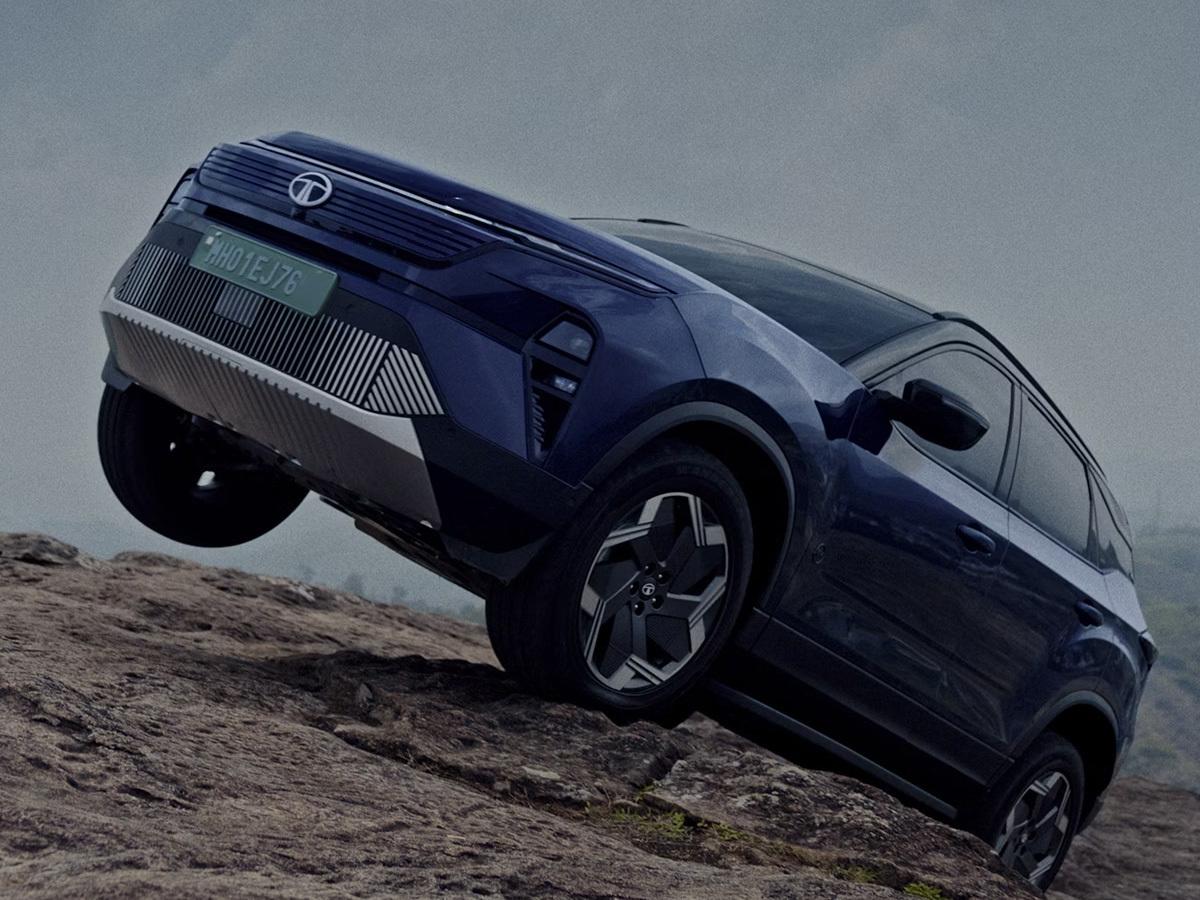
Every carmaker eventually builds the electric vehicle meant to prove it belongs in the big leagues, and for Tata, that car is the Harrier EV. It sits above the Sierra EV and Curvv EV in the electric lineup, wearing the same broad-shouldered body language that made the combustion Harrier a common sight outside upscale housing societies across the country. Underneath, almost nothing carries over unchanged: an updated platform and suspension to carry a battery pack rather than an engine. Having spent time with Tata's smaller EVs earlier this year, I came to the Harrier EV wondering whether bigger simply meant heavier here, or whether it actually meant better.
KEY HIGHLIGHTS
- Tata's biggest and most powerful EV keeps the combustion Harrier's imposing shape rather than reinventing it, while adding all-wheel drive.
- The dual-motor flagship's 313hp and 504Nm combined output is good for a claimed 6.3-second sprint to 100 km/h, enough to edge out its closest rival, the Mahindra XEV 9e.
- Underneath, almost nothing carries over unchanged: an updated platform and suspension to carry a battery pack rather than an engine.
- Scores a perfect 32 out of 32 for adult occupant protection at Bharat NCAP.
- Real-world range for 75 kWh variants settles somewhere around 450 kilometres depending on driving style.
SCORE BREAKDOWN
| Category | Score |
| Exterior Design | 4 |
| Interior & Comfort | 3.5 |
| Infotainment | 4.5 |
| Performance | 4.5 |
| Ride & Handling | 4 |
| Range and Efficiency | 4 |
| Safety | 4.5 |
| Ownership Cost | 3.5 |
EXTERIOR DESIGN - 4 / 10
Tata had a choice when it came to dressing up the Harrier EV: it could either go full spaceship, as several EV rivals do, or lean on a shape buyers are already familiar with. It picked the latter, and the SUV is arguably better for it. The silhouette, proportions and general road presence are lifted almost wholesale from the combustion Harrier, which was never short on kerb appeal to begin with. Buyers hunting for something that screams 'electric' from fifty paces will come away disappointed, but everyone else gets a design that has already proven it ages well.

Up close, the EV-specific touches are subtle rather than showy. The grille has been sealed off and replaced with a panel housing a full-width LED light bar that doubles as a charging indicator when the car is plugged in. Top-spec trims roll on 19-inch aero-optimised alloys, while the entry-level cars make do with 18-inch wheels wrapped in taller, more forgiving sidewalls. Useful side steps flank the body, both easing the climb into the cabin and visually masking the battery pack tucked beneath the floor. At the back, only a fresh badge and the total absence of a tailpipe give the game away.
On paper it measures 4,607mm from nose to tail, stands 1,740mm tall and rides on a 2,741mm wheelbase. Its length and wheelbase are almost identical to the diesel Harrier, although the EV is slightly wider. Ground clearance is pegged at 205mm unladen.
INTERIOR & COMFORT - 3.5 / 10
Slide into the driver's seat, and the cabin will feel instantly recognisable to anyone who has sat in a combustion Harrier, since most of it, from the dashboard design to the switchgear, has simply been carried across. Tata has dressed it up with EV-specific dual-tone upholstery running black and white through the cabin, which does a convincing job of making the space feel airy. Glossy piano black trim runs across the dash and centre console, and while it photographs beautifully on day one, expect it to collect fingerprints and fine scratches within a few months of ownership.
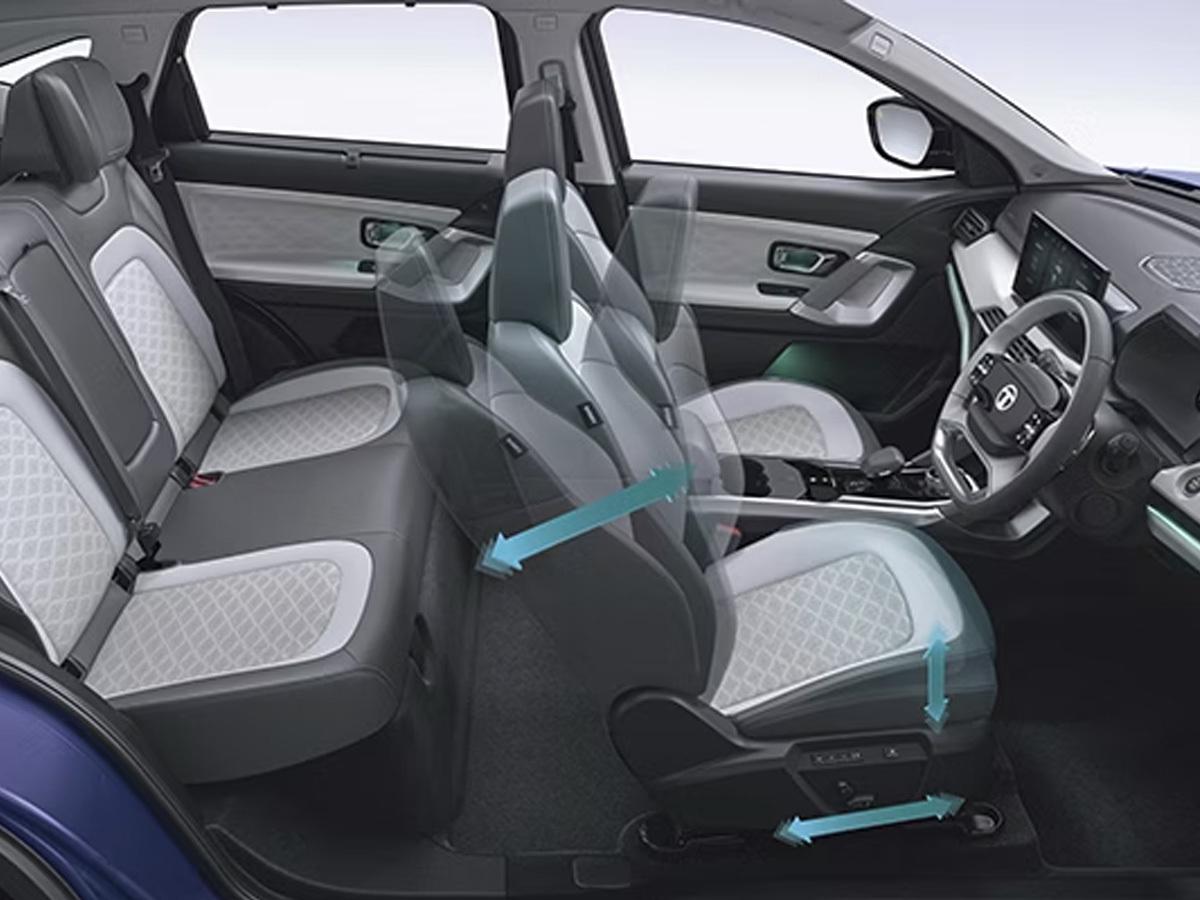
Comfort up front is a clear strength. The seats are wide, well-padded and supportive for larger occupants, with the driver getting 6-way electric adjustment, memory settings and a welcome function, while the passenger makes do with 4-way adjustment. Both seats offer a ventilation function as well.
At the rear, the flat floor lets three adults sit across the bench without much complaint, and the winged headrests are noticeably comfortable, but the missing headrest for the middle occupant is a strange omission at this price.
Storage throughout the cabin is generous and sensibly laid out, with large door bins, a proper glovebox, a cooled centre console box and cupholders placed where you'd actually reach for them. Rear passengers get their own USB-C ports, manual window shades and a boss mode lever that slides the front passenger seat forward at the touch of a switch to liberate more space.
Infotainment and Technology
The centrepiece of the dashboard is a 14.5-inch Samsung Neo QLED touchscreen. Menus are laid out sensibly, wireless Android Auto and Apple CarPlay connect without fuss, and built-in navigation plus Alexa voice support is present as well. The 10.25-inch driver's display also gives you the option to mirror your phone's map in full screen.
A 10-speaker JBL system with Dolby Atmos handles sound duties, and below the touchscreen, the climate controls live on a black, piano-finish strip that mixes backlit touch zones with a couple of physical toggles for temperature, which demands you look away from the road to adjust anything on the move.
Voice commands offer a workaround, stretching to opening or closing the panoramic sunroof on request, though the car needs a bit of patience to understand what you're asking for.
An e-IRVM is offered on Empowered models that can display either the front or rear camera feed and doubles as a dashcam, and a Summon Mode that lets you nudge the SUV forward or backwards from outside using the key fob.
NVH Levels
Cabin insulation is one of the Harrier EV's quiet strengths. Wind and tyre noise stay remarkably well suppressed even as speeds climb, and with no engine to generate its own din, the whole experience feels closer to a much pricier SUV than the price tag suggests. The one letdown is the air-con blower, which stays audibly loud even on its lowest setting.
ONE THING BUYERS SHOULD KNOW
Tata advertises 502 litres of boot space; however, it includes the measurement being done up to the roof. The rear motor and a space-saver spare tucked beneath the boot floor push that floor upward, eating into usable volume even though the headline number looks bigger on paper.
PERFORMANCE & POWERTRAIN - 4.5 / 5
65 kWh RWD
Best For: Buyers who want the Harrier EV badge at the lowest possible entry price
Power: 238 hp
Torque: 315 Nm
Drive Type: Single motor (PMSM), rear-wheel drive
A single permanent magnet motor on the rear axle delivers more than enough shove for a large family SUV in daily use, and the lower price makes it an easier sell against pricier trims further up the ladder.
75 kWh RWD
Best For: Buyers who want the longest possible range without the added cost of AWD hardware
Power: 238 hp
Torque: 315 Nm
Drive Type: Single motor (PMSM), rear-wheel drive
Motor output stays identical to the smaller-battery car, so the extra money here buys more range. A claimed MIDC figure of 627 kilometres is actually the highest in the entire Harrier EV range, which makes this the pick for anyone who drives long distances but has no particular need for all-wheel traction.
75 kWh QWD (AWD)
Best For: Buyers chasing outright performance, all-weather traction or occasional light off-roading
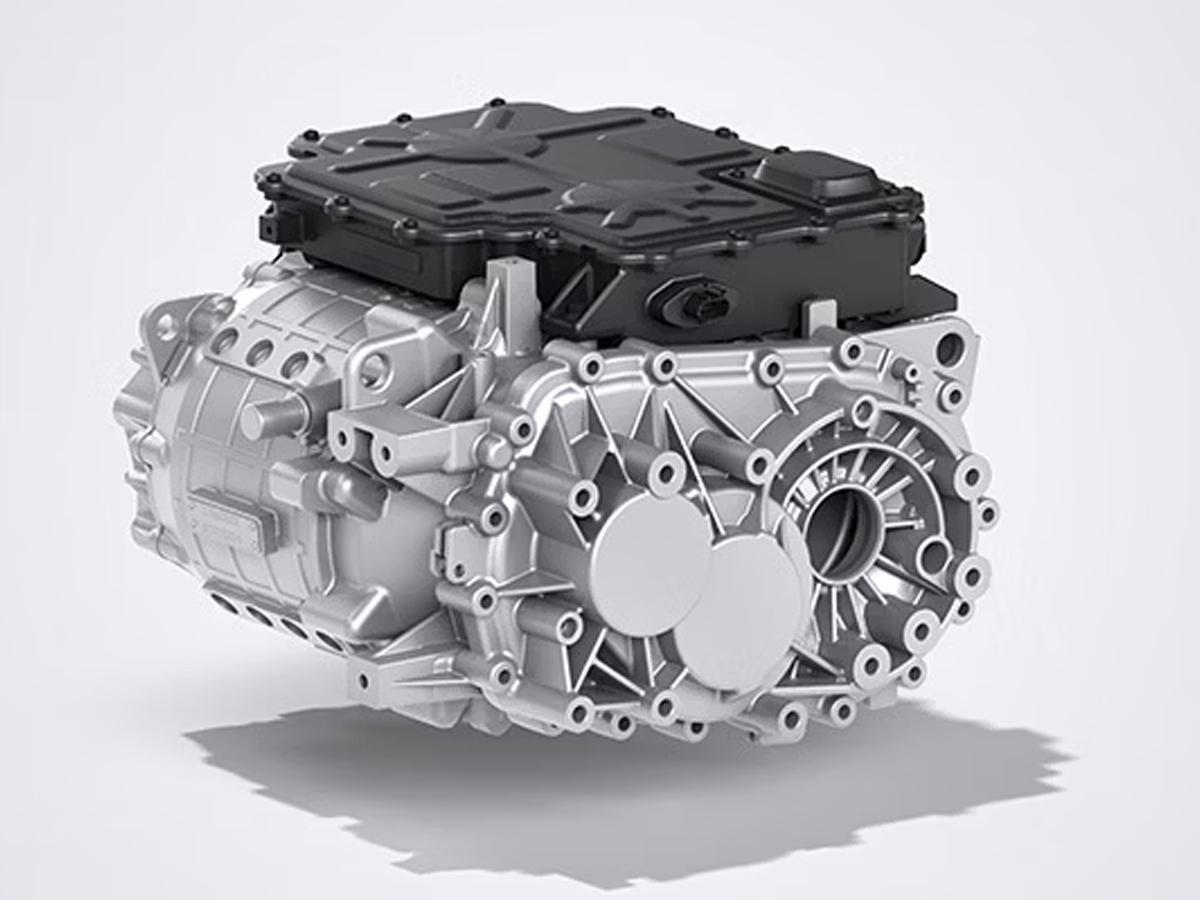
Power: 313 PS combined (a 238 hp rear PMSM motor and a 158 hp front induction motor)
Torque: 504 Nm
Drive Type: Dual motor, Tata's QWD all-wheel-drive system
Tata claims 6.3 seconds to 100 km/h with Boost mode engaged, which is brisk for an SUV weighing north of 2.3 tonnes. What's more telling is how that speed is delivered. Despite the strong figures, acceleration feels measured rather than explosive, and the sheer mass of the car masks the sensation of speed to the point where passengers rarely get pinned back in their seats. Under gentle throttle, the car defaults to rear-wheel drive alone for efficiency, only calling on the front induction motor during hard acceleration or when the rear tyres lose traction. Four regen levels are on offer through the steering paddles, but there's no true one-pedal mode that brings the car to a complete stop.
RIDE & HANDLING - 4 / 5
The Harrier EV gets a proper multi-link rear suspension setup paired with frequency-selective dampers, and the difference shows. Rather than inheriting the harsh, brittle ride that plagues so many combustion-to-electric conversions, the Harrier EV soaks up broken tarmac and potholes with the same rugged confidence the badge has always been known for. However, over larger undulations, rear-seat passengers will notice a slightly floaty vertical motion.

Highway Stability
oint it down a highway, and the Harrier EV settles into a notably confident cruise. That same floatiness over big undulations shows up here too, more noticeable for rear passengers than the driver, but it never tips into anything unsettling at speed.
Handling
Turn into a corner and the front end responds sharply, with steering that feels well connected to what the tyres are doing. Body roll is present, as you'd expect from a tall SUV, but the SUV stays planted through the corners. Step up to the QWD and the all-wheel-drive system adds a fresh layer of confidence through bends, distributing power to whichever axle has grip to spare, though it's worth remembering that no amount of clever torque vectoring changes the basic physics of piloting a nearly 2.3-tonne SUV enthusiastically.
Six terrain modes on the QWD, covering Normal, Snow or Grass, Mud and Ruts, Sand, Rock Crawl and a Custom setting, tailor throttle response and traction control to whatever surface you're on.
RANGE & EFFICIENCY- 4 / 5
| Variant | MIDC Range (Claimed) | Real-World Range (C75) | 7.2 kW AC Charging (10–100%) |
| 65 kWh RWD | 538 km | 420 - 445 km | 9.3 hours |
| 75 kWh RWD | 627 km | 480 - 505 km | 10.7 hours |
| 75 kWh QWD | 622 km | 460 - 490 km | 10.7 hours |
Claimed MIDC figures read well across the board, going up to 627 kilometres for the 75kWh RWD. Real-world numbers naturally sit lower. Broadly speaking, one can expect anywhere from 375 kilometres, when driven with enthusiasm, to up to nearly 500 kilometres, when kept within city speeds and with enough regen taking place.
Charging speeds are competitive without being segment-leading. The bigger 75kWh pack accepts DC fast charging at up to 120kW, enough for a 20 to 80 per cent top-up in around 25 minutes under ideal conditions, while the smaller 65kWh pack tops out at 100kW on DC.
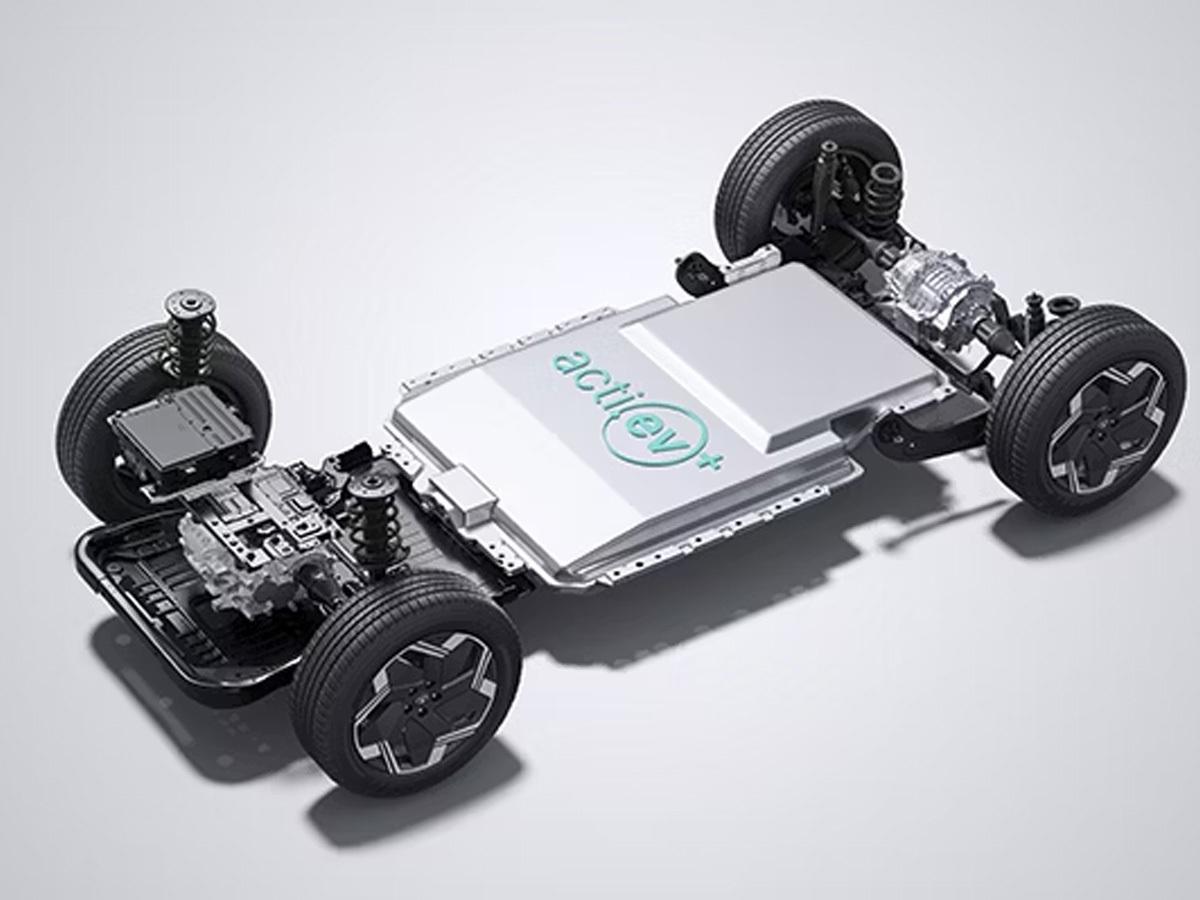
On AC power, Tata bundles only a basic 3.3kW portable charger as standard, so most owners will want to budget extra for the proper 7.2kW wallbox. The high-voltage battery gets Tata's lifetime warranty, an unlimited-kilometre warranty for the first private owner, subject to the applicable terms and conditions. There’s a warranty of 8 years or 1,60,000 kilometres on the motors, and the standard 3-year, 1,25,000-kilometre cover on everything else.
SAFETY - 4.5 / 5
The Harrier EV has been through Bharat NCAP's full assessment, and it scored a perfect 32 out of 32 points for adult occupant protection, along with 45 out of 49 for child occupant protection, translating to a 5-star rating on both counts. Tata credits the platform's 62 per cent gain in torsional stiffness, achieved through a much higher share of high-strength and ultra-high-strength steel.

Safety kit includes seven airbags, including a driver's knee airbag on higher trims, an electronic stability programme with functions like hill descent control and rollover mitigation, tyre pressure monitoring, all-wheel disc brakes and an Acoustic Vehicle Alert System that makes the SUV audible to pedestrians at low speed.
A Level 2 ADAS suite covering roughly 22 individual functions, among them autonomous emergency braking, lane-keep assist, adaptive cruise control and blind-spot monitoring, comes calibrated for Indian traffic conditions, with steering-wheel-mounted controls allowing easy disabling of the assistance. If you'd rather drive without the assistance. The 540-degree camera system's transparent bonnet view and the dashcam-equipped e-IRVM round out the safety package.
WHICH TATA HARRIER EV SHOULD YOU BUY?
| Variant | Battery | Ex-showroom Price |
| Adventure 65 | 65 kWh | Rs 21.49 lakh |
| Adventure S 65 | 65 kWh | Rs 21.99 lakh |
| Fearless+ 65 | 65 kWh | Rs 23.99 lakh |
| Fearless+ 75 | 75 kWh | Rs 24.99 lakh |
| Fearless+ 75 QWD | 75 kWh | Rs 26.49 lakh |
| Empowered 75 | 75 kWh | Rs 27.49 lakh |
| Empowered QWD 75 | 75 kWh | Rs 28.99 lakh |
CARS24 EXPERT PICK
Fearless+ 75 QWD
Tata introduced this trim to make all-wheel drive more accessible without requiring buyers to stretch to the range-topping Empowered variant. Clearly, it's the smarter buy for most people who want QWD without spending top bucks. What you get:
- Dual-motor AWD and the full 313hp, 504Nm output of the flagship, at a noticeably lower price
- The larger 75kWh battery for maximum usable range
- Enough niceties on offer
- A meaningful saving over the Empowered trims
Unless the extra styling flourishes and top-tier convenience features of the Empowered trims actually matter to you, this variant delivers nearly all the capability that makes the QWD desirable in the first place, without the flagship price tag attached to it.
RIVALS
Mahindra XEV 9e
The Harrier EV's most direct rival takes a completely different design approach, wrapping its hardware in a swoopy, coupe-like body rather than a conventional SUV silhouette. The XEV 9e also offers a larger 79kWh battery option with a longer claimed range and noticeably quicker DC fast charging. In its favour, the Harrier EV undercuts it on price, out-accelerates it in real-world testing, and sticks to a shape that won't feel unfamiliar to traditional SUV buyers.
Mahindra BE 6
Mahindra's other electric SUV leans into striking, futuristic styling and undercuts the Harrier EV meaningfully on price. What it doesn't offer, at any price point, is an all-wheel-drive variant.
Tata's Own Sierra EV
Buyers who find the Harrier EV's price a stretch have a capable sibling to consider first. The Sierra EV offers a similar quad-wheel-drive option and nearly as much cabin space for meaningfully less money.
FINAL VERDICT - 4.1 / 5
Add up everything the Harrier EV gets right and the list runs long: road presence that doesn't need an explanation, a thoroughly strong feature set, all-wheel-drive performance that few rivals can match at this price, and crash safety credentials that sit at the very top of what's currently on sale in India. It doesn't reinvent what an electric SUV should look or feel like, and for the buyer this is aimed at, that's very much the point.
- Exterior
- 4.0 / 5
- Interior
- 3.5 / 5
- Infotainment
- 4.5 / 5
- Safety
- 4.5 / 5
What works
- Best for buyers who want Tata's flagship EV experience, the road presence of a proper family SUV, and the reassurance of all-wheel drive without stepping into luxury-brand pricing.
- Buy if you want a spacious, well-equipped electric SUV with strong performance and top-tier crash safety, and you can live with a badge that doesn't scream 'I drive an EV' from across the street.
Worth knowing
- Skip if a handful of everyday ergonomic niggles would bother you daily, or dependable EV-specific service at your nearest dealership is a bigger priority.