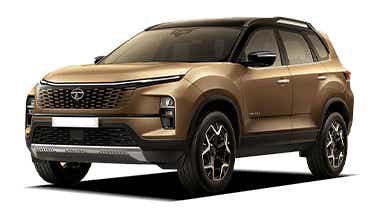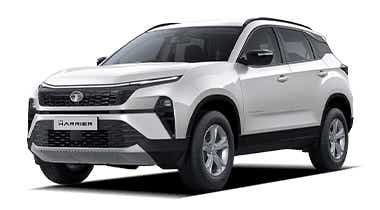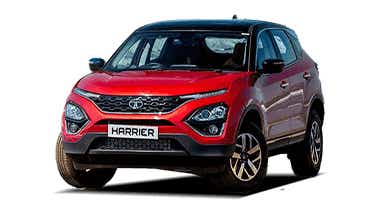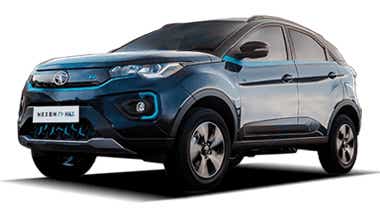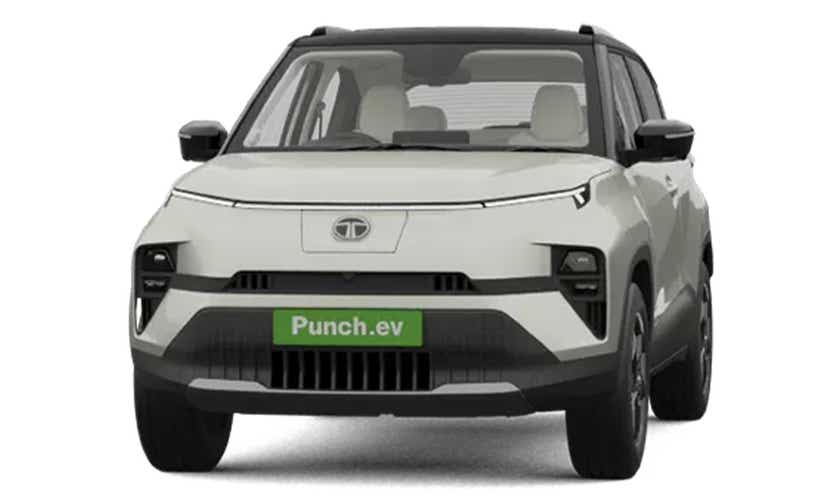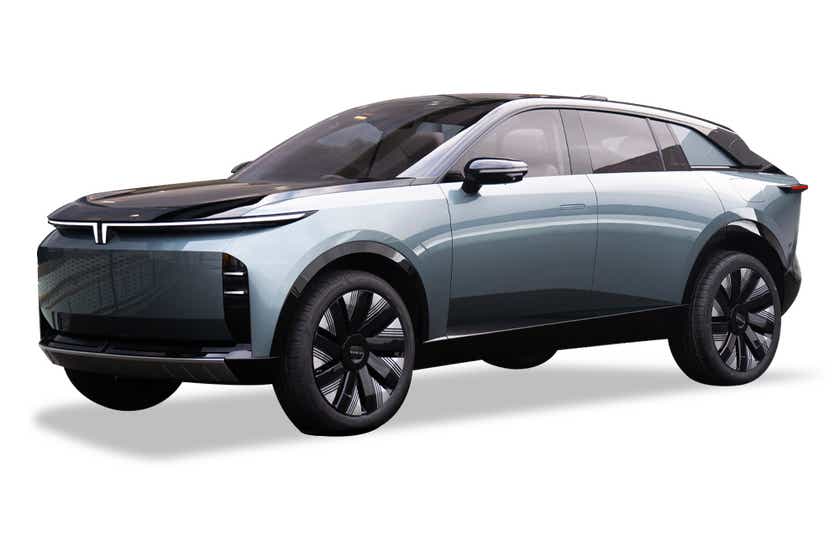




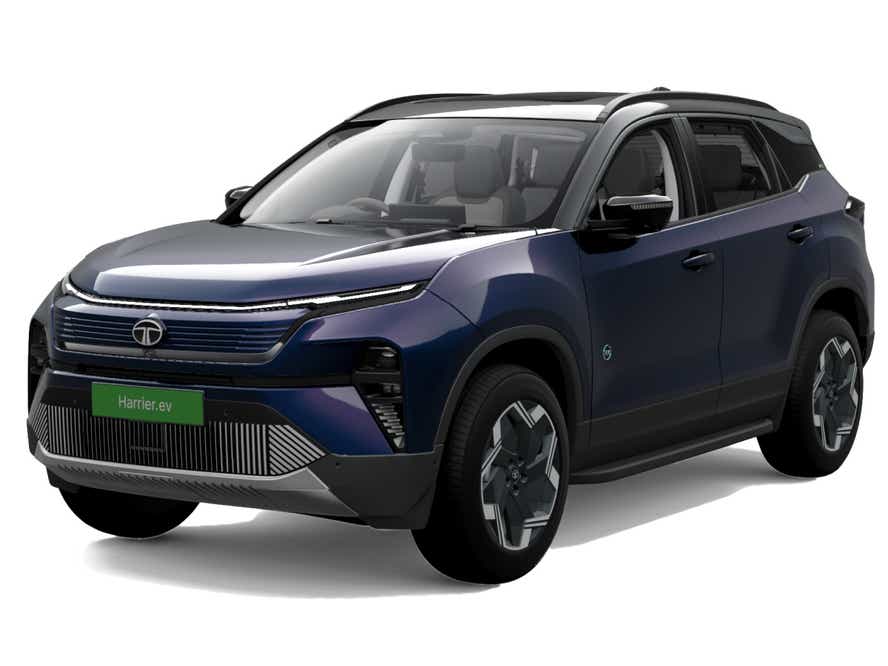
Images of Tata Harrier EV
Tata Harrier EV Specifications
 Range
Range Battery warranty
 Max torqueBattery capacity
 Body type
 Seating capacity
Tata Harrier EV Variants: Price & Spec Cards
Compare Tata Harrier EV with Similar Cars
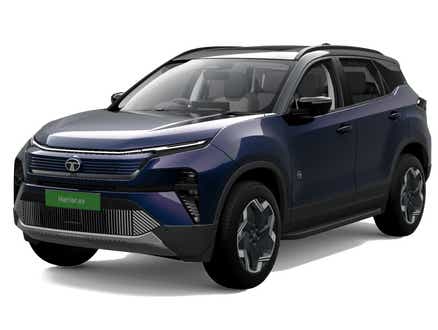 TataHarrier EV₹21.49L - 30.23L*
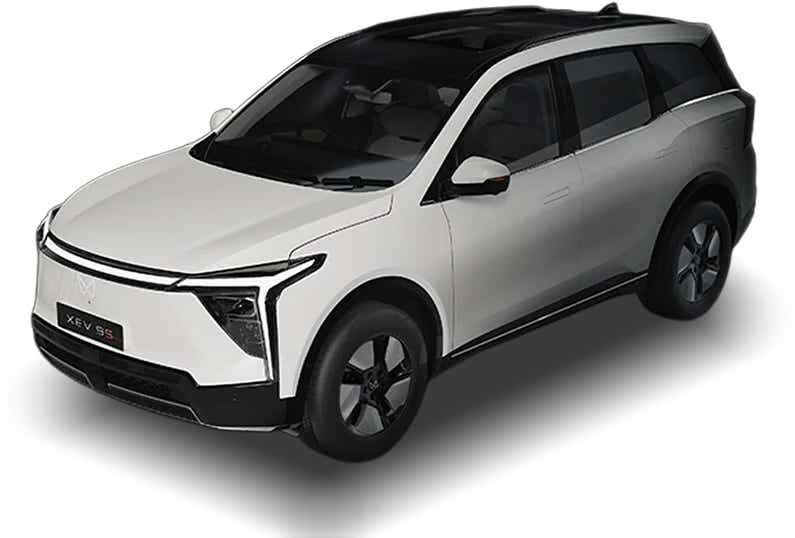
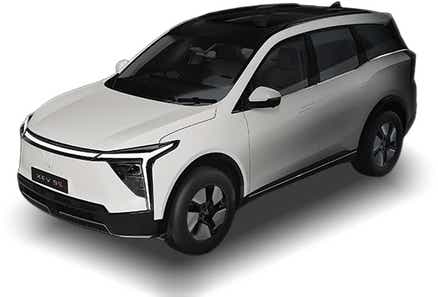 MahindraXEV 9S₹19.95L - 29.45L*
- TataHarrier EV₹21.49L - 30.23L*
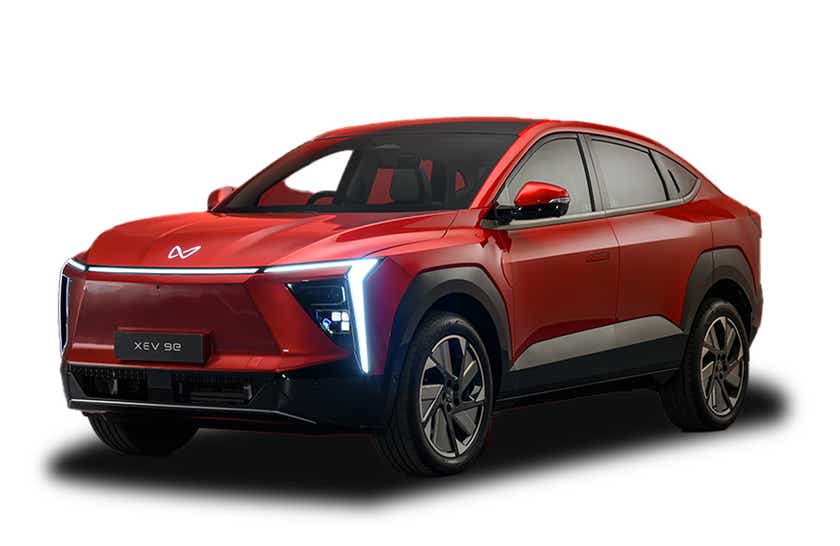
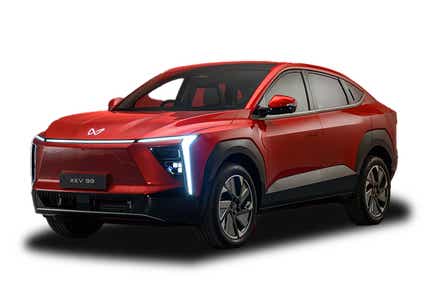 MahindraXEV 9E₹21.90L - 30.50L*
 - TataHarrier EV₹21.49L - 30.23L*
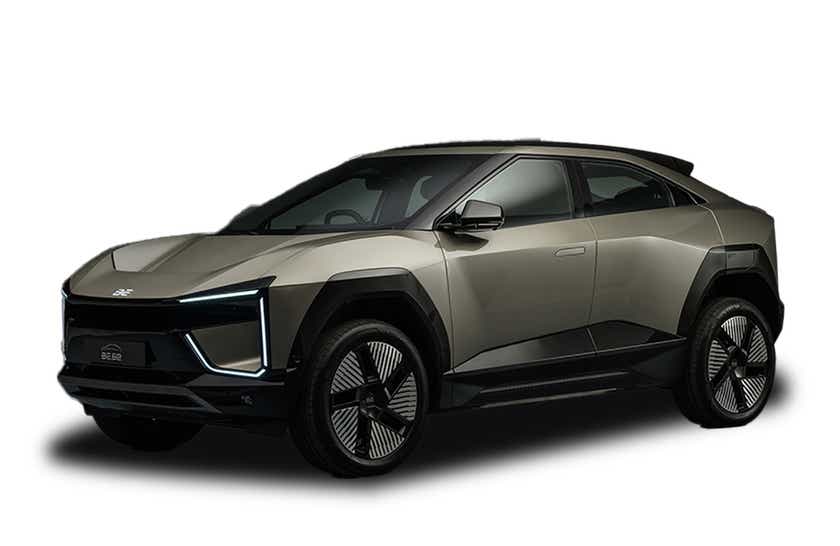
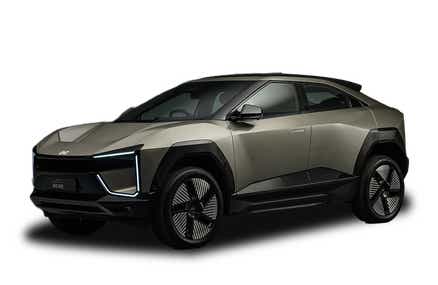 MahindraBE 6₹19.45L - 26.95L*
 - TataHarrier EV₹21.49L - 30.23L*
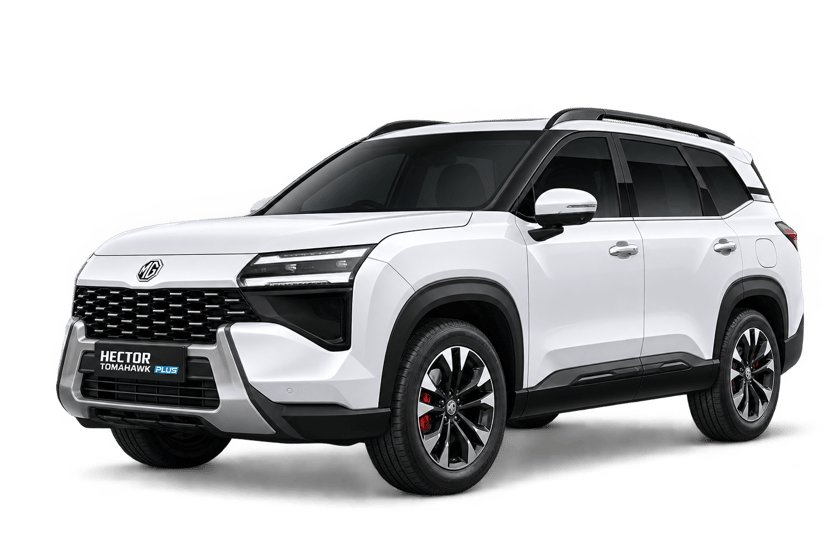
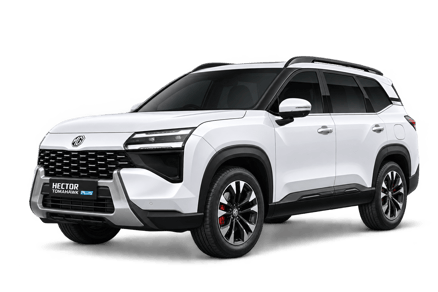 MGHector Tomahawk PHEV₹25.70L - 27.80L*
 - TataHarrier EV₹21.49L - 30.23L*
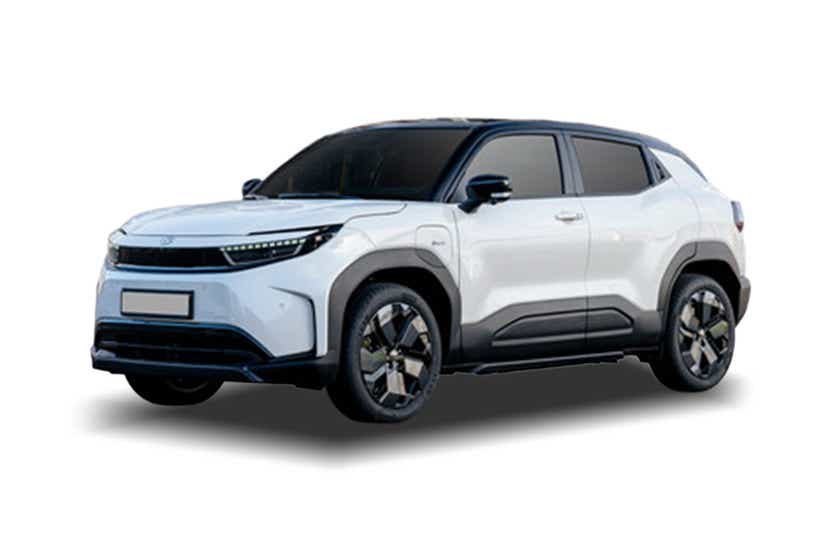
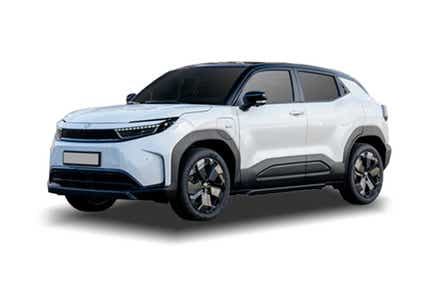 ToyotaUrban Cruiser Ebella₹23.60L*
 - TataHarrier EV₹21.49L - 30.23L*Add cars
Parallel picks for you!
Newsroom
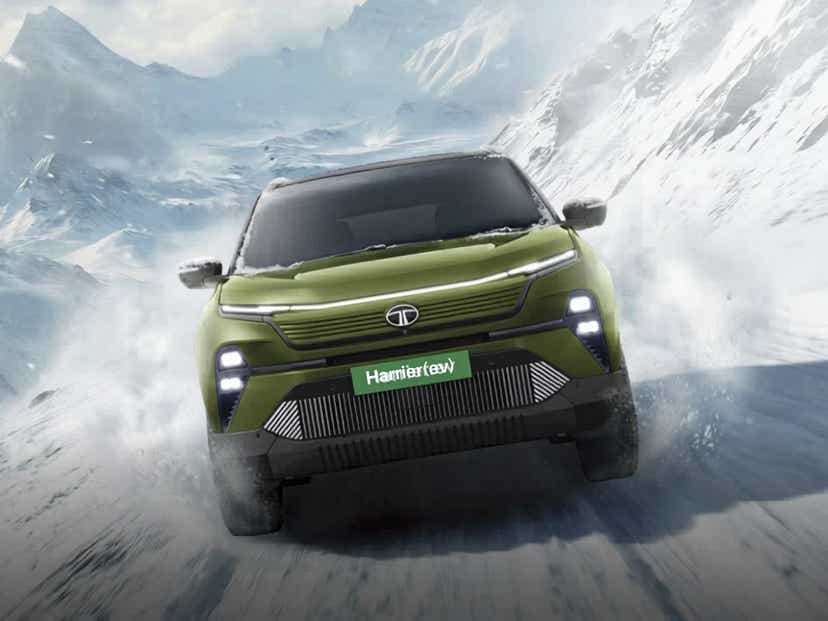 Auto Insider4 MINS READ
Tata Harrier EV Fearless+ QWD explained — Smartest variant in the lineup?
 Reema Bohraposted on 23rd March 2026
 Auto Insider3 MINS READ
Tata Harrier EV waiting period in November 2025 — Details inside!
Reema Bohraposted on 12th November 2025- Auto Insider5 MINS READ
Tata Harrier EV accessories list & prices — Full details inside!
Reema Bohraposted on 2nd August 2025 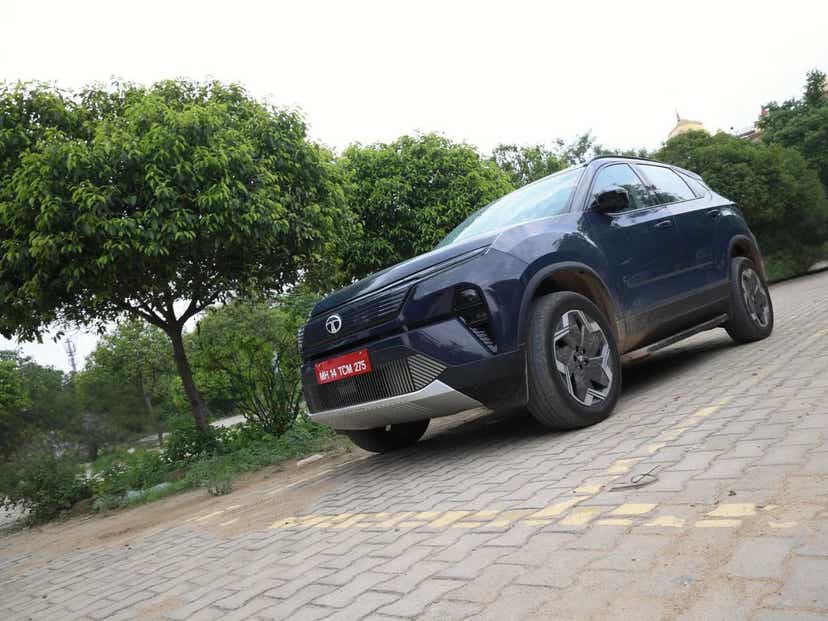 Auto Insider2 MINS READ
2025 Tata Harrier EV deliveries begin — Check booking details here!
 Aryan Aggarwalposted on 1st August 2025
 Auto Insider3 MINS READ
Tata Harrier EV waiting period revealed — Variant-wise details inside
 Amit Saraswatposted on 28th July 2025
 Reviews7 MINS READ
Tata Harrier EV review — Dual motor, quadruple the fun?
Amit Saraswatposted on 22nd July 2025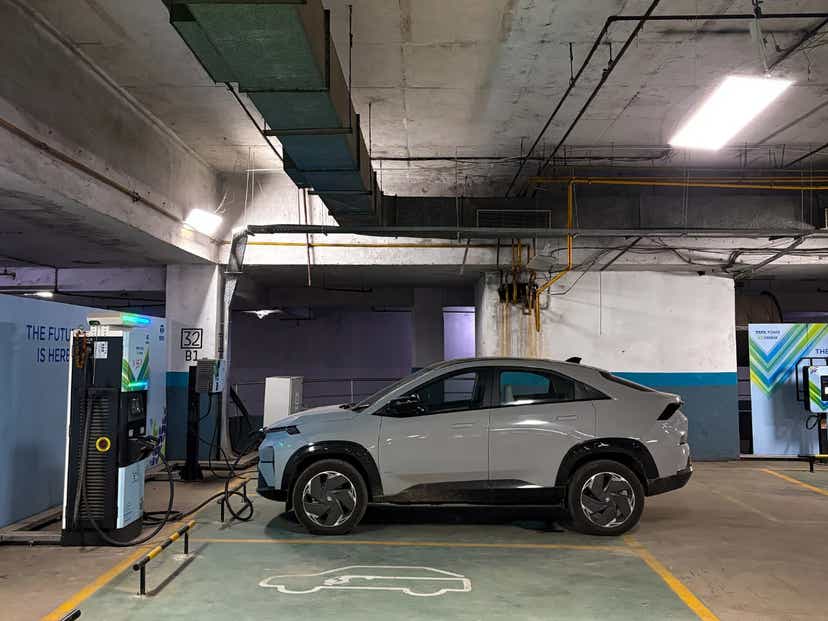 Auto Insider3 MINS READ
Tata EVs lifetime battery warranty terms and conditions explained
Amit Saraswatposted on 16th July 2025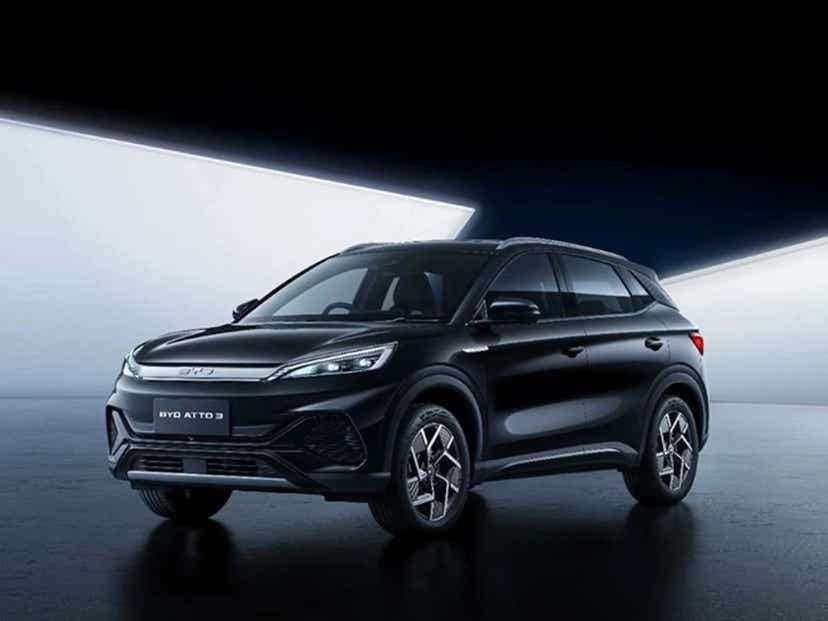 Auto Insider3 MINS READ
Fastest electric cars in India under Rs 30 lakh
 Team Cars24posted on 13th July 2025
- Auto Insider3 MINS READ
2025 Tata Harrier EV bookings open nationwide — Token amount, price list, specs, more
Reema Bohraposted on 4th July 2025 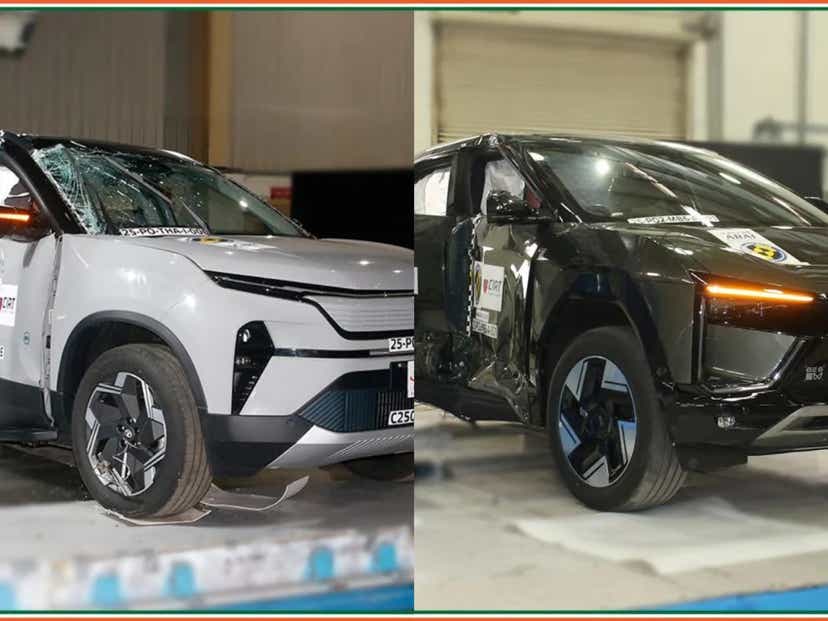 Auto Insider2 MINS READ
Tata Harrier EV vs Mahindra BE 6 safety rating comparison — Which one is safer?
Amit Saraswatposted on 2nd July 2025
New Tata Harrier EV - A Purpose-Built Electric SUV With Long Range and QWD
The Tata Harrier EV takes the Harrier name into a new electric chapter. Unlike an SUV converted to run on batteries, it is built on Tata's acti.ev+ platform, designed around an electric powertrain. The battery sits under the floor, creating a flat floor and making better use of cabin space.
The Tata Harrier EV launch date was 3 June 2025, when Tata Motors introduced it as its larger and more premium electric SUV. It sits above the Nexon EV and targets buyers who want more space, longer range and stronger performance.
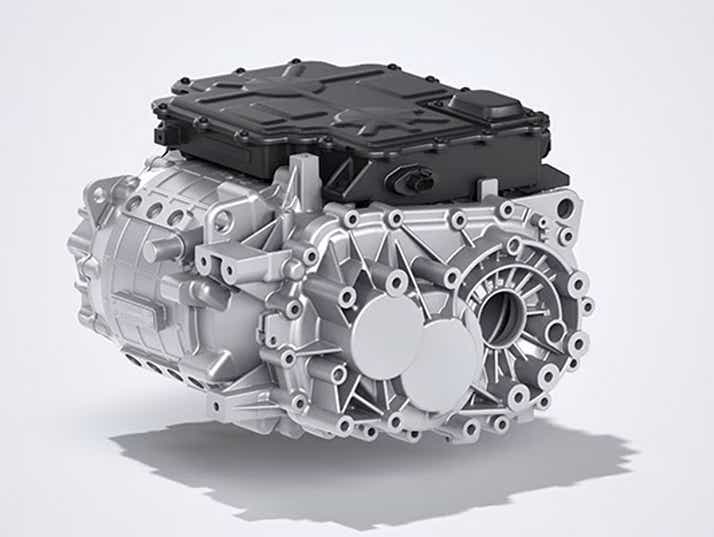
The Harrier EV gets 65 kWh and 75 kWh battery packs, with rear-wheel drive (RWD) and quad-wheel drive (QWD) options. Single-motor RWD versions produce 235 bhp, while the 75 kWh QWD versions use two motors to produce 390 bhp and 504 Nm. The latter can accelerate from 0-100 km/h in about 6.3 seconds in Boost mode.
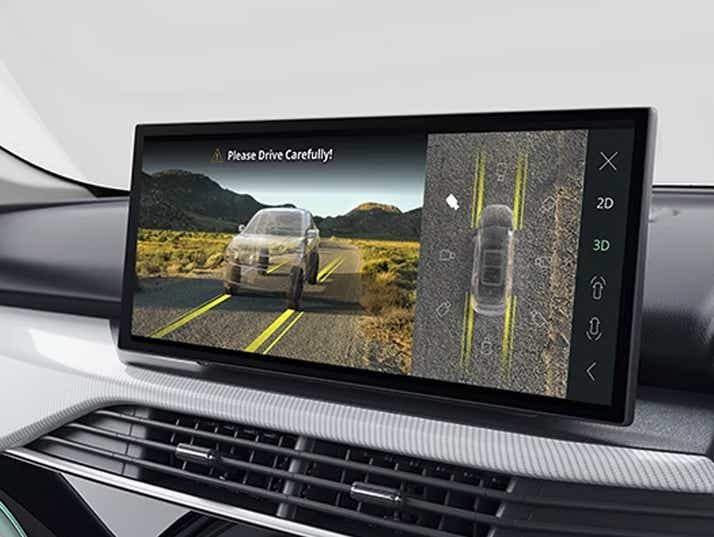
Depending on the variant, it gets a 14.5-inch touchscreen, Level-2 ADAS, a 540-degree camera, V2L functionality and up to 7 airbags. It also has a 5-star Bharat NCAP rating. With a claimed range of over 600 km, a 502-litre boot and genuine QWD capability, the Harrier EV is designed as a practical family SUV with the performance and technology expected from a modern EV.
The Tata Harrier EV price in India starts at ₹21.69 lakh (ex-showroom). The range includes multiple variants, battery configurations and drivetrain options, with the higher trims adding the larger battery and all-wheel-drive hardware.
| Variant | Battery / Power / Torque / Drivetrain | Claimed Range | Ex-Showroom Price |
| EV Adventure 65 (Base Model) | 65 kWh / 235 bhp / 315 Nm / RWD | 538 km | ₹21.69 lakh |
| EV Adventure S 65 | 65 kWh / 235 bhp / 315 Nm / RWD | 538 km | ₹22.19 lakh |
| EV Fearless Plus 65 | 65 kWh / 235 bhp / 315 Nm / RWD | 538 km | ₹24.19 lakh |
| EV Fearless Plus 75 | 75 kWh / 235 bhp / 315 Nm / RWD | 627 km | ₹25.19 lakh |
| EV Fearless Plus QWD 75 | 75 kWh / 235 bhp / 315 Nm / QWD | 627 km | ₹26.69 lakh |
| EV Empowered 75 | 75 kWh / 235 bhp / 315 Nm / RWD | 627 km | ₹27.69 lakh |
| EV Empowered 75 Stealth | 75 kWh / 235 bhp / 315 Nm / RWD | 627 km | ₹28.44 lakh |
| EV Empowered QWD 75 | 75 kWh / 390 bhp / 504 Nm / QWD | 622 km | ₹29.19 lakh |
| EV Empowered QWD 75 Stealth (Top Model) | 75 kWh / 390 bhp / 504 Nm / QWD | 622 km | ₹29.94 lakh |
Note: The ACFC versions of these Tata Harrier EV variants cost around ₹49,000 more than their standard counterparts. All prices are ex-showroom. The final on-road price will be higher than the ex-showroom price because it includes registration, insurance and other applicable charges.
The Tata Harrier EV comes with two battery options, 65 kWh and 75 kWh, and two drivetrain choices, RWD and QWD. All variants are single-speed automatic.
Battery & Powertrain Options
| Powertrain | Battery | Power | Torque | Drivetrain | Claimed Range |
| Single motor | 65 kWh | 235 bhp | 315 Nm | RWD | 538 km |
| Single motor | 75 kWh | 235 bhp | 315 Nm | RWD | 627 km |
| Dual motor | 75 kWh | 390 bhp | 504 Nm | QWD | 622 km |
City Performance
The single-motor RWD Harrier EV is the sensible option for daily commuters. The 235 bhp and 315 Nm motor delivers power smoothly and instantly, while the automatic gearbox makes stop-and-go driving particularly effortless. For a family SUV that will spend most of its time in the city, there is little reason to need more power than this.
The QWD version is much quicker. With 390 bhp and 504 Nm, it responds far more aggressively when you press the accelerator. Tata claims a 0-100 km/h time of around 6.3 seconds in Boost mode, making it one of the quickest Tata SUVs. The extra traction also helps when pulling away on wet or slippery roads.
Highway Performance
For highway use, the 75 kWh RWD is the more sensible choice. Its 627 km claimed range gives it more range headroom between charging stops, while the 235 bhp motor has enough performance for normal cruising and overtaking.
The 75 kWh QWD is the pick for buyers who enjoy stronger acceleration. It has considerably more power in reserve and feels much more immediate when overtaking or joining a fast-moving highway.
Driving Modes
The Harrier EV also gets Eco, City and Sport driving modes, while QWD variants add a Boost mode for maximum performance. Four levels of regenerative braking let you control how strongly the car slows when you lift off the accelerator.
- 65 kWh RWD: Best for buyers who mainly drive in the city and want the lowest entry price.
- 75 kWh RWD: The best all-round choice if you regularly take road trips and want maximum claimed range without paying for QWD.
- 75 kWh QWD: Worth considering if performance, all-wheel-drive traction and the 390 bhp output matter more than getting the absolute maximum range.
The Tata Harrier EV variants are split into three main trims: Adventure, Fearless Plus and Empowered. You can also choose between 65 kWh and 75 kWh batteries, while QWD variants get the dual-motor setup. ACFC versions add the AC fast-charger option.
Adventure & Adventure S
The Adventure 65 is the base variant and gets the 65 kWh battery with a single-motor RWD setup. It comes with a 12.25-inch digital instrument cluster, automatic climate control, rear AC vents, keyless entry and an air purifier.
The Adventure S 65 adds a panoramic sunroof, automatic headlamps and rain-sensing wipers. Both variants make sense if you want the Harrier EV's space and basic features without moving into the more expensive trims. The Adventure is better for buyers who want to keep the price down, while the Adventure S is worth considering if you want a few extra convenience features.
Fearless Plus
The Fearless Plus adds several features that are missing from the Adventure variants, including a 14.5-inch touchscreen, Level 2 ADAS, a 360-degree camera, ventilated front seats and 19-inch alloy wheels. It is available with both the 65 kWh and 75 kWh batteries.
The Fearless Plus 75 gets the larger battery and 627 km claimed range, while the Fearless Plus QWD 75 adds the QWD dual-motor setup. The latter is the more suitable choice if you want stronger performance and all-wheel-drive traction. For most buyers who want more features and the larger battery, the Fearless Plus 75 is the variant worth looking at.
Empowered & Stealth
The Empowered 75 adds more premium features, including JBL audio, adaptive cruise control and Summon Mode. It continues with the single-motor RWD setup, so you get the larger battery and 627 km claimed range without paying for QWD.
The Empowered QWD 75 gets the dual-motor setup with 390 bhp and 504 Nm. It is the better choice if performance matters more than getting the maximum claimed range.
The Stealth versions mainly add a darker exterior treatment and matte-finish elements. The Empowered QWD 75 Stealth sits at the top of the range and combines the most powerful motor setup with the highest equipment level.
- Adventure 65: Pick this if you want the lowest-priced Harrier EV and mainly drive in the city.
- Adventure S 65: Choose this if you want the base variant with a panoramic sunroof and a few extra convenience features.
- Fearless Plus 75: A sensible choice if you want the 75 kWh battery, 627 km claimed range and useful premium features.
- Fearless Plus QWD 75: Pick this if you want QWD without moving to the top-end Empowered variants.
- Empowered 75: Choose this if you want more features but are happy with the single-motor RWD setup.
- Empowered QWD 75: Worth the extra cost if you want 390 bhp, 504 Nm and stronger all-wheel-drive performance.
- Empowered QWD 75 Stealth: The top choice if you want the most powerful Harrier EV with the full feature list and Stealth styling.
The Tata Harrier EV offers strong range across its battery options, while its fast-charging capability makes longer trips easier to plan. Tata also backs the high-voltage battery with a long warranty, which adds confidence for buyers planning to keep the SUV for several years.
With a 7.2 kW AC charger, the 65 kWh battery takes around 9.3 hours and the 75 kWh battery around 10.7 hours to charge from 10% to 100%. Using a compatible 120 kW DC fast charger, it can charge from 20% to 80% in around 25 minutes.
The high-voltage battery gets a lifetime warranty for private first-time owners, covering unlimited kilometres for up to 15 years from the date of first registration. For subsequent owners, coverage is limited to 10 years or 2,00,000 km, whichever comes first.
| Powertrain | ARAI Certified Range | User-Reported City Range | User-Reported Highway Range |
| 65 kWh RWD | 538 km | 430 km | 390 km |
| 75 kWh RWD | 627 km | 490 km | 440 km |
| 75 kWh QWD | 622 km | 460 km | 410 km |
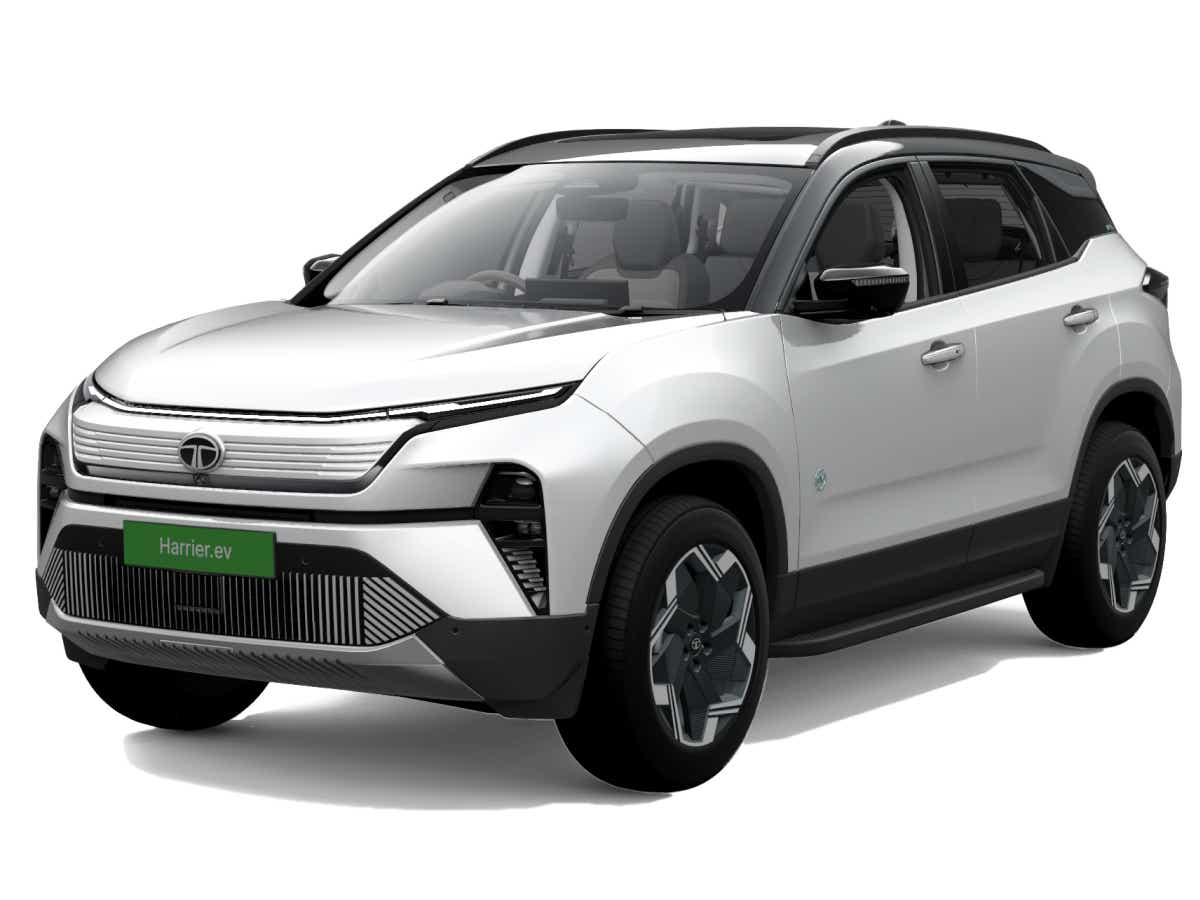
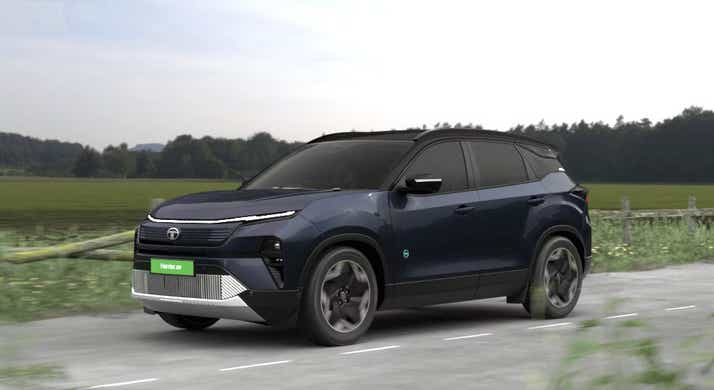
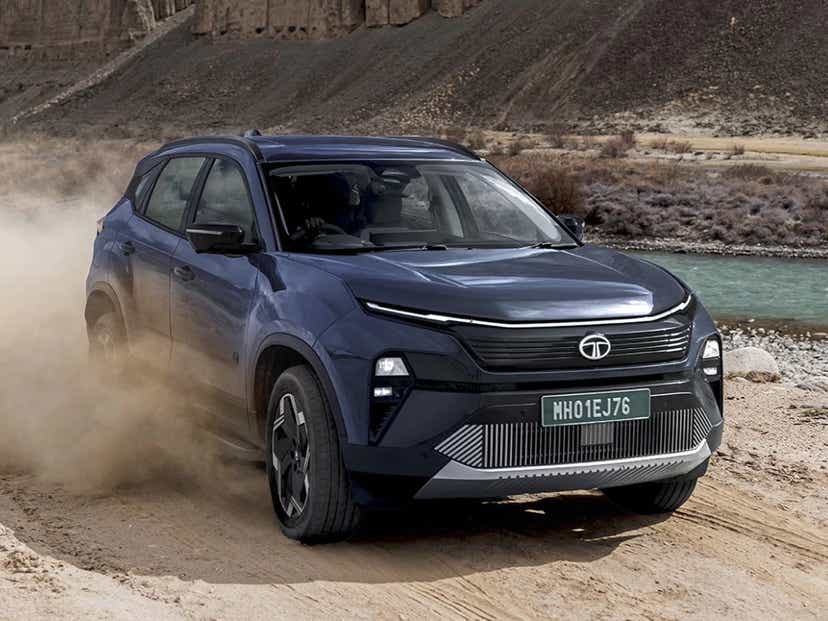
The Tata Harrier EV keeps the large, upright shape of the Harrier but gets several changes to make it look like an EV.
Front Profile
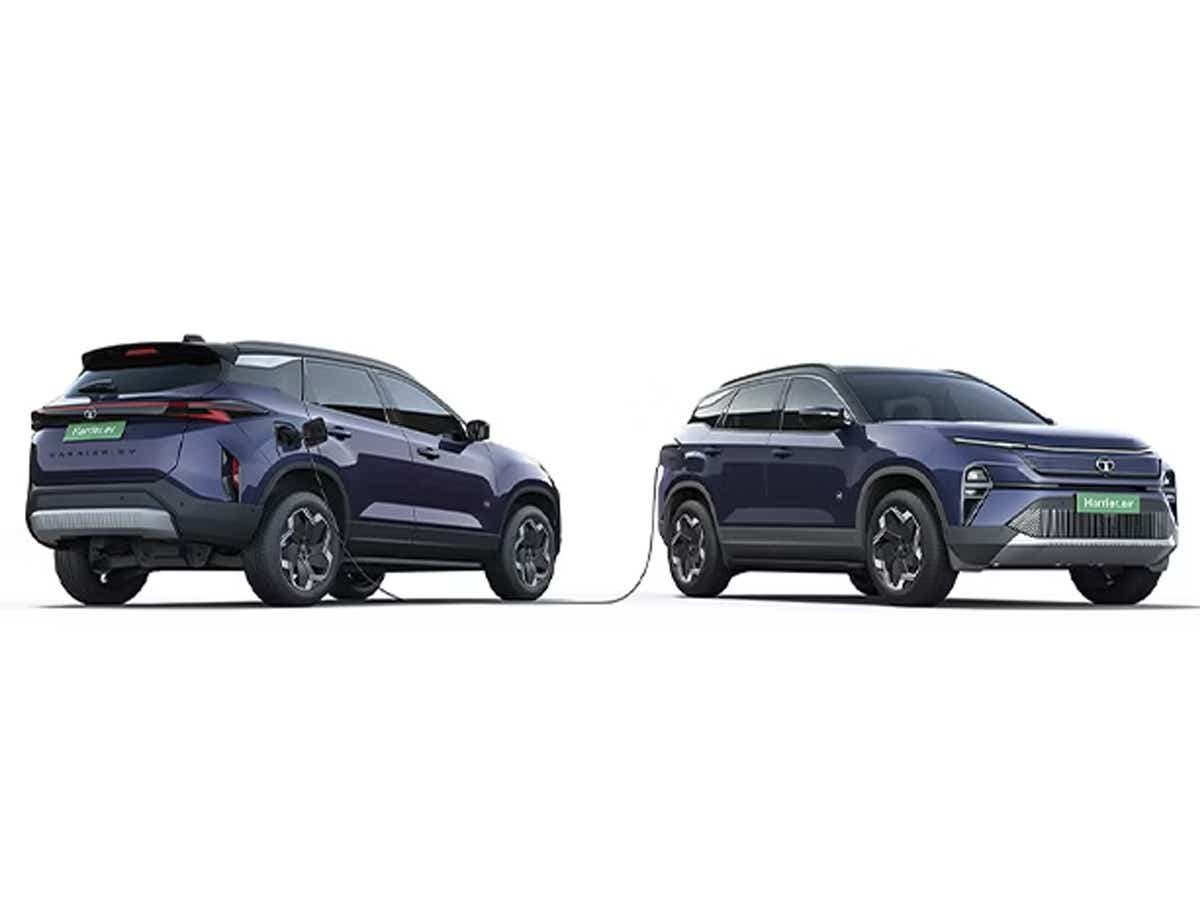
The front gets a closed-off grille with a full-width LED light bar that also works as a charging indicator. The main LED headlamps sit lower in the bumper, while the illuminated Tata logo adds to the EV-specific look.
Side Profile
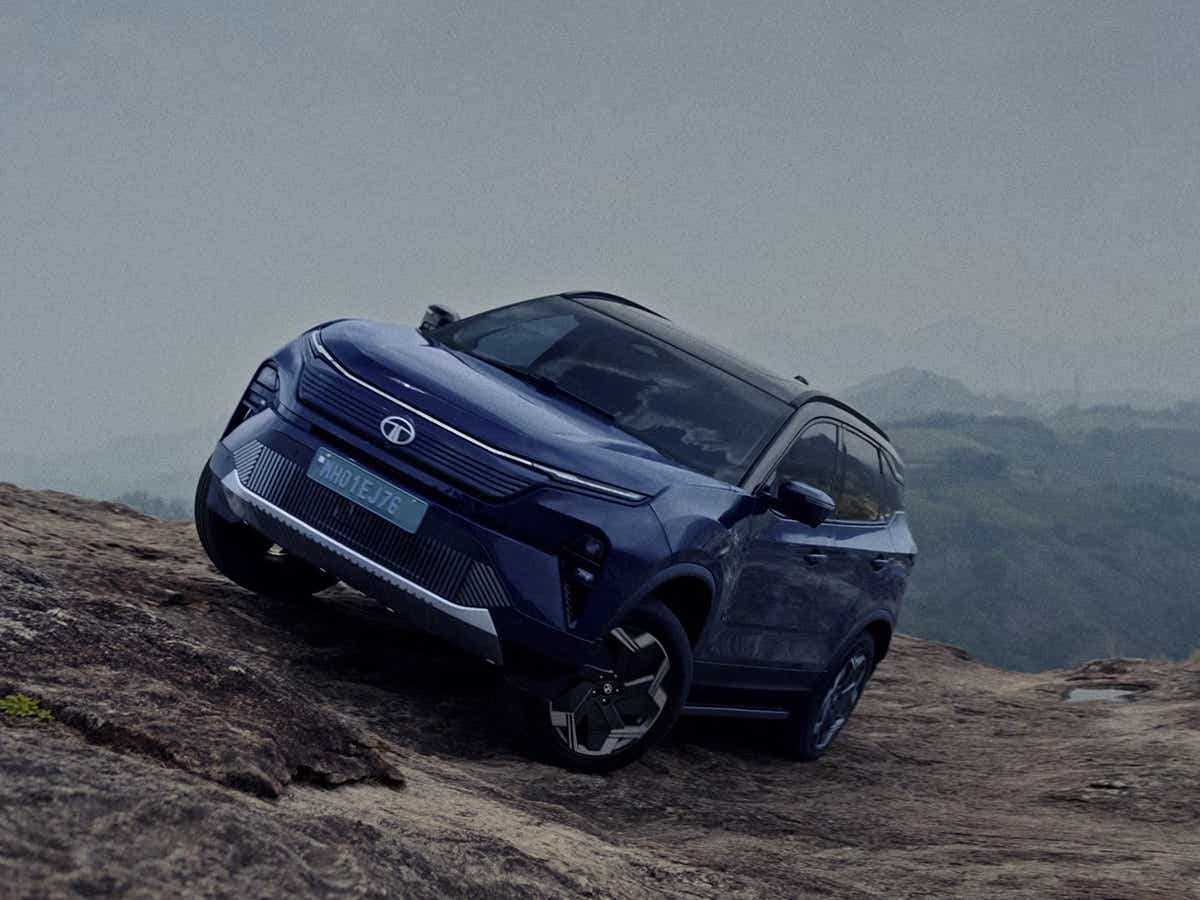
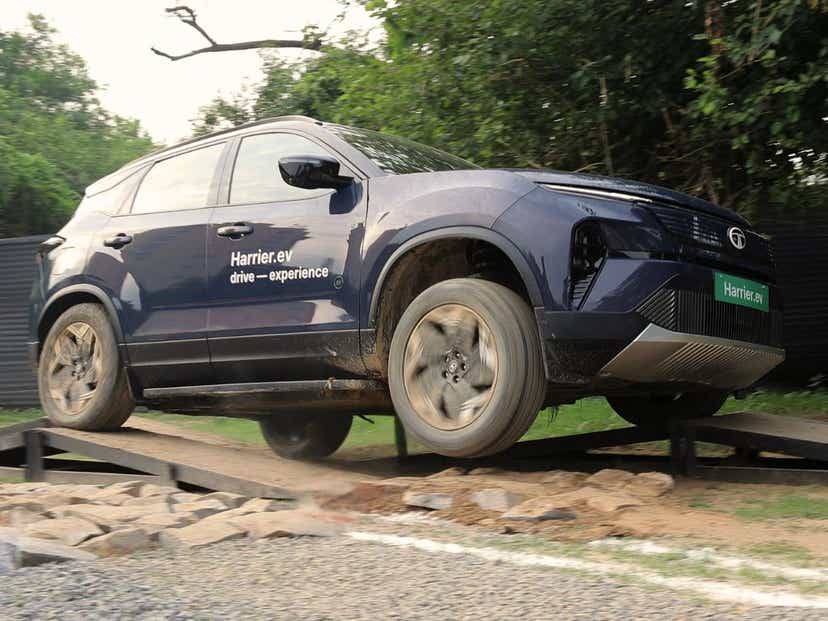
From the side, the Harrier EV has a long and wide profile, with flush-fitting door handles and large alloy wheels. Higher variants get 19-inch aero-optimised alloy wheels. The 205 mm ground clearance should also be useful on broken roads and large speed breakers.
Rear Profile
At the back, connected LED tail lamps give the Harrier EV a wider appearance. The sculpted tailgate and redesigned bumper keep the rear distinct from the regular Harrier, while the overall design remains fairly clean.
The Tata Harrier EV gets a more modern cabin than the regular Harrier, with a wide dashboard and several large screens. Tata has also kept physical controls for some important functions, so basic controls do not have to be operated through the touchscreen.
Space and Seating
The flat floor created by the EV platform leaves more usable space between the front and rear seats. The rear bench has enough width for three adults, while rear passengers get AC vents and USB-C charging ports.
The front seats are available with ventilation and electric adjustment on higher variants. A panoramic sunroof is also offered on selected versions, making the cabin feel more open.
Tech and Usability
The main highlight is the 14.5-inch Samsung Neo QLED touchscreen, which supports wireless Apple CarPlay and Android Auto. A 10.25-inch digital instrument cluster sits ahead of the driver and can display navigation and other driving information.
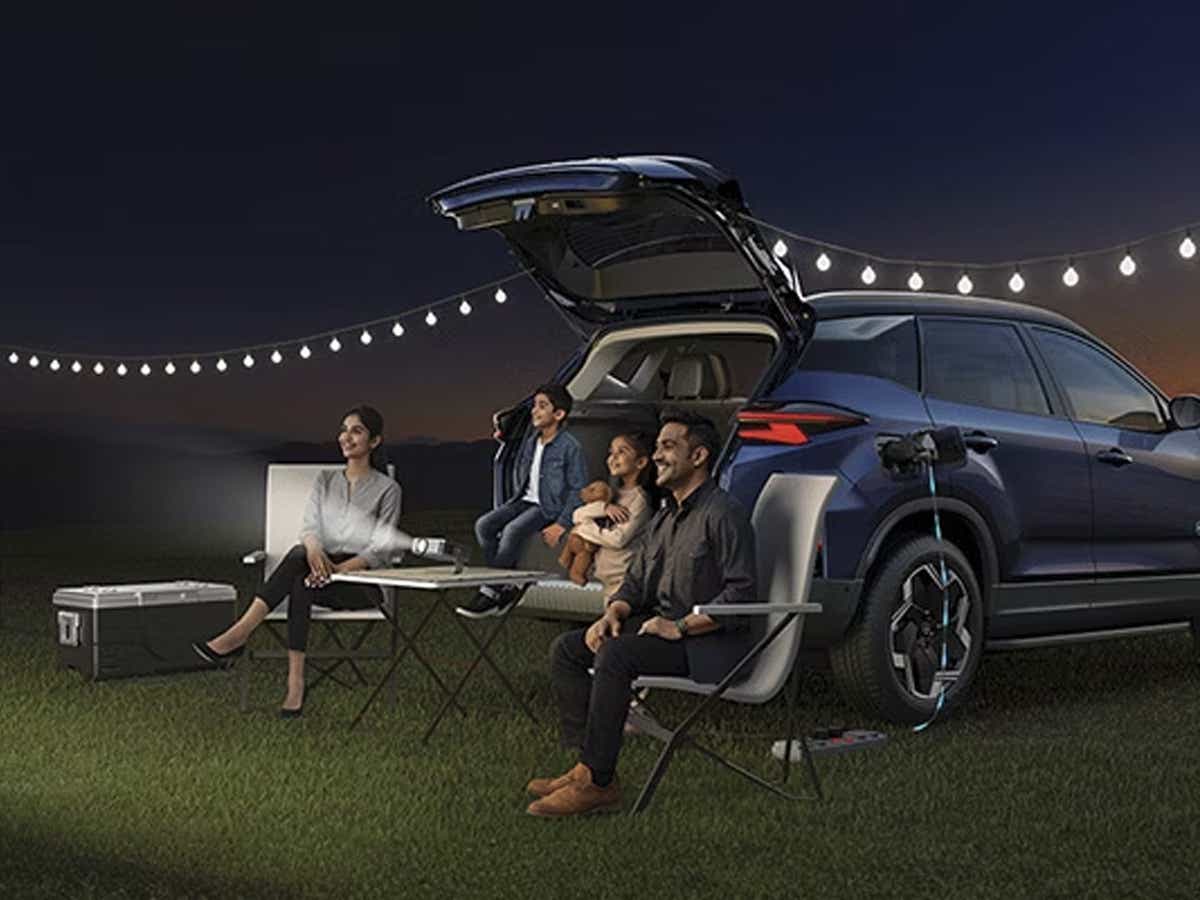
Higher variants also get features such as a 360-degree camera, Level 2 ADAS, JBL audio and vehicle-to-load (V2L) technology. V2L allows the Harrier EV to use its battery to power compatible external devices, which can be useful during road trips or outdoor activities.
Boot Space and Storage
The Tata Harrier EV offers 502 litres of boot space, which is enough for the luggage of a family on a weekend trip. The rear seats can also be folded in a 60:40 split when more cargo space is needed. Practical touches such as large door pockets and a cooled glovebox add to its everyday usability.
The Tata Harrier EV gets a 5-star Bharat NCAP rating, with 32/32 for Adult Occupant Protection, adding peace of mind for families. It also gets multiple active and passive safety features so buyers who place high priority on safety can definitely consider the Harrier EV.
Passive Safety
Harrier EV gets upto 7 airbags, ISOFIX child-seat mounts, all-wheel disc brakes, electronic parking brake with auto-hold and tyre pressure monitoring. The SUV also gets Hill Hold and Hill Descent Control, along with a strong body structure designed to protect occupants in a crash.
Active Safety
The standard safety package includes ABS, electronic stability control, reverse parking sensors and a rear parking camera. An Acoustic Vehicle Alert System (AVAS) also warns pedestrians when the EV is moving at low speeds. Higher variants add a 540-degree surround-view camera, Level 2 ADAS, blind-spot monitoring and front parking sensors.
Here is a quick look at how the safety equipment changes as you move up the Tata Harrier EV range:
| Variant | Key Safety Additions |
| Adventure | 6 airbags, ESC, ABS with EBD, all-wheel disc brakes, TPMS, ISOFIX, hill hold and hill descent control, rear parking sensors and camera |
| Adventure S | Adds 7th knee airbag, auto-dimming IRVM, automatic headlamps, rain-sensing wipers and driver drowsiness detection |
| Fearless Plus | Adds 540-degree surround-view camera, transparent bonnet view, blind-spot view monitor and front parking sensors |
| Empowered / Empowered QWD | Adds Level 2 ADAS, adaptive cruise control with Stop & Go, autonomous emergency braking, lane-keep assist, rear cross-traffic alert, traffic sign recognition and digital IRVM with dashcam |
The Tata Harrier EV competes with the Mahindra XEV 9e, Mahindra BE 6, BYD Atto 3 and Tata Sierra EV. The choice mainly comes down to how much space, range, performance and price matter to you.
| Model | Ex-Showroom Price | Battery Options | Claimed Range | Drivetrain |
| Tata Harrier EV | ₹21.69-30.43 lakh | 65, 75 kWh | Up to 627 km | RWD, QWD |
| Mahindra XEV 9e | ₹21.90-31.25 lakh | 59, 79 kWh | Up to 656 km | RWD |
| Mahindra BE 6 | ₹19.45-26.95 lakh | 59, 79 kWh | Up to 683 km | RWD |
| BYD Atto 3 | ₹24.99-34.49 lakh | 49.9, 60.5 kWh | Up to 521 km | FWD |
| Tata Sierra EV | ₹18.79-26.48 lakh | 63, 75 kWh | Up to 622 km | RWD, QWD |
The Mahindra XEV 9e has a more coupe-like design and a three-screen dashboard that gives the cabin a different feel. Its larger battery also offers a higher claimed range. The Harrier EV is the better choice if you want a conventional SUV shape, more space and the option of dual-motor QWD.
Tata Harrier EV vs Mahindra BE 6
The Mahindra BE 6 is smaller, lighter and cheaper than the Harrier EV. It also offers a higher claimed range with its larger battery. It makes more sense if you mostly drive alone or with a small family. The Harrier EV is better suited to buyers who need more cabin space and want the option of all-wheel drive.
Tata Harrier EV vs BYD Atto 3
The BYD Atto 3 has a smaller footprint and a well-finished cabin, making it easy to use in the city. However, it costs more and its claimed range is lower than the Harrier EV. The Harrier EV is the better option if you want a larger family SUV with more range, stronger performance and QWD.
Tata Harrier EV vs Tata Sierra EV
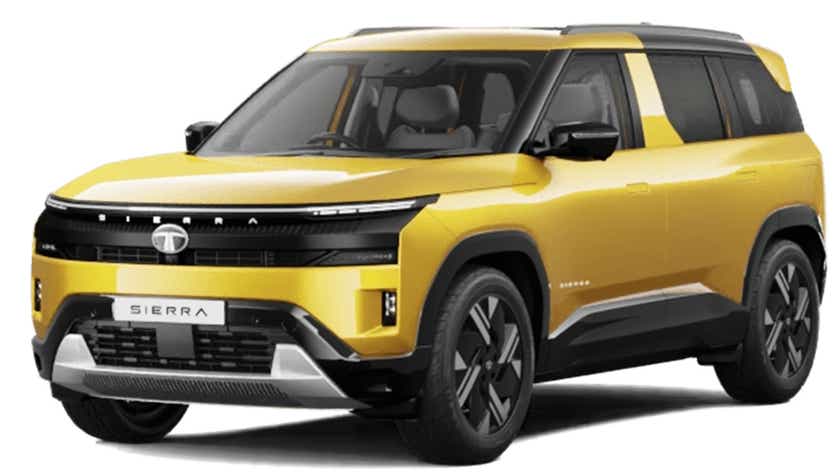
The Sierra EV starts at a lower price and has a boxier shape that makes better use of its cabin and boot space. Its 622-litre boot is also larger than the Harrier EV's. The Harrier EV is bigger and much more powerful in QWD form. The Sierra EV suits buyers who want space and a lower price, while the Harrier EV suits those who want more performance.
- Harrier EV: Choose it if you want a large family SUV, strong performance and the option of QWD.
- XEV 9e: Choose it if you like the coupe-SUV design, three-screen cabin and higher claimed range.
- BE 6: Choose it if you want a smaller and cheaper EV with a sporty feel.
- Atto 3: Choose it if you prefer a smaller SUV with a well-finished cabin and don't need QWD.
- Sierra EV: Choose it if you want a more affordable Tata EV with a larger boot and a boxier cabin.
The Tata Harrier EV gets a strong range, plenty of space and powerful QWD variants, but there are a few things buyers should consider before choosing one.
| Pros | Cons |
| Over 600 kms of claimed range for daily city use and longer highway trips. | The top QWD variants cost close to ₹30 lakh ex-showroom, which is a big jump over the base version. |
| The 390 bhp QWD version delivers 504 Nm of torque, giving it strong acceleration and better traction. | The 75 kWh battery takes around 10.7 hours to charge fully with a 7.2 kW AC charger. |
| The 502-litre boot has enough space for family luggage and weekend trips. | Actual range will depend on speed, traffic, air-conditioning use and driving style. |
| It gets a 5-star Bharat NCAP rating along with multiple airbags and a strong set of safety features. | QWD is available only with the 75 kWh battery, so buyers have to move to a more expensive version. |
| The spacious cabin and flat floor give rear passengers good legroom and make it comfortable for family trips. | Its large size can make tight parking, narrow roads and crowded city streets less convenient. |
The Tata Harrier EV is a sensible choice for buyers who want a large electric SUV for family use. It has a spacious cabin, 502-litre boot, strong safety equipment and enough range for both city driving and highway trips. The 75 kWh RWD version is better if you regularly travel long distances, while the 65 kWh version is enough for mainly city use.
The 390 bhp QWD version is the one to choose if you want strong performance and all-wheel-drive traction. The Harrier EV also gets a 5-star Bharat NCAP rating, useful cabin technology, Level-2 ADAS, and a lifetime battery warranty for the first owner. On the other hand, the higher variants are expensive, home charging takes time and its large size can take time getting used to.
The Mahindra XEV 9e offers more claimed range, the BE 6 is smaller and cheaper, and the BYD Atto 3 offers a more premium cabin at a higher price. The Tata Sierra EV is another option if you want a lower-priced Tata electric SUV. Choose the Harrier EV if you want more space, strong performance and the option of QWD.
Frequently asked questions
The price of the Tata Harrier EV starts at ₹21.49 lakh (ex-showroom, New Delhi).
The length of the Tata Harrier EV is 4607 mm.
The Tata Harrier EV comes with a total of 5 doors.
The Tata Harrier EV is available in 4 color options, including Pristine White, Nainital Nocturne, Pure Grey, Empowered Oxide.
All Model Make Filter
- Recently Launched 5 Seater Cars
- Recently Launched Automatic Cars
- Recently Launched Suv Cars
- Recently Launched Electric Cars
- Recently Launched 0 to 1000cc Cars
- Recently Launched Rwd Cars
- Recently Launched Abs Cars
- Recently Launched Esc Cars
- Recently Launched Hill Hold Assist Cars
- Recently Launched Traction Control Cars
- Recently Launched Tpms Cars
- Recently Launched Adaptive Cruise Control Cars
- Recently Launched Panoramic Cars
- Recently Launched Cars Under 25 Lakhs
- Recently Launched Cars Under 30 Lakhs
- Recently Launched Cars Under 35 Lakhs
- 5 Seater Automatic Cars
- 5 Seater Suv Cars
- 5 Seater Electric Cars
- 5 Seater 0 to 1000cc Cars
- 5 Seater Rwd Cars
- 5 Seater Abs Cars
- 5 Seater Esc Cars
- 5 Seater Hill Hold Assist Cars
- 5 Seater Traction Control Cars
- 5 Seater Tpms Cars
- 5 Seater Adaptive Cruise Control Cars
- 5 Seater Panoramic Cars
- 5 Seater Cars Under 25 Lakhs
- 5 Seater Cars Under 30 Lakhs
- 5 Seater Cars Under 35 Lakhs
- Automatic Suv Cars
- Automatic Electric Cars
- Automatic 0 to 1000cc Cars
- Automatic Rwd Cars
- Automatic Abs Cars
- Automatic Esc Cars
- Automatic Hill Hold Assist Cars
- Automatic Traction Control Cars
- Automatic Tpms Cars
- Automatic Adaptive Cruise Control Cars
- Automatic Panoramic Cars
- Automatic Cars Under 25 Lakhs
- Automatic Cars Under 30 Lakhs
- Automatic Cars Under 35 Lakhs
- Suv Electric Cars
- Suv 0 to 1000cc Cars
- Suv Rwd Cars
- Suv Abs Cars
- Suv Esc Cars
- Suv Hill Hold Assist Cars
- Suv Traction Control Cars
- Suv Tpms Cars
- Suv Adaptive Cruise Control Cars
- Suv Panoramic Cars
- Suv Cars Under 25 Lakhs
- Suv Cars Under 30 Lakhs
- Suv Cars Under 35 Lakhs
- Electric 0 to 1000cc Cars
- Electric Rwd Cars
- Electric Abs Cars
- Electric Esc Cars
- Electric Hill Hold Assist Cars
- Electric Traction Control Cars
- Electric Tpms Cars
- Electric Adaptive Cruise Control Cars
- Electric Panoramic Cars
- Electric Cars Under 25 Lakhs
- Electric Cars Under 30 Lakhs
- Electric Cars Under 35 Lakhs
- 0 to 1000cc Rwd Cars
- 0 to 1000cc Abs Cars
- 0 to 1000cc Esc Cars
- 0 to 1000cc Hill Hold Assist Cars
- 0 to 1000cc Traction Control Cars
- 0 to 1000cc Tpms Cars
- 0 to 1000cc Adaptive Cruise Control Cars
- 0 to 1000cc Panoramic Cars
- 0 to 1000cc Cars Under 25 Lakhs
- 0 to 1000cc Cars Under 30 Lakhs
- 0 to 1000cc Cars Under 35 Lakhs
- Rwd Abs Cars
- Rwd Esc Cars
- Rwd Hill Hold Assist Cars
- Rwd Traction Control Cars
- Rwd Tpms Cars
- Rwd Adaptive Cruise Control Cars
- Rwd Panoramic Cars
- Rwd Cars Under 25 Lakhs
- Rwd Cars Under 30 Lakhs
- Rwd Cars Under 35 Lakhs
- Abs Panoramic Cars
- Abs Cars Under 25 Lakhs
- Abs Cars Under 30 Lakhs
- Abs Cars Under 35 Lakhs
- Esc Panoramic Cars
- Esc Cars Under 25 Lakhs
- Esc Cars Under 30 Lakhs
- Esc Cars Under 35 Lakhs
- Hill Hold Assist Panoramic Cars
- Hill Hold Assist Cars Under 25 Lakhs
- Hill Hold Assist Cars Under 30 Lakhs
- Hill Hold Assist Cars Under 35 Lakhs
- Traction Control Panoramic Cars
- Traction Control Cars Under 25 Lakhs
- Traction Control Cars Under 30 Lakhs
- Traction Control Cars Under 35 Lakhs
- Tpms Panoramic Cars
- Tpms Cars Under 25 Lakhs
- Tpms Cars Under 30 Lakhs
- Tpms Cars Under 35 Lakhs
- Adaptive Cruise Control Panoramic Cars
- Adaptive Cruise Control Cars Under 30 Lakhs
- Adaptive Cruise Control Cars Under 35 Lakhs
- Panoramic Cars Under 25 Lakhs
- Panoramic Cars Under 30 Lakhs
- Panoramic Cars Under 35 Lakhs
- Tata Upcoming Cars
- Tata Recently Launched Cars
- Tata Discontinued Cars
- Tata 4 Star Cars
- Tata 5 Star Cars
- Tata 5 Seater Cars
- Tata 6 Seater Cars
- Tata 7 Seater Cars
- Tata Manual Cars
- Tata Automatic Cars
- Tata Sedan Cars
- Tata Suv Cars
- Tata Hatchback Cars
- Tata Coupe Cars
- Tata Petrol Cars
- Tata Cng Cars
- Tata Electric Cars
- Tata Diesel Cars
- Tata 0 to 1000cc Cars
- Tata 1000 to 1500cc Cars
- Tata 1500 to 2000cc Cars
- Tata Upto 30kmpl Cars
- Tata Awd Cars
- Tata Fwd Cars
- Tata Rwd Cars
- Tata 3 Cylinder Cars
- Tata 4 Cylinder Cars
- Tata Abs Cars
- Tata Esc Cars
- Tata Hill Hold Assist Cars
- Tata Traction Control Cars
- Tata Tpms Cars
- Tata Adaptive Cruise Control Cars
- Tata Sunroof Cars
- Tata Panoramic Cars
- Tata Moonroof Cars
- Tata Cars Under 5 Lakhs
- Tata Cars Under 6 Lakhs
- Tata Cars Under 7 Lakhs
- Tata Cars Under 10 Lakhs
- Tata Cars Under 15 Lakhs
- Tata Cars Under 20 Lakhs
- Tata Cars Under 25 Lakhs
- Tata Cars Under 30 Lakhs
- Tata Cars Under 35 Lakhs
- Tata Cars Under 50 Lakhs
- Maruti Suzuki
- Hyundai
- Mahindra
- Toyota
- Kia
- Honda
- Renault
- Skoda
- Mg
- Nissan
- Volkswagen
- Citroen
- Bmw
- Mercedes Benz
- Xiaomi
- Ford
- Jeep
- Audi
- Jaguar
- Land Rover
- Rolls Royce
- Byd
- Force
- Tesla
- Vinfast
- Bentley
- Lamborghini
- Ola Electric
- Maserati
- Volvo
- Aston Martin
- Ferrari
- Isuzu
- Mclaren
- Mini
- Lotus
- Porsche
- Lexus
- Jsw Cars