
Expert review
Tata Punch Review: More Punch, Fewer Performance Excuses
Automotive journalist · 27 October 2026 at 4:50 pm
Tata’s smallest SUV has been its biggest success story since its launch in 2021. With the Punch facelift, Tata hasn’t messed with the basic recipe that made it so popular but has taken steps to fix the biggest complaint that buyers have had: its lack of outright punch, even in everyday driving. To that end, there’s a new turbo-petrol engine borrowed from the larger Nexon and a CNG variant mated to an AMT. We drive the new Punch to see whether a best-seller has gotten even better, and if it still has what it takes to keep its popularity intact.

KEY HIGHLIGHTS
- New turbo-petrol engine gives the Punch the performance buyers have been missing, but should have also been offered with an automatic
- Styling and cabin updates are not massive but do enough as far as facelifts go to keep things modern and improve usability at the same time
- Addition of a CNG automatic (AMT) to the lineup makes sense for city-buyers who are also thinking of running costs in the long term
SCORE BREAKDOWN
| Category | Score |
| Exterior Design | 4 |
| Interior & Comfort | 4 |
| Engine & Performance | 4 |
| Ride & Handling | 4.5 |
| Fuel Efficiency | 3.5 |
| Safety | 4.5 |
| Ownership Cost | 3.5 |
EXTERIOR DESIGN - 4 / 5
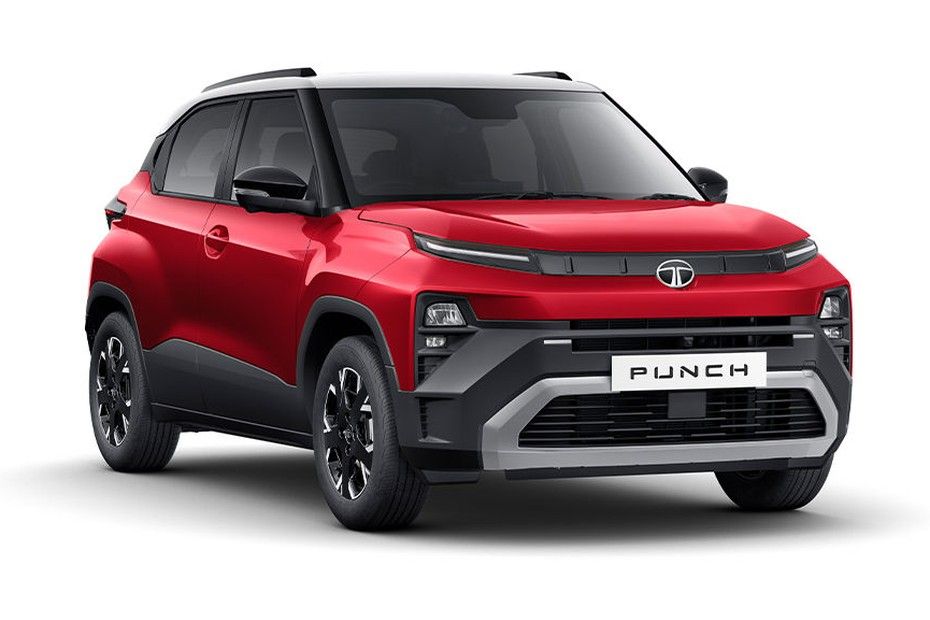
The foundation of the Punch facelift stems from the pre-facelift Punch EV. The vertically stacked LED headlights sit low in the bumper, with the DRLs relocated higher up and tucked into a more substantial gloss-black trim that runs between the two. The reworked bumper adds thick black cladding with a silver surround around the bottom air intakes, styled to look like a bull bar. It results in a chunkier looking front end than before, which can only be a good thing as far as buyers are concerned. The rear gets LED tail lights with a light bar connecting the two, making for a more sure-footed appearance versus the outgoing Punch. The lower half of the bumper gets a faux skidplate look courtesy a silver striated section, a smart way to really drive the Punch’s SUV aspirations home. Top variants get a new 16-inch alloy wheel design but otherwise the side profile remains the same.
Tata says the Punch can wade water up to 400mm deep, with ground clearance up marginally to 193mm. That water wading capacity number is impressive, especially when compared against something like the Maruti-Suzuki Jimny which comes in at around 300mm.
INTERIOR & COMFORT - 4 / 5
The dashboard layout of the facelifted Punch is instantly familiar but the perceived quality is uplifted with a few clever (and one not-so-clever) changes. The new two-spoke steering wheel with its illuminated logo and new digital instrument panel go a long way towards the more upmarket feel. However, as modern as the new touch-based central panel controls look, the reality of touch controls mean you’ll be forced to look away from the road to adjust something as basic as the temperature inside the cabin. On the plus side, there’s now a dedicated button for locking/unlocking the doors and the wireless phone charger has a cooling fan, which is a non-negotiable feature if you want to actually use wireless charging on a hot day.

The seats have been redesigned with extra bolstering and, even better, with extended under thigh support both front and rear. It’s a small change but probably one that comes from Tata listening to specific customer feedback, which is always a good thing. Rear seat space itself remains unchanged, which means three adults will be a bit of a squeeze. The middle passenger will feel even more shortchanged now that the other two seats have better support than before but the addition of a rear AC vent is welcome, irrespective of how many passengers are in the rear. Kneeroom is adequate even with a tall driver and passenger seated front-to-rear.
Boot space stands at 366-litres, good for three-four cabin baggage-sized suitcases. Boot space on the CNG variant drops to 210 litres but, thankfully for this day and age, both petrol and CNG versions still pack a spare wheel, packaged under the car.
ENGINE & PERFORMANCE - 4 / 5
The outgoing Punch’s biggest flaw, coming from actual buyers, was its 1.2-litre, naturally-aspirated, 3-cylinder Revotron engine, which felt like it was running out of breath if you tried to drive it in a hurry. Instead of updating it to provide better performance, Tata has given the Punch a new engine: the Nexon’s 1.2-litre, 3-cylinder turbo-petrol making 120hp, 170nm torque and paired with a 6-speed manual gearbox only. The claimed 0-100kmph figure around 11 seconds might not sound like a lot but when compared to the NA Punch’s time of over 16 seconds, you can understand just how big the jump is.

Turbo lag is well-controlled, with the power coming on early enough to make city overtakes feel like hardly any effort. The mid-range pull also pays off and for everyone who’s ever complained about the Punch’s drivetrain previously, this engine is the answer. But it’s not without compromise. It’s only available with a manual gearbox and the clutch bite point takes some getting used to, apart from shifts themselves feeling notch when driven hurriedly. The NA engine carries over unchanged and when driven with patience, is perfectly serviceable in the city, if a little out of its breadth at highway speeds.
The other big addition is the CNG variant with the option of an AMT and paddle shifters. On petrol you get the whole 88hp, which drops to 73hp on CNG. The drop in power makes an already labouring engine feel like it’s working harder than it already was. Of course, driven sedately in the city, this should pose no problem, especially with the benefits in lower running costs CNG brings. The AMT drives like most AMTs, in that you have to learn how to drive around the peculiarities of the head-nod on upshifts but the convenience can’t be beat.
RIDE & HANDLING - 4.5 / 5
If there’s one area that Tata didn’t have to change much, if at all, on the Punch, it would be its suspension setup. It’s still the strongest suit of this compact SUV, with a composure that’s hard to shake even over broken roads at higher speeds. Bumps are absorbed without clunks or thuds, leaving occupants blissfully unaware of road conditions. CNG variants get a marginally stiffer suspension setup to deal with the added weight, which shows in slightly less compliancy over bumps.
The steering, light and easy to manoeuvre at city speeds, weighs up enough at highway speeds to give the Punch impressive stability out on the open road, which when coupled with its stellar ride quality results in confidence that defies its size. Braking, handled by discs up front and drums at the rear, provide progressive stopping power, with nose-dive also kept well in check under hard stops.
FUEL EFFICIENCY - 3.5 / 5
Tata hasn’t released official ARAI figures for the turbo-petrol Punch yet, while the same engine in the Nexon is rated between 17.2-17.4kmpl (AMT/MT). Considering that the Nexon is larger and heavier the Punch should carry a figure above that, potentially closer to the NA’s 20.1kmpl rating. That said, real-world figures from the NA are closer to 10-11kmpl in the city, so expect the turbo-petrol to return less than that, as they historically run thirstier in heavy traffic. The CNG MT variant is rated for an efficiency of 26.99km/kg. With a tank size of 60-litres, you can expect a range of up to 200km, depending on driving conditions.
SAFETY - 4.5 / 5

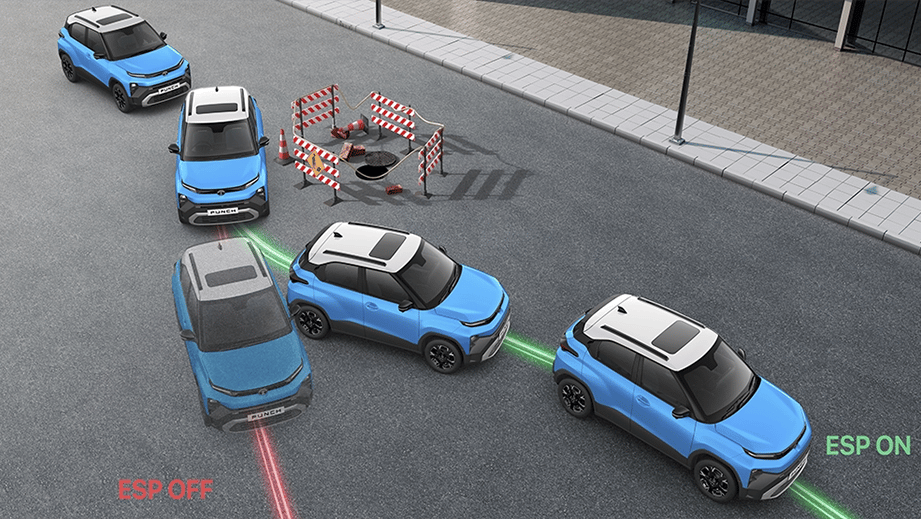
The Punch facelift carries forward the 5-star Bharat NCAP safety rating of the outgoing car, one of its strongest selling points. Six airbags come standard across the range, alongside ESP, hill hold and hill descent control, a tyre pressure monitoring system, and three-point seatbelts all around. As with many new cars, the absence of load sensors at the rear mean you’ll hear a warning unless you buckle up the rears even without occupants present.
WHICH TATA PUNCH SHOULD YOU BUY?
| Engine Option | Transmission | Available Trims | Best Suited For |
| 1.2L NA Petrol | 5-Speed Manual | Smart, Pure, Pure+, Adventure, Accomplished | Budget-first buyers prioritising low upfront cost |
| 1.2L NA Petrol | 5-Speed AMT | Pure+, Adventure, Accomplished | City drivers wanting clutch-free convenience without paying for CNG or turbo |
| 1.2L Turbo Petrol | 6-Speed Manual | Adventure, Accomplished+ S | Enthusiasts and highway drivers wanting genuine performance |
| 1.2L CNG | 5-Speed Manual | Pure+, Adventure, Accomplished | Fleet buyers and daily commuters chasing the lowest running costs |
| 1.2L CNG | 5-Speed AMT | Accomplished, Accomplished+ S | Buyers who want CNG economy but refuse to work a clutch in traffic |
EXPERT PICK
1.2L Turbo Petrol, Adventure
This is the sweet spot of the lineup, in our books. You get the new engine for Rs 70,000-80,000 more than the 1.2 Revotron engine, with the potential penalty of fuel efficiency being made up for in how it drives. It comes with most of the modern comfort features you could want, though if you do want a sunroof, you’ll have to step up to the S trim. The CNG variants cost between Rs 1-1.10 lakh more than their petrol counterparts but the higher price up front will even out with lower running costs.
RIVALS
Hyundai Exter
Offers a lighter steering feel and a smoother powertrain with the caveat of its quirky looks.
Citroen C3
Distinctive styling and matching ride comfort, though it trails the Punch on features and service network reach.
Renault Kiger / Nissan Magnite
A turbo-CVT alternative, with segment-leading boot space, but with arguably lower quality levels and a thinner service network.
FINAL VERDICT 3.9 / 5
The 2026 Tata Punch sets out to improve on the original with a set of updates that range from keeping it contemporary in the face of new competition as well as fixing some of the issues of the outgoing car. The turbo-petrol engine has the power the Punch desperately needed to appeal to more buyers more of the time but the missing automatic on this variant is an oversight that may turn potential buyers away. Moreover, the touch-based climate controls on mid-high variants may get buyers into the showroom but may also quickly turn to less than ideal as time ages the piano-black finish.
Ultimately, pricing on top variants edges ever closer to Nexon territory, which is why the mid-variants are the pick of the lot. For buyers who wanted everything the Punch already did well, plus an engine that can finally keep up, the new Punch delivers exactly that.
- Exterior
- 4.0 / 5
- Interior
- 4.0 / 5
- Engine & Performance
- 4.0 / 5
- Fuel Efficiency
- 3.5 / 5
What works
- Best for buyers who want a compact, easy-to-park package with strong safety credentials and low running costs.
- Buy if you want a well-rounded small SUV with practicality, safety and value.
Worth knowing
- Skip if you need a fully-loaded automatic compact SUV, since the Punch iTurbo doesn’t have an automatic option, while the naturally-aspirated engine only offers an AMT.