
Expert review
Tata Sierra Test Drive Review: A Strong Comeback, Still Short of the Benchmark

Content Editor · 27 October 2026 at 6:15 pm
Key Highlights
- The Sierra returns as a modern, practical SUV rather than relying purely on nostalgia, while still retaining a strong visual connection with the original.
- Its long wheelbase and spacious rear cabin make passenger comfort one of its biggest strengths, especially for family buyers.
- Ride quality is a standout, with the suspension delivering impressive comfort and composure over typical Indian road conditions.
- A premium cabin, triple-screen layout and JBL Dolby Atmos audio system help the Sierra feel more upmarket than many of its segment rivals.
The Tata Sierra arrives with considerably more pressure on its shoulders than an ordinary new midsize SUV. Part of that pressure comes from the name. The original Sierra remains one of the most recognisable Tata vehicles from the 1990s, and bringing that badge back automatically creates expectations. But the bigger challenge has little to do with nostalgia. The new Sierra enters one of the toughest segments in the Indian car market, where the Hyundai Creta and Kia Seltos have spent years setting benchmarks for refinement, equipment, ease of driving and, importantly, ownership experience.

That makes the new Sierra particularly interesting because Tata Motors has not approached it conservatively. This is not a familiar Tata platform with a different body sitting on top. There is a new architecture underneath, two new petrol engines in the range, a completely redesigned cabin, new electronics and one of the most ambitious equipment lists Tata has put into a mass-market car. Even visually, the Sierra makes a conscious effort to stay away from the generic midsize SUV template. Spend some time with the Sierra and much of that effort becomes obvious. That said, how good is the Sierra, and should you be buying one? Here is our detailed Tata Sierra review.
Score Breakdown
| Category | Score |
| Exterior Design | 4.5 |
| Interior & Comfort | 4.7 |
| Infotainment | 4 |
| Performance | 3.5 |
| Ride & Handling | 4 |
| Fuel Efficiency | 3.7 |
| Safety | 4.5 |
| Ownership Cost | 3.5 |
Tata Sierra Exterior Design - 4.5 / 5
The Sierra's design is one of the strongest reasons to consider it. Tata could easily have turned the revival into a retro exercise, but instead it has used the original car as inspiration while building something that works as a modern five-door SUV.

The side profile carries the strongest Sierra connection. The large B-pillar, upright stance and blacked-out treatment around the rear glass recreate the visual impression of the original car's distinctive glasshouse. It isn't an exact recreation, nor should it be. Modern structural requirements and the need for rear doors mean the new car has to work very differently, but the designers have retained enough visual identity to make the connection obvious.
The proportions help enormously. The Sierra has a long wheelbase, relatively short overhangs and a wide body, giving it considerable road presence without becoming cumbersome. The 19-inch wheels on higher variants fill the arches beautifully, although I would probably sacrifice some of that visual drama for the better comfort and refinement likely offered by the smaller wheels.
The front is slightly more conventional than the rest of the car. The full-width LED lighting, slim headlamps and dark fascia look modern but don't have quite the individuality of the side profile. The rear works better, with a clean tailgate, full-width lighting and a neatly hidden rear wiper.
Overall, though, Tata has succeeded in giving the Sierra an identity. In a segment filled with very competent but increasingly familiar-looking SUVs, that counts for a lot.
Tata Sierra Interior, Features And Comfort - 4.7 / 5
The Sierra's interior might be Tata's best-designed cabin yet. The dashboard sits relatively low, the windscreen is broad, and the large glass area makes the cabin feel immediately airy. Light-coloured upholstery and the panoramic sunroof enhance that impression further, although keeping those lighter materials clean over several years could become difficult.
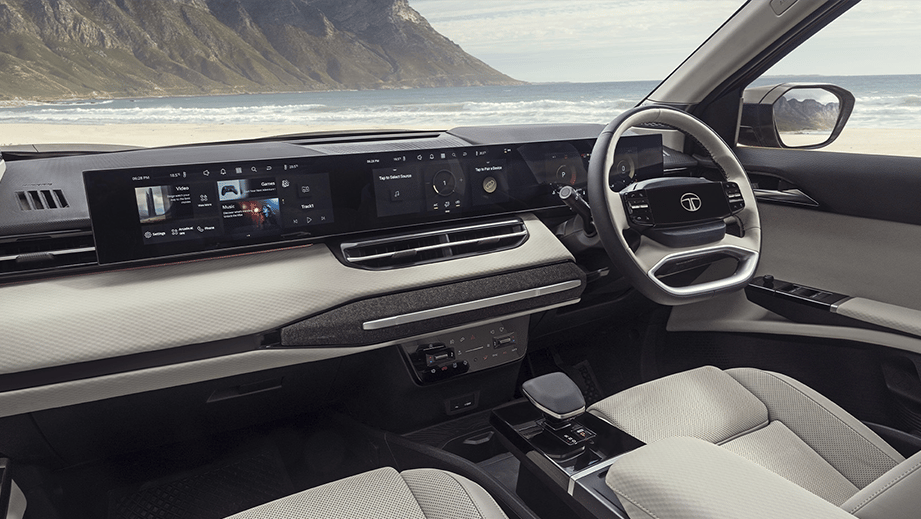
Higher variants get the headline-grabbing three-screen arrangement: a digital driver's display, central infotainment screen and passenger entertainment display. The screens themselves are crisp and responsive, and Tata's infotainment software has improved significantly. However, I am not convinced that the passenger screen is an essential feature. The variant below, which combines two screens with a head-up display, arguably provides a more useful setup from the driver's perspective.
The touch-sensitive climate controls remain frustrating. They look clean when the car is parked, but physical buttons are simply easier to use while driving. The electronic gear selector is another example of design getting slightly ahead of usability, with a small but noticeable delay between selecting a gear and the system responding.
Fortunately, the important parts of the cabin are much better resolved. The front seats are comfortable, have well-judged cushioning and offer extendable under-thigh support on higher variants. The driving position feels natural, something that hasn't always been guaranteed in older Tata products, and visibility ahead is good.
The rear seat is arguably the bigger highlight. There is generous legroom and headroom, the floor is nearly flat, and three adults can realistically sit across the bench. The reclining backrest, rear AC vents, sunblinds, charging ports and boss mode add to its usefulness on longer journeys. The JBL audio system is another genuine highlight. Rather than simply being loud, it sounds well balanced across the cabin and is easily among the better factory-fitted systems available at this price.
The only thing preventing the cabin from scoring higher is quality consistency. The design creates premium expectations, and some materials and panel fitment don't always live up to them.
Comfort is one of the Sierra's strongest qualities. The suspension provides excellent isolation from larger road imperfections, while the seats manage a good balance between cushioning and support. The generous rear-seat space also makes a major difference on longer journeys. Passengers aren't forced into awkward seating positions, and the reclining backrest allows the second row to become genuinely relaxing rather than simply spacious.
Tata Sierra Engine Performance - 3.5 / 5
The Sierra's three-engine range looks comprehensive on paper, but each powertrain has a very different character.
The 1.5-litre naturally aspirated petrol is primarily the affordability option. With 106 PS and 145 Nm, it has enough performance for relaxed city use, but the Sierra is too substantial a vehicle for this engine to feel genuinely effortless. With passengers and luggage on board or while overtaking on a highway, you are likely to use more of the available performance more often. It makes sense for low-mileage buyers prioritising purchase price, but it wouldn't be my preferred Sierra.
The new 1.5-litre turbo-petrol is easily the most impressive engine from behind the wheel. Its roughly 160 PS and 255 Nm outputs finally give the Sierra the kind of performance you expect from a modern turbo-petrol SUV. More importantly, the engine delivers its performance progressively rather than waiting for a dramatic turbo kick.
That makes it easy to drive smoothly in traffic while still providing enough performance for quick overtakes. Refinement is also a major improvement over older Tata petrol engines. The six-speed Aisin torque-converter automatic suits the engine well. It isn't exceptionally fast when you use the paddles, but left to make its own decisions, it is smooth and generally keeps the engine where it needs to be.
The diesel takes the opposite approach. It isn't particularly exciting, but it makes plenty of sense. The 1.5-litre unit produces around 118hp and up to 280Nm, and its strength is easy, relaxed progress rather than outright acceleration. It cruises comfortably, has enough torque for overtaking and works well with the six-speed automatic. Its weakness is refinement. The diesel is audible almost all the time and becomes considerably louder when revved. Buyers covering serious annual mileage may accept that compromise because the engine's character suits long-distance use rather well.
My choice would therefore be the turbo-petrol for predominantly urban use and driving enjoyment, and the diesel for buyers regularly doing long highway journeys.
Tata Sierra Ride And Handling - 4 / 5
The Sierra reminds you quite quickly that Tata understands suspension tuning. Even on the top variants with frequency-dependent dampers and 19-inch wheels, the car deals with broken roads remarkably well.
There is a slight firmness at low speeds and you can feel the texture of rougher surfaces underneath you, but larger potholes and undulations are absorbed with confidence. More importantly, the suspension doesn't feel fragile when the road deteriorates. You can maintain a reasonable pace over surfaces that would force some softer crossovers to slow down considerably.
At highway speeds, the Sierra improves further. It feels planted and stable, with good straight-line composure and very little unnecessary movement over expansion joints or undulations.
The handling is similarly mature rather than sporty. There is body roll, as you would expect from a relatively tall SUV, but it is well controlled. Grip levels are good and the Sierra remains predictable when driven quickly. Push hard enough and it will eventually run into understeer rather than suddenly becoming entertaining.
The steering follows the same philosophy. It is light enough around town, gains useful weight with speed and is accurate enough for everyday driving. It doesn't provide a great deal of feedback, though, and drivers looking for a genuinely involving steering setup may find some rivals more satisfying. That doesn't concern me enormously because the Sierra isn't pretending to be a performance SUV. Its strength is the confidence with which it covers difficult roads and long distances.
Fuel Efficiency - 3.7 / 5
| Engine | Fuel Type | Transmission | ARAI Claimed Mileage | User Reported Mileage |
| 1.5-litre NA Petrol | Petrol | 6-Speed MT | 17.4 kmpl | 12-13 kmpl |
| 1.5-litre NA Petrol | Petrol | 7-Speed DCT | 16.9 kmpl | 11-12 kmpl |
| 1.5-litre Turbo Petrol | Petrol | 6-Speed AT | 15.3 kmpl | 10-12 kmpl |
| 1.5-litre Turbo Diesel MT | Diesel | 6-Speed MT | 21.26 kmpl | 15-18 kmpl |
| 1.5-litre Turbo Diesel AT | Diesel | 6-Speed AT | 19.22 kmpl | 15-17 kmpl |
Fuel efficiency varies quite noticeably depending on the engine and transmission you choose. The 1.5-litre turbo-diesel manual is the most economical on paper, with an ARAI-rated 21.26 kmpl, while user-reported figures typically sit between 15 and 18 kmpl. The naturally aspirated petrols are rated at 17.4 kmpl with the manual and 16.9 kmpl with the DCT, though real-world returns are generally closer to 12-13 kmpl and 11-12 kmpl, respectively. The 1.5-litre turbo-petrol automatic is the thirstiest of the lot, with a claimed 15.3 kmpl and user-reported figures of around 10-12 kmpl. So, for buyers with higher running, the diesel remains the obvious choice, while the petrols make more sense for relatively lower annual usage.
Safety - 4.5 / 5
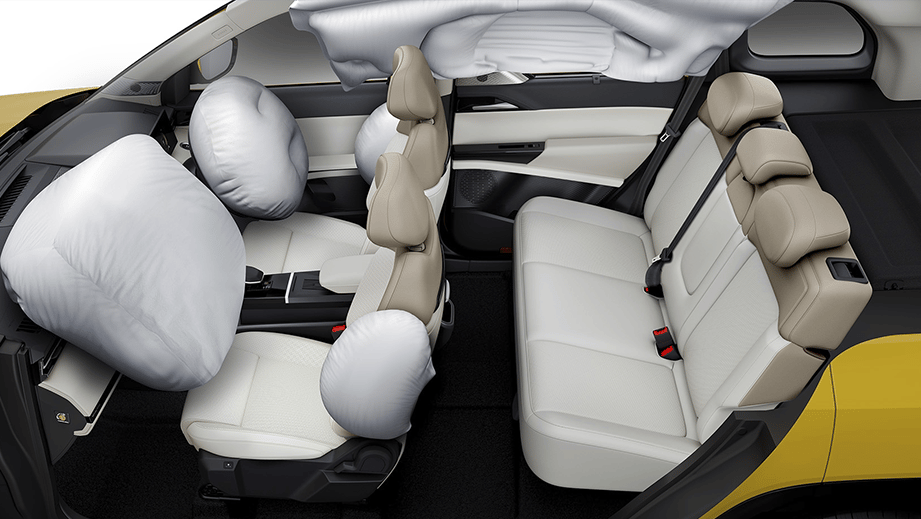
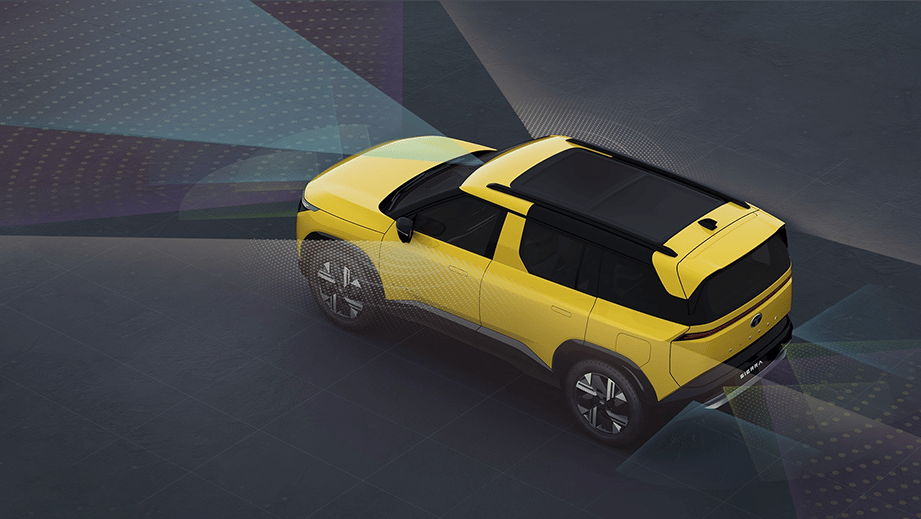
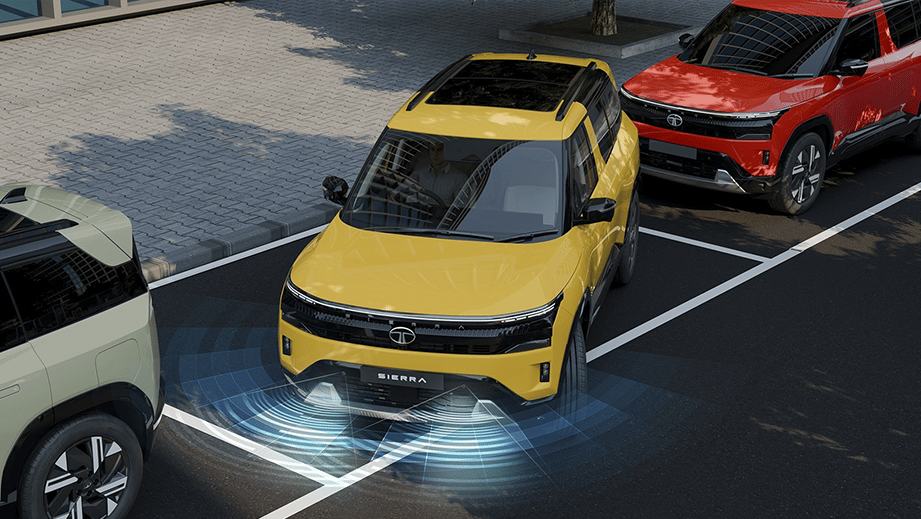
The Sierra backs Tata’s strong safety reputation with a five-star Bharat NCAP rating for both adult and child occupant protection. More importantly, safety hasn’t been treated as something reserved for the expensive variants, with the fundamentals such as six airbags, ESP and all-wheel disc brakes standard across the range. Higher trims build on this with Level 2 ADAS, making the Sierra one of the more convincing safety packages in the segment. There is very little here that would give a family buyer reason to complain.
Which Tata Sierra Variant Should You Buy?
| Engine Option | Transmission | Base Variant | Mid-Level Variant | Top Variant | Best Suited For |
| 1.5-litre NA Petrol | 6-Speed Manual | Smart+ | Pure, Pure+, Adventure, Adventure+ | Accomplished, Accomplished+ | Buyers who want the Sierra at a lower entry price and have largely relaxed driving needs |
| 1.5-litre NA Petrol | 7-Speed DCT | Not Available | Pure, Pure+, Adventure | Not Available | Those looking for an easy-to-drive petrol automatic for regular urban use |
| 1.5-litre Turbo Diesel | 6-Speed Manual | Smart+ Diesel | Pure Diesel, Pure+ Diesel, Adventure Diesel, Adventure+ Diesel | Accomplished Diesel, Accomplished+ Diesel | Drivers covering long distances regularly and looking to keep running costs in check |
| 1.5-litre Turbo Diesel | 6-Speed Automatic | Not Available | Pure Diesel AT, Pure+ Diesel AT, Adventure+ Diesel AT | Accomplished Diesel AT, Accomplished+ Diesel AT | Buyers who spend plenty of time on highways and prefer a relaxed, torque-rich automatic |
| 1.5-litre Turbo Petrol | 6-Speed Automatic | Not Available | Adventure+ Turbo | Accomplished Turbo, Accomplished+ Turbo | Those who want the quickest and most refined Sierra, with performance taking priority over efficiency |
CARS24 EXPERT PICK
Accomplished Turbo Petrol Automatic
This is the variant we'd recommend to buyers who want the Sierra at its best without stretching all the way to the top trim. What you get:
- The 160PS turbo-petrol engine with the 6-speed torque-converter automatic
- Ventilated front seats, powered driver’s seat and leatherette upholstery
- Level 2 ADAS with adaptive cruise control on the turbo-automatic
- Dolby Atmos audio, wireless charging and a head-up display
- 19-inch alloy wheels and a more premium overall cabin experience
It costs more than the Adventure+ Turbo, but the additional equipment is genuinely useful and the upgrade is easier to justify. The Accomplished+ adds the third screen, powered tailgate and a few more convenience features, but most buyers can comfortably skip those. For us, the Accomplished Turbo is where the Sierra’s performance, features and price come together best.
Rivals
Hyundai Creta
The Hyundai Creta has been dominating the segment ever since it made its debut in the Indian market and not only offers a great package in terms of looks, interior comfort and features but is also known for its higher resale value and after-sales support. While the Sierra gives a tough competition to the Creta with its large footprint, spacious cabin, 5-star safety rating and a long features list, the Creta manages to appeal to buyers with its premium packaging and proven track record.
Kia Seltos
The new Kia Seltos is a solid option for anyone looking for a sorted and practical mid-size SUV. With the launch of the new generation, the Seltos now not only boasts a new styling and updated cabin, but has also become safer and more suitable for family buyers. Just like the Creta, the Seltos has an edge over the Sierra when it comes to fit-finish levels, in-cabin experience, long-term reliability and more.
Maruti Grand Vitara and Toyota Urban Cruiser Hyryder
The Maruti Suzuki Grand Vitara and Toyota Urban Cruiser Hyryder are strong alternatives for buyers who prioritise fuel efficiency, reliability and a relatively stress-free ownership experience. Their biggest advantage over the Sierra is the availability of strong-hybrid powertrains, which make them particularly attractive for buyers with high city usage. The Sierra feels more substantial in terms of road presence, cabin space, features and overall performance.
Skoda Kushaq and Volkswagen Taigun
The Skoda Kushaq and Volkswagen Taigun appeal more strongly to buyers who place driving dynamics, turbo-petrol performance and solid road manners high on their priority list. Both feel more compact and less spacious than the Sierra, but their steering, chassis balance and engine-gearbox combinations make them more engaging to drive. The Sierra counters with a roomier cabin, stronger road presence, more features and a broader powertrain range.
Final Verdict
The new Sierra matters because it shows how far Tata Motors has progressed. The old name creates attention, but the new car does not depend on nostalgia once you start evaluating it seriously.
The Sierra deserves serious consideration if space, ride comfort and road presence sit high on your priority list. It is especially convincing as a family SUV because it has enough rear-seat width to carry five adults properly and enough boot space to handle their luggage.
The turbo-petrol automatic would be my recommendation for buyers with moderate annual running. It gives the Sierra the performance and refinement the chassis deserves, and the torque-converter automatic should be easier to live with in traffic than an aggressive dual-clutch setup.
The Sierra's weaknesses are now less about basic engineering and more about execution. Fit and finish need to become consistent, refinement could improve and some of the controls remain unnecessarily complicated. Tata's after-sales reputation also continues to place an additional question mark over an otherwise convincing package.
That is why I find the Sierra encouraging rather than flawless. Tata no longer needs to prove that it can design a desirable SUV or tune one well for Indian roads. The Sierra demonstrates that quite convincingly. The next challenge is making sure every customer receives the same quality of car and the same confidence throughout the ownership experience. If Tata can deliver that consistently, the Sierra has everything required to become much more than a successful comeback for an old name.
- Exterior
- 4.5 / 5
- Infotainment
- 4.0 / 5
- Performance
- 3.5 / 5
- Safety
- 4.5 / 5
What works
- Space and comfort: The Sierra makes excellent use of its footprint. The long wheelbase, wide cabin and upright roofline create enough space for five adults, and the rear seat is considerably more usable than in many midsize SUVs. Add the large boot and it works very well as a family car.
- Ride quality: This remains one of Tata's strongest areas. The Sierra absorbs poor roads with confidence and feels particularly composed as speeds rise. Even the top variants on 19-inch wheels manage bad surfaces surprisingly well, although the smaller wheel options should be better still.
- The overall package finally feels complete: Design, cabin ambience, equipment, performance and road manners come together better here than in most previous Tata products. The Sierra doesn't depend entirely on one standout quality to justify itself.
Worth knowing
- Fit and finish need more consistency: Some cars feel properly put together, while others have shown uneven panel gaps, poorly seated trim and minor quality inconsistencies. Tata's problem isn't its ability to make a good Sierra; it is making every Sierra equally good.
- Refinement could be better: The diesel remains quite audible, and road and tyre noise on the 19-inch wheel variants reduce the sense of isolation inside the otherwise premium-looking cabin.
- Tata ownership remains a question mark: The Sierra itself is promising, but Tata's inconsistent service experience and history of electronic niggles cannot simply be ignored. For many buyers, this will matter as much as what the car is like during a test drive.