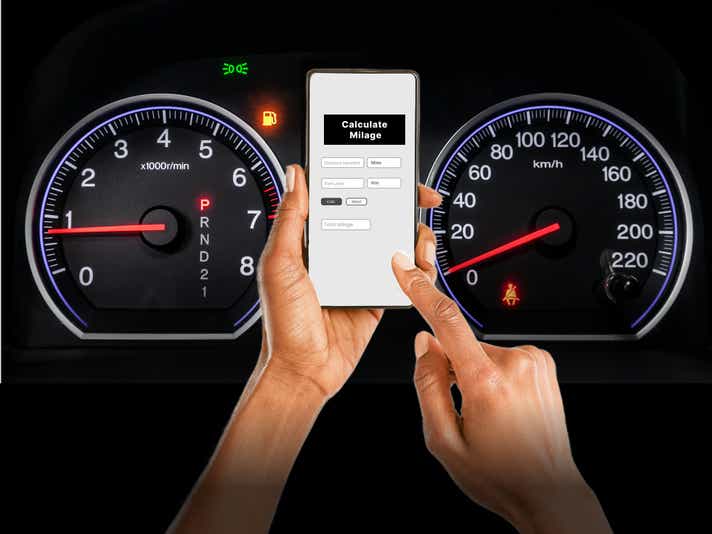

The first and foremost point Indian car buyers want to know about is the car’s mileage. Because everyone wants to understand how much the running cost of a car would be if they purchase it. A car’s running costs comprise two components - fuel consumption and service costs.
Thus, if you are wondering how to check the mileage of a car? Here we present you a comprehensive guide on calculating the average of your car by simply following basic steps.
Become a part of the official Cars24 auto community; CLUTCH, where we host lively auto discussions, updates, and more.
Importance of Understanding Your Car’s Mileage
All the cars that are launched in India come with an ARAI fuel efficiency figure. A car’s ARAI mileage is a highly optimised number and does not go well with the real-world mileage of the car. The reason behind this is the unrealistic conditions under which the vehicles are tested.
A car’s fuel consumption is a crucial thing to understand because it will not only give you a realistic estimate of how many kilometres it will cover on a single tank of fuel (or, if it’s an electric vehicle, how many kilometres it will cover until you have to recharge the battery), but also how it will impact your monthly and annual budget.
It's important to know how to calculate mileage as it gives you a good idea of the distance your car can cover for every litre of fuel. With this, you can also calculate how much you might have to spend on fuel. When it comes to selling your car, knowing accurate mileage can fetch you a good value.
With increasing fuel prices, it is important to understand how to extract maximum mileage from your car. Given all that, how do you calculate your car’s mileage accurately? What can you do to improve your car’s mileage? And does your driving technique affect your car’s mileage? In our guide on how to calculate your car’s efficiency, we will answer all those questions, and more.
Before anything else, let’s first understand what car mileage is.
What is Car Mileage?
In layman's terms, car mileage indicates the fuel efficiency of a vehicle. It is nothing but the distance a car runs in one unit of fuel for combustion engines. The measurement units used can be different for different regions of the world. For electric vehicles, the efficiency is measured as the distance travelled in one unit (kWh) of electricity.

Internal Combustion Engines
For internal combustion engines (ICE), the measurement units used are kilometres/litre (kmpl), miles/gallon (US/UK), litres/100 km or gallons/100 miles.
Electric Vehicles
For electric vehicles (EVs), the measurement units used are - kilometres/kWh, Miles/kWh, kWh/100 km or kWh/100 miles.
ARAI Certified Fuel Efficiency Figures vs. Real-World Mileage
As we mentioned earlier, all cars in India are thoroughly tested and homologated by the Automotive Research Association of India (ARAI). ARAI test the cars for their efficiency under strict testing protocols and then gives them an official fuel efficiency figure. However, ARAI car mileage is optimised and does not reflect the real-world mileage of cars.
For example, Maruti Suzuki Swift’s ARAI-certified fuel efficiency is 24.8 kmpl, but in real-world driving conditions, the mileage obtained by owners falls between 14 kmpl in city driving conditions and about 20 kmpl on highways. If someone drives the car with a very light foot and without turning on the AC, maybe they can touch the ARAI figure; otherwise, it is not possible to always obtain ARAI mileage.
1) The ARAI test is performed using a chassis dynamometer, which aims to simulate the Indian Driving Cycle (IDC) to test the cars in conditions as close to the real world as possible. The test tries to achieve this by taking into consideration several forces that act upon a car in actual conditions (like inertia). However, the simulation is not a close match for the actual driving conditions. That’s why the fuel efficiency figures for a car tested on a dynamometer don’t entirely tally with real-world figures.
2) The ARAI test has a duration of a mere 19 minutes for a distance of 10 kilometres with the simulated city and highway road conditions on a dynamometer at an average speed of around 31 kmph. The speeds do not exceed 90 kmph. Naturally, these are hardly representative of real-world driving conditions, and this is another reason why ARAI fuel efficiency figures differ from real-world figures.
All the same, car manufacturers continue to use ARAI-rated figures because they bring a certain level of uniformity to all the cars on sale, and hence it becomes easier to compare and evaluate choices.
How to Calculate the Average of Your Car
One of the most reliable ways to calculate your car’s mileage involves a straightforward process that’s easy to perform. However, to get the accurate mileage in city, on highways and mixed driving conditions, you have to perform the test a total of three times. Follow these steps to get accurate car mileage.

1. Fill up your car’s fuel tank to the brim.
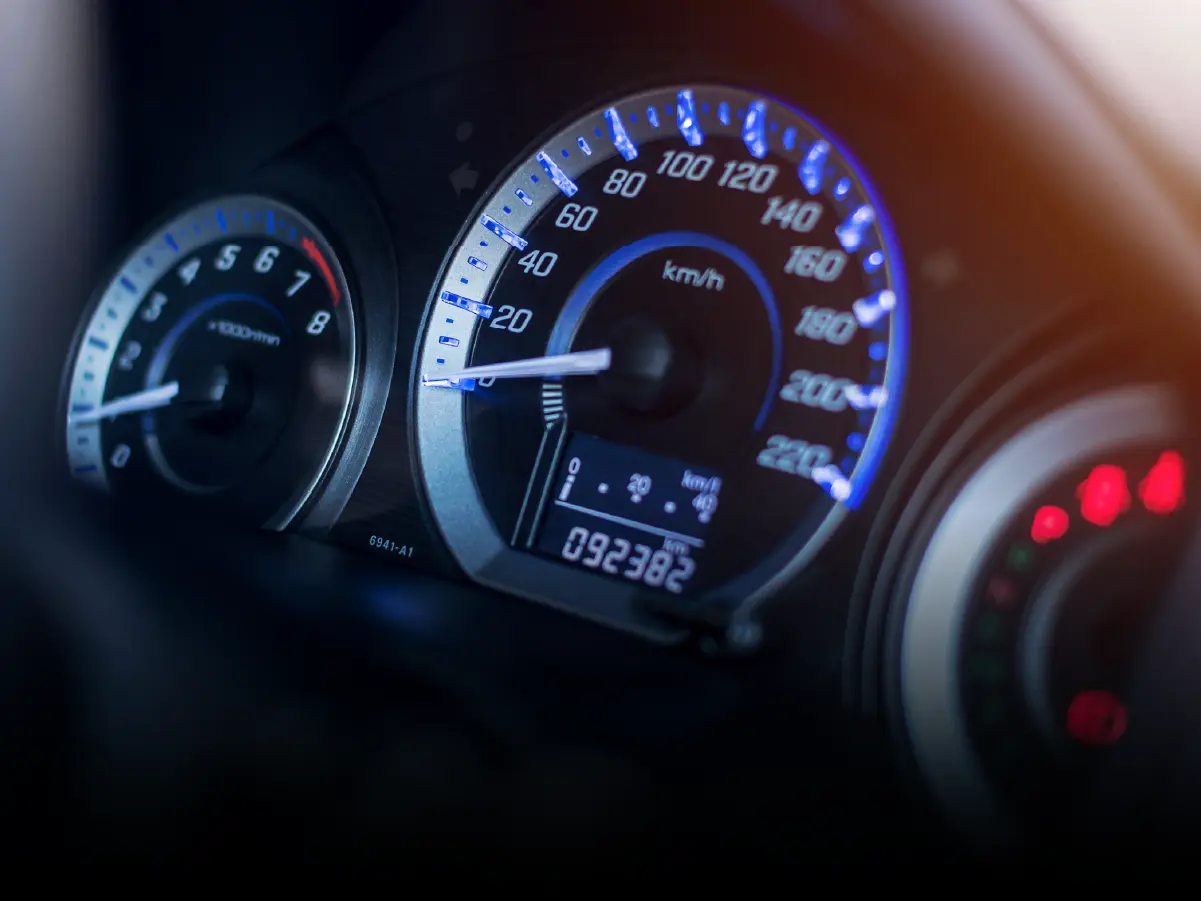
2. Reset your car’s trip meter. This will allow you to track the distance travelled during this test cycle.
3. Now, to get the mileage in city driving conditions. Drive the car as usual as you would during your regular commuting days. You have to drive for 200 km to get an accurate fuel efficiency figure.
4. Now, refuel the car till the brim and note down the amount of fuel that went inside the tank.
5. To get the highway mileage figure, just drive up to 200 km and then refuel. Note down the amount of fuel filled.
6. Now you should drive 100 km in the city conditions and 100 km on the highways to get accurate fuel efficiency in mixed driving conditions.
7. Finally, you have to do a simple calculation and get an accurate car mileage figure. Just divide the amount of fuel consumed by 200 km.
For example, if you refuelled your car’s tank with 12.5 litres of fuel, your car’s mileage would be 200/12.5 = 16 kmpl.
City Mileage: As we go through the data and user reviews across the internet, we can say that most cars powered by a 1.2-litre petrol engine deliver around 11-12 kmpl in city driving conditions.
Highway Mileage: Similarly, a car powered by a 1.2-litre petrol engine can deliver around 18 kmpl on the highways with lower load. However, the throttle inputs have to be light to get high mileage on the highways.
Mixed Mileage: The range of mixed mileage of a car can be wide, as one can counter heavy traffic during city rides and low to no traffic on the highways, or vice versa.
Formula to Calculate a Car’s Mileage
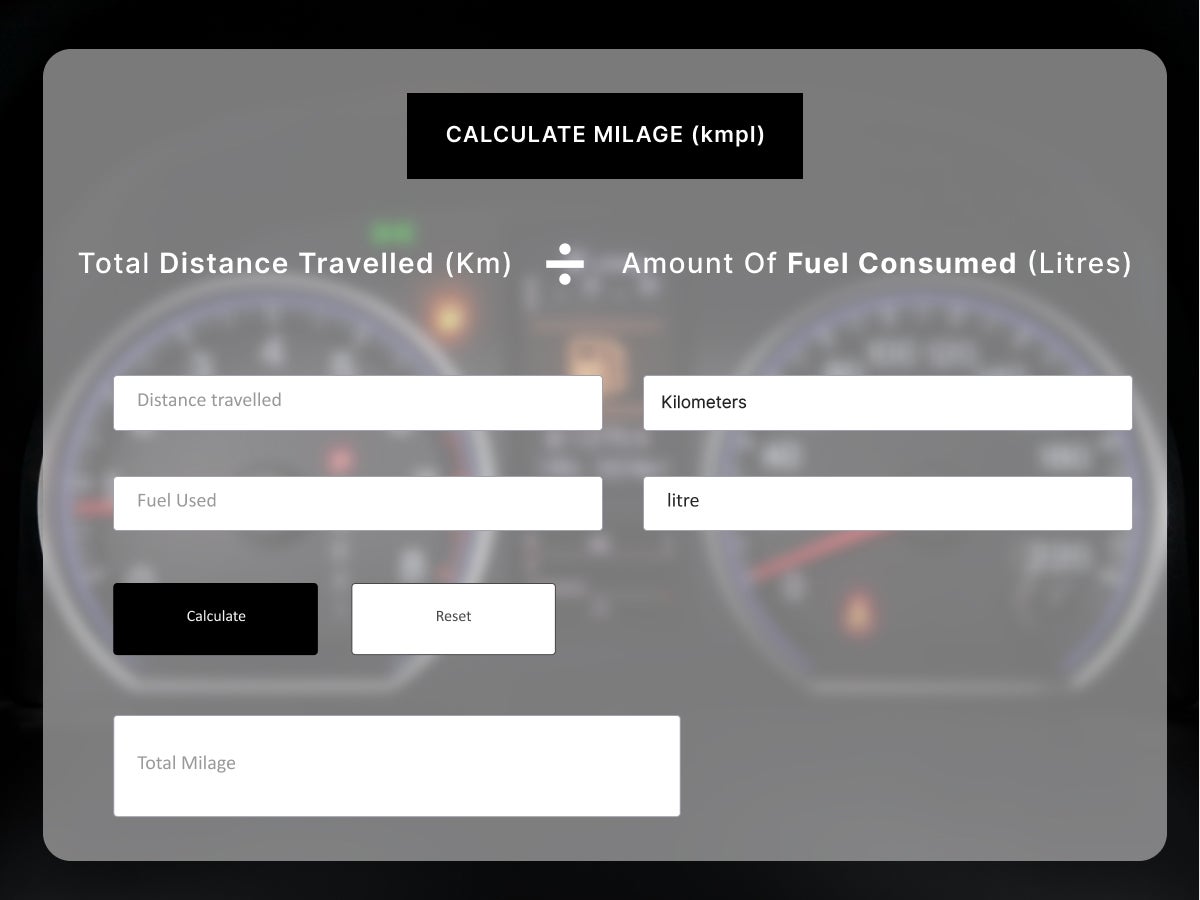
The formula to calculate mileage is as follows:
Total distance travelled (km) / amount of fuel consumed (litres) = Fuel Efficiency/Mileage (kmpl)
Tips for Accurate Mileage Calculation
While conducting fuel efficiency runs, there are a few things to keep in mind, namely:
- Make sure you drive your car normally, as you would do on a daily basis
- Don’t try too light-footed driving as you might get highly optimised mileage, which can be troublesome when higher fuel bills turn out to be greater than your calculations
- Be sure to fill the fuel tank to the brim to get precise measurements
- Ensuring your car is well-maintained and serviced is also a key factor. This is a practice that should be adhered to even when you aren’t conducting fuel economy tests
- Your tyre pressure should be at the manufacturer-recommended numbers
Why is it Important to Calculate Your Car’s Mileage
Having a clear understanding of how much fuel your car consumes in city, on highways and under mixed driving conditions can help you plan your finances. Here are other benefits of calculating your car’s mileage:
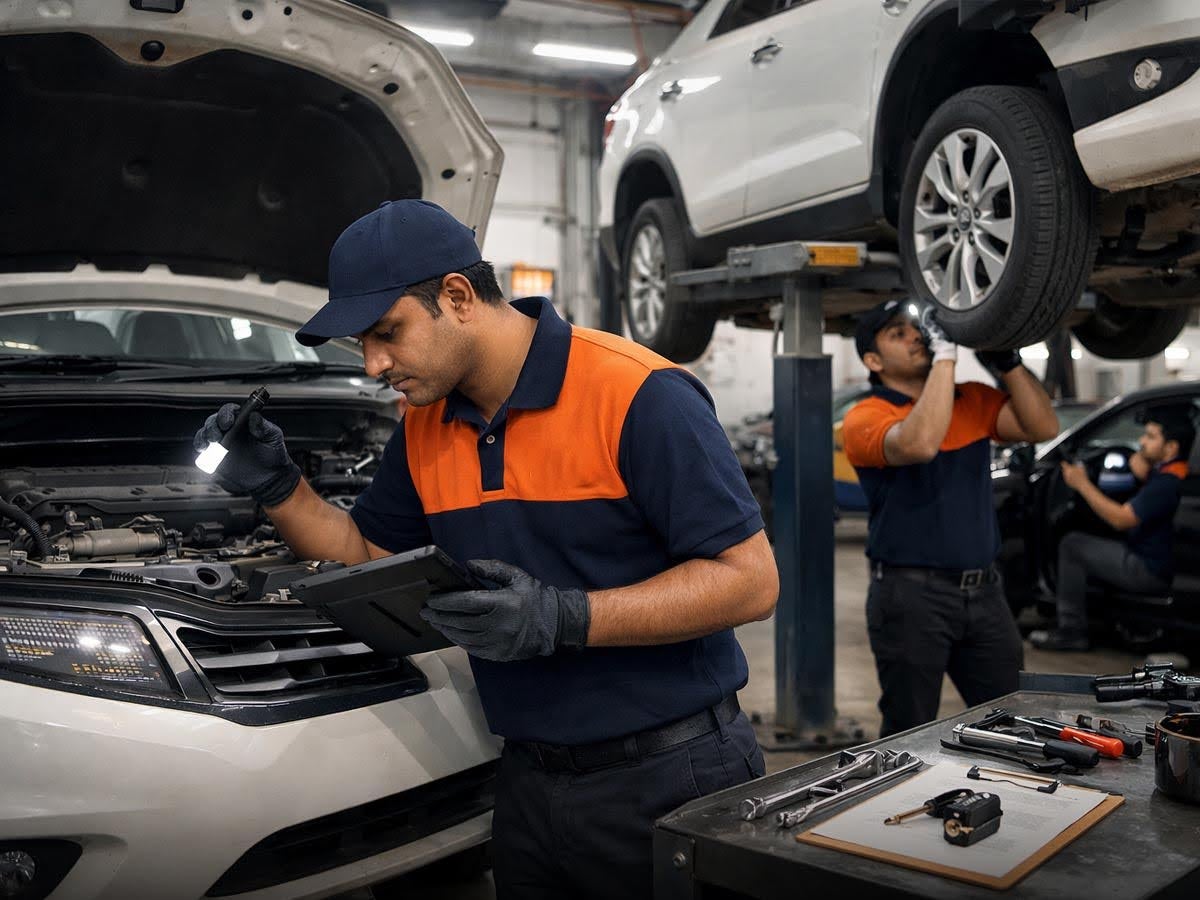
1) It will get you into the habit of identifying your car’s fuel consumption over a longer period of time. This will be useful to spot an issue early if the fuel consumption drops unexpectedly. It could mean that there’s something wrong with your car’s engine, and a quick visit to your car technician will be able to spot the problem and help rectify it.
2) Monitoring your car’s average is useful when evaluating the impact of different fuel types on your car’s performance.
3) If you notice drastic variations in your fuel consumption and there’s nothing wrong with your engine, then it could mean that your driving habits need optimising.
Factors Affecting Car Mileage
There are plenty of factors that affect the kind of mileage a car delivers. These factors include:
- The first and foremost is the weight. If you carry passengers more often, and the boot space is filled with luggage, then your car will deliver lower mileage.
- Tyre air pressure also affects the fuel efficiency of your car. Lowering the tyre pressure leads to increased fuel consumption due to higher drag.
- On a daily basis, your driving habits affect the fuel efficiency of your car. If you frequently rev up your car to overtake other vehicles, then your car’s mileage will drop drastically.
- Using an Air conditioner reduces your car’s mileage because the AC compressor derives its power from the engine itself.
- Driving in hilly areas also leads to lower fuel efficiency because driving uphill uses more energy.
- If you choose fuel with efficiency-increasing additives, it can lead to slightly better mileage.
- At the end, a properly maintained car delivers better mileage than one which is not serviced regularly.
Tips for Improving Car Mileage Through Driving Habits
Whether you are buying a new or a used car, driving habits do lead to a lot of fluctuations in the fuel efficiency of your car. Therefore, you must stay conscious about how you drive to get the highest possible mileage from your car. The most direct thing that impacts mileage are throttle inputs, gear shifts, braking, and AC.
Here are some essential tips to increase your car mileage just by tweaking your driving habits.
- Gentle acceleration and braking reduce fuel wastage. Even if you own a car with the best reported mileage figure, frequent high acceleration and jerky braking can drastically reduce your car’s mileage.
- Try to cruise at a constant speed whenever possible to get higher fuel efficiency. When an engine runs at a steady RPM, the fuel wastage reduces and efficiency boosted.
- Always turn off the engine when stopping for extended periods or stopping at a traffic signal for more than 20 seconds.
- Ensure proper tyre pressure that goes well with the manufacturer’s recommendation. Underinflated tyres increase fuel consumption.
- Always try to shift gears smoothly. Also, try not to drive at lower speeds in higher gears as this puts strain on the engine and the clutch.
- Use the AC judiciously as it increases engine load and decreases mileage.
- Reducing unnecessary weight in the car can lead to better fuel efficiency as the engine has to work less hard. The heavier your car is, the more fuel it will consume.
- No one can avoid heavy traffic, but we can drive sanely with a light throttle in traffic to get as optimised fuel efficiency as possible.
- Some modern cars come with driving modes. So switching to ‘Eco’ or ‘Green’ mode can make the engine run more efficiently, leading to better mileage.
- Finally, a rule of thumb is to maintain your car well and get optimised mileage consistently.
Conclusion
With this, you have learned about how to calculate your car’s mileage and why knowing the fuel efficiency of your car can be useful in financial planning and assessing the overall condition of the vehicle. Also, you understood how driving habits affect the fuel efficiency of a car and also keep the wear and tear on the lower side.
In a country as sensitive to prices as ours, it’s important to ensure that your car is as efficient as possible. While it’s true that there are a few factors influencing a car’s fuel economy that are out of our control (like its shape and its overall weight), there are quite a few things we can do that are within our control to help improve a car’s mileage.