How Indians Are Paying Traffic Challans in 2025: Digital vs Offline Trends
- 1UP accounts for 21% of all traffic challans in India as per Cars24 data
- 2Goa leads in challan payment rate at 87.30%, Telangana trails at just 2.99%
- 3Cars24 platform processes significant challan payments across Tier 1 states
- The Scale of Traffic Challans in India
- Digital vs Offline: Where Does India Stand in 2025?
- How Are Indians Actually Paying Their Challans in 2025?
- The Tier 1 vs Tier 2 State Divide
- Why Pendency Remains a Big Problem
- What This Means for Used Car Buyers
- The Road Ahead: What 2025 Looks Like for Challan Payments
- Final Thoughts
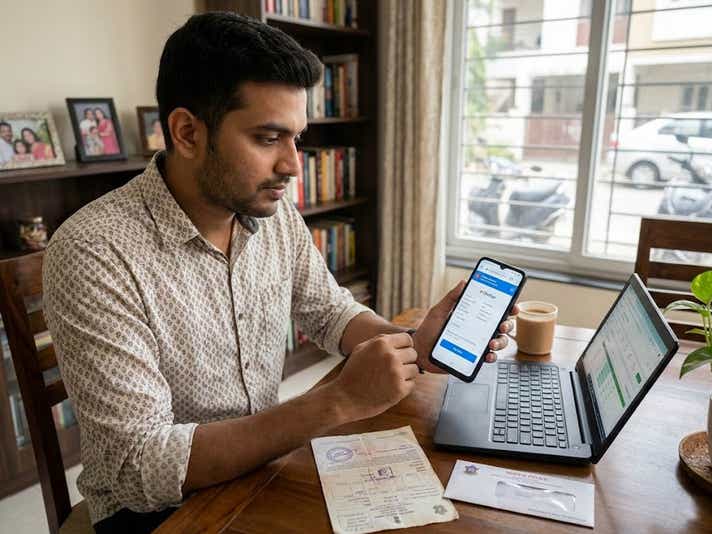
Traffic challans in India have come a long way from paper receipts and long queues at traffic police offices. In 2025, paying a traffic challan in India is increasingly a digital-first experience. Whether you got a speeding ticket in Delhi, a signal-jumping notice in Mumbai, or a traffic challan in Maharashtra for not wearing a seatbelt, you can now settle it from your phone in minutes.
But how much of India has actually made the shift to digital? And which states are leading, which are lagging, and what does this mean for the average driver? As per Cars24 data, the picture is both encouraging and uneven. Let us break it down.
The Scale of Traffic Challans in India
Before we talk about how Indians are paying, it helps to understand who is getting challaned the most.
As per Cars24 data, Uttar Pradesh alone accounts for 21.04% of all traffic challans issued across the country. Delhi follows at 11.51%, Tamil Nadu at 10.90%, and Haryana at 9.02%. Together, just four states make up nearly 60% of all challans in India.
| State | % of Total Challans |
| Uttar Pradesh | 21.04% |
| Delhi | 11.51% |
| Tamil Nadu | 10.90% |
| Haryana | 9.02% |
| Kerala | ~5% |
| Others (combined) | ~42% |
This concentration matters because it tells us where payment infrastructure, awareness, and enforcement all need to be strongest.
Digital vs Offline: Where Does India Stand in 2025?
India has made massive strides in digital payment infrastructure over the last decade. UPI alone processes billions of transactions every month. Traffic challan payment has quietly joined this digital wave, but adoption is far from uniform across states.
States Leading the Digital Payment Shift
As per Cars24 data, Goa has the highest challan payment rate in India at 87.30%. This means that out of every 100 challans issued in Goa, nearly 87 are being paid. Whether online or offline, compliance is clearly high. The small population and relatively higher income levels likely help.
Other states with relatively higher payment clearance tend to be smaller states or union territories where enforcement is more concentrated and population density makes follow-up easier.
States Where Most Challans Go Unpaid
On the other end, Telangana has a payment rate of just 2.99%. That means 97.01% of all challans issued in Telangana are still pending. Karnataka is not far behind, with 83.58% of its challans unpaid.
These numbers point to a serious gap in either awareness, infrastructure, or enforcement follow-through. If people do not know how to pay, or if there is no real consequence for not paying, challans pile up.
| State | % Challans Paid | % Challans Pending |
| Goa | 87.30% | 12.70% |
| Uttar Pradesh | High absolute volume | Significant pending stock |
| Karnataka | ~16.42% | 83.58% |
| Telangana | 2.99% | 97.01% |
How Are Indians Actually Paying Their Challans in 2025?
There are multiple ways to pay a traffic challan in India today. The method you use often depends on the state you are in, how tech-savvy you are, and how the challan was issued.
1. Official Government Portals
Most states have their own traffic police websites or are integrated with the Parivahan Sewa portal run by the Ministry of Road Transport and Highways. You can visit echallan.parivahan.gov.in, enter your challan number or vehicle number, and pay using UPI, net banking, or debit or credit cards.
This is the most official route and works for challans issued by traffic cameras, also called e-challans.
2. UPI and Payment Apps
Google Pay, PhonePe, and Paytm have integrated challan payment sections. For many users, this is the most convenient option because they are already using these apps for other payments. You can search by vehicle number and pay in a few taps.
3. Third-Party Platforms Like Cars24
Platforms like Cars24 have made challan discovery and payment even simpler, especially for used car buyers who need to make sure a vehicle is challan-free before purchasing. As per Cars24 data, Manipur shows a very high share of challans paid through the Cars24 platform at 63.62%, indicating strong platform trust in that region. In contrast, Maharashtra sees only 1.09% of paid challans going through Cars24, suggesting that other channels dominate there.
| State | % of Paid Challans via Cars24 |
| Manipur | 63.62% |
| Telangana (alt) | 29.20% |
| Maharashtra | 1.09% |
This variation is a reminder that no single platform dominates across India. User behaviour is shaped by local habits, state-level infrastructure, and awareness.
4. Offline Payment at Traffic Police Offices
Cash payment at traffic police booths or police stations is still very much alive in India. Smaller towns and rural areas with lower digital literacy often rely heavily on this mode. While it is convenient for some, it is not trackable in real time and does not update digital records immediately.
The Tier 1 vs Tier 2 State Divide
As per Cars24 data, 12 states contribute to roughly 80% of all challan volume in India. These are the Tier 1 states from a challan perspective.
| Tier | States | Contribution to Total Challans |
| Tier 1 | UP, Delhi, Tamil Nadu, Haryana, Kerala, Gujarat, West Bengal, Maharashtra, Rajasthan, Karnataka, Bihar, Andhra Pradesh | ~80% |
| Tier 2 | All remaining states and UTs | ~20% |
In Tier 1 states, digital payment options are more widely available, enforcement is more active, and platforms like Parivahan and third-party apps are better known. The focus of digital infrastructure investment should logically remain here, while Tier 2 states benefit from lightweight digital education and SEO-led awareness.
Why Pendency Remains a Big Problem
Even with all the digital options available, a large chunk of challans in India go unpaid. Why?
• Lack of awareness: Many drivers do not know they have a pending challan, especially if it was an e-challan issued by a camera, and the SMS did not reach them.
• Fear or confusion: First-time offenders may not know how to contest or pay a challan, so they ignore it.
• No immediate consequence: In many states, there is no mechanism to block vehicle renewals or transfers due to unpaid challans. This removes the urgency to pay.
• Cash-first mindset: A section of drivers still prefers to settle challans informally or at traffic checkpoints, bypassing the official system.
States like Telangana (97.01% pending) and Karnataka (83.58% pending) urgently need both awareness campaigns and stricter enforcement linkages, such as tying pending challans to vehicle fitness certificates or RC renewals.
What This Means for Used Car Buyers
If you are buying or selling a used car, pending challans are a real concern. As per Cars24 data, Uttar Pradesh leads in total challan amount at 24.94% of India's cumulative challan value. This means a second-hand car from UP is statistically more likely to carry a pending challan liability than one from a low-challan state.
Always check the vehicle's challan status before buying. You can do this on the Parivahan portal or through platforms like Cars24 that surface this data automatically. Unpaid challans can create legal and financial headaches for the new owner, especially during RC transfer.
The Road Ahead: What 2025 Looks Like for Challan Payments
Several trends are shaping how Indians will pay traffic challans going forward:
• FASTag integration: With FASTag now mandatory, highway violations can be directly linked to the FASTag account. Automatic deductions for challan payment may become more common.
• Unified app push: The government is working towards consolidating traffic services under DigiYatra and other unified platforms, which may simplify the fragmented payment landscape.
• State-level enforcement tightening: States like Tamil Nadu and Delhi are already linking vehicle documentation renewals with challan clearance.
• Platform adoption: Third-party platforms will continue to play a role, particularly in trust-heavy transactions like used car buying where challan history matters.
Final Thoughts
India is moving towards digital challan payment, but the shift is uneven. States like Goa show that high compliance is achievable. States like Telangana show that without enforcement follow-through and easy payment access, even the best digital infrastructure sits unused.
For everyday drivers, the message is simple: check your challans regularly, pay them on time, and use trusted platforms that give you a clear picture of your vehicle's compliance status. It saves money, avoids legal trouble, and keeps your vehicle documents clean.
Frequently Asked Questions
Expand all