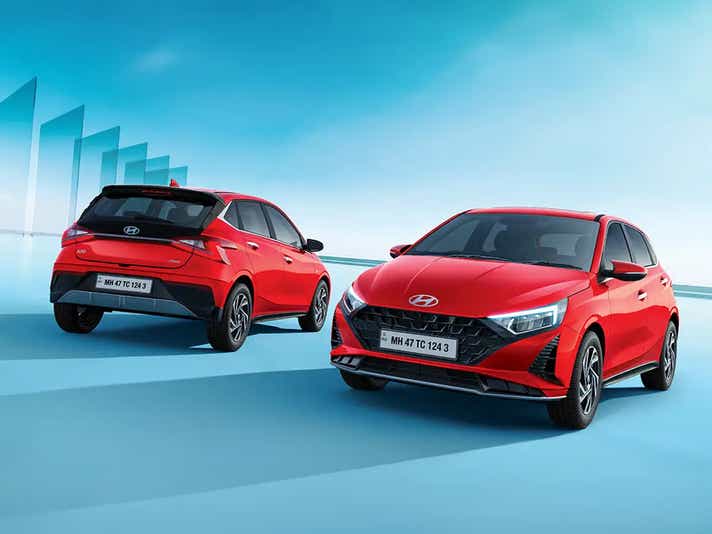
Hyundai i20 Mileage Comparison: Petrol vs Turbo Petrol
- 1Hyundai i20 mileage is very competitive across all engine options.
- 2This Hyundai i20 mileage comparison reveals actual daily running costs.
- 3Discover the real-world average and fuel efficiency figures today.
The Hyundai i20 is a premium hatchback perfect for urban families. It offers excellent comfort and exceptional daily practicality. You can choose between a naturally aspirated petrol engine and a turbo petrol engine. The standard petrol engine gets a manual or automatic transmission. The turbo version comes with a manual or dual-clutch automatic. This Hyundai i20 mileage comparison matters for your running costs. Buyers wanting simple convenience often prefer the standard petrol variant. Enthusiastic drivers focus on the excellent performance of the turbo.
Variant-Wise Price Difference
Before we proceed with the comparison, we must check prices. It is important to understand the premium for the turbo. The turbo option is currently available as the N Line. Let us look at the ex-showroom price differences today.
| Variant | 1.2L Petrol Price | 1.0L Turbo Price |
| Mid Spec | ₹7.75 lakh | ₹10.43 lakh |
| Top Spec | ₹10.34 lakh | ₹11.92 lakh |
There is a substantial premium for the turbo engine fitment because you only get it now in the N Line trims. These variants also include sportier cosmetic and mechanical upgrades.
Hyundai i20 ARAI Mileage Figures
Here are the official lab-tested figures for the vehicle. These numbers showcase the claimed Hyundai i20 mileage.
| Engine & Transmission | Official Mileage |
| 1.2L Petrol Manual | 20.35 km/l |
| 1.2L Petrol Automatic | 19.65 km/l |
| 1.0L Turbo Manual | 20.25 km/l |
| 1.0L Turbo Automatic | 20.25 km/l |
Disclaimer: ARAI mileage is not equivalent to real-world average. ARAI figures are tested under strictly controlled laboratory conditions. Real-road driving provides slightly varying fuel efficiency statistics.
Mileage vs Competitors
| Car Model | Petrol Mileage | Turbo Petrol Mileage |
| Hyundai i20 | 20.35 km/l | 20.25 km/l |
| Tata Altroz | 19.33 km/l | NA |
| Maruti Baleno | 22.35 km/l | NA |
The Maruti Baleno does not offer a turbo engine option. The Hyundai i20 provides a highly balanced overall performance. It offers a great mix of power and fuel efficiency.
On the other hand, if you require the strong torque of a diesel engine or heavy build quality, exploring the Tata Motors Altroz mileage comparison highlights an efficient 23.64 km/l on diesel and 26.2 km/kg on CNG.
Real-World Fuel Efficiency (City vs Highway)
Below is the real-world average of the Hyundai i20. This covers both city and open highway driving conditions.
| Condition | 1.2L Petrol | 1.0L Turbo Petrol |
| City | 12-14 km/l | 10-12 km/l |
| Highway | 16-18 km/l | 16-18 km/l |
In city driving conditions, the standard petrol delivers around 13 km/l. The turbo petrol returns a slightly lower 11 km/l. On the highway, the fuel efficiency gap becomes much smaller. The standard petrol offers approximately 17 km/l on open roads. The turbo variant stretches further with an impressive 17 km/l.
Real-world numbers differ from official ARAI testing figures. Lab tests completely exclude heavy traffic and air conditioning. City traffic heavily impacts your daily petrol efficiency. Smooth driving styles will significantly improve your highway average.
Beyond smooth driving habits, maintaining the right Hyundai i20 tyre pressure is important to obtain the right mileage on long road trips.
Performance Comparison
Beyond fuel efficiency, let us compare the performance specifications.
| Spec | 1.2L Petrol | 1.0L Turbo Petrol |
| Engine size | 1197 cc | 998 cc |
| Power | 83 bhp | 120 bhp |
| Torque | 114.7 Nm | 172 Nm |
| Transmission | MT / IVT | MT / DCT |
The drivability difference is very noticeable during highway overtakes. The turbo engine offers immense torque for pulling heavy loads. Naturally aspirated petrol engines are incredibly smooth and very silent. You will feel a thrilling power surge in turbo mode. This surge makes highway driving incredibly fun and engaging.
Cost Comparison
Running Cost
To understand the true running cost difference, we need data. We must use the real-world average, not just ARAI figures. We assume petrol costs roughly ₹100 per litre.
| Fuel Type | Real-World Mileage | Fuel Price | Cost Per Km |
| 1.2L Petrol | 14 km/l | ₹100/litre | ₹7.14 per km |
| 1.0L Turbo | 13 km/l | ₹100/litre | ₹7.69 per km |
When you factor in realistic conditions, the difference is marginal. Your running cost with standard petrol is roughly ₹7.14. The turbo running cost increases slightly to ₹7.69 per kilometre. The standard engine remains more economical for daily city users. The turbo petrol demands a slightly higher daily running budget.
Monthly and Five-Year Projection
Let us assume you drive 1,500 kilometres every single month. This reveals your total fuel expenses over a specific timeframe.
| Timeframe | 1.2L Petrol Cost | 1.0L Turbo Cost |
| Monthly | ₹10,710 | ₹11,535 |
| Yearly | ₹1,28,520 | ₹1,38,420 |
| 5-Year | ₹6,42,600 | ₹6,92,100 |
The fuel savings with the standard petrol are quite noticeable. You save roughly ₹825 every single month on fuel alone. The turbo engine requires a higher initial purchase price. You also pay slightly more for fuel over five years. However, driving enthusiasts gladly accept this minor extra cost.
Practical Ownership Tradeoffs
Whether you are buying a new or a used Hyundai i20, here are the things you need to consider before deciding between the powertrain options:
- Initial Purchase Cost
The turbo petrol variant demands a significantly higher upfront premium. You must pay for the advanced engineering and extra performance.
- City Drivability
The naturally aspirated engine offers very smooth power delivery. The turbo engine displays slight turbo lag in heavy traffic. This lag requires slightly more gear changes in the city.
- Maintenance and Care
Turbocharged engines require strict adherence to maintenance service schedules. You must use high-quality synthetic oils for proper lubrication. Standard engines are slightly more forgiving with basic routine maintenance.
- Long-Term Reliability
Naturally aspirated engines are mechanically simpler and highly reliable. Turbo engines involve complex components that need eventual replacement. Hyundai provides excellent warranty coverage for complete peace of mind.
Who Should Buy Which
Here is a quick summary for your final buying decision.
Choose 1.2L Petrol if:
- You primarily drive in heavy stop-and-go city traffic.
- You want a very smooth and predictable daily commute.
You prefer lower upfront purchasing and long-term maintenance costs.
Choose 1.0L Turbo if:
- You frequently drive on open highways for road trips.
- You crave thrilling acceleration and punchy overall engine performance.
- You enjoy the sporty styling elements of the N Line.
Frequently Asked Questions
Expand all