RC Transfer with CARS24: Timelines, Process, and What Sellers Should Expect
- 1CARS24 manages all RTO paperwork and documentation for a seamless RC transfer
- 2Seller Kavach protects you from challans and liabilities until the RC transfer
- 3Inter-state transfers take longer as they require an NOC and road tax payment
Selling a car through traditional offline channels often involves a labyrinth of paperwork that leaves many owners feeling overwhelmed and anxious. Many individuals struggle with the complex requirements of the Regional Transport Office because they lack the proper guidance or professional support.
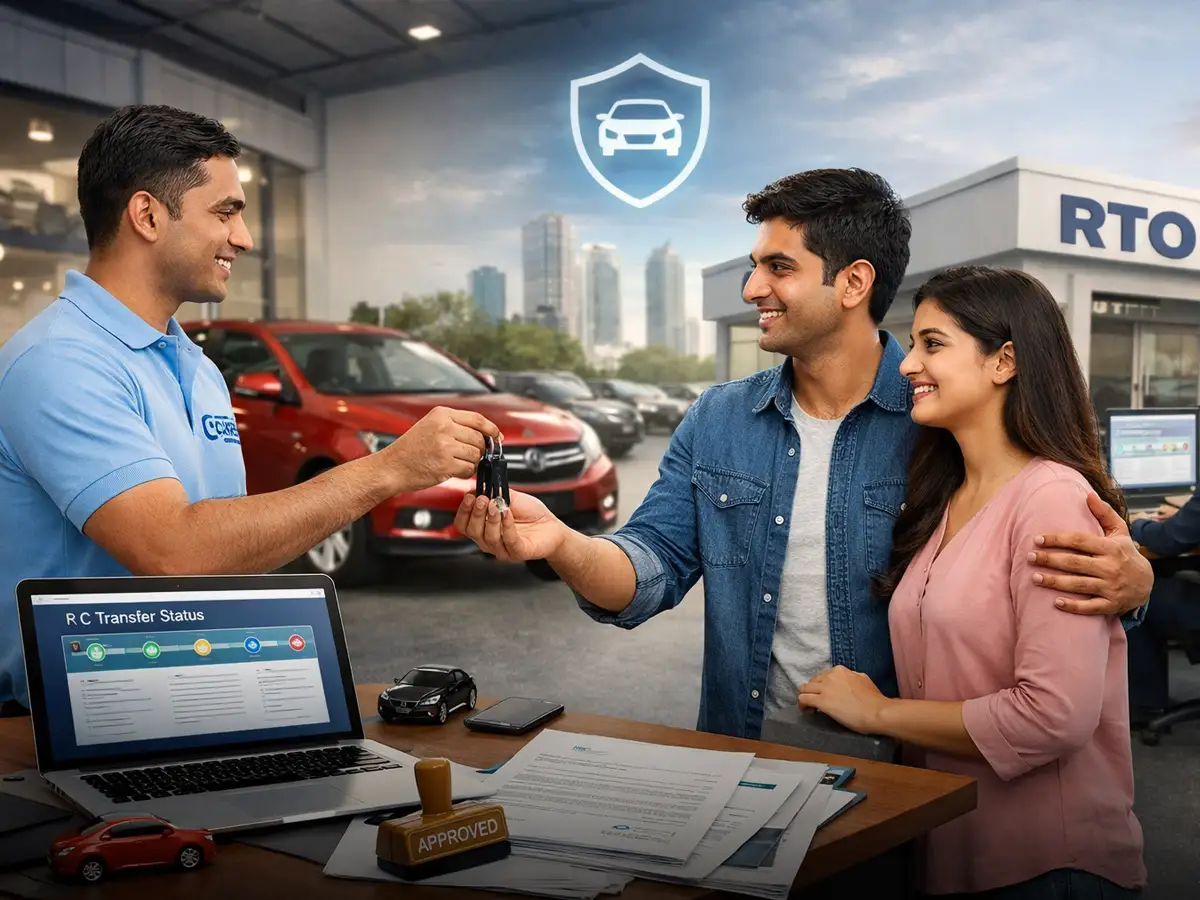
However, CARS24 has improved this cumbersome process by creating a streamlined approach to ownership transfer. Sellers do not need to chase the RTOs or agents, as our specialised teams manage the entire documentation workload. This level of shift to automated RC transfer tracking has brought much-needed relief to the Indian used car market.
RC Transfer Timelines
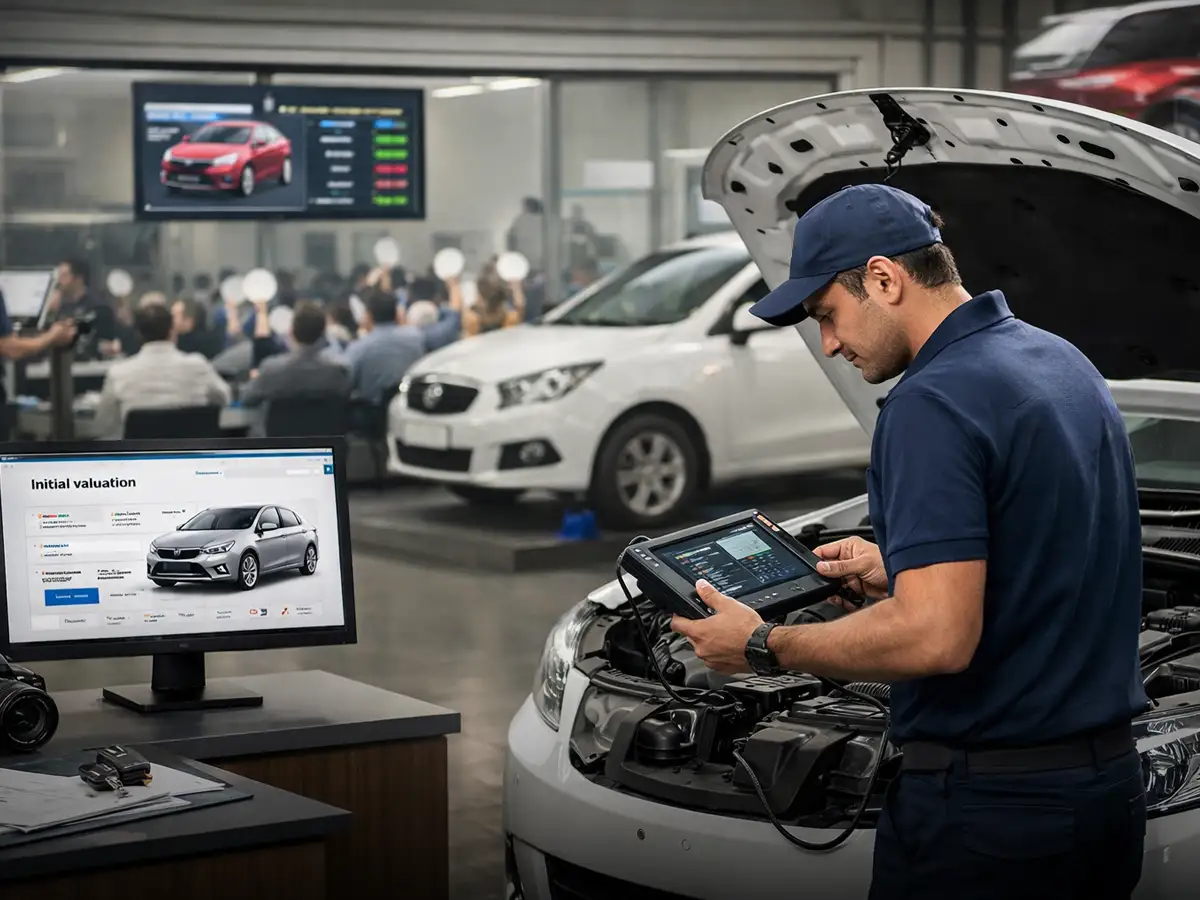
At CARS24, we have developed a centralised documentation hub that handles every file to ensure a high level of accuracy and oversight for every single transaction. While handing over the car, sellers are required to sign all the necessary RTO forms so that the paperwork remains ready for the future buyer. Hence, the actual timeline for an RC transfer remains variable because the process officially begins only after a buyer is found.
Therefore, the duration for which a car sits in our network depends on market demand and the specific model of the vehicle. Let’s first understand what is the process of ownership transfer before moving on with the timelines.
Complete Ownership Transition Process
The RC transfer process in India starts with the seller and buyer filling out Form 29 and Form 30. These forms, along with the original RC, valid insurance, pollution certificate and identity proof of both parties, are submitted on the Parivahan portal or at the local RTO. After document verification and fee payment, the RTO updates the ownership details in the system and issues a new RC in the buyer’s name, which usually takes two to three weeks.
In case of inter-state RC transfers, we ask the seller to provide us with a No Objection Certificate (NOC) from the previous RTO, as it is mandatory to apply for re-registration in the new state.
As you can see in this process, the actual submission of papers to the RTO occurs only when a buyer purchases the car from us. We get all the paperwork done from the buyer and then apply for the transfer.
Market Demand and Trigger Points for Ownership Transfer
The sellers’ cars are securely parked within our secure network of verified dealers while we wait for the perfect buyer to emerge. Therefore, the actual transfer of ownership can only be triggered once the new individual completes the purchase of the car. How quickly a car gets sold depends on the demand for that particular model and the overall condition of the car.
Some cars are sold faster than others in certain regions, while it can be vice versa in another region or state. Consequently, the time spent in our inventory can vary from a few weeks to several months. Furthermore, the RC transfer process remains dormant during this period because the law requires a specific buyer's details for the application.
Moreover, the sellers receive a notification as soon as the vehicle finds a new home and the legal transition begins.
Handling Hypothecation and Document Expiries
Accuracy in documentation remains the biggest factor in ensuring a smooth transfer through the government offices. Furthermore, a common bottleneck arises when the bank loan No Objection Certificate (NOC) expires because most banks or NBFCs provide NOCs with a 3 to 6 months' validity.
Accordingly, a seller must provide a fresh NOC if the car remains in our inventory beyond the three or six-month window. Moreover, incorrect signatures or expired insurance policies or PUCC certificates can also lead to temporary pauses in the RTO workflow. Therefore, we maintain a dedicated team to follow up on these expired documents to prevent any long-term delays for the sellers.
In addition to these issues, the presence of an active loan on the vehicle requires an additional step to clear the hypothecation before the ownership can change.
Mapping the State-Wise Speed of RC Transfers
Different states across India operate with varying levels of digitisation and administrative speed within their respective transport departments. Furthermore, metro cities like Delhi or Mumbai often process applications faster than smaller towns where manual record-keeping might still exist.
Therefore, a seller should expect a timeline that reflects the local efficiency of their specific RTO. In addition to this, seasonal holidays and RTO backlogs can occasionally extend the usual duration for a new RC to be issued. Consequently, the ideal timeline for a state-level transfer usually ranges between 15 days to 45 days under normal circumstances. Furthermore, our centralised system tracks these regional variations to provide the most accurate updates to our users.
Challenging Inter-State Transfer
The longest period of time that an RC transfer might take is that of interstate transfers. Because re-registering a car from one state to another requires completing a multi-layered legal process that requires patience and precise paperwork. Furthermore, the seller must obtain an inter-state No Objection Certificate from the original RTO before the car can be registered in a new territory.
Subsequently, the new buyer must pay the applicable road tax in their home state while the seller initiates a refund claim from the previous authority. Moreover, these cross-border transactions involve significant coordination between different RTO offices and can take several months to reach completion.
Therefore, the complexity of clearing road taxes and obtaining fresh registrations often creates a longer waiting period for the final paperwork. At the end, most RTOs require the physical presence of the car to get the engine and chassis numbers imprinted on the forms to complete the inter-state transfer.
Absolute Seller Safety with Seller Kavach
There is a significant gap between the day a car is sold and the moment the new ownership is legally recorded. We introduced ‘Seller Kavach’, an industry-first protection policy to address this specific period of uncertainty for our sellers. Sellers can enjoy total peace of mind because this unique shield covers them from any potential liabilities until the RC reflects the name of the buyer.
Seller Kavach provides a comprehensive protection against traffic violation challans, police summons, and accident claims that might arise during the transition phase. Illegal misuse of the vehicle becomes a worry of the past for those who activate Seller Kavach during the sale.
Furthermore, we provide legal experts for free representation in the rare event of a court notice related to the vehicle. We have covered liability worth ₹10 lakh through Seller Kavach and protected sellers from unwanted financial loss.
Conclusion
Managing the legal transition of a vehicle requires a dedicated team of professionals who understand the nuances of Indian transport laws. CARS24 has invested heavily in a centralised documentation system to provide a seamless and secure experience for every customer.
After selling a car, sellers can focus on their next big purchase while our experts handle the heavy lifting of the RTO process. We ensure the twin pillars of commitment to transparency and safety for every car owner in the country. Therefore, the era of chasing paperwork through dusty offices has officially come to an end for our valued users.
Frequently Asked Questions
Expand all