AC, Engine and Tyres: The Real Cost of Skipping a Used Car Inspection
- 145% of used cars have tyre issues - the most common PDI finding by far
- 2Engine and AC problems each appear in 25% of inspected vehicles
- 3Skipping a Rs. 3,000 PDI can lead to Rs. 1 lakh+ in surprise repairs
Most used car buyers negotiate hard on price and then skip the one step that protects them from far larger losses: a professional pre-delivery inspection. Our data shows that the most commonly found issues in used cars are tyre health (45%), engine problems (25%), AC condition (25%), and suspension issues (30%), all of which are invisible to the naked eye but extremely costly to repair. Skipping the inspection to save a few thousand rupees can cost you lakhs.
The Numbers: What's Failing and How Often
Our used car PDI data paints a clear picture of what buyers are actually inheriting when they skip inspections:
- Tyre health: 45% of used cars inspected have tyre issues, the single most common finding
- Suspension issues: 30%, a near-invisible problem with serious safety and cost implications
- Engine issues: 25%, from minor oil consumption to major mechanical wear
- AC condition: 25%, compressor wear, refrigerant leaks, or electrical faults
- Brakes: 15%, pads, rotors, and hydraulic system concerns
Accidental history: 25%, often correlated with suspension and alignment issues
Tyres: The Rs. 40,000 Problem You're Most Likely to Inherit
At 45%, tyre issues top the list. This seems minor, since tyres can be replaced. But consider: a full set of quality tyres for a mid-size sedan costs Rs. 25,000 to Rs. 45,000, depending on the brand and size. If the car you're buying has tyres with 20% tread remaining, that cost is coming very soon, and it should be priced into your negotiation or replaced before delivery.
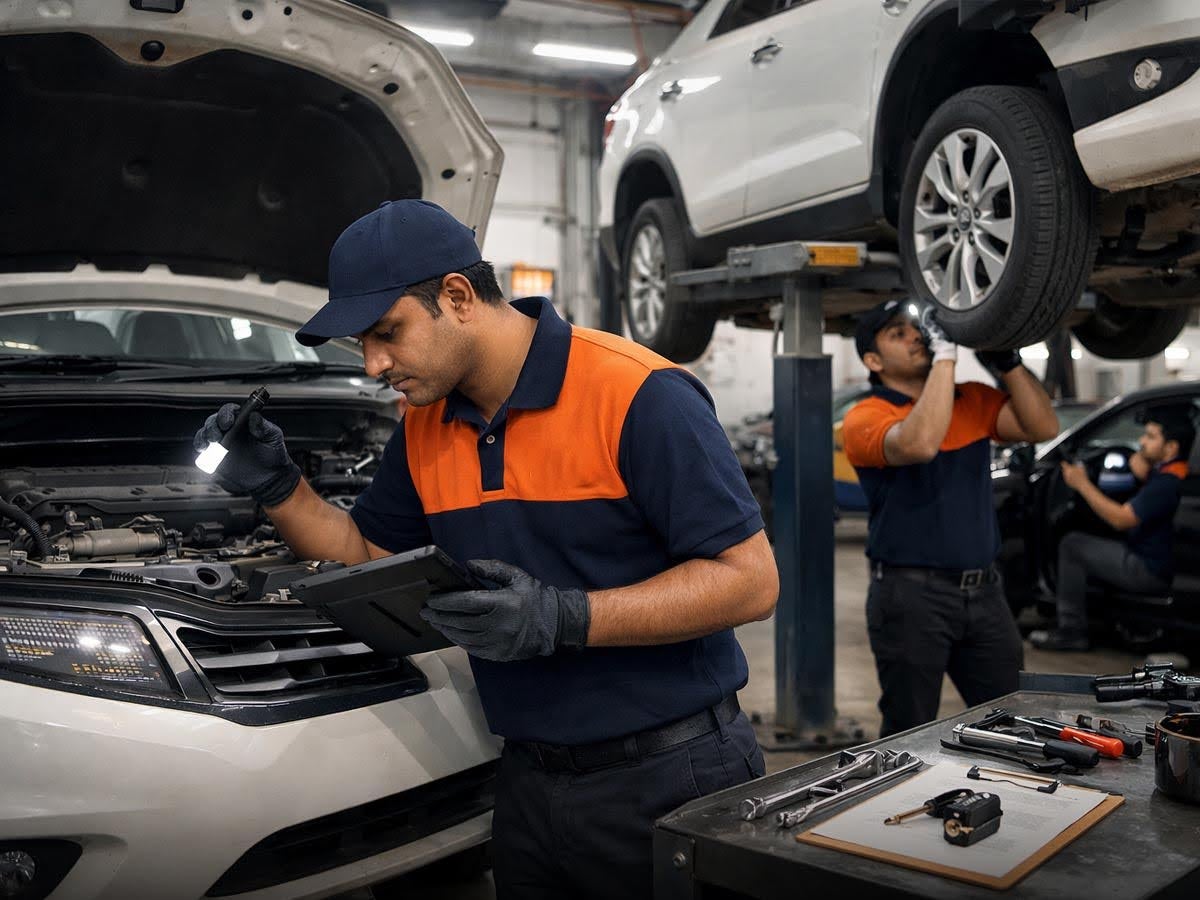
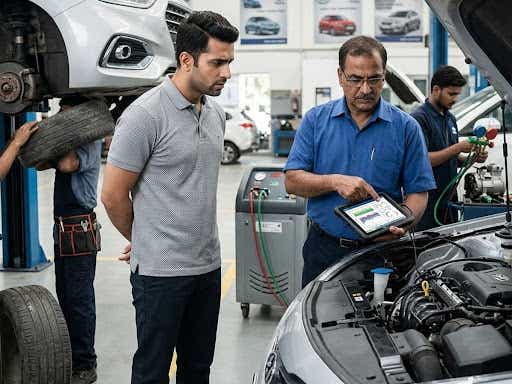
Inspectors assess tread depth, sidewall cracking, uneven wear patterns (which indicate alignment or suspension problems), and age. A tyre can look fine visually but be more than 5 years old, at which point rubber degradation makes it unsafe regardless of tread depth.
Suspension: The Hidden Safety Risk
30% of used cars have suspension issues, and these are almost never visible without lifting the car. Worn shock absorbers, compromised bushings, and damaged control arms affect handling stability, braking distance, and tyre wear. A car with bad suspension feels acceptable in normal driving, but becomes dangerous in emergency manoeuvres or on wet roads.
Suspension repairs are also expensive. A full suspension overhaul on a mid-size car can run Rs. 30,000 to Rs. 80,000 at a proper workshop. Skipping the inspection means you won't know about this until you're already the owner.
Engine and AC: The Big-Ticket Repairs
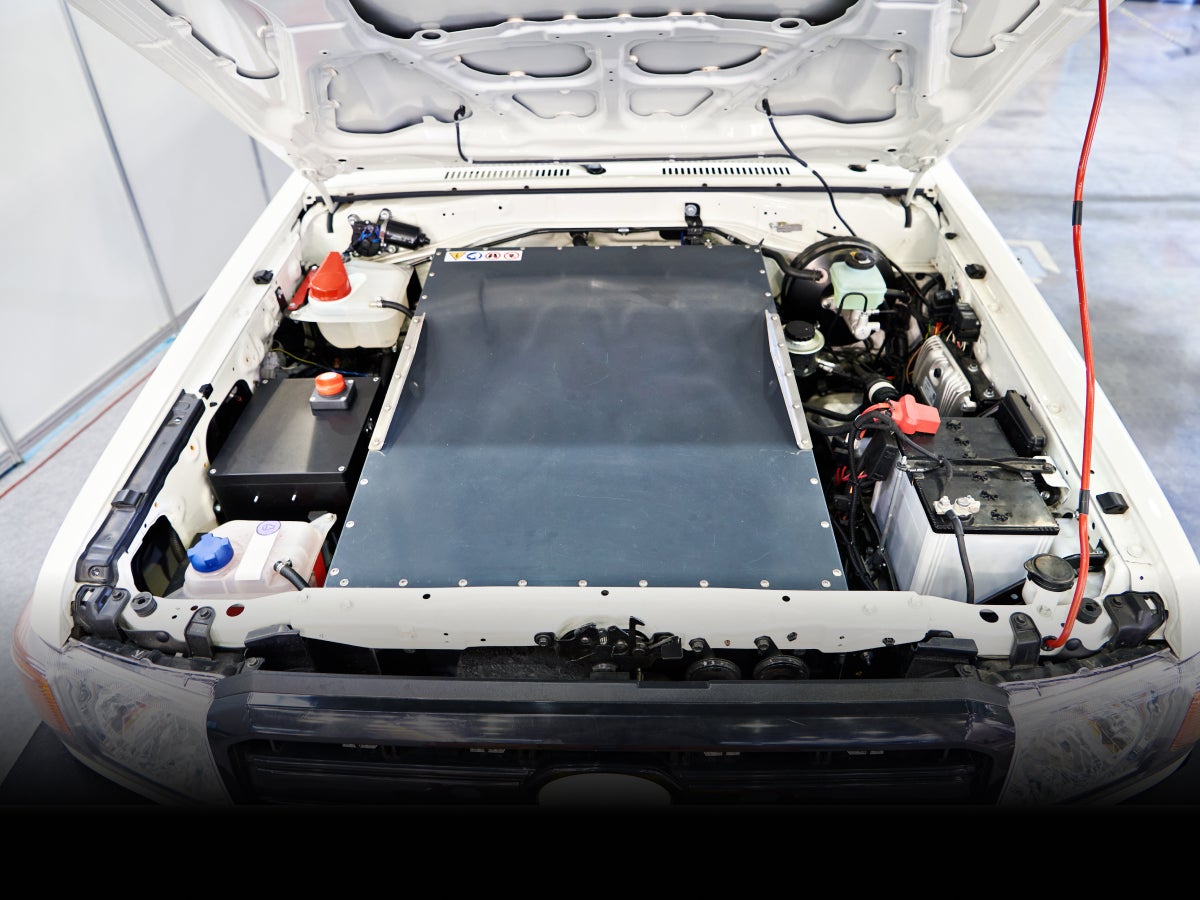
Engine issues at 25% range from oil leaks and excessive consumption to more serious problems like worn timing components or cooling system failures. A comprehensive PDI includes compression testing, oil analysis, and a full engine scan to surface what's lurking beneath. Engine repairs are the costliest of all, with major work running into multiple lakhs.
AC issues at 25% are particularly common in older vehicles. Compressor failures, refrigerant leaks, and blower motor problems are all costly repairs. AC compressor replacement alone can cost Rs. 15,000 to Rs. 40,000, depending on the vehicle. In a country where summer temperatures regularly exceed 40 degrees, a non-functional AC isn't a minor inconvenience.
What a PDI Actually Saves You
Consider this: a professional PDI costs a fraction of what any one of these repairs costs. If it uncovers tyre issues, you can negotiate the cost off the asking price. If it finds suspension problems, you either get them rectified pre-purchase or walk away. If it reveals engine wear, you avoid inheriting a depreciating money pit. The math is not complicated. An inspection almost always pays for itself many times over.
The Bottom Line
Given that 45% of used cars have tyre issues, 30% have suspension problems, and 25% each have engine and AC concerns, the odds of buying a problem-free pre owned car without used car inspection are very low. Treat the inspection not as an optional extra but as the most important step in the purchase process, more important than test-driving, and arguably more important than the price negotiation itself.
Frequently Asked Questions
Expand all