Used Car Red Flags - 7 Hidden Inspection Issues 45% of Cars Fail On
- 1Recent data shows forty-five per cent of used cars fail on critical tyre health
- 2One in four used vehicles possesses hidden engine defects or structural damage
- 3Digital odometer tampering affects twenty per cent of all inspected used cars
In India, if you are planning to buy a used car, it might seem like a game of high-stakes poker. The seller shows you a royal flush, which is nothing but a polished exterior, a clean interior, and a glowing sales pitch which mentions that it is the best used car you can pick. But beneath that fresh wax lies the reality of the vehicle’s history. You might end up finding engine issues, a dead battery, uneven tyre patterns, faulty electricals and whatnot.
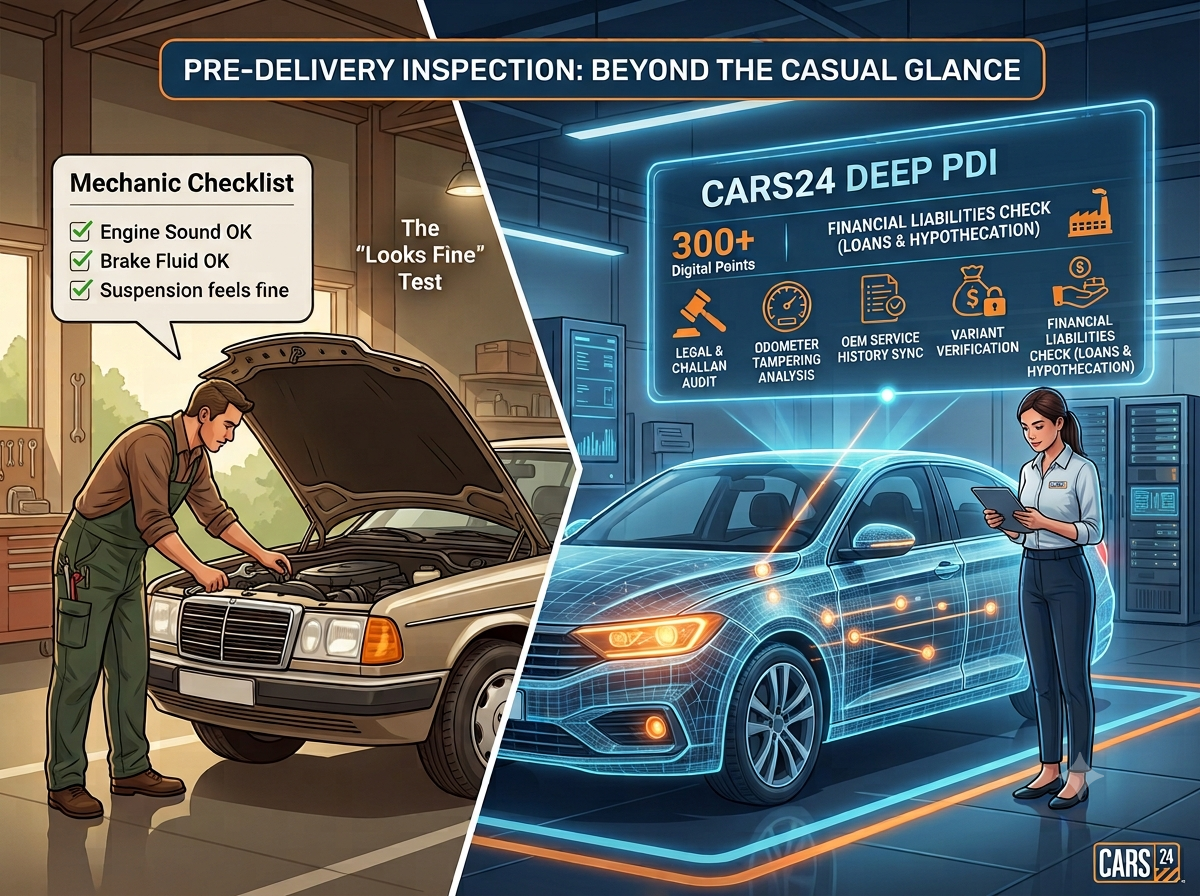
At professional Pre-Delivery Inspection (PDI) hubs, the data tells a sobering story. Nearly half of all used cars inspected fail on at least one critical health marker. If you’re browsing the second-hand car market, these might pose safety risks and financial traps.
Here are the seven most common red flags professional inspectors uncover in a used car before it reaches its next owner. These inspection issues are from Cars24’s internal inspection database.
1. Tyre Health has 45% Fail Rate
Tyres are the most common failure point we get to see. Around 45% of the used cars we inspected turned out to have some sort of issues with their tyres. Our car inspectors have found.
- Low tread depth - Over the years of usage, the tread depth reduces, and owners ignore this before selling their cars.
- Sidewall Cracks - They mostly occur due to age and UV exposure, even if the tread looks deep.
- Uneven Wear - A massive red flag for suspension or alignment issues.
- Manufacturing Dates - Tyres with over 6+ years of usage must be replaced because they are chemically compromised.
2. The Hidden Engine Issues
Of all the used cars that our inspectors have checked over the years, around 25% of them have some kind of underlying engine defects. In modern cars, it is not easy to identify engine-related issues without professional inspection.
Here are the common engine issues our inspected used cars have.
- Slow oil leaks masked by a recent engine wash.
- Head gasket seepages that only manifest after the engine reaches full operating temperature.
- Coolant contamination that signals a potentially catastrophic repair bill in your near future.
3. Structural Issues Due to Accidental History
It is not always simple to see a car as clean if its title is clean. Our internal data shows that 25% of used cars have met with accident in the past. And in most cases, the sellers do not reveal their accidental history. Inspectors use paint thickness gauges to find filler under the paint. They check the aprons, pillars, and trunk floors for weld marks that prove the car has been reconstructed rather than just repaired.
4. Odometer Tampering
This is perhaps the most cynical red flag. Roughly 20% of the cars we inspected show signs of odometer tampering. Modern cars have digital odometers, which are hard to spot with the naked eye.
But our car inspectors cross-reference the mileage with wear and tear on high-touch points like the brake pedals, gear shifter, seat bolsters, etc. In addition to these, the service history logs are also checked to spot the odometer discrepancies.
5. Failing Suspension System
If you end up buying a used car which has a floaty feeling while driving or makes a clunking noise over bumps, it’s likely part of the 30% of cars that have suspension issues. Cars with a failing suspension system might have blown struts, worn-out bushings, or leaking dampers.
6. Braking Inefficiency
Safety in used cars should not be an afterthought. But still about 15% of used cars fail on brake health. The brake issues include thinning brake pads, warped rotors that cause vibration, and old brake fluid that has absorbed moisture. These issues lead to increased braking distances, leading to compromised safety.
7. Electrical and Sensors Issues
Modern cars are computers on wheels with heavy reliance on electrical systems and sensors. In used cars, a Check Engine light can be cleared with a cheap scanner, only to reappear 50 kilometres later. Professional used car inspections use advanced OBD-II diagnostics to find stored codes that indicate failing oxygen sensors, faulty ABS modules, or airbag system errors that have been bypassed.
Final Thought - Data Doesn’t Lie
A used car might look like a million bucks on a listing site, but professional PDIs reveal that the perfect used car is a rarity. When 45% of cars are rolling on compromised tyres, and 1 in 4 has a hidden engine issue, purchasing a used car blindly can be a massive financial risk.
Before you sign the papers, remember - you aren’t just buying a car; you’re buying its previous owner’s maintenance habits. Make sure you know exactly what those habits were.
Frequently Asked Questions
Expand all