Volkswagen Virtus vs Hyundai Verna: Which Premium Sedan Should You Buy in 2026?
- 1The Hyundai Verna brings futuristic styling and Level 2 ADAS for complete safety.
- 2The Volkswagen Virtus sets the absolute benchmark for enthusiastic highway driving.
- 3Both these premium sedans offer generous boot space exceeding five hundred litres.
- Volkswagen Virtus vs Hyundai Verna: Overview
- Volkswagen Virtus vs Hyundai Verna: Features Comparison
- Space and Practicality Comparison
- Volkswagen Virtus vs Hyundai Verna: Engine & Performance
- Volkswagen Virtus vs Hyundai Verna: Mileage in the Real World
- Maintenance and Resale Value Comparison
- Volkswagen Virtus vs Hyundai Verna: Price & Value for Money
- Final Verdict: Who Should Buy What
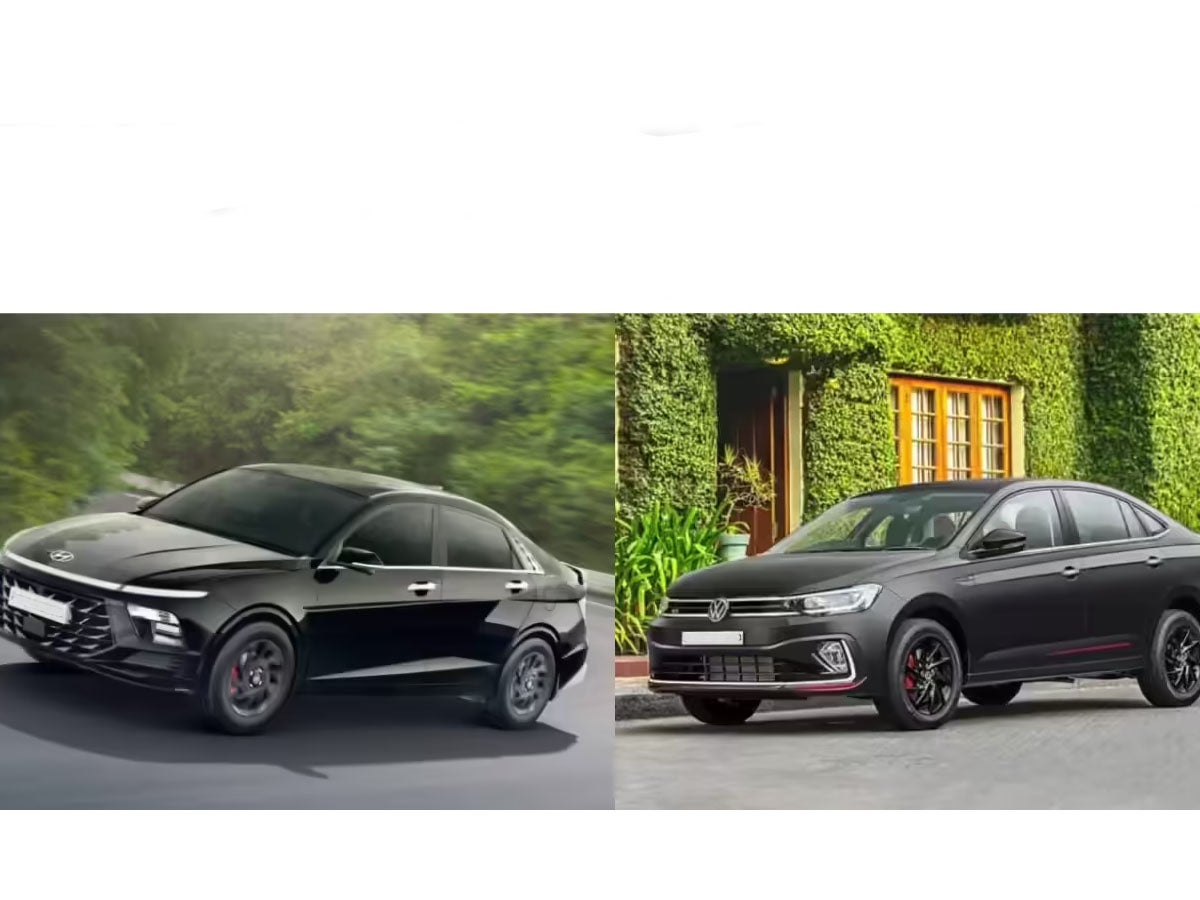
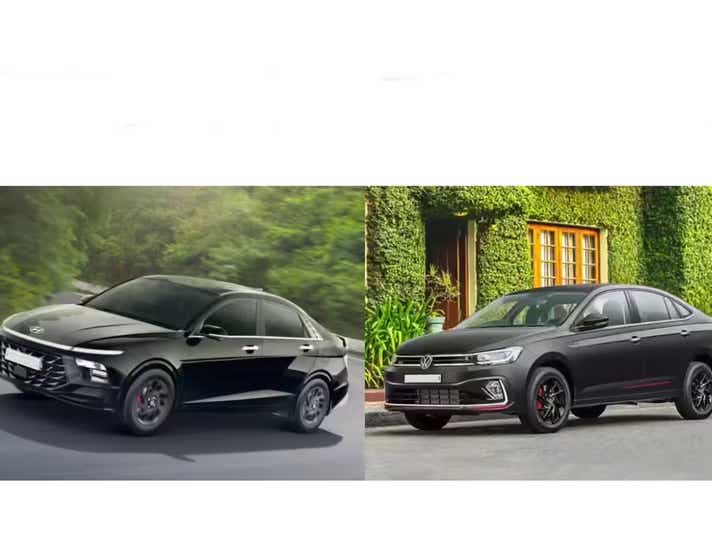
The premium mid-size sedan segment in the Indian market has witnessed a spectacular revival over the last couple of years. While SUVs have dominated sales charts, a dedicated set of buyers still prefers the low-slung stance, superior high-speed stability, and engaging driving dynamics that only a well-engineered three-box car can deliver. Popular players like the Honda City and Skoda Slavia continue to enjoy a loyal customer base, but two specific models are currently battling fiercely for the top spot; the Volkswagen Virtus vs Hyundai Verna has completely redefined what buyers expect from a modern sedan in terms of performance and technology.
The Volkswagen Virtus is widely celebrated for its timeless German design, incredibly robust build quality, and a chassis that enthusiastically begs to be driven hard around corners. It is the quintessential driver's car in this space. Conversely, the latest generation Hyundai Verna took a bold leap into the future with its radical, cyberpunk-inspired exterior and a cabin that resembles a luxury spacecraft. The Verna is heavily focused on pampering its occupants with segment-first technology and exceptional refinement. Understanding the nuances of the Volkswagen Virtus vs Hyundai Verna debate is crucial for anyone looking to invest in a premium family car that offers more than just basic point A to point B transportation. This comprehensive guide breaks down every critical parameter to help you make an informed decision.
Volkswagen Virtus vs Hyundai Verna: Overview
Summary: The Hyundai Verna wins in terms of outright feature innovation and rear-seat comfort, while the Volkswagen Virtus takes the crown for timeless styling and sheer driving pleasure.
Volkswagen Virtus: The Volkswagen Virtus is built on the heavily localised MQB A0 IN platform. Despite its high localisation, it does not compromise on the solid, reassuring thud that European cars are famous for. It is an elegant, well-proportioned sedan that ages gracefully. Its primary strength lies in its predictable handling and potent turbocharged engines, making it the perfect choice for buyers who genuinely love spending time behind the steering wheel. However, its interior, while logically laid out, can feel slightly functional and lacks the absolute visual flair seen in newer rivals.
Hyundai Verna: The Hyundai Verna approaches the premium sedan formula differently. It is meticulously designed to offer a soft, luxurious, and highly connected experience. Inside, it feels distinctly opulent with soft-touch materials and a dual-screen layout that mimics cars from segments twice its price. The Verna is exceptionally reliable for urban commuting and offers a plush ride quality that absorbs road imperfections brilliantly
| Specification | Volkswagen Virtus | Hyundai Verna |
| Price Range (Ex-showroom) | ₹11.55 Lakh to ₹19.40 Lakh | ₹11.00 Lakh to ₹17.42 Lakh |
| Engine Options | 1.0L Turbo Petrol, 1.5L Turbo Petrol | 1.5L NA Petrol, 1.5L Turbo Petrol |
| Performance (Max Power) | 115 PS to 150 PS | 115 PS to 160 PS |
| Mileage (ARAI Claimed) | 18.1 kmpl to 19.6 kmpl | 18.6 kmpl to 20.6 kmpl |
| Boot Space | 521 Litres | 528 Litres |
| Standout Features | Cylinder deactivation tech, 10-inch screen | Level 2 ADAS, heated seats, Bose audio |
Pros and Cons of Both Cars
Summary: The choice here boils down to your driving style. The Virtus is the definitive driver's choice, while the Verna is the undisputed king of the chauffeur-driven experience. The Hyundai Verna is the overall winner here for offering a more comprehensive, family-friendly package.
Volkswagen Virtus
- Pros: Exceptionally composed high-speed stability, timeless and understated exterior design, segment-leading ground clearance of 179 mm, and a brilliant 1.5L TSI engine option.
- Cons: The cabin plastics feel a bit scratchy in the lower half of the dashboard, and the lack of advanced driver assistance systems puts it slightly behind the curve.
Hyundai Verna
- Pros: Class-leading rear-seat legroom, an incredibly exhaustive feature list including heated and ventilated seats, a potent 160 PS turbo engine, and a comprehensive Level 2 ADAS suite.
- Cons: The radical exterior styling may not appeal to mature buyers, and the steering feedback feels disconnected when driving enthusiastically on winding roads.
Volkswagen Virtus vs Hyundai Verna: Features Comparison
Summary: Premium sedans are judged heavily on their equipment levels. In this aspect, the Hyundai Verna secures a clear victory by offering highly advanced comfort and safety technologies that its German rival currently misses out on.
| Feature | Volkswagen Virtus | Hyundai Verna |
| Ventilated front seats | Yes (Topline variant onwards) | Yes (SX Opt variant onwards) |
| Heated front seats | No | Yes (Turbo variants) |
| Electric Sunroof | Yes (Single-pane) | Yes (Single-pane) |
| Level 2 ADAS suite | No | Yes (Standard on SX Opt) |
| Fully digital instrument cluster | Yes | Yes |
| Premium Audio System | Yes (8-speaker setup) | Yes (8-speaker Bose system) |
Where Hyundai Verna edges out: The Korean sedan is an absolute technological powerhouse. It is the only car in its class to offer heated front seats alongside ventilation, which is a massive boon for buyers in colder northern regions. Furthermore, the inclusion of a comprehensive Level 2 ADAS suite adds a layer of active safety that includes adaptive cruise control, lane-keeping assist, and autonomous emergency braking. The Bose sound system also delivers a deeper, richer bass profile than its rival.
Where Volkswagen Virtus edges out: The Virtus focuses on perfecting the basics. While it lacks ADAS, its 10-inch infotainment screen is arguably crisper and suffers from fewer glare issues under direct sunlight compared to the Verna. The tactile feel of the steering wheel buttons and the satisfying click of the climate control sliders offer a slightly more premium mechanical feedback.
Space and Practicality Comparison
Summary: Both vehicles offer cavernous interiors, but the Hyundai Verna claims the win here due to its longer wheelbase, which translates into unparalleled rear-seat comfort for passengers.
| Dimension | Volkswagen Virtus | Hyundai Verna |
| Length | 4561 mm | 4535 mm |
| Width | 1752 mm | 1765 mm |
| Height | 1507 mm | 1475 mm |
| Wheelbase | 2651 mm | 2670 mm |
| Boot Space | 521 Litres | 528 Litres |
Takeaway: The Volkswagen Virtus is slightly longer overall, giving it a very elegant, stretched-out profile. However, the Hyundai Verna boasts a longer wheelbase. This directly results in phenomenal legroom for rear-seat passengers, allowing even tall adults to stretch out comfortably on long journeys. The Verna also features a slightly more reclined rear seat angle. The Virtus counters with superior under-thigh support, making it very comfortable, but it cannot quite match the sheer stretching room of the Verna.
Volkswagen Virtus vs Hyundai Verna: Engine & Performance
Summary: The Volkswagen Virtus takes the overall win for driving enthusiasts due to its superior chassis tuning, which perfectly complements its powerful engines.
The true character of a premium sedan lies under its bonnet. The Virtus relies solely on turbo-petrol engines, offering a 1.0L TSI and a 1.5L TSI. The Verna provides a calm 1.5L naturally aspirated engine and an explosive 1.5L turbocharged unit.
City driving: The Hyundai Verna, equipped with the 1.5L naturally aspirated engine and the IVT (CVT) gearbox, is the absolute pinnacle of city driving comfort. The power delivery is incredibly smooth, and the steering is light enough to twirl with one finger while navigating tight parking spots. The Virtus 1.0L TSI is also highly capable in the city, but its torque converter automatic transmission exhibits a slight hesitation at crawling speeds compared to the seamless nature of the Verna's CVT.
Highway driving: Out on the open highway, the dynamics change entirely. The Volkswagen Virtus 1.5L TSI paired with the DSG transmission is an absolute masterpiece. The gear shifts are lightning-fast, and the steering weighs up beautifully as speeds increase, giving the driver immense confidence through sweeping corners. The Verna 1.5L Turbo actually produces more horsepower on paper (160 PS), making it blistering fast in a straight line. However, its suspension is tuned more for comfort, resulting in noticeable body roll during aggressive cornering.
Volkswagen Virtus vs Hyundai Verna: Mileage in the Real World
Summary: Turbocharged petrol engines are highly sensitive to driving styles. The Volkswagen Virtus claims the win in this category thanks to its clever cylinder deactivation technology, which significantly aids highway fuel economy.
| Engine & Gearbox | Volkswagen Virtus (Real World) | Hyundai Verna (Real World) |
| Base Petrol (Manual) | 13 to 14 kmpl (1.0L Turbo) | 12 to 13 kmpl (1.5L NA) |
| Base Petrol (Auto) | 11 to 12.5 kmpl (1.0L AT) | 11 to 12 kmpl (1.5L CVT) |
| Top Turbo (Auto) | 12 to 16 kmpl (1.5L DSG) | 10 to 14 kmpl (1.5L DCT) |
The Virtus 1.5L TSI is surprisingly frugal on the highway. This is heavily attributed to its active cylinder technology, which shuts down two cylinders when cruising at steady speeds, allowing it to easily return over 16 kmpl. The Verna's naturally aspirated engine is very consistent in city traffic, but its potent 1.5L turbo engine can be quite thirsty if driven aggressively. For buyers covering large distances on the highway, the larger German engine proves to be more economical.
Maintenance and Resale Value Comparison
Summary: Brand perception plays a massive role in ownership satisfaction. The Hyundai Verna is the definitive winner in this section due to Hyundai's deeply entrenched service network and historically stronger resale value.
Leveraging ownership anecdotes spanning several years, the Korean brand commands immense trust among Indian buyers. Hyundai's spare parts are generally more accessible, and their service centres are present even in smaller tier-three cities. This widespread availability ensures that the Verna retains excellent value in the used car market. Finding a willing buyer for a well-maintained Verna takes very little time.
Volkswagen has made massive strides in reducing maintenance costs with its heavily localised MQB A0 IN platform. The brand now offers comprehensive service value packages that make routine maintenance highly predictable and affordable. However, the perception of expensive German upkeep still slightly hinders the Virtus in the used car market compared to its Korean rival. While the Virtus is relatively trouble-free, the Verna offers a more stress-free ownership proposition.
Volkswagen Virtus vs Hyundai Verna: Price & Value for Money
Summary: Value for money is subjective, but comparing variant to variant shows that the Hyundai Verna offers more features per rupee. The Verna wins the value argument for budget-conscious buyers.
| Variant Level | Volkswagen Virtus | Hyundai Verna |
| Entry Level | Comfortline (Starts ~₹11.55 Lakh) | EX (Starts ~₹11.00 Lakh) |
| Mid-Spec | Highline (Great balance) | SX (Incredible value) |
| Top-Spec | GT Plus (Enthusiast focused) | SX Opt Turbo (Tech heavy) |
Best variants:
Looking closely at the Hyundai Verna SX vs Volkswagen Virtus Highline comparison, the Verna SX emerges as an incredibly strong proposition. It undercuts the Virtus in price while offering features like a sunroof and larger alloy wheels. The Virtus Highline is excellent mechanically, but feels slightly barebones inside compared to the Hyundai. For top-tier buyers, the Verna SX Opt provides advanced safety tech for less money than the Virtus GT Plus, making the Korean sedan the ultimate value champion.
Final Verdict: Who Should Buy What
Choosing the perfect sedan depends entirely on what you want your driving experience to feel like on a daily basis.
| Parameters | Which Model Triumphs | Slight Reasoning | Best for.. |
| Driving Dynamics | Volkswagen Virtus | Stiff chassis and brilliant steering feel | Enthusiast drivers |
| Rear Seat Comfort | Hyundai Verna | Longer wheelbase and plush ride quality | Chauffeur-driven buyers |
| Safety Technology | Hyundai Verna | Standard Level 2 ADAS on top variants | Tech-savvy families |
| Highway Mileage | Volkswagen Virtus | Active cylinder deactivation on the 1.5L | Frequent cross-country travellers |
Buy the Hyundai Verna if you:
- Prioritise complete passenger comfort and class-leading rear-seat legroom.
- Want the absolute latest technology, including heated seats and active safety features.
- Prefer a smooth, effortless, and silent driving experience in dense city traffic.
Buy the Volkswagen Virtus if you:
- Love taking the long, winding road home and appreciate precise steering feedback.
- Prefer clean, elegant, and timeless European design over aggressive modern styling.
- Frequently travel on high-speed expressways and desire rock-solid stability.
Frequently Asked Questions
Expand all