How Cars24 Inspectors Check Tyres, Paint and Engine Health
- 1Tyre, paint, and engine checks use precision tools
- 2Car Inspection ensures safety and legal readiness
- 3RTO transfer depends on matching the car and documents
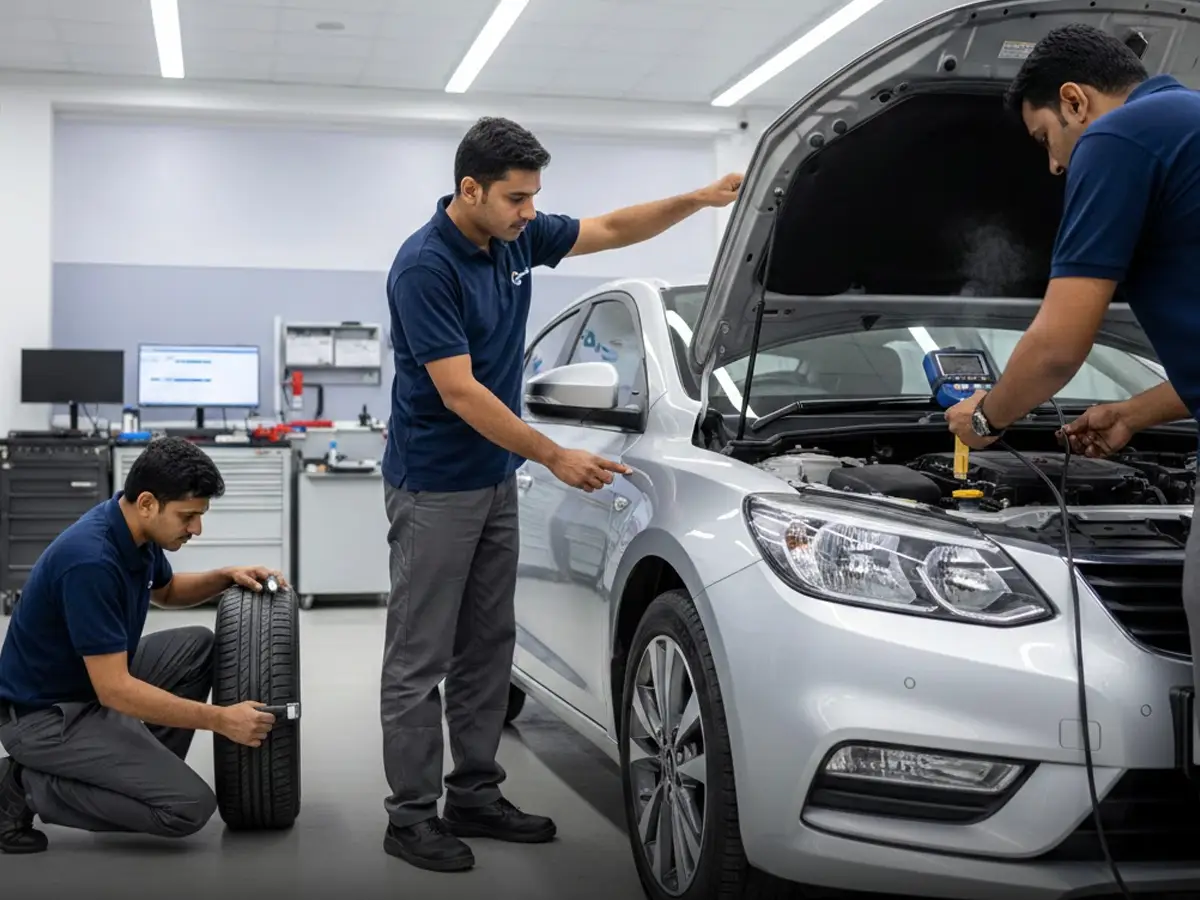
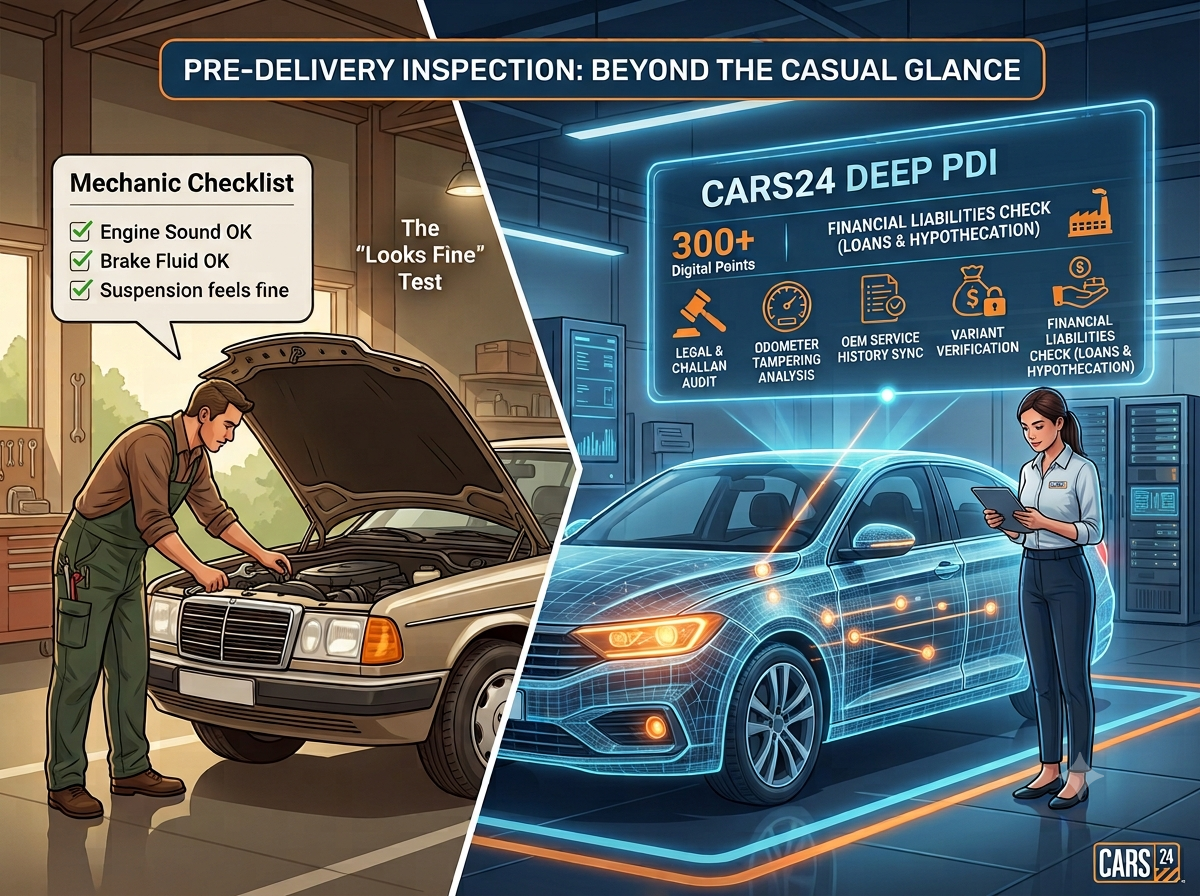
When you sell a car to Cars24, the inspection is the most critical part of the journey. While many people think an inspection is just a quick look at the car's appearance, it is actually a highly technical deep dive. Our inspectors use specialised tools to evaluate three major areas: the tyres, the paint, and the engine.
This data doesn't just decide the price; it also ensures that the vehicle is fit for a legal ownership transfer. However, even with a perfect inspection report and all the right paperwork, the final Registration Certificate (RC) transfer depends on the Regional Transport Office (RTO). Understanding how we check these components and why the RTO process remains separate is key to a smooth selling experience.
The Tyre Check: Safety and Alignment
Tyres are the only part of the car in constant contact with the road. At Cars24, we don't just look for good or bad tyres; we measure their remaining life using a tread depth gauge.
- Tread Depth: A new tyre typically has a tread depth of about 8 mm. If the depth is below 2 mm, the tyre is considered unsafe and requires immediate replacement.
- Uniform Wear: Our inspectors check if the tyre is wearing out evenly. If one side of the tyre is more worn than the other, it indicates a problem with the wheel alignment or the suspension.
- Sidewall Integrity: We look for cuts, bulges, or bubbles. These are signs of structural failure that could lead to a blowout.
The Paint Check: Detecting Hidden Accidents
To the naked eye, a car might look perfect. However, our inspectors use a Paint Thickness Gauge (PTG) to see what lies beneath the surface. This tool measures the distance between the sensor and the metal body in microns.
- Factory Standards: A factory-painted car usually has a thickness between 80 and 120 microns.
- Repainted Panels: If the gauge reads 200 or 300 microns, it means the panel has been repainted. If it reads 500+ microns, it indicates the use of putty or filler to cover a dent or a major accidental repair.
- Structural Integrity: We pay close attention to the pillars (A, B, and C pillars) and the apron. If these areas show signs of repair, the car’s structural safety is compromised.
For the RTO, the colour of the car must match what is written on the RC. If a seller has repainted the car a different colour without updating the RC, the ownership transfer will be rejected immediately. Our paint check ensures that the physical car matches its legal description.
The Engine Health: Beyond the Sound
The engine is the heart of the vehicle. Our inspection involves both mechanical and digital checks.
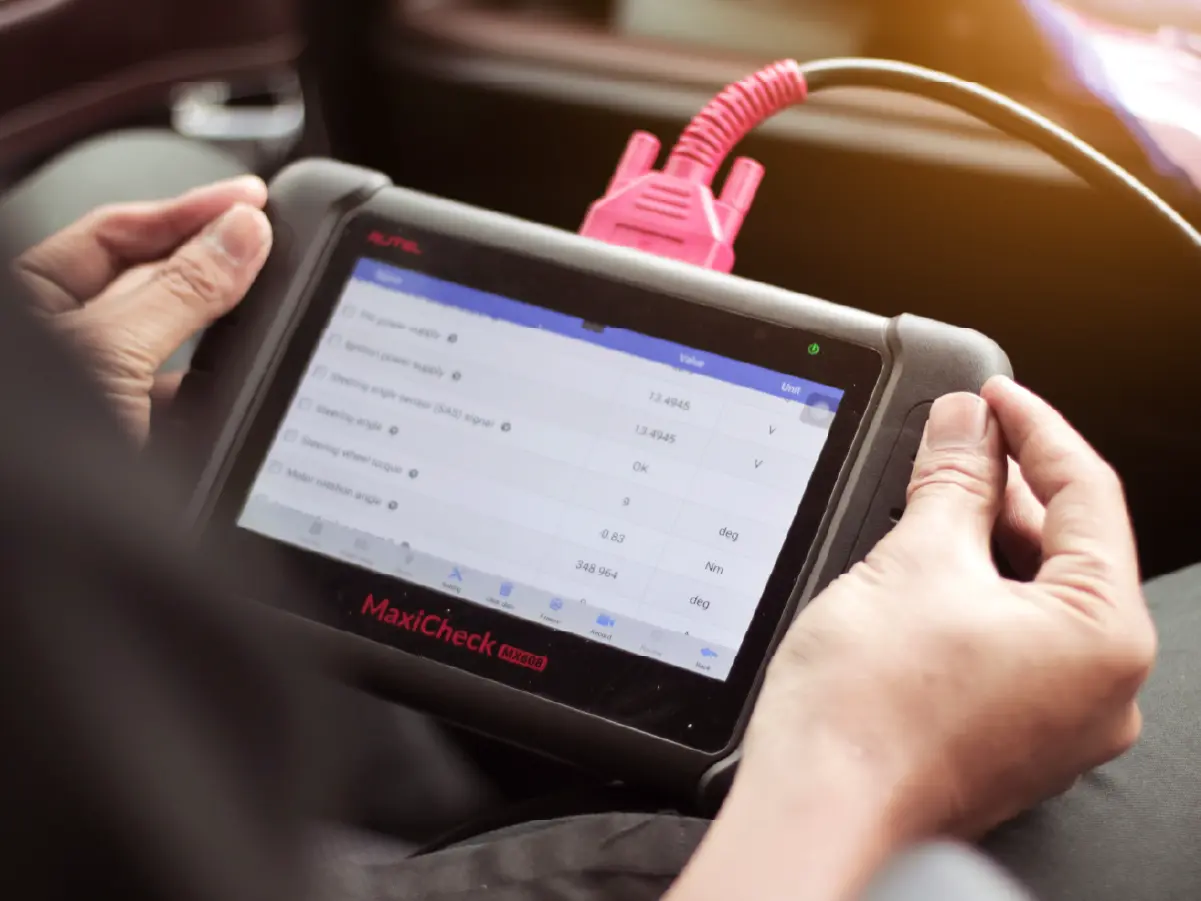
- MIL checking: Our experienced inspectors check all the Malfunction Indicator Lamps (MIL) that help reveal error codes that are not visible on the dashboard. This can detect issues with any of the car's systems, like the engine, battery, alternator, airbags, steering system, etc.
- Fluid Analysis: We check the engine oil for sludge (which indicates poor maintenance) and the coolant for oil traces (which indicates a blown head gasket).
- Blow-by Test: By checking the fumes coming out of the oil filler cap, we can determine if the engine's internal seals (piston rings) are worn out.
- Transmission: During the test drive, our inspectors check for tight gear shifts or a slipping clutch, which are expensive repairs.
Summary of the Process
| Component | What We Check | Why It Matters for RTO |
|---|---|---|
| Tyres | Tread depth & age | Vehicle fitness for transfer |
| Paint | Micron thickness | Colour match & structural safety |
| Engine | MIL and Sound | Passing the RTO fitness test |
How Standardised Inspections Support Fair Valuation
A thorough inspection is only as reliable as the process behind it. At Cars24, the 300-point checklist follows the exact same protocol regardless of where the car is being evaluated. A seller in Delhi and a seller in Coimbatore receive the same level of scrutiny, the same digital workflow, and the same quality of report. This consistency is not just a quality measure; it directly affects the final price a seller receives.
The inspection is guided entirely by proprietary software. A technician cannot proceed to the next checkpoint until the current one is recorded and photographed. No step can be skipped during a busy day, and no finding can be adjusted without a verifiable image to back it up. The seller has access to the exact same report that goes to the dealer network before bidding begins.
That last point is what connects standardisation to price. When verified dealers receive a consistent, photo-backed report from a platform they trust, they bid with significantly more confidence. More confidence means more aggressive bidding, and more aggressive bidding means a higher final offer for the seller.
| What Standardisation Ensures | Seller Benefit |
|---|---|
| Same 300-point protocol across all cities | No location-based bias in valuation |
| Software prevents skipping checkpoints | Every price-affecting detail is captured |
| Photographic proof for every finding | No unexplained deductions |
| Same report shared with seller and dealers | Full transparency throughout the process |
| Consistent reports build dealer confidence | More competitive bidding, higher final price |
Online Inspection vs Dealer Inspection: Key Differences
Many sellers have experienced a local dealer walking around their car, taking a short test drive, and arriving at a number with no explanation. The difference between that experience and a Cars24 inspection is not just about the tools used. It runs through the entire philosophy of how the car is evaluated and what happens to the seller after the deal is done.
A local dealer operates on instinct and immediate resale potential. Their assessment is informal, their documentation often incomplete, and their offer frequently revised downward at the paperwork stage once they find something to negotiate on. More critically, local dealers tend to overlook documentation details that the RTO will not, such as a signature mismatch, an uncleared hypothecation, or an outdated road tax status. These oversights do not affect the dealer. They affect the seller, who can remain legally tied to the vehicle for months after the handover.
The Cars24 inspection is built on the opposite principle. Strictness at the inspection stage is what prevents complications later. Every finding is recorded, every deduction is justified, and all paperwork is prepared to meet RTO standards before the sale is finalised.
| Feature | Local Dealer | Cars24 |
|---|---|---|
| Inspection method | Visual and subjective | Tool-based and standardised |
| Price revision risk | High, often revised at signing | None, final offer is confirmed upfront |
| Documentation focus | Minimal | RTO-ready compliance |
| Seller's legal protection | Low, the seller often stays liable | Seller Kavach until RC transfer completes |
| Basis of final price | Single buyer's opinion | Live competitive bidding across 20,000+ dealers |
Common Inspection Flags Sellers Often Miss
When an inspection report comes back with findings a seller did not expect, the most natural reaction is to push back. This happens regularly, and it is almost never a sign of bad faith on either side. It is the result of a well-documented psychological phenomenon called sensory adaptation.
When you drive the same car every day for five, seven, or ten years, your brain gradually tunes out the slow deterioration of the vehicle. What feels completely normal to you is often a measurable departure from the factory standard to a trained inspector seeing the car for the first time. Here are the most common points of friction sellers encounter and why the inspector is usually right.
Engine sound: A seller might say the engine has always sounded like that. To the owner, that is probably true. But engine wear happens over thousands of kilometres, and the change in pitch or vibration is too incremental to notice day to day. An inspector who has assessed dozens of cars that week has a fresh baseline and is comparing the car to a factory standard, not to how it sounded last month.
Repainted panels: Sellers who have never been in an accident are sometimes genuinely surprised when a panel flags as repainted. Transit damage when the car was new, or a dealership touch-up before the first sale, are common causes. The paint thickness gauge measures microns. It does not register intent; it registers what is there. The reading is objective regardless of when or why the repair happened.
Suspension wear: Shock absorbers lose their dampening ability gradually, not suddenly. Sellers unconsciously adjust their driving style over time to compensate for extra bounce or a slight lean on corners. By the time an inspector performs a bounce test or checks for fluid seeping from the seals, the car's handling may have drifted considerably from its original safety parameters, even though it feels perfectly normal to the person who drives it daily.
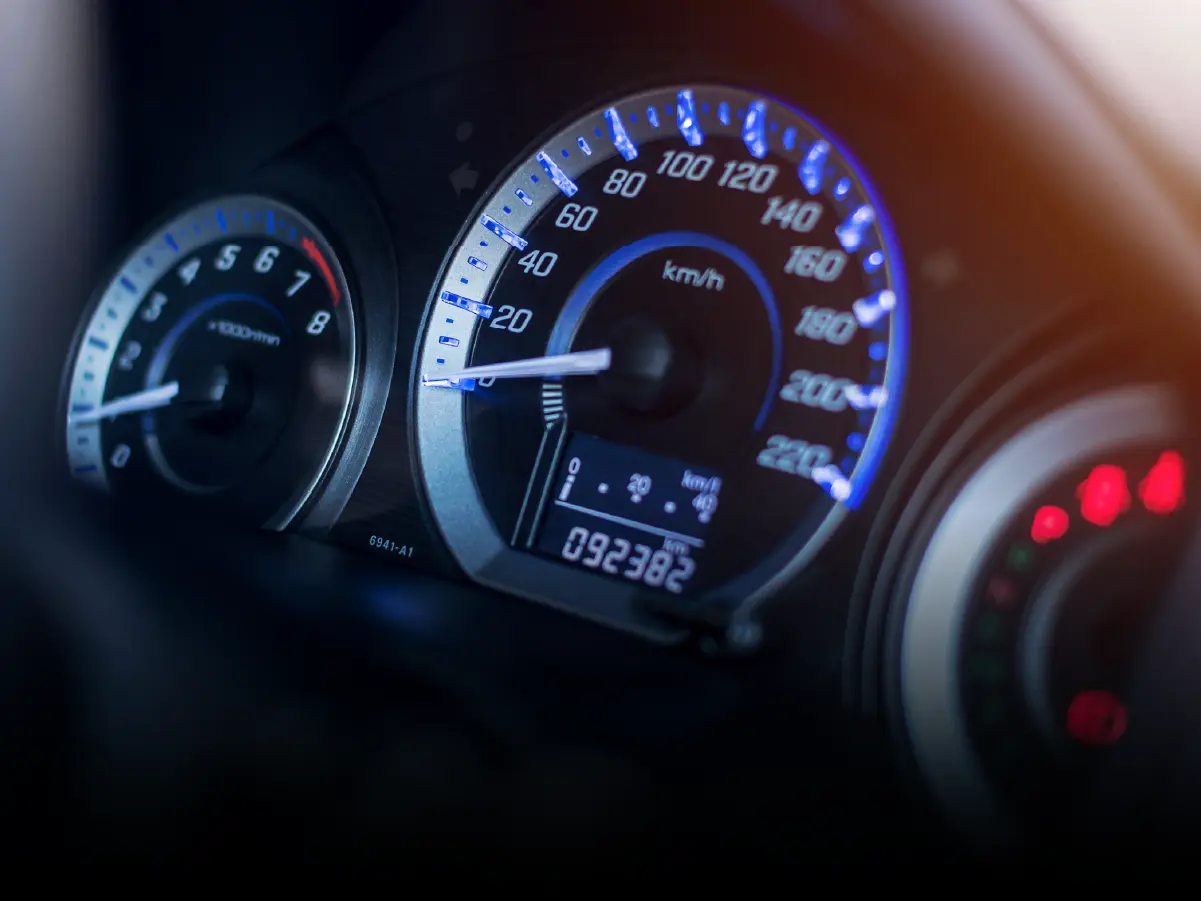
Dashboard warning light check: A lit warning light, especially the Malfunction Indicator Lamp (MIL), is the car's own signal that something needs attention, whether that's an engine issue, a sensor problem, or another fault. Our inspectors check the dashboard closely for any active light before the car is even started and again once it's running. A clean dashboard with no active warnings is a meaningful, honest signal about the car's condition at the time of inspection.
Tyre age versus tyre appearance: A tyre can look visually intact while being structurally compromised. Rubber hardens and becomes brittle over time, regardless of how much tread remains. A tyre with adequate depth but six or seven years of age is a safety concern that a visual check alone will never reveal.
None of these flags is judgements on how well the car was maintained. They are objective measurements of components that age on their own timeline. The inspector's role is to see the car as the next buyer will experience it, not as the current owner has learned to live with it.
Thorough Checks Lead to Safer Buyers
At Cars24, our inspection is designed to be as thorough as possible to give you a fair price and ensure the car is legally ready for sale. However, the ecosystem involves three players: the seller, the platform, and the buyer. Ensuring the first two are perfectly aligned, enabling us to provide a secure experience for the third, and that is an essential part of our business.
By ensuring a used car is ready for the road, we provide happy experiences to first-time buyers, upgraders, and families. Checking tyres helps make sure the car will remain controllable in unforeseen circumstances; checking paint helps us establish that the structural integrity of the car has not been compromised; and engine health evaluation enables us to deliver a reliable vehicle, ensuring safety for everyone on the road.
Frequently Asked Questions
Expand all