Hyundai Discontinued Cars in India (2026): Old Hyundai Models, Why They Were Stopped & Which Ones Are Still Worth Buying
- 1India's shift to compact SUVs caused the end of iconic Hyundai sedans
- 2Most discontinued Hyundai models still enjoy excellent spare-part support
- 3The Tucson and Elantra remain top premium picks in the used-car market
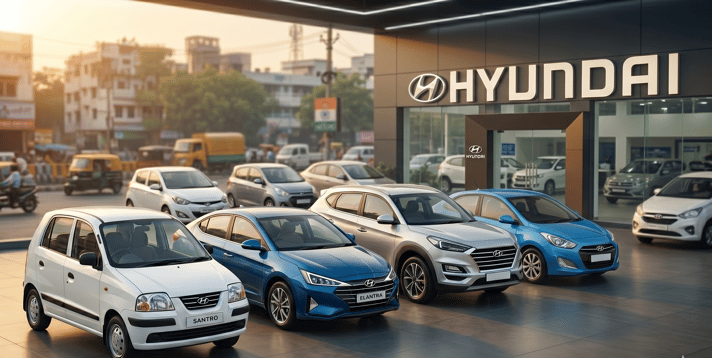
Hyundai’s rise in India is a textbook success story, originally built on feature-packed hatchbacks, elegant sedans, and later, SUVs. Models like the Santro, i20, Verna, Creta, and Elite i20 didn't just participate in their segments; they shaped them, making Hyundai one of India’s strongest and most reliable car brands.
Yet, despite this massive success, you might have noticed that several popular cars have quietly vanished from showroom floors. A combination of stricter emission norms, plummeting sedan demand, rapid SUV market expansion, and a necessary portfolio restructuring meant that even some beloved models had to face the axe. Premium segments, too, saw low sales, forcing Hyundai to rethink its higher-end offerings.
If you are navigating the used-car market or just feeling nostalgic, this guide sets the record straight. We will walk through the definitive discontinued Hyundai cars list, uncover exactly why Hyundai stopped them, and help you decide whether they are still worth buying used today. We’ll also look at the reality of maintenance and spare-part availability, so you know exactly what you are getting into.
Quick Snapshot: Major Hyundai Cars Discontinued in India
| Model | Segment | Discontinued In | Why It Was Stopped |
| Santro | Entry hatchback | 2022 | Weak demand, BS6 upgrade costs |
| Elantra | Premium sedan | 2022 | Low sedan demand |
| Tucson | Premium SUV | 2025 | Weak sales in the premium SUV segment |
| Xcent | Compact sedan | 2020 | Replaced by Aura |
| Eon | Entry hatchback | 2019 | Stringent safety & emission norms |
| Accent | Sedan | 2013 | Ageing product |
| Getz | Premium hatchback | 2009 | Replaced by i20 |
| Terracan | SUV | 2007 | Expensive niche product |
| Sonata | Executive sedan | 2015 | Weak luxury sedan demand |
| Santa Fe | Premium SUV | 2017 | High pricing, CKD challenges |
Key Takeaways
- Hyundai discontinued several sedans and premium ICE SUVs as India shifted heavily toward compact SUVs.
- Most mainstream discontinued Hyundai models still have decent spare-part support across the country.
Cars like the Santro, Elantra, and Tucson continue to attract used-car buyers because of their comfort and reliability.
Why Hyundai Discontinued So Many Cars
To understand why so many familiar names disappeared, we need to look at the broader shifts in the Indian automotive landscape.
India Shifted Toward SUVs
The Indian buyer's preference has undergone a massive transformation. Compact SUVs became dominant, offering higher ground clearance and a commanding driving position that suits Indian roads perfectly. Consequently, hatchbacks and sedans lost their market share, and premium sedans became increasingly niche products.
This dramatic shift directly affected models like the Elantra, Sonata, Xcent, and Accent. Enthusiast discussions often point out Hyundai’s growing overdependence on SUVs like the Creta and Venue, noting that while these high-riders flourished, traditional sedans lost their momentum.
BS6 & BS6 Phase 2 Increased Costs
Emission regulations played a brutal role in thinning out car portfolios. The transition to BS6 and the subsequent BS6 Phase 2 introduced stricter emission rules that required significant mechanical upgrades. For low-volume cars, these expensive updates became incredibly hard to justify financially.
Hyundai also had to reduce several diesel offerings across its range to keep prices competitive. This regulatory hurdle primarily affected the Santro, the diesel variants of the Aura, and the diesel Grand i10 Nios.
Premium Hyundai Models Struggled in India
While Hyundai is a household name for budget and mid-range buyers, its premium positioning remained difficult in higher segments. Buyers spending upwards of ₹30 lakh often shifted their attention toward Toyota for bulletproof reliability, Jeep for rugged appeal, or German luxury brands for the badge value.
Because of this intense competition, expensive imported or completely knocked-down (CKD) units struggled to find enough buyers. This especially impacted flagship models like the Tucson, Santa Fe, and the luxurious Sonata.
Most Popular Discontinued Hyundai Cars in India
Let’s break down the most notable models that left a lasting impact on Indian roads.
Hyundai Santro
Why the Santro Was So Important
The Santro was Hyundai’s undisputed breakthrough car in India. Its original "tall-boy" practicality changed how Indians viewed small cars, offering excellent headroom and easy ingress. It was an affordable proposition, a reliable city commuter, and a true family favourite for decades.
Why Hyundai Discontinued It
Despite a heavily publicised relaunch, the newer Santro faced weak demand in a shrinking entry-level hatchback market. Ultimately, the high costs associated with the mandatory BS6 update forced Hyundai to pull the plug in 2022.
Should You Buy a Used Santro?
- Pros: Cheap maintenance, incredibly easy city driving, and superb all-round visibility.
- Cons: Basic safety features by modern standards, a slightly dated highway feel, and older interior materials.
Best For: First-time buyers, budget-conscious city users, and small families needing a reliable runabout.
Hyundai Elantra
Why the Elantra Had a Loyal Fanbase
The Elantra offered genuine premium sedan comfort that rivalled much more expensive European cars. It was known for its highly refined petrol and diesel engines, a plush ride, and a feature-loaded cabin that felt ahead of its time.
Why Hyundai Stopped It
The Elantra fell victim to declining sedan demand. With low sales volumes in a market entirely dominated by SUVs, keeping it on showroom floors stopped making financial sense.
Why Enthusiasts Still Like It
Owner still highly praise used Elantra models for its planted highway stability, its whisper-quiet refined diesel engine, and the sheer premium feel it offers at surprisingly accessible used-car prices.
| Strengths | Weaknesses |
| Comfortable highway cruiser | Expensive spare parts |
| Strong feature list | Lower resale demand |
| Refined diesel engine | Limited aftermarket support |
Hyundai Tucson
Why the Tucson Was Hyundai’s Best Premium SUV
Serving as the brand's flagship ICE SUV until recently, the Tucson was beloved for its incredibly refined 2.0-litre diesel engine, premium interiors, strong feature list (including Level 2 ADAS in its final generation), and exceptionally comfortable ride quality.
Why Hyundai Discontinued It
Axed in late 2025, the Tucson suffered from weak demand in the highly competitive ₹30–40 lakh segment. High CKD pricing challenges made it expensive, and many potential buyers ended up shifting toward the Toyota Fortuner or Jeep Meridian.
What Owners Still Love About the Tucson
Enthusiasts continue to praise used Tucson models for their refinement, superb highway comfort, and mature suspension setup that absorbs bumps effortlessly.
| Pros | Cons |
| Premium comfort & Level 2 ADAS | Expensive imported parts |
| Great, punchy diesel engine | Lower resale value |
| Feature-rich, quiet cabin | Potential waiting time for parts |
Hyundai Xcent
Hyundai’s Early Compact Sedan Success
The Xcent took the Grand i10's brilliant platform and added a highly practical boot. It won buyers over with an affordable diesel engine option and exceptionally comfortable city usage.
Why It Was Discontinued
It was eventually replaced by the Aura as part of Hyundai’s broader design and feature overhaul strategy to keep the lineup looking fresh.
Is a Used Xcent Worth Buying?
Yes. It remains a highly practical choice that is cheap and easy to maintain. It also holds a very strong reputation in the taxi and fleet markets for its long-term durability.
Hyundai Eon
Why Buyers Loved the Eon
The Eon was a stylish entry-level hatchback that brought fluidic design to the budget segment. Its compact dimensions and affordable ownership made it a hit for urban commuting.
Why Hyundai Killed It
The Eon could not keep up with tightening safety regulations and the expensive BS6 transition. Furthermore, the market was shifting toward slightly larger, more practical hatchbacks.
Used Eon Reality
It is incredibly cheap to buy and offers brilliant city usability, but modern buyers must remember that its safety limitations remain an important factor to consider for highway use.
Hyundai Accent
Why the Accent Was Once Extremely Popular
The Accent was the definitive, reliable family sedan of the early 2000s. It featured smooth petrol engines and eventually built a massive, unshakeable presence in the taxi market.
Why It Disappeared
It sat on a rapidly ageing platform, and modern rivals, along with Hyundai's own newer sedans like the Verna, simply overtook it in technology and design.
Used Accent Ownership Today
Today, it is mostly relevant for ultra-budget buyers or dedicated enthusiasts looking to restore classic old-school sedans.
Hyundai Getz
Why the Getz Was Ahead of Its Time
Before the i20, there was the Getz. It was an incredibly spacious hatchback that offered a premium feel and European-inspired ride quality that Indian buyers weren't used to seeing in small cars.
Why It Failed Commercially
It suffered from expensive positioning for its era. Eventually, it was replaced by the massively successful i20.
Why Enthusiasts Still Respect It
Many purists still consider the Getz to be one of Hyundai’s best-balanced old hatchbacks, praising its sorted driving dynamics and robust build.
Hyundai Sonata
Hyundai’s Premium Sedan Ambition
The Sonata was Hyundai's ambitious play in the executive sedan market. It offered limo-like premium comfort and carried an imported, luxurious image.
Why It Failed
At the time, Hyundai struggled with weak luxury brand perception. Combined with expensive pricing and a shrinking market for large executive sedans (as buyers moved to luxury SUVs), the Sonata was forced into retirement.
Hyundai Santa Fe
Hyundai’s Earlier Premium SUV Attempt
The Santa Fe was a bold premium SUV positioned with massive road presence. It had a strong diesel engine appeal and was heavily praised for its styling and power.
Why It Never Became Mainstream
Expensive maintenance, CKD pricing, and limited market acceptance crippled its sales. Most importantly, it simply could not break the absolute dominance of the Toyota Fortuner.
Which Discontinued Hyundai Cars Are Still Worth Buying?
If you are hunting for used Hyundai cars, match your needs to the right model:
| Buyer Type | Recommended Model |
| Budget city buyer | Santro |
| Premium sedan buyer | Elantra |
| Comfortable family SUV buyer | Tucson |
| Taxi/fleet usage | Xcent |
| Cheap city hatchback | Eon |
| Hatchback enthusiast | Getz |
Are Spare Parts Still Easily Available?
Mainstream Hyundai Models Still Have Good Support
Because of Hyundai’s incredibly widespread service network across India, maintaining mainstream discontinued cars is generally manageable. You will rarely struggle to find parts or mechanics for the Santro, Xcent, Eon, and even the Elantra.
Parts Can Become Expensive For Premium Models
The story changes when you look at the higher end. Parts for the Tucson, Sonata, and Santa Fe can be notably expensive. Owners of these imported or CKD Hyundai models often report longer waiting periods for specific components to be shipped, especially body panels or specialised electronic modules.
What to Check Before Buying a Discontinued Hyundai
- Service History: This is absolutely critical for diesel models, premium SUVs, and any car equipped with a DCT (Dual-Clutch Transmission). A skipped service on a complex engine can lead to massive repair bills.
- Suspension & Electrical Systems: Older Hyundais, particularly models like the first-gen i20 or older Elantras, may develop premature suspension wear and annoying infotainment or electrical glitches.
DCT & Automatic Gearboxes: Check these incredibly carefully on the Tucson and the newer Elantra variants. Ensure shifts are smooth and there is no shuddering when pulling away from a standstill.
Why Many Discontinued Hyundai models Still Sell Well Used
Ultimately, Hyundai’s core ownership experience still matters. Buyers are drawn to the highly refined engines, consistently comfortable ride quality, feature-loaded cabins, and relatively easy maintenance that the brand is known for. This underlying trust is exactly why used Hyundai demand remains remarkably strong, long after the factory has stopped building them.
Hyundai’s Future Strategy in India
Moving forward, Hyundai is doubling down on what works today. The brand is focusing heavily on:
- SUVs: Strengthening the portfolio with updates to the Creta, Venue, and Alcazar.
- EVs: Driving forward with their Creta EV strategy and expanding the premium Ioniq range.
Premium Technology: Integrating advanced connected car features and wider ADAS availability across lower segments.
The era of the budget Hyundai sedan may be behind us, but their aggressive push into electric and smart SUV mobility shows a brand fully adapted to the modern buyer.
Conclusion
Hyundai has discontinued several iconic and well-loved cars in India as the market shifted toward high-riding SUVs, stricter BS6 emission norms, and newer, cleaner technologies.
Despite this culling, many discontinued Hyundai models remain highly attractive in the used-car market because of their inherent comfort, feature-rich cabins, and refined driving experience. Cars like the Santro, Elantra, and the recently axed Tucson continue to have loyal fan followings even after their production ended.
However, if you are stepping into the used market, you must carefully evaluate maintenance costs, spare-part availability, and long-term ownership realities, especially for premium CKD models, before bringing an older Hyundai home.
Frequently Asked Questions
Expand all