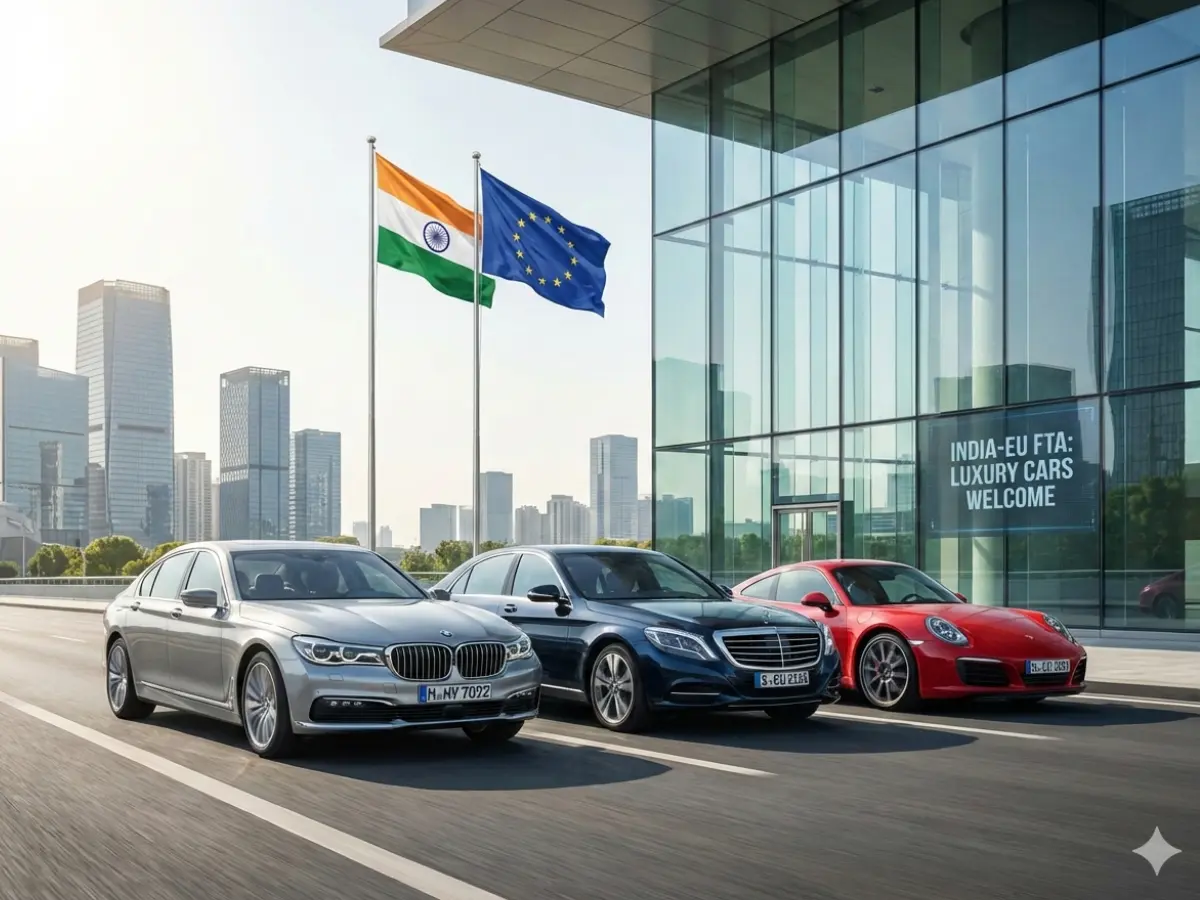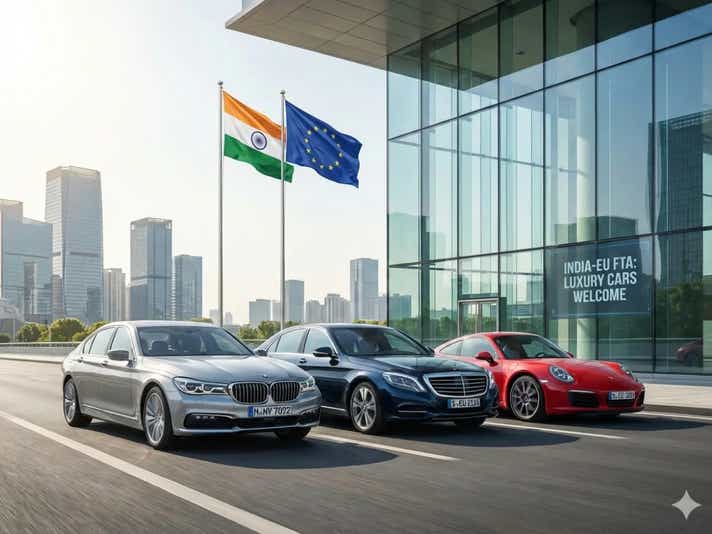
BMW, Mercedes, Porsche buyers find relief — India-EU free trade agreement to make select luxury cars cheaper in India
- 1India–EU FTA eases import duties on European luxury cars
- 2Taxes on BMW, Mercedes, Porsche & other European luxury cars will gradually drop
- 3Reduced duties apply to 2.5 lakh CBUs annually, excluding CKDs and EVs for 5 years
After almost 2 years of negotiations, the India EU free trade agreement (FTA) finally concludes, bring with it a sigh of relief for buyers seeking luxury cars in India, as the agreement eases import duties on European cars.
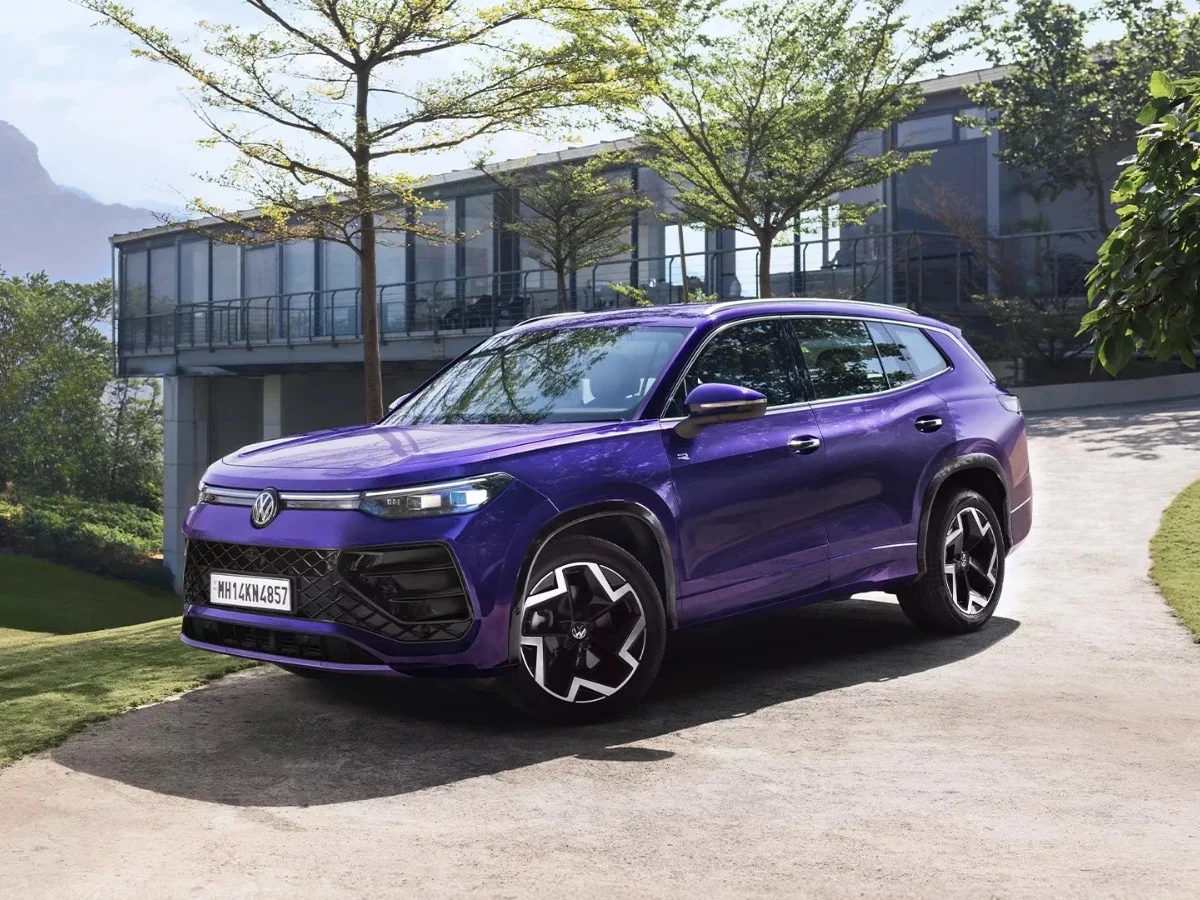
Buyers seeking specific models from the likes of BMW, Mercedes Benz, Porsche, Lamborghini, Bentley and Rolls Royce, cars which were taxed between 70% (cars priced less than 40,000 USD) and 110% (cars priced above 40,000 USD), to breathe a sigh of relief as the FTA is set to bring down the tax rate to 10%, albeit in a gradual manner.
However, this reduced rate will only be applicable to 2.5 lakh cars annually, and applies only to completely built units (CBUs), and not to completely knocked down (CKDs). These benefits are also only limited to vehicles with petrol or diesel fuel types, while electric vehicles (EVs) have been exempt for the first 5 years, a move set to safeguard local domestic EV manufacturers.
Decoding the FTA in Accordance to India’s Automotive Mission Plan 2047 (AMP 2047)
Currently, India sits at number 3, after USA and China, in the automotive manufacturing sector, and is an industry that is growing constantly. To further support the automotive sector in India, the Government of India has come out with the Automotive Mission Plan 2047, aiming to make India not just an assembly centre for the automotive industry, but a leader in cutting-edge automotive research and development. AMP 2047 aims to bring together the shared vision of key groups. These include Original Equipment Manufacturers (OEMs), auto parts makers, policymakers, academics, and users. The goal is to solve major issues such as new technology and charging infrastructure.
Also Read: MG Majestor launch date confirmed — Top things to know ahead of launch!
Seven sub-committees made up of experts from government, industry, and academia will lead this effort. They will help create a clear and complete plan with goals set for 2030, 2037, and 2047.
The 2026 India–EU Free Trade Agreement supports Automotive Mission 2047 by opening markets while protecting India’s core auto industry. It lowers import duties in a limited and phased way, while safeguarding domestic EV manufacturing in the early years.
The agreement promotes technology transfer, European investment, and global value-chain integration. It also boosts auto-component exports and aligns India with global standards. Together, these steps strengthen local manufacturing, improve competitiveness, and support India’s goal of becoming a global automotive hub by 2047.
Stay updated with all the latest happenings & developments in the automotive world by joining our official AUTOVERSE WhatsApp community. Also, don’t forget to check out our YouTube channel, AUTOVERSE by CARS24, for key details & visuals.