How the India-built Toyota Starlet went from zero stars to four — Details inside!
- 1Upgrade followed a production change making six airbags standard
- 2Child occupant protection remained at three stars
- 3Starlet's bodyshell was rated unstable in the frontal test
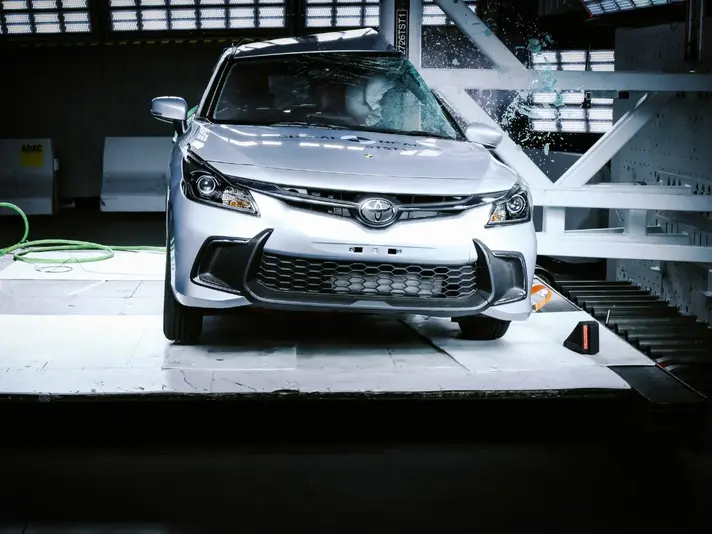
The Toyota Starlet has improved from a zero-star to a four-star safety rating for adult occupant protection in the latest Global NCAP crash test. The upgrade came after Toyota made six airbags standard on the car, including side curtain airbags.
The Starlet is built in India but sold in South Africa. It is tested under Global NCAP's SaferCarsForAfrica programme. The latest result shows how much the added airbags improved the car's crash protection.
Toyota Starlet crash test background — The zero-star result
Global NCAP gave the two-airbag version of the Starlet a zero-star adult protection rating in May this year. The car received three stars for child protection. At that time, the Starlet had driver and passenger airbags and Electronic Stability Control as standard. However, it did not have side head-protection airbags. The Starlet is a popular car in South Africa, with more than 20,000 units sold. The poor safety result led Toyota to update the car's safety equipment.
Toyota Starlet 6 airbags update
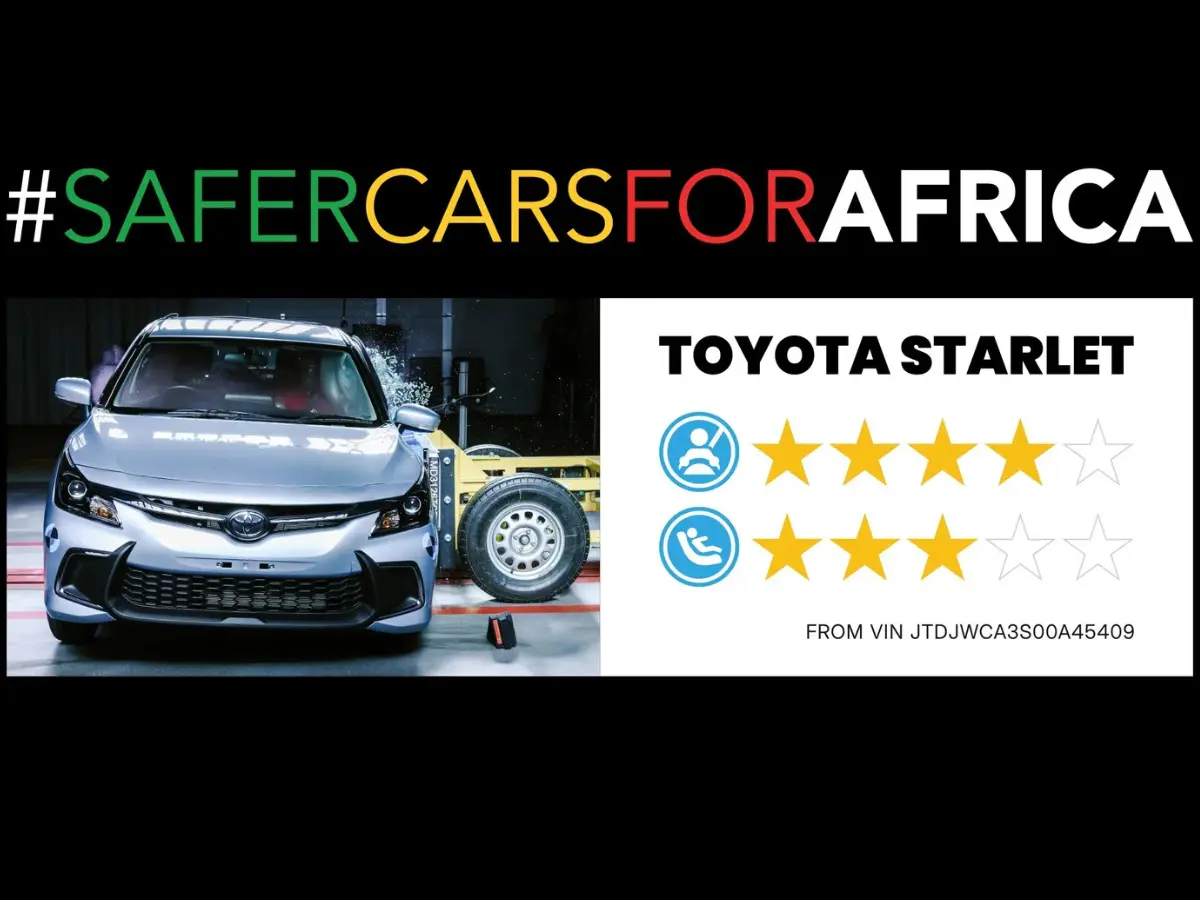
Toyota later made six airbags standard on the Starlet. The update added side curtain airbags and was made as a production change at Toyota's Indian plant. Global NCAP offered Toyota the option to submit the updated car for another crash test. Toyota did not take up the offer. Global NCAP then tested the updated version using its own funding. The result was a major improvement. Adult occupant protection increased to four stars, while child protection remained at three stars.
Toyota Starlet adult occupant protection score
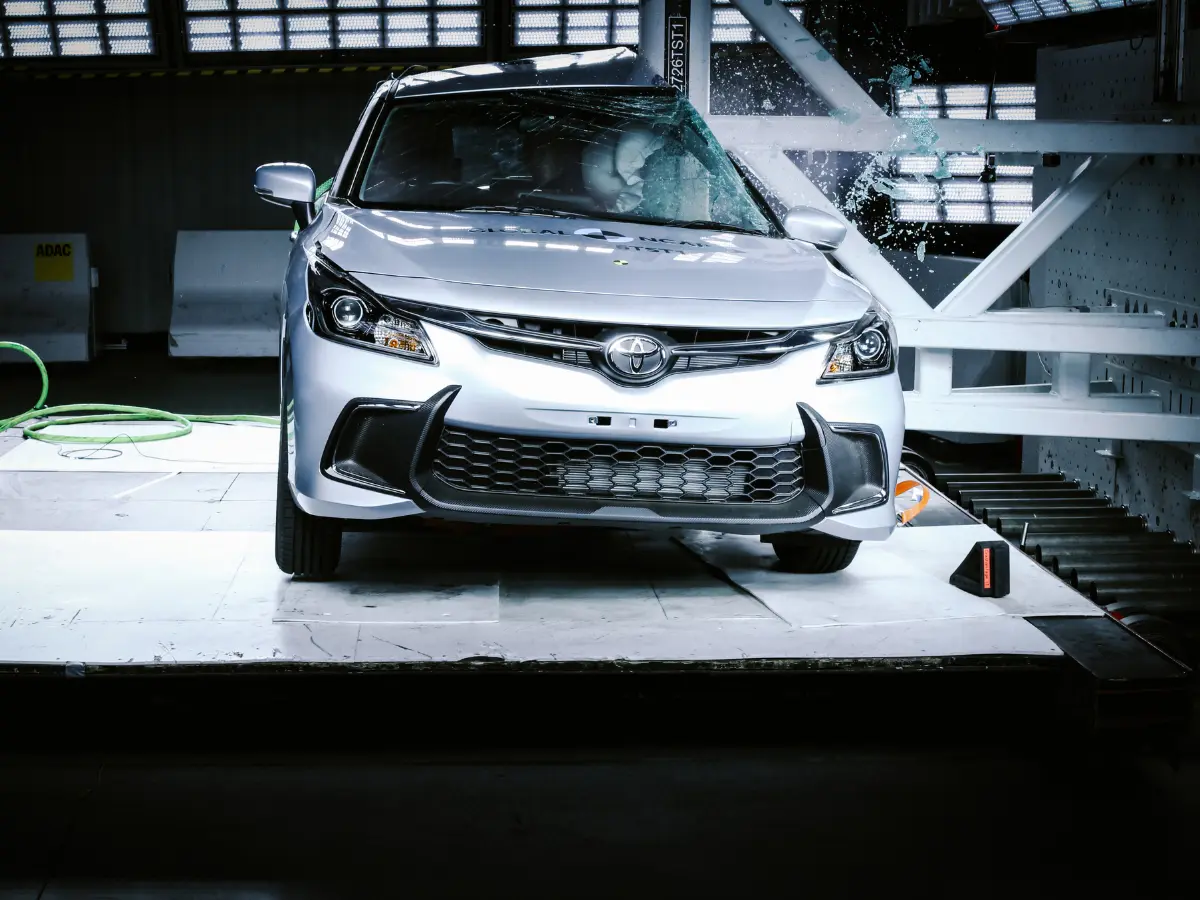
The six-airbag Starlet scored 27.97 out of 34 points for adult occupant protection.
| Adult Occupant Protection Test | Score / Result |
|---|---|
| Frontal Offset Deformable Barrier | 10.908 |
| Side Movable Deformable Barrier Test | 15.066 |
| Side Pole Impact Test | OK |
| Total | 27.97 / 34.00 |
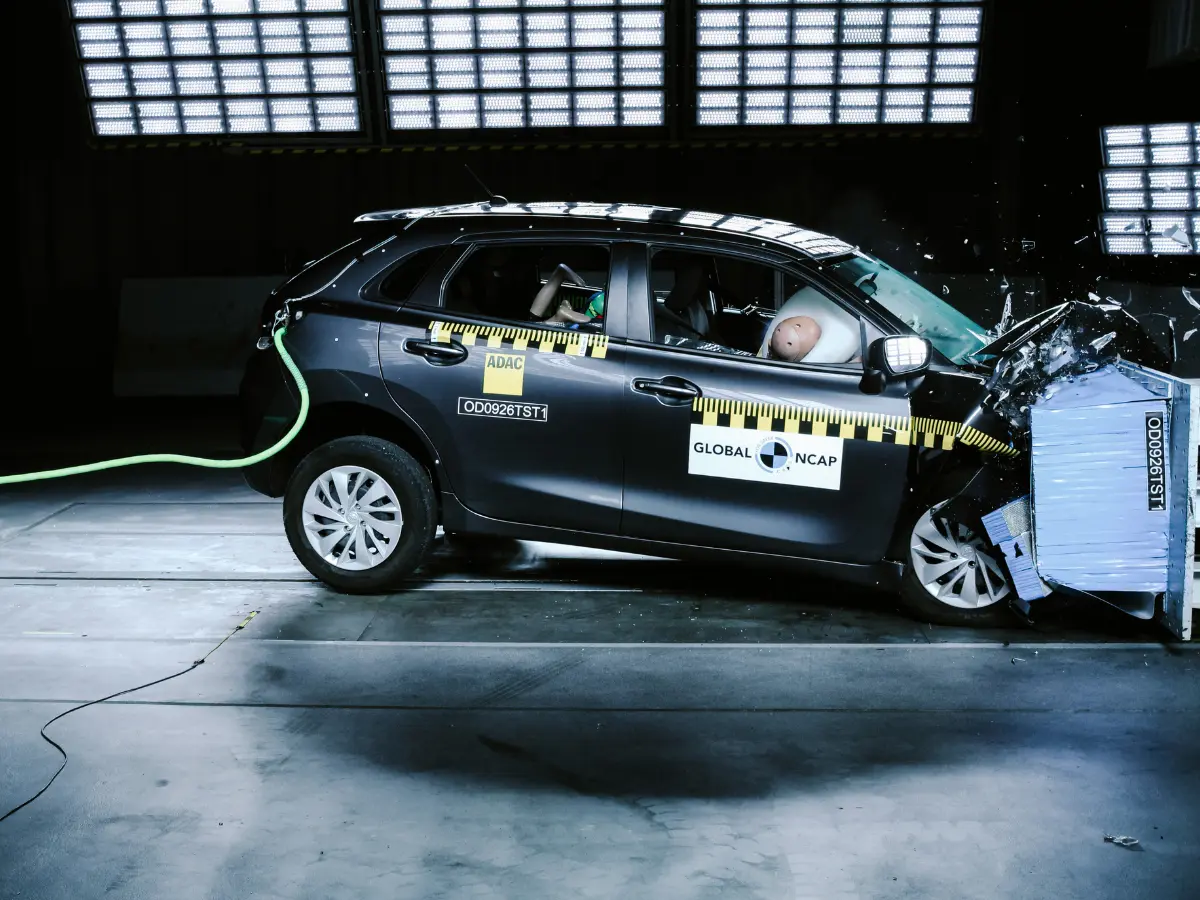
In the frontal crash, the driver's head protection was rated adequate, while the passenger's head protection was good. Neck and chest protection also received good to adequate ratings. Both the driver's and passenger's knees had marginal protection. They could hit structures behind the dashboard during a crash. Tibia protection ranged from good to adequate, while the footwell remained stable.
The bodyshell was rated unstable and was not considered capable of taking further loading. This remains one of the weaker areas of the car despite the four-star rating. In the side impact test, head, abdomen and pelvis protection were rated good.
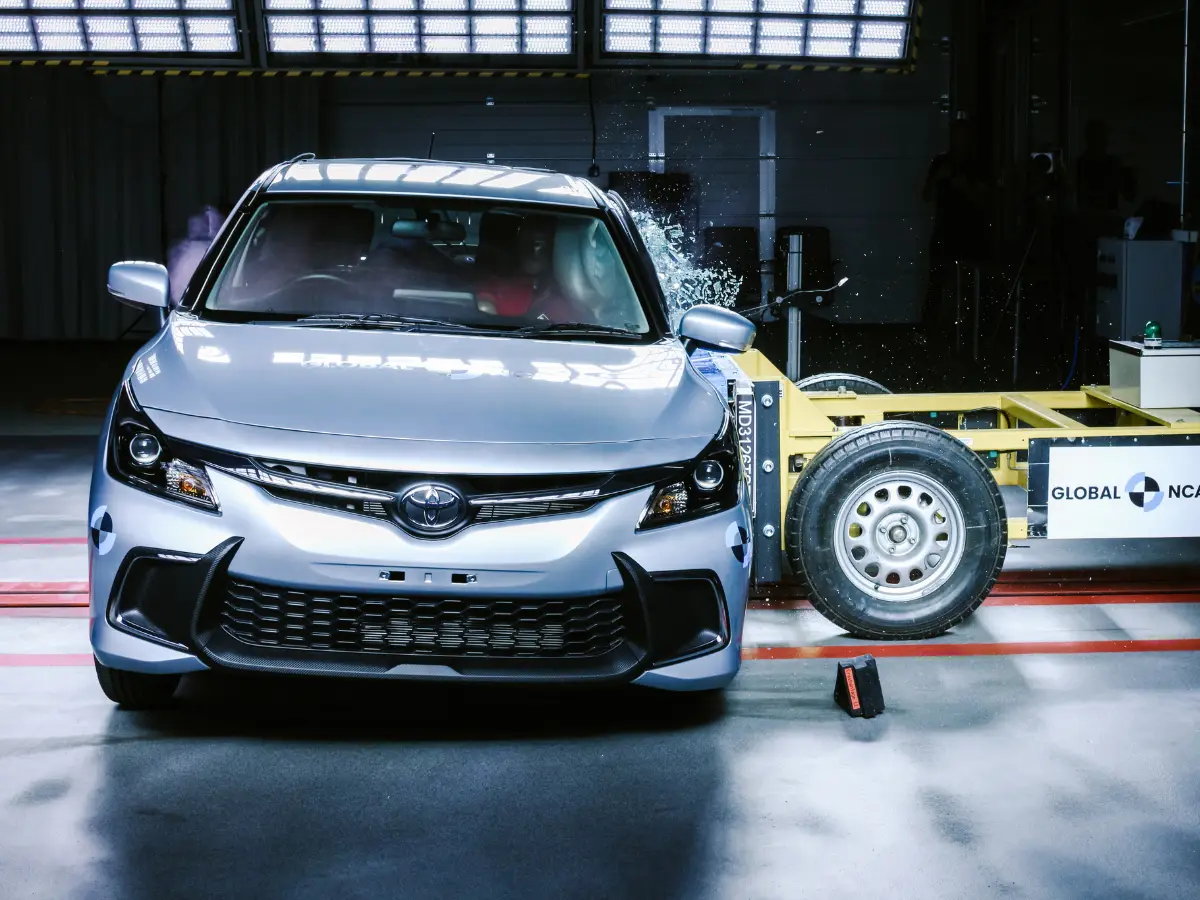
Chest protection was adequate. In the side pole test, head, abdomen and pelvis protection were again good, while chest protection was marginal. Electronic Stability Control received an acceptable rating under Global NCAP's latest requirements. It is standard on the car. Seat belt reminders are also standard for all seating positions.
Toyota Starlet child occupant protection score
The Starlet scored 29.33 out of 49 points for child occupant protection. This keeps its earlier three-star rating.
| Child Occupant Protection | Test Area | Score |
|---|---|---|
| 18-month-old child | Frontal impact | 6.71 / 8 |
| 18-month-old child | Side impact | 4.00 / 4 |
| 3-year-old child | Frontal impact | 2.81 / 8 |
| 3-year-old child | Side impact | 0.00 / 4 |
| Installation score | 10.81 / 12.00 | |
| Vehicle assessment score | 5.00 / 13.00 | |
| Total | 29.33 / 49.00 |
The 3-year-old child dummy was placed in a rearward-facing ISOFIX seat with a support leg. In the frontal crash, the seat could not fully stop the dummy's head from hitting the interior. Chest protection was also low.
The 18-month-old dummy used a similar rearward-facing ISOFIX seat. Its head was contained during the crash, but chest protection was limited. In the side impact test, the 18-month-old dummy had full protection. The 3-year-old dummy's head was exposed to the impact, resulting in zero points for this part of the test.
The Starlet has three-point seat belts in all seating positions. ISOFIX mounts are available on the outer rear seats. A warning label also tells users not to place a rearward-facing child seat in the front passenger seat. However, the front passenger airbag cannot be switched off when a rearward-facing child seat is fitted. Child seat installation passed in most rear seating positions, while some positions failed the test.
Toyota Starlet safety equipment on the six-airbag version
The updated Starlet has a larger safety package than the version tested earlier. It now gets six airbags as standard, covering the driver, front passenger and side curtain areas. The front seats also get seat belt pretensioners and load limiters. A knee airbag and side chest or pelvis airbags are not available.
Electronic Stability Control and seat belt reminders are standard. The car also meets GTR 9 and UN 127 pedestrian protection requirements. However, the Starlet does not get features such as autonomous emergency braking, speed assist or lane assist.
Stay updated with all the latest happenings & developments in the automotive world by joining our official AUTOVERSE WhatsApp community.