Maruti Suzuki starts 300 kW green hydrogen pilot plant in Haryana
- 1Hydrogen is blended with natural gas and used as process fuel in manufacturing
- 2It is made using solar energy that would otherwise go unused on holidays
- 3Company plans to scale up the technology across its Haryana and Gujarat plants
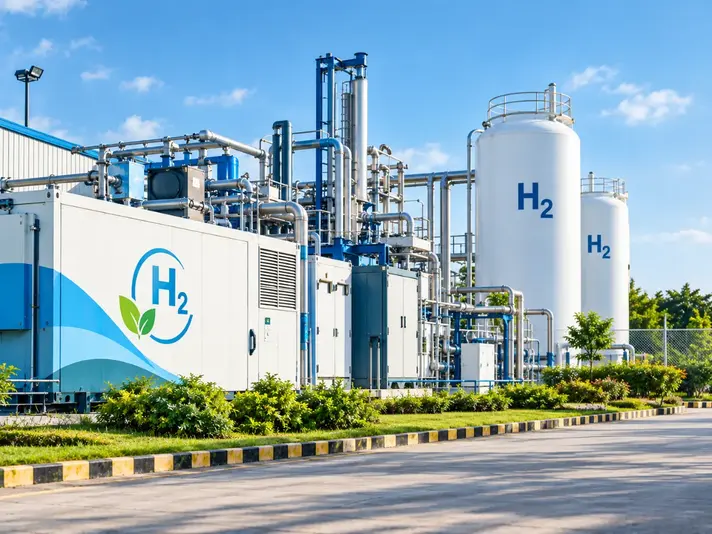
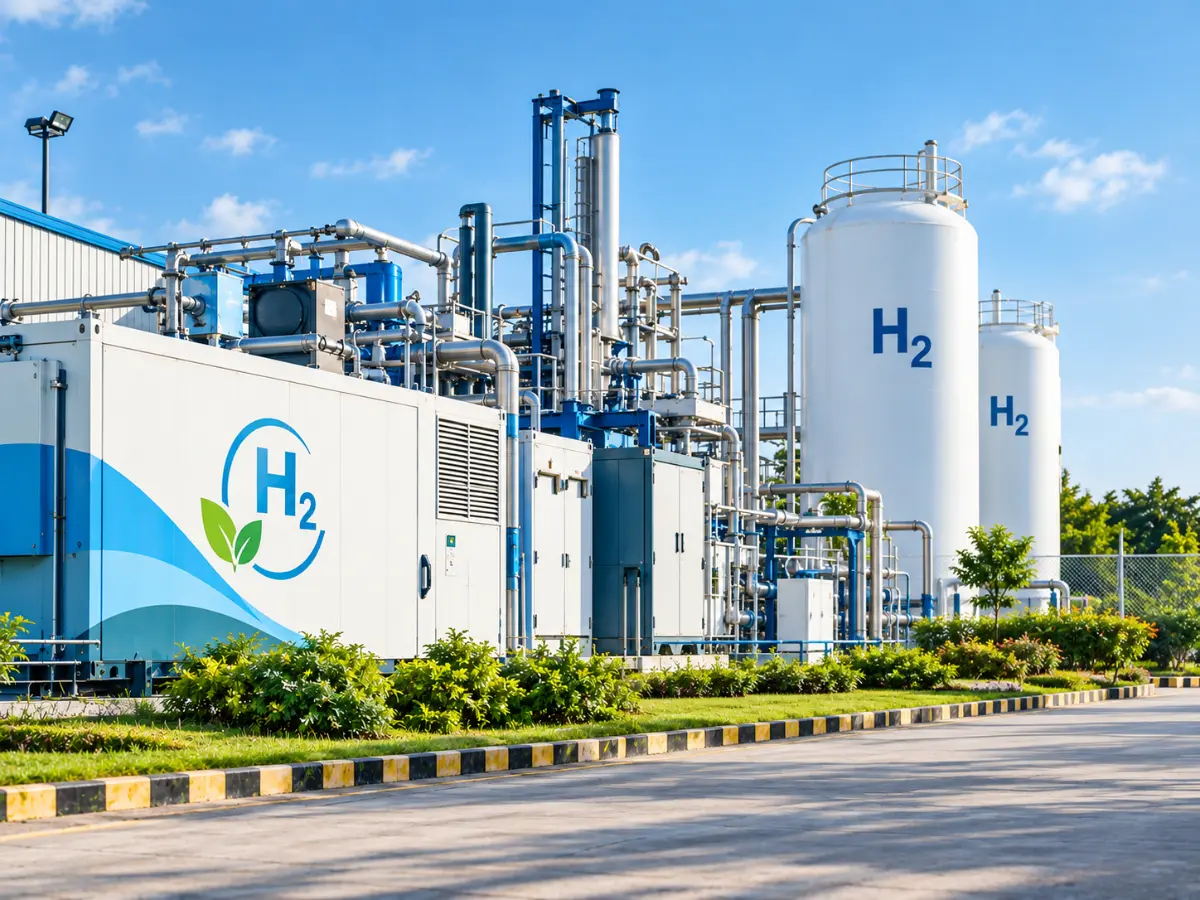
Maruti Suzuki India Limited has commissioned a 300 kW green hydrogen electrolyser plant at its Manesar facility in Haryana. The plant is a pilot project and is the company's first green hydrogen facility. The hydrogen it produces is blended with natural gas and used as process fuel in the company's manufacturing operations.
How the Maruti Suzuki green hydrogen plant works
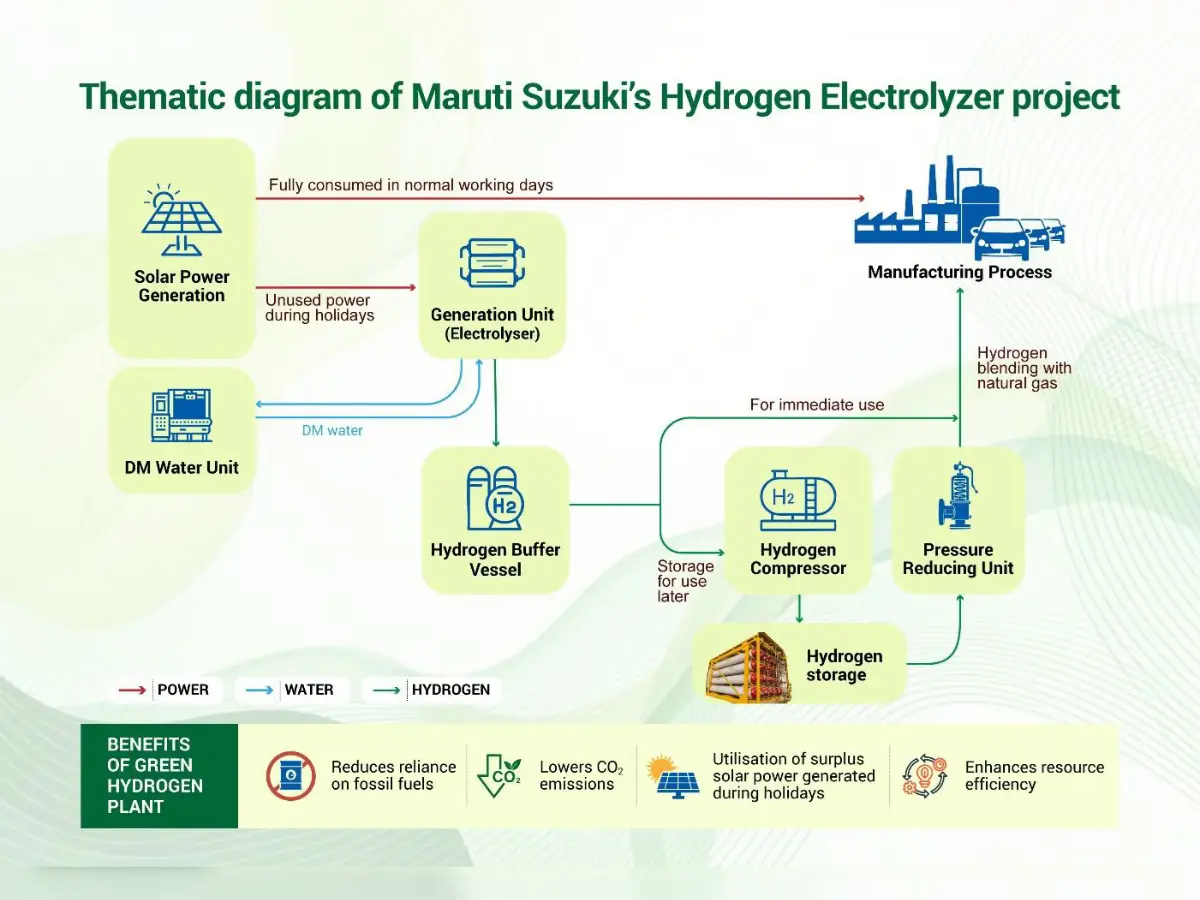
An electrolyser uses electricity to split water into hydrogen and oxygen. The hydrogen is called green when the electricity comes from a renewable source. At Manesar, the plant is powered by the solar energy generated at the facility. Solar power produced on holidays, which would otherwise go unused, is used to make the hydrogen. The hydrogen is then stored and used later in manufacturing. This helps Maruti Suzuki make fuller use of its solar generation.
Maruti Suzuki plans to scale up green hydrogen
Maruti Suzuki plans to use the experience gained from the Manesar pilot project to expand green hydrogen technology across its manufacturing facilities in Haryana and Gujarat.
The company says the project supports the Government of India's Green Hydrogen Mission. It also follows Suzuki Motor Corporation's philosophy of Sho-Sho-Kei-Tan-Bi, which focuses on making things smaller, fewer, lighter and shorter, while improving their overall design.
Also Read: Tata Aeris launched in India at Rs 5.29 lakh — Prices, features, specs, & more
Maruti Suzuki manufacturing emission targets
Hisashi Takeuchi, Managing Director and CEO of Maruti Suzuki India, said the company has taken a multi-pathway approach for manufacturing just as it has for products. He said India's competitive position as a manufacturing base may not depend only on cost and quality, but also on CO2 intensity. Maruti Suzuki aims to reduce the carbon footprint of its manufacturing operations from 615,000 tonnes at present to 266,000 tonnes in FY 2030-31, using a mix of clean technologies.
Other clean energy projects at Maruti Suzuki plants
Maruti Suzuki is also working on several other clean energy projects across its manufacturing facilities. The company uses in-house solar power plants, renewable energy procured from government sources and power purchase agreements with third parties for solar and wind energy.
At its Kharkhoda facility, Maruti Suzuki is setting up a 10-tonnes-per-day biogas plant, which is scheduled to be commissioned during FY 2026-27. The company has also commissioned a 1 MWh battery energy storage system at the facility. Maruti Suzuki has started using compressed biogas as a process fuel. Its board has also approved four compressed biogas projects with a total budget of Rs 5,610 million.
Separately, Suzuki Motor Corporation, along with the National Dairy Development Board and dairy unions, plans to set up 10 biogas plants across India. Three of these plants are already operational in Gujarat.
Stay updated with all the latest happenings & developments in the automotive world by joining our official AUTOVERSE WhatsApp community.