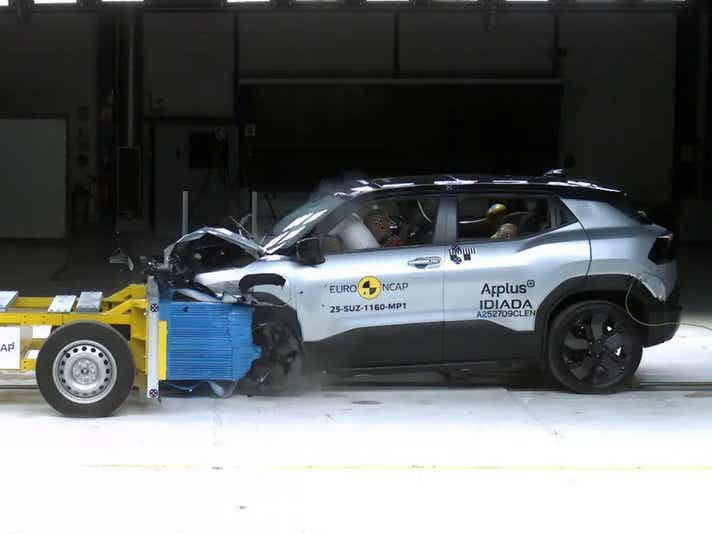
Suzuki e Vitara ANCAP crash test results — 4-star safety rating but not without its weak spots
- 1Achieved a 4-star ANCAP rating for all variants in Australia and New Zealand
- 2Strong child protection with full points in frontal and side tests
- 3Safety assist tech included: Lane Keep Assist, AEB, Blind Spot Monitoring, & more
The Suzuki e Vitara has finally arrived in Australia and New Zealand and ANCAP has put it through its paces. The all-electric SUV landed in New Zealand in March 2026 and Australia in April 2026 and this safety rating covers all variants. Whether you're going for the 2WD or 4WD version, the rating applies across the board.
So how did it do? The Maruti e Vitara walked away with a 4-star ANCAP rating, a respectable result, but far from a clean sheet. The car showed strong numbers in child protection and decent scores in vulnerable road user protection, but adult occupant protection and safety assist both had areas where the car fell short. Let’s break it all down.
Suzuki e Vitara ANCAP crash test — Overall Scores at a Glance
| Category | Score | Percentage |
|---|---|---|
| Adult Occupant Protection | 31.00 / 40 | 77% |
| Child Occupant Protection | 43.00 / 49 | 87% |
| Vulnerable Road User Protection | 50.34 / 63 | 79% |
| Safety Assist | 12.78 / 18 | 71% |
Adult occupant protection
| Test | Speed | Score |
|---|---|---|
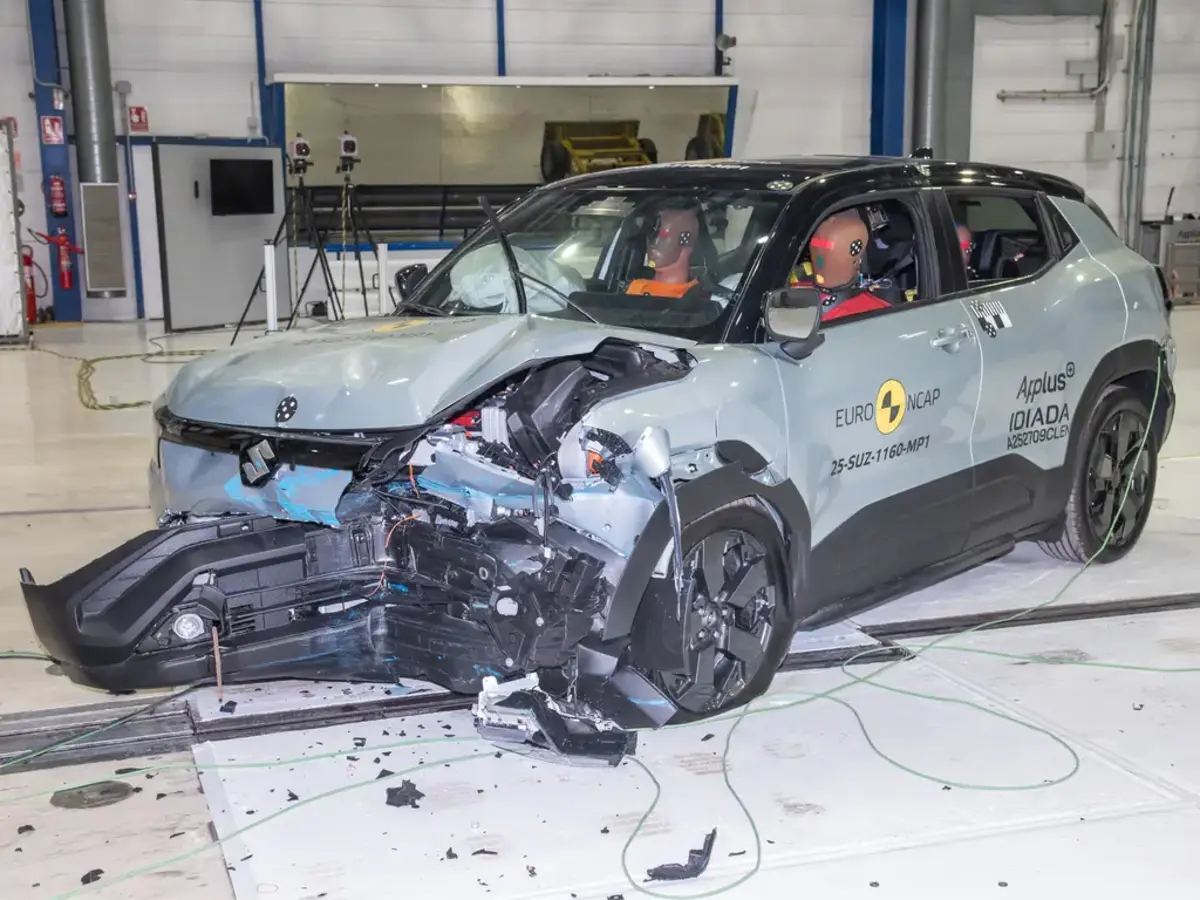
| Frontal Offset (MPDB) | 50 km/h | 5.59 / 8 |
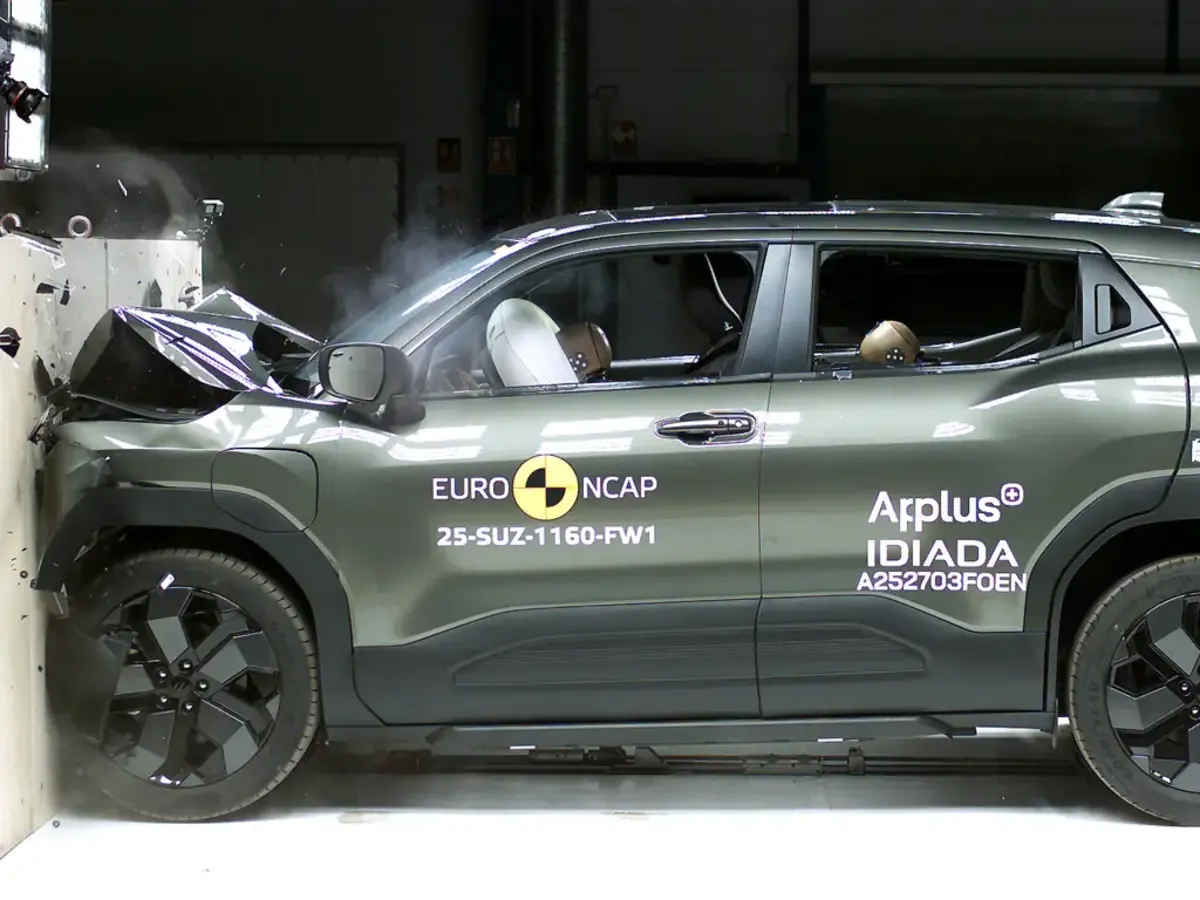
| Full Width Frontal | 50 km/h | 6.35 / 8 |
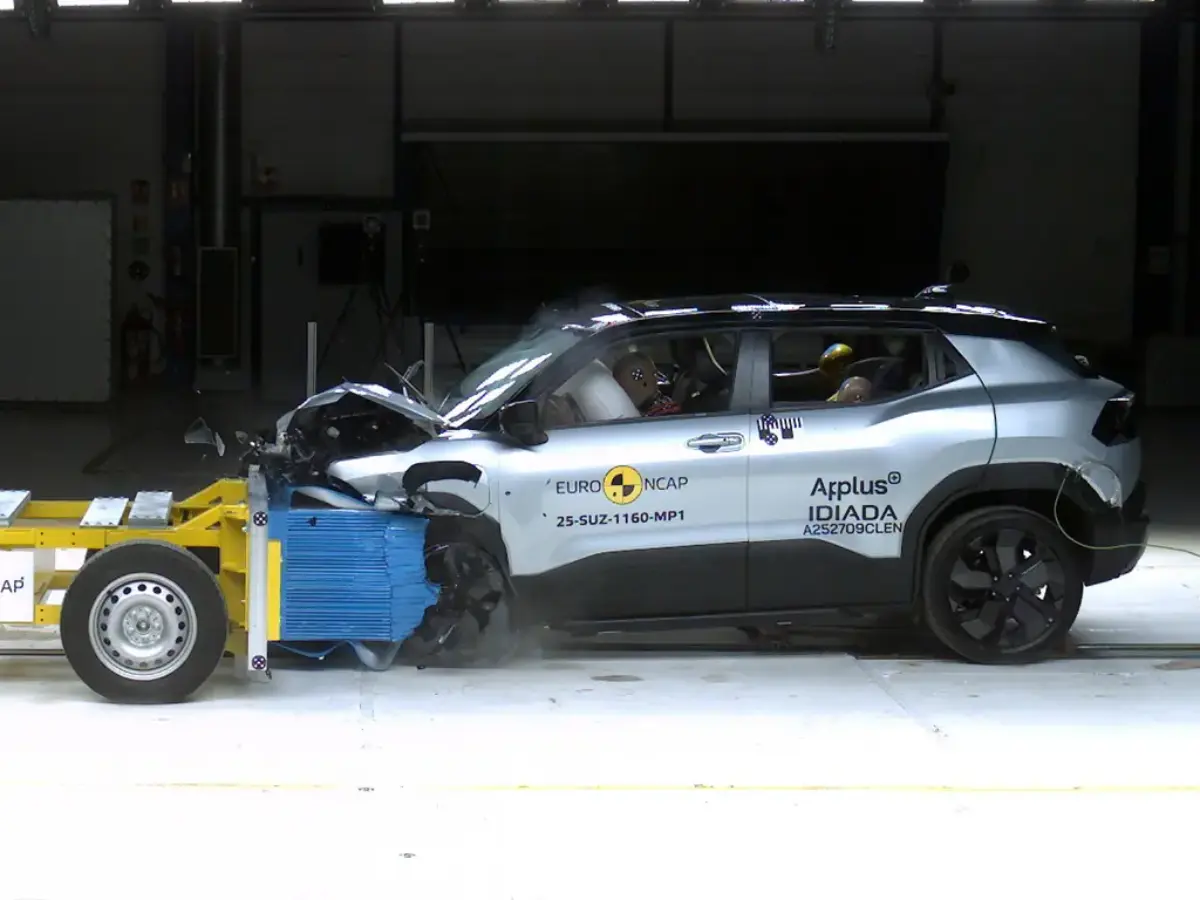
| Side Impact | 60 km/h | 6.00 / 6 |
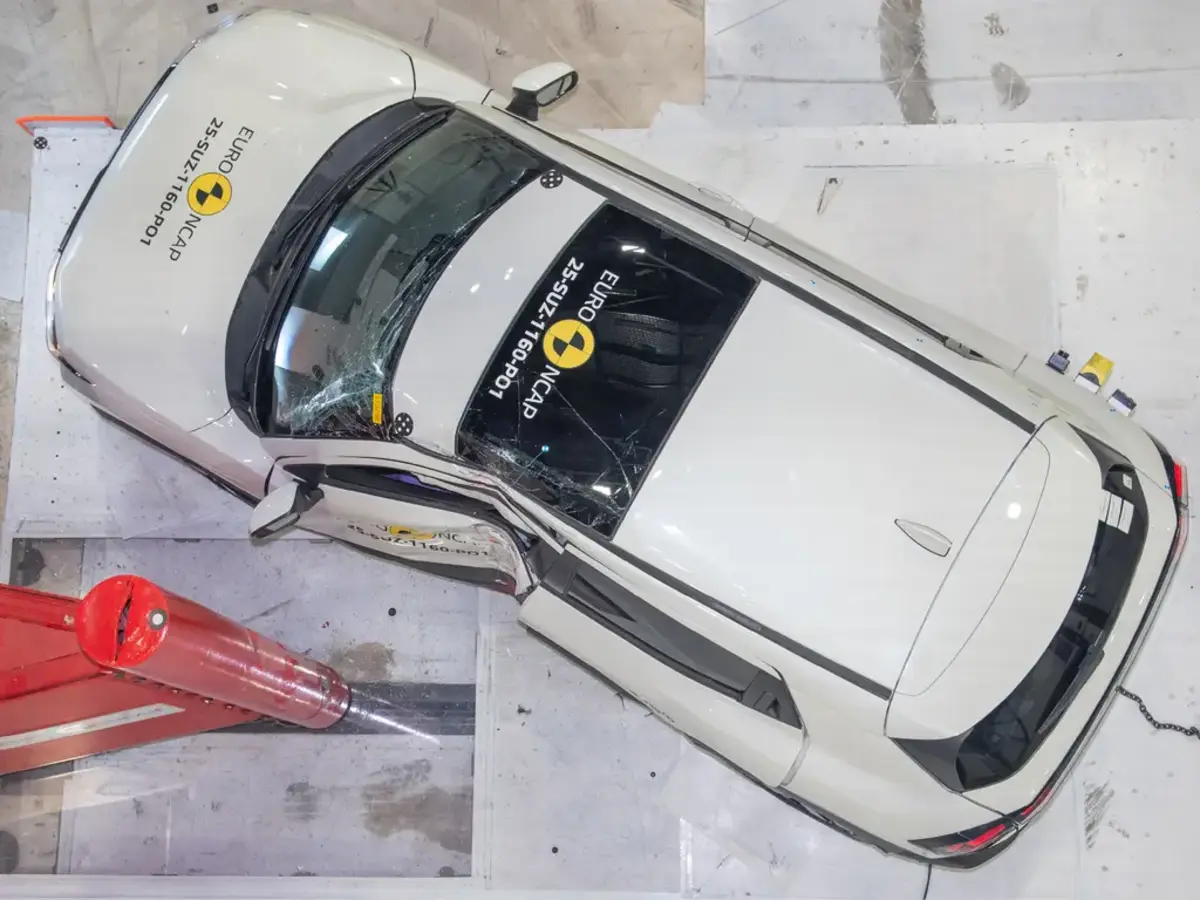
| Oblique Pole | 32 km/h | 6.00 / 6 |
| Whiplash Protection | — | 3.89 / 4 |
| Far Side Impact | 60 & 32 km/h | 1.00 / 4 |
| Rescue & Extrication | — | 2.17 / 4 |
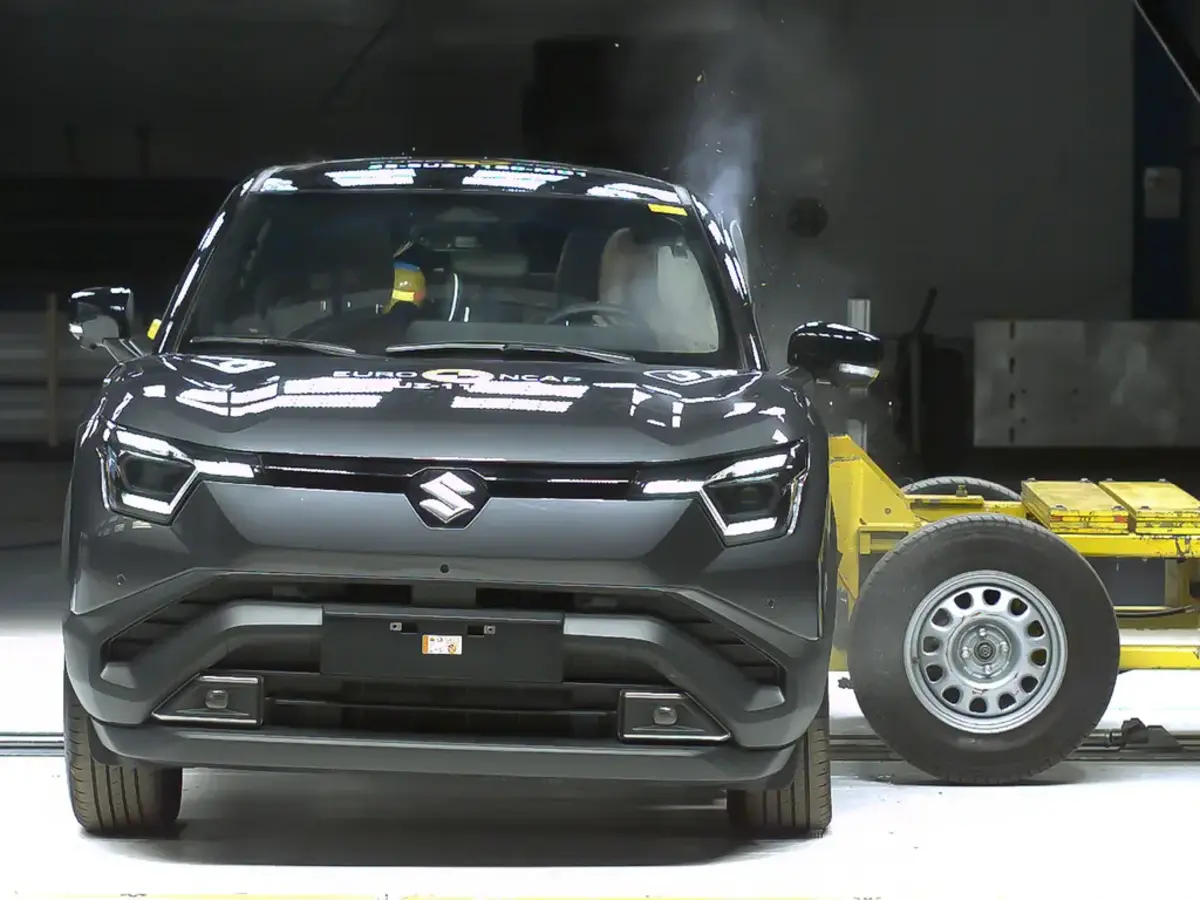
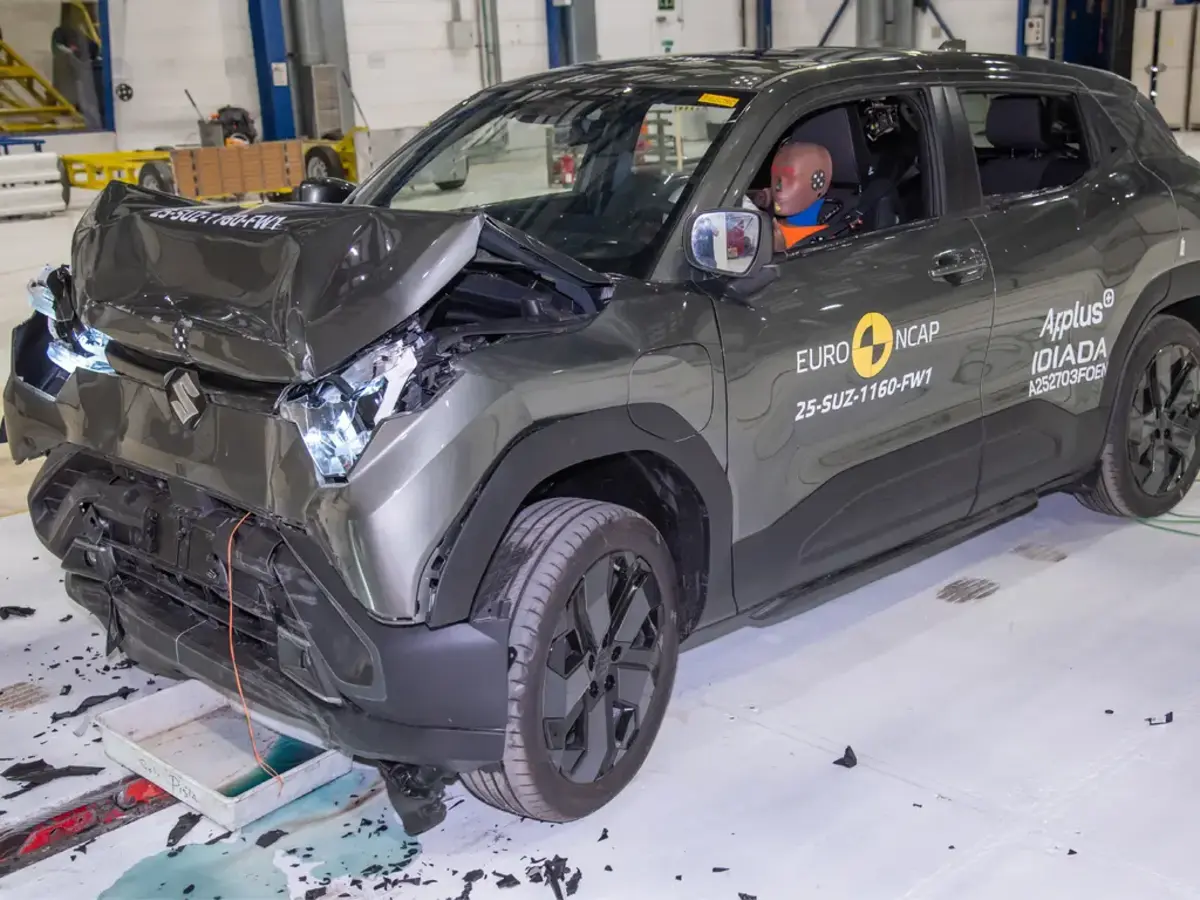
The Suzuki e Vitara did very well in adult occupant protection but had clear trouble spots that pulled its score down.In the frontal offset test at 50 km/h, the passenger compartment stayed strong. There was no structural collapse or door intrusion. Head, neck and leg protection were good for both driver and front passenger. Chest protection was weaker. The driver’s chest was rated marginal and the front passenger’s chest was adequate. The front structure also posed a moderate risk to other vehicles, causing a 2.77-point deduction out of 8.
The full-width frontal test was tougher. The driver’s chest protection was weak. The rear passenger’s head and chest protection were marginal. A 2-point deduction was applied for the rear passenger’s head movement. Other areas remained good. Side impact and oblique pole tests were the car’s strongest points. Protection for the head, chest, abdomen and pelvis was rated good.
Far-side impact tests highlighted another issue. Without a centre airbag, front passengers could hit each other in a side crash. The driver could also slide toward the opposite side. On the rescue and safety side, a rescue sheet is available for first responders. Multi-collision braking is fitted to help avoid secondary crashes. Doors remain functional if the car enters water, though window operation was not tested.
Also Read: Volkswagen Taigun facelift production begins ahead of launch — First look revealed
Child occupant protection
| Test Category | Score |
|---|---|
| Dynamic Test (Front) | 16.00 / 16 |
| Dynamic Test (Side) | 8.00 / 8 |
| Restraint Installation | 12.00 / 12 |
| On-Board Safety Features | 7.00 / 13 |
Child protection is the e Vitara’s strongest area. In both the frontal offset and side impact tests, protection for the 6-year-old and 10-year-old dummies was rated good across all critical body areas. The car scored maximum points in both tests.
The e Vitara comes with lower ISOFix anchorages on the rear outboard seats and top tether anchorages for all rear seats. During testing, typical Australian and New Zealand child restraints could be installed in all rear positions without any issues, earning full points. The only weak point is child presence detection. There is no system to alert if a child is left in the car, which lowered the on-board safety features score to 7.00 out of 13.
Vulnerable Road User Protection
| Test Category | Score |
|---|---|
| Head Protection (Adult, Child, Cyclist) | 12.44 / 18 |
| Pelvis Protection | 3.34 / 4.5 |
| Femur Protection | 4.50 / 4.5 |
| Knee & Tibia Protection | 9.00 / 9 |
| AEB Pedestrian (Forward) | 5.90 / 7 |
| AEB Pedestrian (Backover) | 0.00 / 2 |
| AEB Cyclist | 7.82 / 9 |
| AEB Motorcycle | 5.34 / 6 |
| LSS Motorcycle | 2.00 / 3 |
In pedestrian impact tests, the e Vitara’s bonnet and windscreen offered mostly good to marginal head protection. Stiff zones like the windscreen pillars, base of the windscreen and front and sides of the bonnet returned marginal or poor results. Pelvis protection was mixed while lower leg protection was good across the board.
The AEB system, called Dual Sensor Brake Support II, can detect pedestrians, cyclists and motorcyclists. For pedestrians, it performed well in all forward scenarios including turns. It does not work in reverse, so backover situations scored zero points.
For cyclists, AEB worked well in all test scenarios, including turning, but there is no cyclist dooring warning to alert drivers or passengers when a cyclist approaches from behind.
For motorcyclists, AEB performed well in most situations, including turns. Emergency lane keeping around motorcycles was rated adequate.
Safety Assist
| Test Category | Score |
|---|---|
| Seat Belt Reminders | 1.00 / 1 |
| Driver Monitoring | 0.00 / 2 |
| Speed Assistance Systems | 2.33 / 3 |
| AEB / AES (Car-to-Car) | 3.50 / 4 |
| AEB / AES (Junction & Crossing) | 2.96 / 4 |
| AEB / AES (Head-On) | 0.50 / 1 |
| Lane Support Systems | 2.50 / 3 |
The Suzuki e Vitara in safety assist too comes with a strong set of safety tech across all variants, but a few gaps keep the score from going higher. The AEB car-to-car system performed well, avoiding or reducing collisions with stationary, slower, and braking vehicles. Junction Assist also worked effectively. AEB crossing scenarios and head-on situations were rated adequate.
Lane Keep Assist (LKA) performed well, while Emergency Lane Keeping (ELK) was adequate. The Speed Assist System (SAS) reads road signs and shows the local speed limit, and Intelligent Adaptive Cruise Control (iACC) adjusts speed automatically. There is no manual or intelligent speed limiter, so the system informs rather than enforces.
Seatbelt reminders with occupancy detection are fitted to all seats. However, the car lacks a Driver Monitoring System (DMS) to detect fatigue or distraction, which cost it full points in this section.
Blind Spot Monitoring (BSM) is standard and covers both cars and motorcycles, which is useful in real-world driving.
Suzuki e Vitara standard safety features
The Suzuki e Vitara sold in New Zealand and Australia, from the base model to the top-spec version, comes with a solid set of standard features listed below.
- Dual frontal airbags (driver and front passenger)
- Side chest-protecting airbags (front seats)
- Side head-protecting curtain airbags (front and rear)
- Driver knee airbag
- Autonomous Emergency Braking (Car-to-Car, Pedestrian, Cyclist, Motorcyclist, Junction, and Crossing)
- Lane Keep Assist (Car-to-Car & Car-to-Motorcycle) and Lane Departure Warning
- Emergency Lane Keeping (ELK)
- Speed sign recognition and Intelligent Adaptive Cruise Control (iACC)
- Blind Spot Monitoring (BSM) for cars and motorcycles
- Seatbelt reminders with occupancy detection for all seats
- Secondary / multi-collision brake
- Forward Collision Warning (FCW)
Not available on any variant:
- Centre airbag
- Child presence detection
- Driver monitoring system (DMS)
- AEB Backover
- Cyclist dooring alert
- Automatic emergency call (eCall)
Also Read: Honda car offers & discounts — Check out the latest deals available
Stay updated with all the latest happenings & developments in the automotive world by joining our official AUTOVERSE WhatsApp community. Also, don’t forget to check out our Instagram handle, autoverse_by_cars24, for key details & visuals.