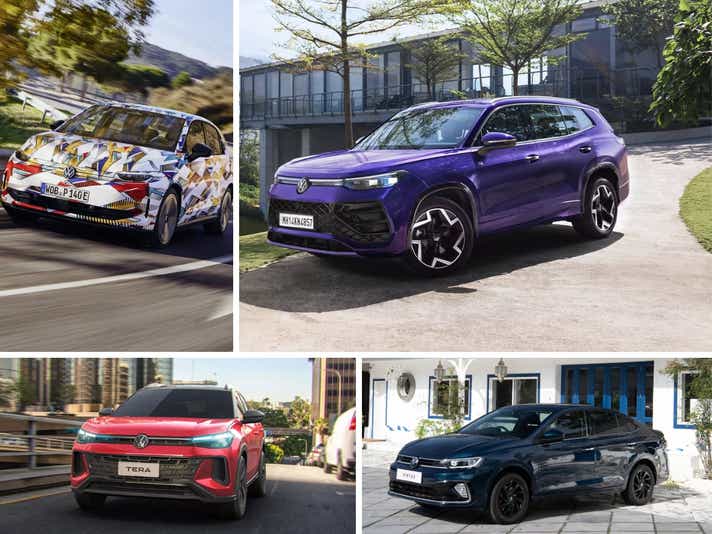
Upcoming Volkswagen cars in 2026 — What the future holds for VW fans!
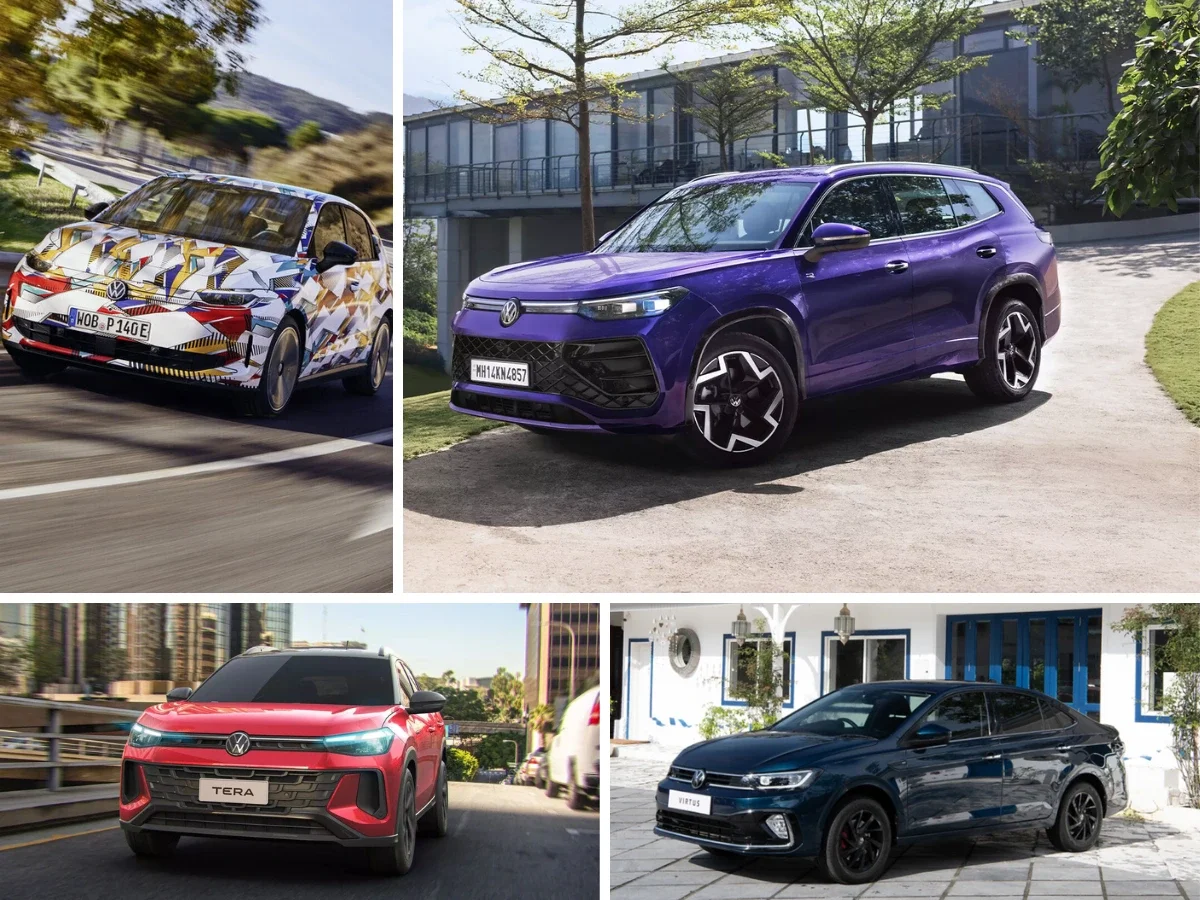
- 1Seven-seater premium SUV with 2.0L turbo-petrol, AWD, launching early 2026
- 2VW Virtus Facelift will get a new 8-speed automatic gearboX
- 3VW Tera is likely to be Volkswagen’s sub-4-metre SUV for India
Volkswagen has revealed its roadmap for India, confirming five new models that will broaden its lineup. The range will include everything from seven-seater SUVs to subcompact crossovers, with refreshed facelifts also in the pipeline.
Here’s a closer look at the Volkswagen cars coming to India in 2026, including updates on design, features, expected launch timelines, and what we know so far about each model.
Upcoming Volkswagen cars in 2026 — Tayron R-Line
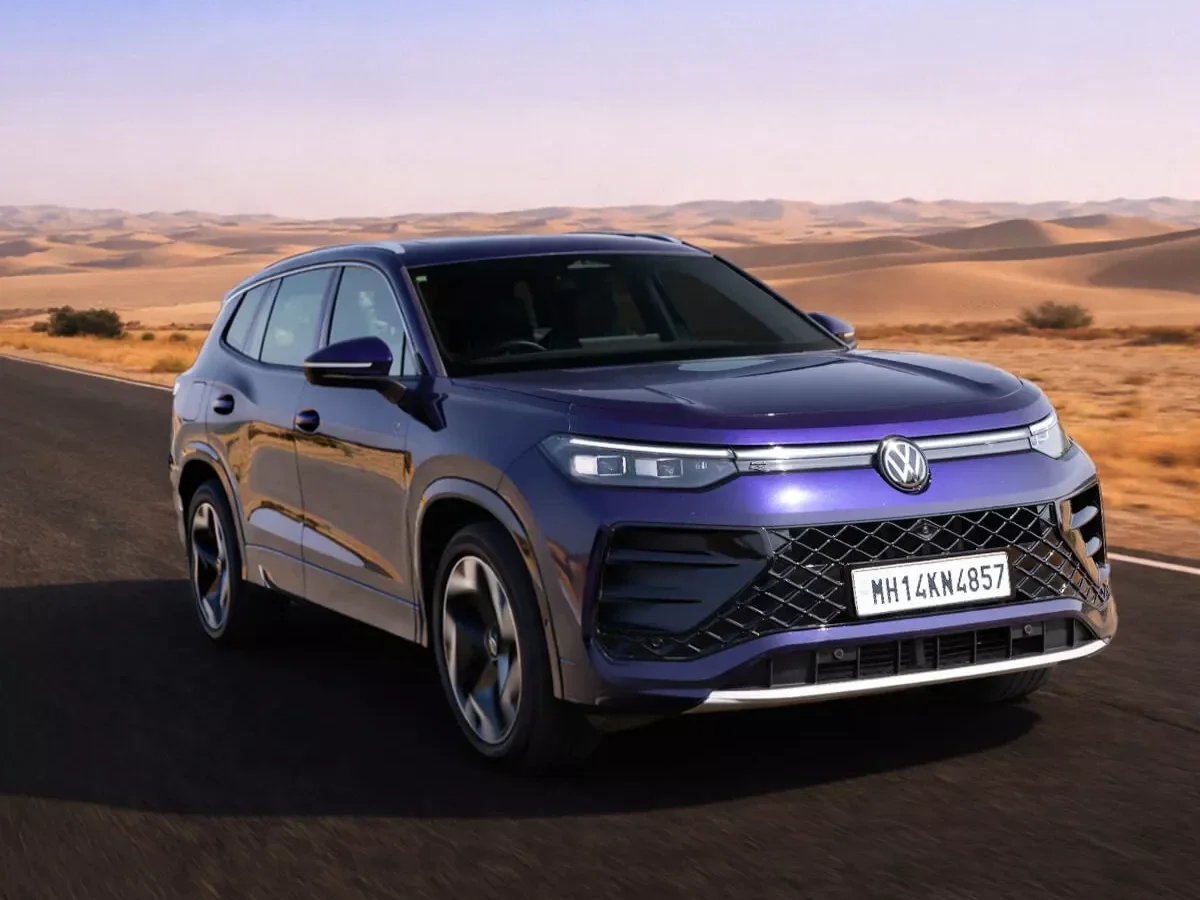
Volkswagen is kicking off the year with the launch of the Tayron R-Line, a seven-seater SUV that has already been unveiled, though the price is yet to be announced. This new SUV will be offered in a single variant and will occupy a premium position above the Tiguan R-Line. Production is already underway at Volkswagen’s Chhatrapati Sambhajinagar plant in Maharashtra.
Under the hood, the Tayron R-Line packs a 2.0-litre turbocharged petrol engine that produces 204PS and 320Nm of torque. Power is sent to all four wheels through a 7-speed dual-clutch automatic transmission and Volkswagen’s 4MOTION all-wheel-drive system.
Volkswagen Tera

Volkswagen launched the Tera in Brazil last year. The SUV sits on the MQB A0 platform, the same base that underpins the new Skoda Kylaq. That matters because Volkswagen is also preparing its entry into the sub-4-metre SUV space and this upcoming model is widely expected to be the Tera adapted for this segment.
The MQB A0 platform already supports sub-four-metre SUVs in India, as the Kylaq has shown. Using the same platform allows Volkswagen to move faster and keep development costs in check. It also explains why the Tera is being linked so closely to this launch. Power is likely to come from the familiar 1.0 litre TSI petrol engine, which already does duty in models like the Virtus, Slavia, Taigun, Kushaq, and Kylaq.
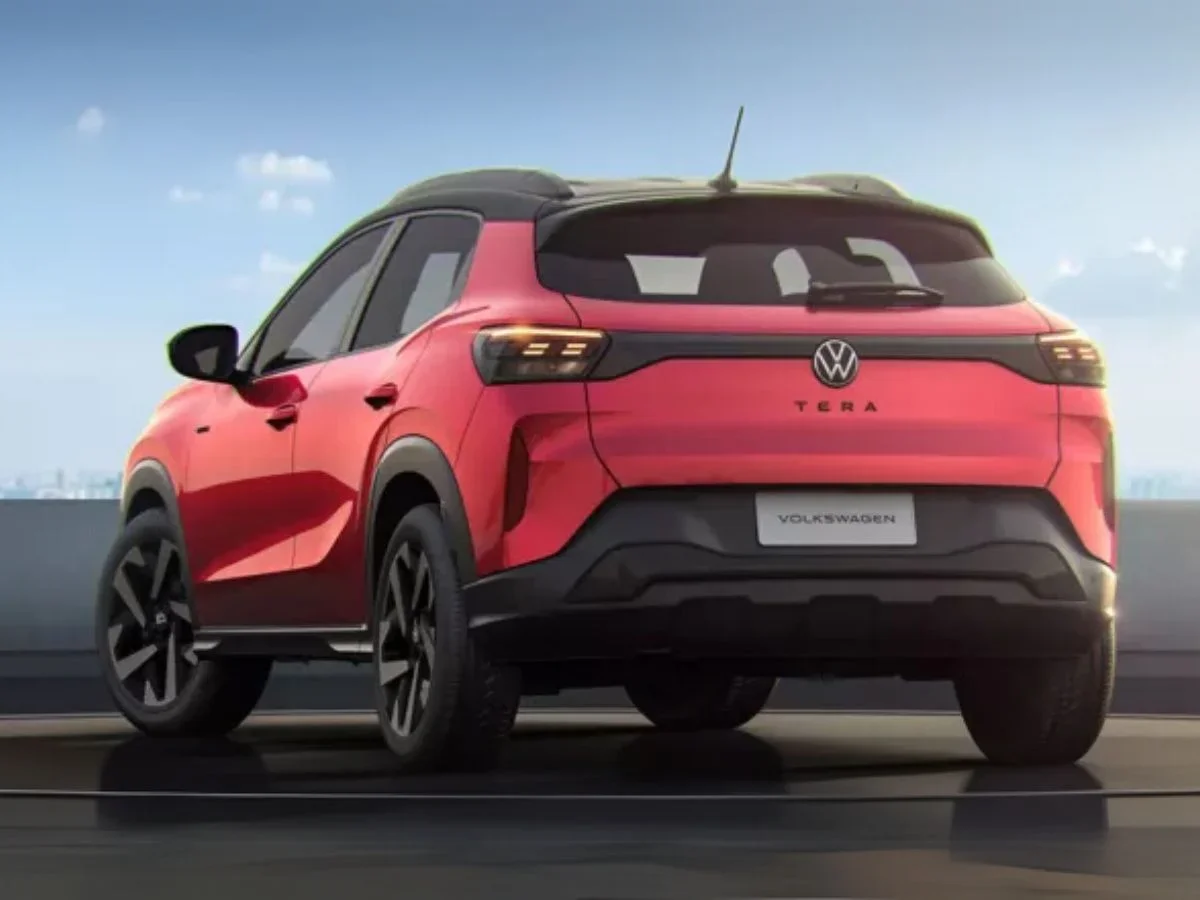
In terms of design, the Tera takes inspiration from larger Volkswagen SUVs such as the Tiguan and the ID.4. While the Brazil-spec model measures over four metres, the India-bound version is expected to be brought under that limit. In India, staying below four metres brings clear tax advantages, which are crucial in a price-sensitive segment.
The launch is expected in the first half of this year. Once it arrives, Volkswagen’s sub four metre SUV will take on rivals like the Kia Sonet, Maruti Brezza, Skoda Kylaq, Mahindra XUV 3XO, Hyundai Venue, and Tata Nexon.
Also Read: India-bound MG Majestor debuts globally in the Middle East — See the images
Volkswagen Virtus Facelift

Another upcoming Volkswagen model in 2026 is the Virtus Facelift. The facelift is expected to bring subtle tweaks to the front and rear without straying too far from the current design. The cabin is likely to see visual updates as well.
On the features front, the Virtus Facelift could see a significant upgrade. Expect a larger 10-inch digital cluster, electrically adjustable seats, automatic climate control, new leatherette upholstery, wireless charging, front-seat ventilation, a panoramic sunroof, 360-degree camera, and even ADAS safety systems, among others.
Under the hood, Virtus will continue with the 1.0-litre TSI engine paired with the familiar six-speed manual. However, it is likely to get a brand-new eight-speed automatic, replacing the older six-speed unit. The 1.5-litre TSI engine is also expected to remain, paired with either a six-speed manual or a seven-speed DSG.
The Virtus Facelift is expected in the middle to the latter part of 2026, most likely sometime between July and September or just before the Diwali festival.
Also Read: Mahindra Vision S diesel AT interior spied ahead of launch — Concept vs reality
Volkswagen Taigun Facelift
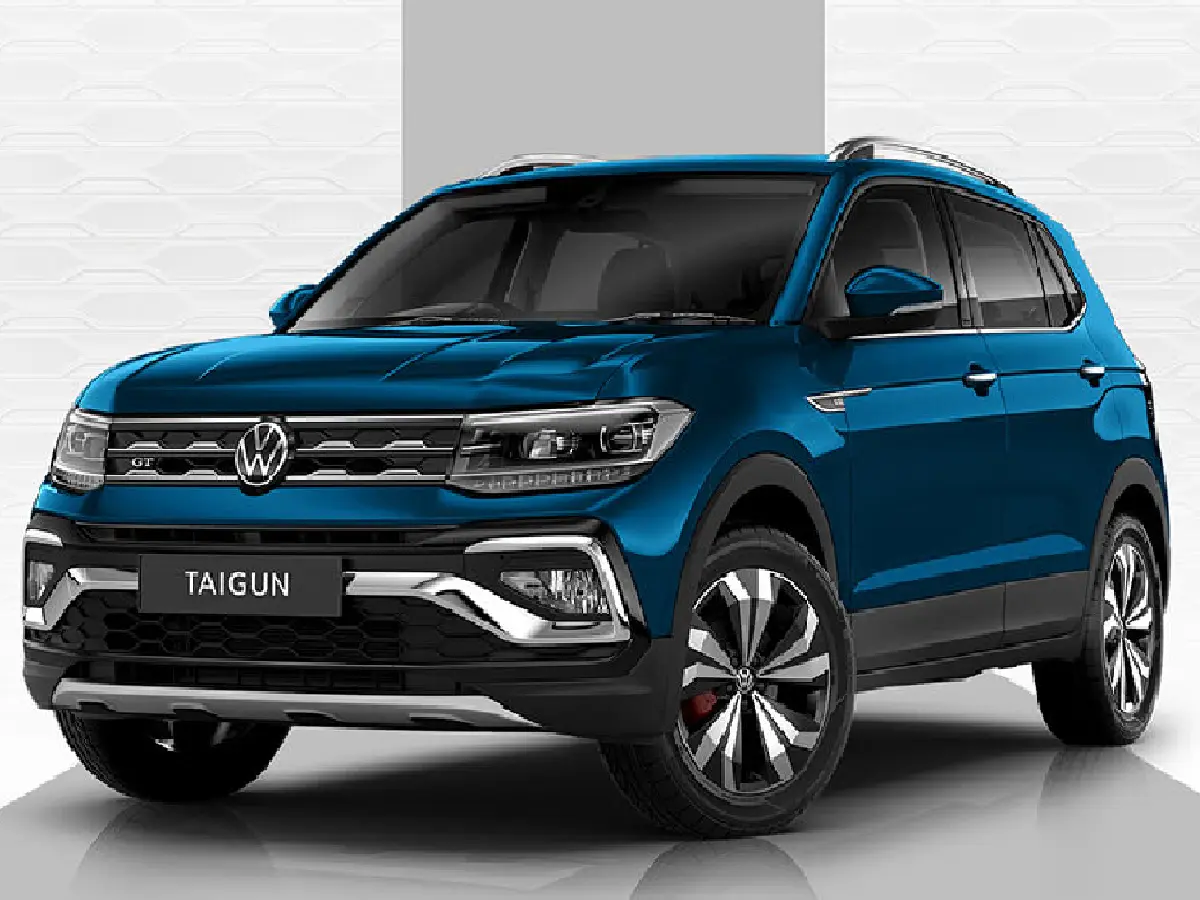
Another model gearing up for a facelift in 2026 is the Volkswagen Taigun, which has been spotted undergoing active testing in India. The facelift launch is expected around the middle to the latter part of the year, similar to the Virtus Facelift.
Under the hood, the Taigun facelift is also expected to continue with the 1.0-litre TSI engine paired with the familiar six-speed manual. A new eight-speed automatic transmission will replace the older six-speed unit, similar to what is happening inthe Virtus facelift. The 1.5-litre TSI engine will remain available, paired with either a six-speed manual or a seven-speed DSG.
On the exterior, the facelifted Taigun is expected to come with revised front, updated rear and new colour options. Inside, the cabin will likely see updates, including new upholstery, a larger digital instrument cluster, and a larger sunroof. Features like Level 2 ADAS and a 360-degree camera are expected.
Volkswagen ID Polo
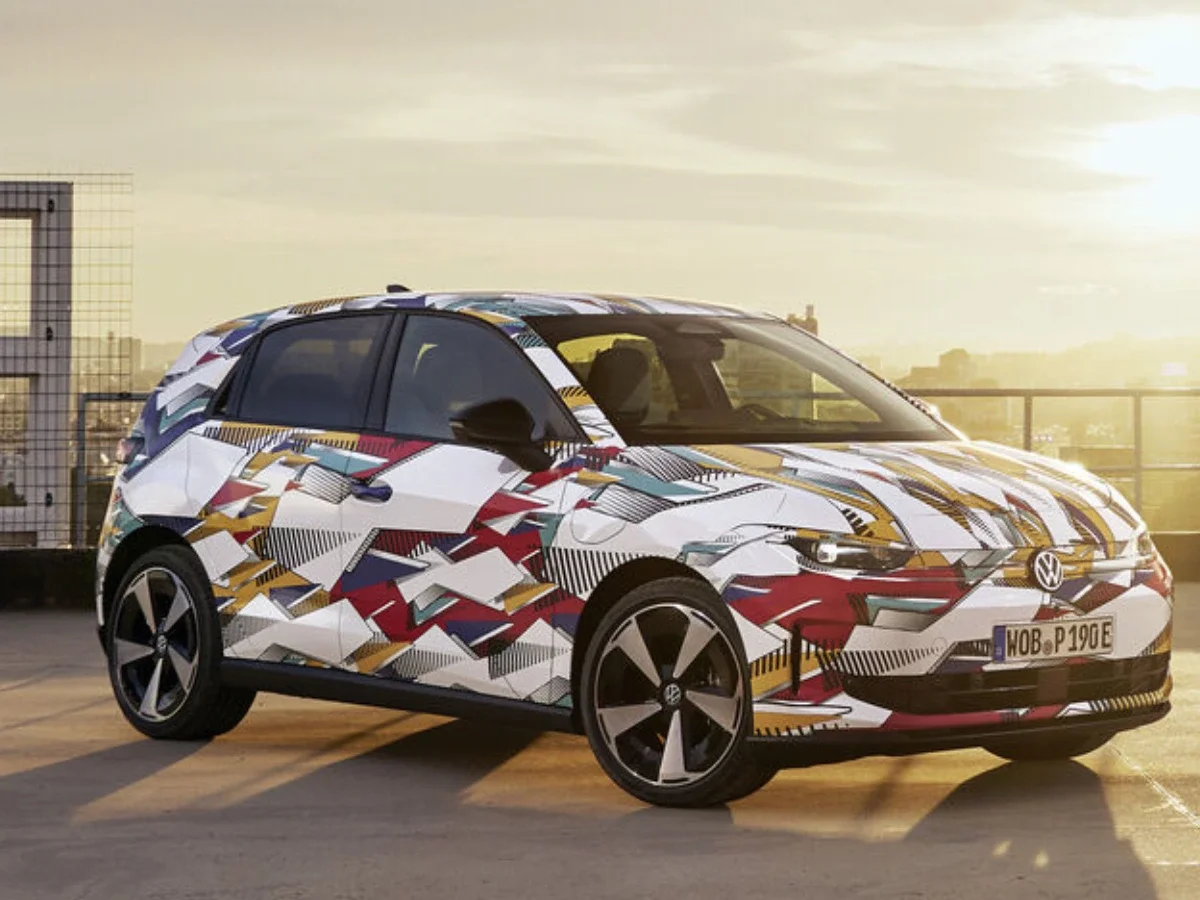
Among the models expected to be launched in 2026, the Volkswagen ID.Polo has attracted the most attention. This fully electric Polo is designed as a compact SUV around four metres in length. Its launch expectation has created considerable excitement, especially for India’s growing EV market.
Last year, in the later months, the brand globally revealed key details about the ID.Polo. It is confirmed to debut in spring 2026 and will be offered in three power levels: 85 kW (116 PS), 99 kW (135 PS), and 155 kW (211 PS). A sportier ID.Polo GTI with 166 kW (226 PS) will follow later in the year.
The lower-powered 85 kW and 99 kW models will come with a 37 kWh lithium iron phosphate battery. This battery is simpler, safer, and more cost-effective. It can charge at rapid DC stations up to 90 kW. The higher-powered 155 kW and 166 kW versions will use a larger 52 kWh nickel manganese cobalt battery. This gives a range of up to 450 km and allows faster charging at up to 130 kW.
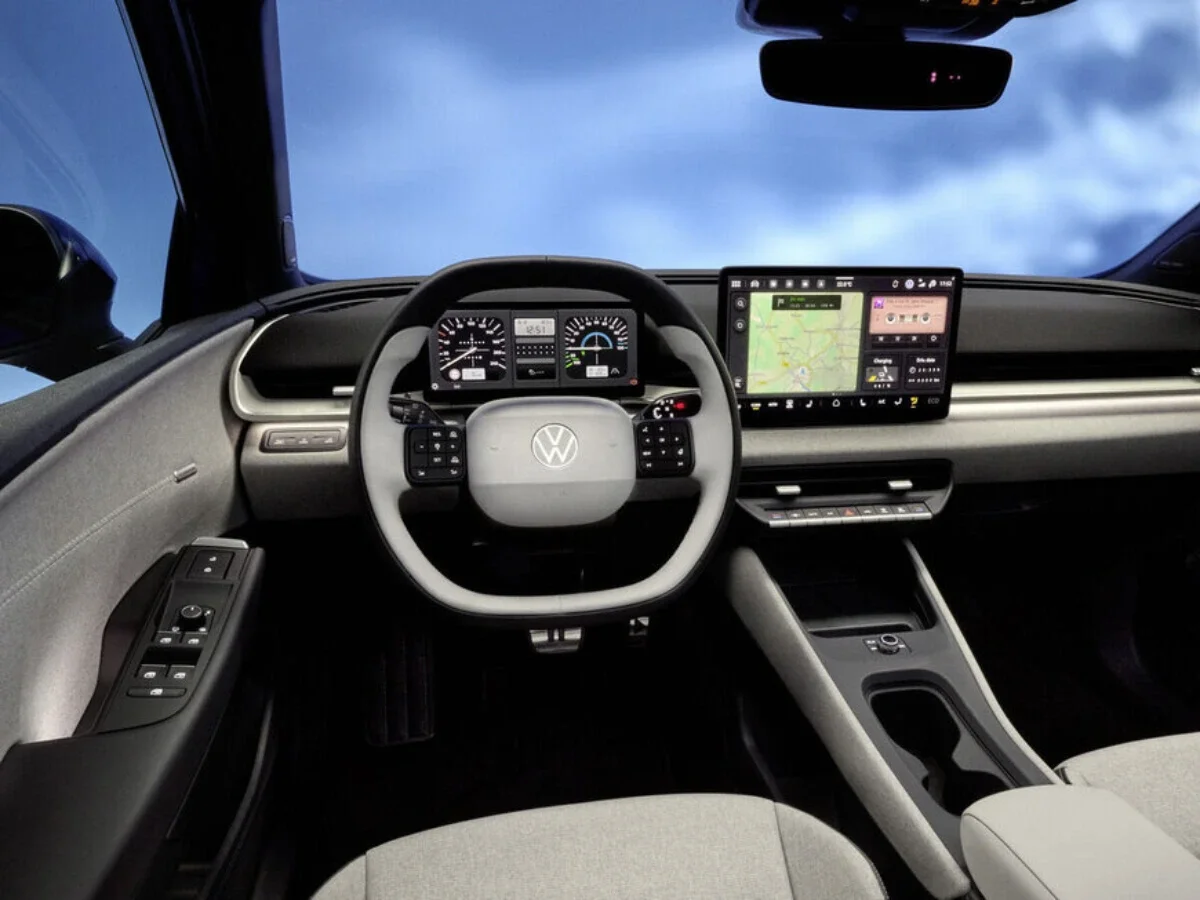
In India, Volkswagen is reportedly considering assembling these EVs locally rather than importing them. This cautious approach makes sense because EV pricing and long-term profitability depend heavily on local rules and incentives.
Initially, Volkswagen and Skoda were also expected to develop an EV around the size of their compact SUVs, like the Kushaq or Taigun. With the ID.Polo, however, the focus has shifted to a smaller, city-friendly segment. This makes sense for India, where buyers want compact, practical EVs for daily commutes and urban driving. The ID.Polo has raised expectations for Volkswagen's electric entry.
Meanwhile, stay updated with all the latest happenings & developments in the automotive world by joining our official AUTOVERSE WhatsApp community. Also, don’t forget to check out our YouTube channel, AUTOVERSE by CARS24, for key details & visuals.