GST on Used Cars in India (2026): How Tax Works When You Buy or Sell a Pre-Owned Car
- 1If you sell your own car directly or to a dealer, you pay no GST on the sale
- 255th GST Council introduced a uniform 18% GST on used-car dealer margins
- 3A registered dealer pays 18% GST only on its margin
- Do You Pay GST When You Buy or Sell a Used Car?
- How GST on Used Cars Works: The Margin Scheme Explained
- What Changed in 2025: The 55th GST Council Meeting and the Single 18% Rate
- 18% GST on Used Cars: What It Means If You Are Selling
- 18% GST on Used Cars: What It Means If You Are Buying
- Buying From a Dealer vs Buying From an Individual: Are You Paying Extra?
- Used Car vs New Car Taxation After GST 2.0
- GST on Used Electric Cars
- Other Taxes and Charges When You Buy or Sell a Used Car
- What Buying From an Organised Platform Like Cars24 Gets You
The December 2024 headlines about "18% GST on used cars" left many buyers and sellers with the wrong impression. Some read them as a sign that every used car would cost 18% more. Others assumed that selling their own car would now come with a tax bill. Neither is the case. This guide covers how GST on used cars works today, what changed and when, what it means for you as a seller or a buyer, and the other taxes and charges that come with a used car deal.
Do You Pay GST When You Buy or Sell a Used Car?
Most people who buy or sell a used car in India never pay GST directly. The tax applies only when a GST-registered business sells the car. Even then, it is charged on that business's profit on the car, not on the full price.
| Who sells | Who buys | GST on the sale |
| You, as an individual | Another individual | None |
| You, as an individual | A dealer or platform | None |
| Another individual | You | None |
| A GST-registered dealer | You | 18% of the dealer's margin, built into the price you pay |
| A business selling a car it used for its own work | Anyone | 18% of the margin, provided no input tax credit was claimed on the car |
GST is a tax on supplies made in the course of business. Selling your personal car is not a business activity, so the law has nothing to tax.
How GST on Used Cars Works: The Margin Scheme Explained
A registered dealer pays GST on its margin, not on the car's full value. This is the margin scheme, set out in Rule 32(5) of the CGST Rules, 2017, and applied to old and used vehicles through a rate notification issued in January 2018.
The logic is straightforward. A car is fully taxed when it is first sold new. Taxing its entire value again every time it changes hands would stack tax on tax, so the law taxes only the value the dealer adds.
GST payable = 18% x (Selling price - Purchase price)
Three rules shape how this works in practice:
- Margin only: The tax is calculated on the difference between the dealer's selling price and its purchase price. The rest of the car's value is not taxed again.
- No tax on a loss: If the dealer sells a car for less than it paid, the margin is negative and is ignored. No GST is due on that car, and the loss cannot be used to reduce the GST on other cars.
No credit on the car itself: The scheme applies only if the dealer has not claimed input tax credit on the vehicle it bought.
Examples
| Scenario | Dealer bought at | Dealer sells at | Margin | GST at 18% |
| Typical resale | ₹4,00,000 | ₹4,50,000 | ₹50,000 | ₹9,000 |
| Thin margin on a costlier car | ₹9,00,000 | ₹9,30,000 | ₹30,000 | ₹5,400 |
| Sold at a loss | ₹6,00,000 | ₹5,80,000 | Negative, ignored | Nil |
These figures are illustrative and treat the selling price as the pre-tax value. They do not represent the final price of any particular car. The second row shows why the car's price alone does not decide the tax: a costlier car with a thin margin can carry less GST than a cheaper car with a wider one.
When a Business Sells a Car It Used
Companies, firms and self-employed professionals registered under GST also sell cars they used for work. The same 18% rate applies, with one change in how the margin is worked out. If the business claimed depreciation on the car under income tax law, the margin is the sale price minus the car's depreciated value on the date of sale, and a negative figure is again ignored. A car with a depreciated value of ₹3,00,000 sold for ₹4,00,000, for example, carries GST of ₹18,000 on the ₹1,00,000 margin.
The margin scheme is not available if the business claimed input tax credit on the car. For most businesses, this does not arise, because GST law blocks input tax credit on passenger cars except for specific uses such as dealing in cars, carrying passengers for hire, or running a driving school.
What Changed in 2025: The 55th GST Council Meeting and the Single 18% Rate
The change widely reported as "18% GST on used cars" was a rate unification, not a new tax. The GST Council recommended it at its 55th meeting on 21 December 2024. The government then notified it through Notification No. 04/2025-Central Tax (Rate), which took effect on 16 January 2025. It came through a rate notification.
Rates Before and After 16 January 2025
| Used vehicle sold by a registered dealer | Rate on margin until 15 January 2025 | Rate on margin from 16 January 2025 |
| Petrol, LPG or CNG, engine of 1200cc or more and length of 4000mm or more | 18% | 18% |
| Diesel, engine of 1500cc or more and length of 4000mm or more | 18% | 18% |
| SUVs with an engine above 1500cc, length above 4000mm and ground clearance of 170mm | 18% | 18% |
| All other used vehicles, including small cars, sub-4-metre compact SUVs and EVs | 12% | 18% |
The older categories required both conditions to be met. A sub-4-metre compact SUV with a 1.5-litre diesel engine, for instance, fell in the 12% group because it missed the length condition. After 16 January 2025, that distinction stopped mattering.
The practical effect fell on dealers selling small cars, compact SUVs and electric cars, a large part of the used car market. Their GST on each car's margin went up by six percentage points. Larger cars and SUVs saw no change.
Was It a New Tax?
No. Dealers were already paying GST on their margin before 2025, at either 12% or 18%. The 55th Council meeting raised the lower rate and put every used vehicle under one rate. It did not bring private sales into GST, and it did not move the tax from the margin to the full value of the car.
How Used Car GST Has Evolved Since 2017
| Date | What happened | Effect on used cars |
| 1 July 2017 | GST introduced | Used vehicles sold by dealers attracted the same rates as new ones, 28% GST plus compensation cess, on the dealer's margin |
| 25 January 2018 | Concessional rates notified after the 25th GST Council meeting | 18% on the margin for larger cars and SUVs, 12% for all others, and compensation cess reduced to nil |
| 21 December 2024 | 55th GST Council meeting | Recommended a single 18% rate for all used vehicles, EVs included |
| 16 January 2025 | Notification No. 04/2025-Central Tax (Rate) in force | 18% on the margin for every used vehicle |
| 22 September 2025 | GST 2.0 in force | New-car rates restructured and compensation cess on cars removed; the used-car rate stayed at 18% on the margin |
| 8 October 2026 | 57th GST Council meeting | Recommended clarifying that margin-scheme dealers can claim credit on business costs other than the cars they buy |
18% GST on Used Cars: What It Means If You Are Selling
When you sell your own used car, the 18% rate does not apply to you. You pay no GST whether you sell to a friend, a stranger or a dealer, and you do not need a GST registration to sell.
How GST Figures in a Dealer's Offer
A dealer's offer starts from the price it expects to resell the car at. From there it accounts for the costs it will carry before that resale: inspection, reconditioning, paperwork, holding the car in stock, and the GST on its margin. GST is one of several inputs. Because it applies only to the margin, its effect on your offer is small next to the car's age, condition, mileage, ownership history and the demand for that model.
No Capital Gains Tax on a Personal Car
Income tax law excludes personal effects, meaning movable property held for personal use, from the definition of a capital asset. A car you have used yourself falls in that category. Selling it does not create a taxable capital gain, even in the uncommon case where you sell it for more than you paid.
The exclusion depends on actual personal use. Courts have held that a vintage car kept as a collectible, with no evidence of personal use, is a capital asset and its sale can attract capital gains tax. A car owned by a business is dealt with under business tax rules instead.
18% GST on Used Cars: What It Means If You Are Buying
When you buy a used car from a registered dealer, the GST built into your price is 18% of the dealer's margin on that car, not 18% of the price. On most purchases, that works out to a small fraction of what you pay.
The table below shows the arithmetic. It expresses the dealer's margin as a share of the selling price, so it holds whatever the car costs.
| Dealer margin as a share of the selling price | GST as a share of the selling price |
| 5% | 0.9% |
| 8% | 1.44% |
| 10% | 1.8% |
Margins vary by car, dealer and market conditions, and these rows show the calculation at different levels rather than any particular dealer's margin. The selling price here is the price before GST.
The margin itself is not pure profit. It also covers the dealer's spending on inspection, reconditioning, paperwork and any warranty attached to the car, which the next section looks at in detail.
Buying From a Dealer vs Buying From an Individual: Are You Paying Extra?
A dealer car usually carries a higher sticker price than a comparable car sold privately. Whether that is an extra cost or a fair price depends on what the margin pays for, and on what you would otherwise do and pay for yourself.
What a Private Sale Offers
In a private sale, there is no dealer margin and no GST, and you deal directly with the person who drove and maintained the car. If the seller has complete service records and the car passes an independent check, it can be a sound purchase.
Where Private Sales Carry Risk
- Condition: There is no inspection unless you arrange and pay for one. Accident repairs, flood damage and a tampered odometer are hard for an untrained eye to spot.
- Legal history: You have to check for an active loan on the car, unpaid challans, and whether the RC details match the car in front of you.
- Paperwork: The RC transfer, insurance transfer and any NOC are your responsibility. Until the transfer is recorded, the car is not legally yours.
- After-sale support: There is no warranty and no return option. A fault that shows up a week later is yours to fix.
Payment risk: Large payments between strangers can go wrong for either party.
What the Dealer's Price Covers
| What an organised dealer typically provides | What it protects you from | The private-sale alternative |
| Multi-point inspection | Hidden mechanical, electrical or structural faults | Hiring a mechanic or inspection service yourself |
| Reconditioning before sale | Repair bills for worn parts soon after purchase | Paying for those repairs after you buy |
| Document and history checks | An open loan, pending challans or mismatched records | Checking VAHAN, challan records and the lender yourself |
| RC and insurance transfer | Delays, and liability gaps while the car is in limbo | RTO visits or agent fees, plus follow-up |
| Warranty | Repair costs for covered faults in the early months | Usually not available |
| Return window | Being stuck with a car that does not suit you | Not available |
| Financing | Arranging a used car loan separately | Approaching lenders on your own |
Not every dealer offers all of these, and terms differ. Compare what is included, not just the price.
Common Myths
- "A private sale always works out cheaper": Only on the sticker. Add an inspection, the repairs a reconditioned car would already have had, and the time and cost of the transfer, and the gap narrows. Some private-sale risks cannot be removed at any price.
- "Used cars became 18% more expensive in 2025": The 2025 change raised the rate on the dealer's margin from 12% to 18% for smaller cars and EVs. Where the margin is 10% of the price, that adds about 0.6% to what you pay.
"Every used car dealer offers the same protection": Only dealers holding an authorisation certificate under the motor vehicle rules can become the deemed owner of cars handed to them. Inspection standards, warranties and return policies also vary from one dealer to the next.
Used Car vs New Car Taxation After GST 2.0
A new car is taxed on its full value; a used car bought from a dealer is taxed only on the dealer's margin. GST 2.0, in force from 22 September 2025, changed the rates on new cars but not that basic difference.
Under GST 2.0, small cars moved from 28% GST plus compensation cess to a flat 18%. Small here means petrol, CNG or LPG cars with engines up to 1200cc, and diesel cars with engines up to 1500cc, in both cases no longer than 4000mm. Larger cars and SUVs moved to a single 40% rate with no cess, down from combined rates that reached 50% for the biggest SUVs. Electric cars stayed at 5%.
| Factor | New car | Used car from a registered dealer |
| GST rate | 5% for EVs, 18% for small cars, 40% for larger cars and SUVs | 18% for every type |
| What the rate applies to | Full transaction value | Dealer's margin only |
| Compensation cess | Removed from 22 September 2025 | Nil since January 2018 |
| Road tax | Paid in full at first registration | Already paid by the first owner; generally not charged again on a transfer within the same state |
| Registration | New registration charges | Ownership transfer fee |
| Insurance premium | Based on a higher insured declared value | Based on a lower insured declared value, because the car has depreciated |
What GST 2.0 Did to Used Car Prices
Cheaper new cars put downward pressure on used prices, because a used car has to stay meaningfully cheaper than the new one to sell. Used car sellers repriced many models around the September 2025 change. For buyers, that meant lower used prices.
Is Buying Used Still Worth It in 2026?
For most buyers, yes, but tax is not the main reason. Depreciation is. A car loses a large share of its value in its first few years, and buying used means someone else has absorbed that loss.
GST on Used Electric Cars
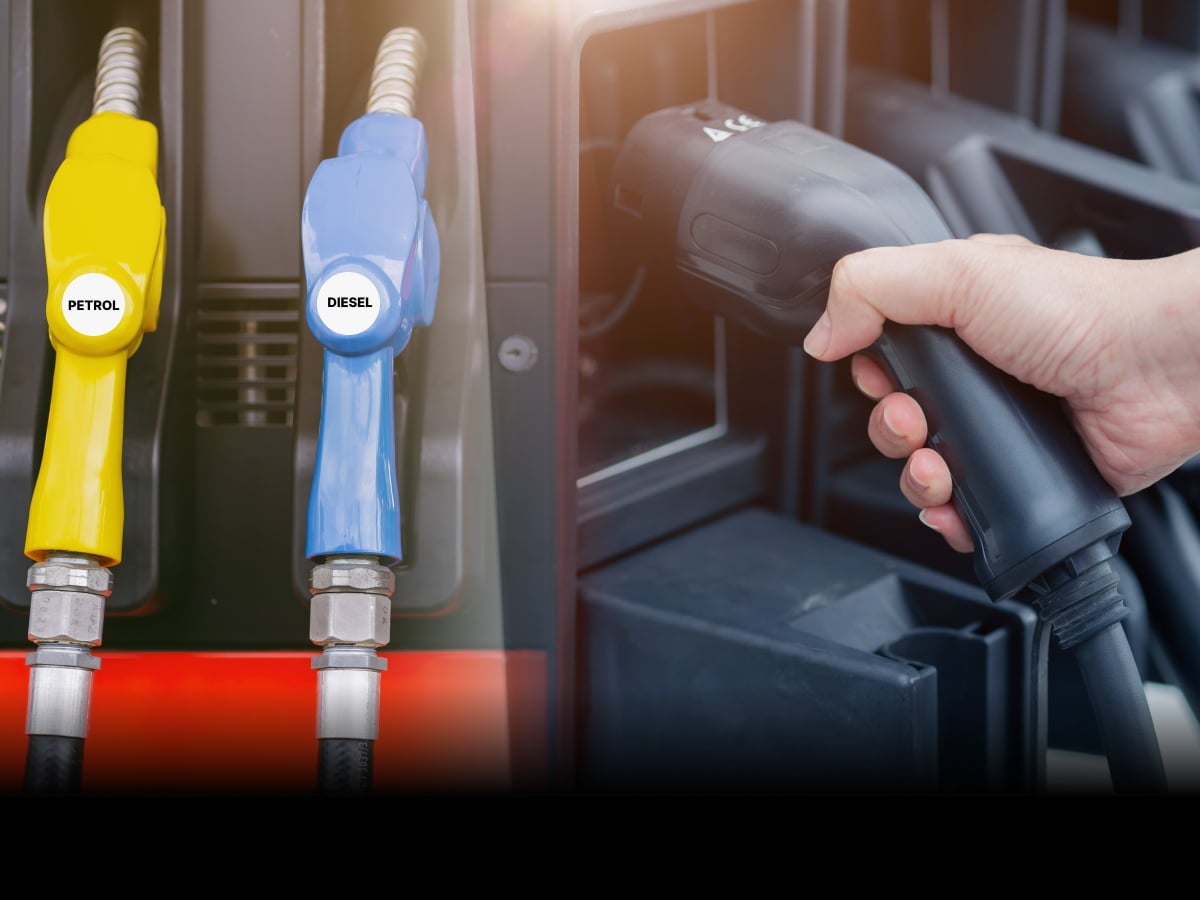
A used electric car sold by a registered dealer carries 18% GST on the dealer's margin. Until 15 January 2025 the rate was 12%. The change drew attention because the rate on used EVs rose while new EVs stayed at a concessional 5%.
Private sales of used EVs between individuals carry no GST, the same as any other personal car.
Checks That Matter More Than Tax on a Used EV
- Battery health: Ask for the battery's state of health (SoH), its current capacity compared with when it was new. It has more bearing on the car's value than any tax.
- Battery warranty: Find out how much of the battery warranty remains and whether it transfers to a second owner. Terms differ by manufacturer.
- Charging equipment: Confirm whether the home charger and portable charging cable come with the car.
Charging history: Frequent fast charging can affect battery wear, so ask how the car was usually charged.
Other Taxes and Charges When You Buy or Sell a Used Car
GST is only one of the costs in a used car deal. The others depend on where the car is registered, where it will be driven, and what it sells for.
| Charge | Who pays | When it applies |
| RC transfer fee | Usually the buyer | On every change of ownership; the amount is set by each state |
| Road tax | The first owner, at registration | Generally not charged again on a transfer within the same state; payable afresh if the car is re-registered in another state |
| TCS at 1% | The buyer, collected by a dealer or other covered seller | When the sale value is above ₹10 lakh; credited against the buyer's income tax |
| Hypothecation removal | The seller | When the car was bought on a loan |
| Insurance transfer | The buyer | Within 14 days of the ownership transfer |
| Pending challans | The registered owner at the time of the offence | Best cleared before the sale, since they can hold up the RC transfer |
What Buying From an Organised Platform Like Cars24 Gets You
An organised platform earns its margin through the checks and commitments it takes on, which a private seller is rarely in a position to offer. For cars from its own inventory, these are the main reasons why used car buyers trust Cars24.
| Stage | What happens | Why it matters |
| Inspection | Each car goes through a 300-point inspection covering mechanical, electrical, structural and legal checks | Faults and paperwork problems surface before you pay, not after |
| Repair assurance | Repairs at no extra cost for the first 30 days or 1,500 km, whichever comes first | Covers issues that only appear in daily use |
| Return window | The car can be returned within 30 days or 999 km, whichever comes first, for a refund after applicable deductions | You can live with the car before committing to it |
| Standard warranty | 12 months of cover on key mechanical components such as the engine, transmission and drivetrain | Limits the cost of a major failure in the first year |
| Extended cover | An optional Lifetime Warranty plan, valid up to 12 years from registration or 1,50,000 km, whichever is earlier | Longer protection for owners who keep a car for many years |
| Financing | Used car loan options through the platform | One less transaction to arrange separately |
Frequently Asked Questions
Expand all