Honda City e:HEV Real World Mileage: City, Highway & Owner Reports
- 1Discover the exact Honda City e:HEV real world mileage for your daily commutes.
- 2Maximise your Honda City e:HEV hybrid real world mileage with our smart tips.
- 3Uncover the true average and fuel efficiency secrets of this popular hybrid car.
- Number To Consider When Buying Honda City e:HEV
- Honda City e:HEV Real World Mileage
- Claimed vs Real World Mileage
- Honda City Hybrid Real Mileage Reported by Owners
- Honda City e:HEV Mileage in Different Driving Conditions
- Is The City Hybrid Fuel Efficient?
- Running Cost of Honda City e:HEV
- Tips to Improve Mileage
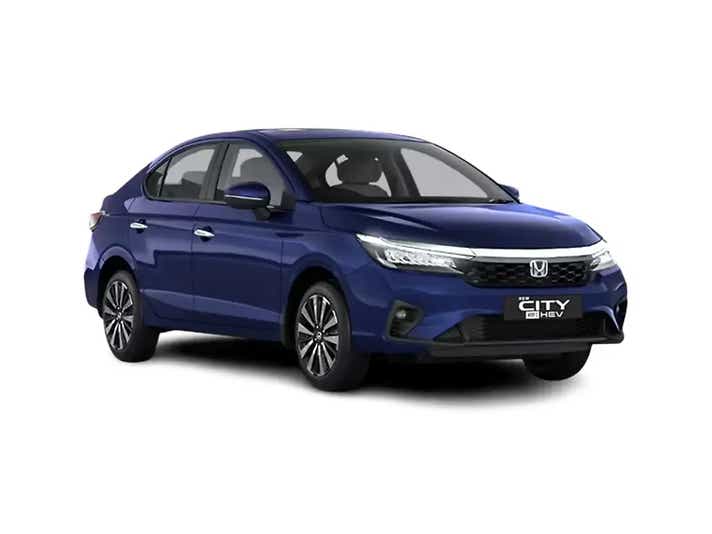
When stepping into the world of electrified vehicles, grasping the practical fuel economy becomes paramount to making an informed purchasing decision. The standard iteration of the Honda City has enjoyed a massive legacy as a household favourite among buyers who prioritise reliability and comfort. However, the introduction of the strong hybrid powertrain has attracted a completely new demographic of users who strictly prefer maximum fuel efficiency.
For this advanced model, you can expect a Honda City e:HEV real world mileage range of 22 to 24 km/l under mixed driving conditions. Because this vehicle operates as a dedicated strong hybrid, it does not offer standard diesel or standalone manual petrol variants within this specific badge.
The actual fuel economy you achieve will always fluctuate based on traffic conditions, your throttle input, and overall driving style. It is incredibly important to set realistic expectations before bringing the car home, as laboratory figures rarely translate perfectly to daily street driving.
Number To Consider When Buying Honda City e:HEV
The table below outlines the core technical specifications, engine output, and official efficiency figures you need to consider.
| Specification | Hybrid Petrol Variant |
| Engine Type | 1.5-litre Atkinson Cycle i-VTEC + Two-Motor e-CVT |
| Engine Capacity | 1498 cc |
| Power | 126 PS (Combined System Power) |
| Torque | 253 Nm (Maximum Motor Performance) |
| Transmission Options | Automatic (e-CVT) |
| ARAI Mileage | 27.1 km/l |
| Real World Mileage | 22 to 24 km/l |
| Fuel Tank Capacity | 40 Litres |
While the manufacturer provides an outstanding official figure of 27.1 km/l, real-world mileage differs from official figures depending on driving conditions, terrain, passenger load, and how frequently the electric motor engages during your daily commute. The hybrid architecture constantly shifts between using battery power and petrol power, meaning your driving environment plays a massive role in the final fuel economy number you see on the dashboard.
Honda City e:HEV Real World Mileage
The overall fuel efficiency of any vehicle varies significantly depending on the engine type, the transmission it uses, and the driving conditions you encounter. The sophisticated powertrain in this vehicle behaves quite differently compared to a conventional internal combustion setup. It utilises a complex intelligent multi-mode drive system that continuously evaluates your speed and battery charge to optimise the real average.
Honda City e:HEV Hybrid Real World Mileage
This specific variant pairs a highly efficient Atkinson cycle petrol engine with a dual-motor electric hybrid system and an e-CVT automatic transmission. At lower urban speeds, the electric traction motor handles the majority of the propulsion. This drastically improves the Honda City e:HEV hybrid real world mileage since the petrol engine remains dormant during heavy stop-and-go traffic.
| Driving Condition | Mileage |
| City | 20 to 23 km/l |
| Highway | 24 to 26.5 km/l |
| Mixed | 22 to 24 km/l |
From a driver's perspective, this hybrid system acts like an absolute cheat code for congested commutes. The instant torque provided by the electric motor makes city overtaking completely effortless and silent. When you merge onto the highway and gain speed, the petrol engine seamlessly engages a lock-up clutch to directly drive the wheels. This transition ensures you maintain a stellar real average without sacrificing any passing power at high speeds. Because the electric motor assists during heavy acceleration, the engine never feels strained, which further prevents unnecessary fuel consumption.
Claimed vs Real World Mileage
It is incredibly common for car buyers to notice a significant gap between the laboratory tested fuel efficiency figures and the numbers they actually manage to get on the open road.
| Variant | ARAI Mileage | Real Mileage |
| Honda City e:HEV ZX | 27.1 km/l | 22 to 24 km/l |
| Honda City e:HEV V | 27.1 km/l | 22 to 24 km/l |
A noticeable difference between the claimed and practical figures exists due to several harsh realities of daily commuting.
- Controlled environment testing removes unpredictable elements like wind resistance, uneven road gradients, and sudden emergency braking entirely from the testing equation.
- Ideal testing conditions do not account for the heavy electrical load drawn by modern infotainment screens, headlights, and constant automatic climate control operation.
The impact of traffic and driving behaviour plays a massive role in the real world. Hard acceleration drains the hybrid battery much faster than anticipated, forcing the petrol generator to burn more fuel to recharge the system.
Honda City Hybrid Real Mileage Reported by Owners
Looking at owner feedback from reputable automotive forums and user reviews gives us additional insight into what the vehicle truly achieves on Indian roads. Analysing multiple user reports from various automotive communities shows that mileage varies heavily depending on driving conditions and usage patterns. Enthusiasts and daily office commuters alike share valuable data that paints a very clear picture of the Honda City e:HEV real world mileage.
The community data reveals highly consistent and reliable efficiency ranges across the board. Most drivers report that their mixed driving mileage sits comfortably around the 22 to 24 km/l mark. For those who frequently travel between states, the highway mileage often peaks between 24 and 26.5 km/l when cruising steadily. Furthermore, city mileage remains incredibly impressive at 20 to 23 km/l during regular urban commutes, which is a rare feat for any sedan of this size.
Several key factors heavily influence the fuel economy reported by everyday owners:
- AC usage: Running the climate control constantly on extremely hot summer days forces the petrol engine to fire up more often to power the compressor, which naturally lowers the overall fuel efficiency.
- Passenger load: Carrying five adult passengers along with luggage in the boot adds substantial weight. This means the electric motor requires far more energy to move the vehicle from a standstill, depleting the battery faster.
- Driving style: Smooth throttle inputs keep the vehicle in pure EV mode for much longer periods. Aggressive drivers who constantly floor the accelerator will see a sharp drop in their real average.
Traffic conditions: Heavy bumper-to-bumper traffic actually benefits this specific hybrid system. The regenerative braking hardware constantly captures kinetic energy to recharge the battery during frequent stops.
Honda City e:HEV Mileage in Different Driving Conditions
Understanding how the hybrid architecture reacts to different environments helps you set realistic expectations for your own daily routes.
| Driving Condition | Hybrid Petrol Mileage |
| Heavy city traffic | 20 to 22 km/l |
| Moderate city driving | 21 to 23 km/l |
| Highway cruising | 24 to 26.5 km/l |
| Mixed driving | 22 to 24 km/l |
Unlike traditional internal combustion cars that burn excessive fuel while idling in traffic, this sedan shines brightly in congested areas. However, highway mileage is usually higher than city mileage when you are cruising smoothly at optimal speeds around 80 to 90 km/h. This happens because the petrol engine engages directly with the front wheels at its absolute peak thermal efficiency. If you push the vehicle aggressively to triple-digit speeds on the expressway, the aerodynamic drag increases exponentially, causing the highway fuel economy to understandably drop back down.
Is The City Hybrid Fuel Efficient?
When assessing the market for your next family purchase, this vehicle stands out as an absolute champion of fuel economy.
| Vehicle | Real World Mileage | Claimed Mileage |
| Honda City e:HEV | 22 to 24 km/l | 27.1 km/l |
| Volkswagen Virtus 1.0 AT | 13 to 15 km/l | 18.45 km/l |
| Hyundai Verna 1.5 IVT | 12 to 14 km/l | 19.60 km/l |
| Segment Average | 14 to 16 km/l | 18 to 20 km/l |
This sedan is considered exceptionally fuel-efficient for its category. It consistently delivers a fantastic real average that easily outshines its standard petrol rivals. While the real-world mileage vs claimed mileage comparison shows a standard percentage drop that is typical of all passenger vehicles, the absolute numbers remain entirely unmatched in the midsize sedan segment. You are essentially getting hatchback levels of fuel consumption in a spacious, premium family car.
Running Cost of Honda City e:HEV
To truly understand the financial benefit of the Honda City e:HEV real world mileage, we must look at the realistic monthly running cost for the hybrid petrol engine. Assuming a current petrol price of roughly Rs 95 per litre in Delhi and a daily driving distance of 30 kilometres, you would cover 900 kilometres a month. With an average real world mileage of 23 km/l, your vehicle would consume just over 39 litres of petrol.
- This brings your monthly fuel expenditure to approximately Rs 3,705.
- A standard petrol automatic sedan averaging 13.5 km/l would consume nearly 67 litres for the exact same distance.
- That standard petrol car would cost you around Rs 6,365 monthly to run.
- The hybrid setup, therefore, saves you roughly Rs 2,660 every single month on fuel alone.
Over a standard 5-year ownership period, these consistent monthly savings accumulate, allowing you to keep an extra Rs 1,59,600 in your pocket.
Tips to Improve Mileage
To extract the absolute maximum Honda City e:HEV hybrid real world mileage from your vehicle, apply these highly practical driving habits to your daily routine.
- Maintaining correct tyre pressure reduces unnecessary rolling resistance and lessens the heavy physical burden on the electric traction motor.
- Smooth acceleration and braking allow the regenerative braking system ample time to capture the maximum amount of kinetic energy, which actively recharges the lithium-ion battery.
- Avoiding excessive idling is generally handled by the car itself, but ensuring you are not sitting parked with the AC blasting for long hours will preserve your battery life.
- Regular servicing keeps the engine oil fresh, the air filters clean, and ensures the internal combustion engine operates at its peak mechanical efficiency.
- Maintaining optimal speed on highways between 80 and 90 km/h keeps the engine securely in its direct drive sweet spot, preventing unnecessary fuel burn.
- Anticipating traffic flow ahead of you prevents harsh, sudden braking. Allowing the car to coast up to a red light regenerates power naturally.
- Using the climate control intelligently on moderate days rather than keeping it pinned at the lowest possible temperature saves considerable battery juice.
- Keeping the boot entirely empty of unnecessary heavy items improves the overall power-to-weight ratio of the sedan.
- Utilising the eco mode button alters the throttle response to be less aggressive, which naturally coaches you into a highly efficient driving rhythm.
Frequently Asked Questions
Expand all