Maruti Suzuki Eeco Real World Mileage: The Complete Guide
The Maruti Eeco is a highly utilitarian people mover that has dominated the Indian commercial and private transportation sector for over a decade. Built as a direct successor to the legendary Omni, it has established a formidable legacy based on robust engineering, tremendous interior space, and a highly dependable powertrain. Whether utilised as a school van, an ambulance, a cargo carrier, or a large family vehicle, its core appeal revolves around incredibly low overall running costs.
For budget-conscious buyers, determining the exact Maruti Eeco real world mileage is the most critical step before finalising a purchase. It is important to recognise that the practical fuel economy you achieve will drastically differ from the officially claimed ARAI figures. The ARAI certification process takes place in a highly controlled laboratory environment. Therefore, it is crucial to establish realistic expectations regarding the true fuel economy before bringing this van home, ensuring you are financially prepared for the practical expenses associated with your specific daily usage.
Numbers To Consider When Buying Maruti Suzuki Eeco
Before evaluating the practical fuel economy, we must review the mechanical hardware dictating its performance. The current iteration is powered by a reliable 1.2 litre K Series Dual Jet, Dual VVT engine. The table below meticulously outlines the exact engine specifications, available transmission options, fuel types, claimed ARAI fuel efficiency, and the respective fuel tank capacities.
| Model Name | Engine Specs (Power & Torque) | Transmission Options | Fuel Options | ARAI Mileage | Fuel Tank Capacity |
| Maruti Eeco | 80.76 bhp & 104.4 Nm | 5 Speed Manual | Petrol | 19.71 kmpl | 32 Litres |
| Maruti Eeco | 71.65 bhp & 95.0 Nm | 5 Speed Manual | CNG | 26.78 km/kg | 60 Litres (Water Capacity) |
Maruti Suzuki Eeco Real World Mileage
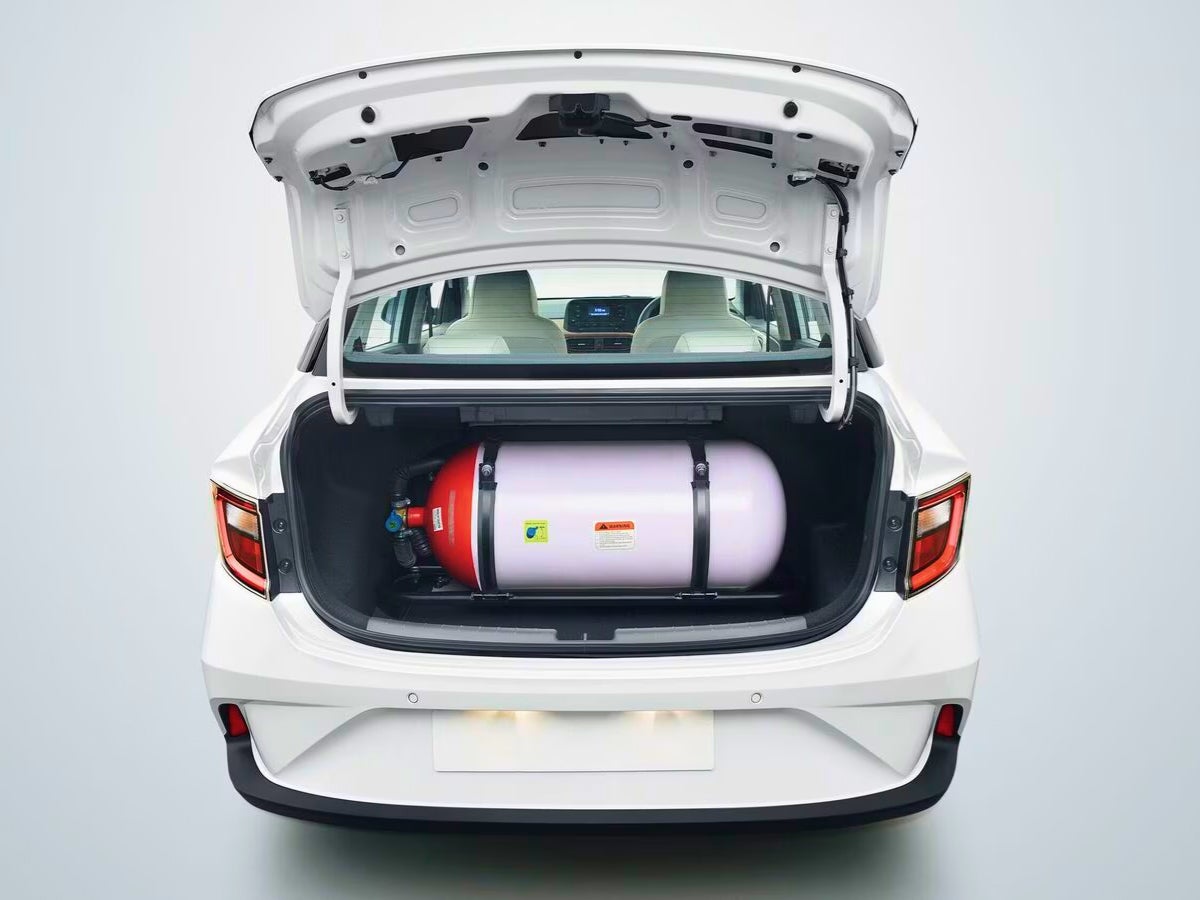
When analysing the Maruti Eeco real world mileage, you must evaluate its fuel storage capacity. The petrol variant comes equipped with a 32-litre tank, providing an expected aggregate range of approximately 420 km to 460 km on a complete refuel. The factory-fitted CNG models hold around 8 kg to 9 kg of compressed natural gas, translating to an expected range of roughly 180 km to 210 km before requiring a mandatory top-up.
This expected range heavily depends on a multitude of factors. Your individual driving style, constant payload carried, tyre maintenance, and frequency of air conditioning usage play a massive role in dictating the final numbers. Let us meticulously break down figures across the available powertrain combinations.
Maruti Suzuki Eeco Petrol Manual Mileage
| Driving Condition | Real World Mileage Range |
| City | 12.0 kmpl to 13.5 kmpl |
| Highway | 15.5 kmpl to 17.0 kmpl |
| Mixed | 13.5 kmpl to 15.0 kmpl |
From a driver's perspective, the five-speed manual transmission mated to the K series petrol engine offers a surprisingly peppy driving experience. Because the vehicle is primarily designed to haul heavy loads, the gearing is noticeably shorter in lower ratios.
In dense urban environments, navigating through narrow streets yields a highly respectable average. On the open highway, maintaining a strict and steady speed below 80 kmph is absolutely vital. The tall, boxy aerodynamic profile creates substantial wind resistance at higher speeds, meaning pushing the speedometer past 90 kmph will see your overall average drop significantly.
Maruti Suzuki Eeco CNG Mileage
| Driving Condition | Real World Mileage Range |
| City | 19.0 km/kg to 21.0 km/kg |
| Highway | 23.0 km/kg to 25.0 km/kg |
| Mixed | 21.0 km/kg to 23.0 km/kg |
For fleet operators and commercial buyers, the manual CNG variant is the absolute default choice. The Maruti Eeco CNG real world mileage is exceptionally good and serves as the primary reason for its unrivalled dominance in the commercial passenger segment. Driving this variant requires a slightly patient approach on uphill inclines, but the incredible average makes the Maruti Eeco real world mileage in CNG mode a brilliant financial proposition for high-mileage users.
Claimed vs Real World Mileage
There is a distinct gap between manufacturer laboratory claims and actual performance on public roads. Here is a direct tabular comparison showcasing the exact difference between officially certified ARAI figures and the practical Maruti Eeco real world mileage.
| Engine & Transmission | Claimed ARAI Mileage | Real World Mileage (Mixed) |
| Petrol Manual | 19.71 kmpl | 14.5 kmpl |
| CNG Manual | 26.78 km/kg | 22.0 km/kg |
This difference between official laboratory numbers and practical fuel efficiency exists primarily due to the stringent parameters of the ARAI testing protocol. Official testing is done on a rolling dynamometer inside a controlled facility, ensuring zero wind resistance, no traffic congestion, and a constant ambient temperature. It completely ignores aerodynamic drag caused by the van's boxy shape, the extra weight of seven passengers, and heavy reliance on air conditioning during hot summer months.
Real World Mileage By Owners
To present an accurate picture, we analysed multiple user reports from reputable automotive forums regarding the Maruti Eeco real world mileage. These generic user reports provide unfiltered insights into how the vehicle copes with daily commercial demands and varying ownership styles.
Passenger and Cargo Load: Owners heavily emphasise that weight is the biggest factor affecting fuel efficiency. When fully loaded with seven passengers or equivalent commercial cargo, the engine is placed under immense strain. Users consistently report a visible drop of around 2.0 kmpl on the highway when operating at maximum payload capacity.
Air Conditioning Impact: For variants equipped with factory air conditioning, owners note a significant decrease in the overall average. Given the massive glass area, the AC compressor works overtime to cool the interior. This operation actively reduces the Maruti Eeco petrol real world mileage by roughly 1.5 kmpl during peak summer traffic.
City Congestion: Navigating congested urban markets requires constant clutch slipping and first gear usage. Fleet drivers state that in bumper-to-bumper scenarios, fuel efficiency quickly drops to around 11 kmpl.
Driving Style Variability: Commercial drivers who aggressively accelerate report heavily degraded figures. Conversely, private owners adopting a relaxed driving style easily achieve the upper limits of the anticipated fuel economy.
Comparison of Maruti Eeco with Key Rivals
While this utilitarian van operates in a league of its own without direct boxy van competitors, it is often cross-shopped against other budget-friendly people movers. Here is a brief tabular comparison of the Maruti Eeco real world mileage against three alternative vehicles chosen by practical buyers.
| Car Model | Real World Mileage (Petrol Mixed) |
| Maruti Eeco | 13.5 kmpl to 15.0 kmpl |
| Renault Triber | 14.0 kmpl to 15.5 kmpl |
| Maruti Suzuki WagonR | 15.5 kmpl to 17.5 kmpl |
| Maruti Suzuki Ertiga | 14.5 kmpl to 16.0 kmpl |
On the other hand, if you want to switch back to a traditional, highly frugal hatchback for your personal use, taking a look at the Maruti Suzuki Celerio real world mileage reveals some of the best fuel-saving figures in the country.
Running Cost of Maruti Eeco
Evaluating the long term financial implications of your purchase is highly necessary, requiring the conversion of the Maruti Eeco real world mileage into actual monthly expenses. Let us calculate this using the current petrol price in Delhi, approximately ₹94.77 per litre, and an estimated CNG price of roughly ₹76.00 per kg. We will consider a realistic example of driving 30 km daily, equating to a total monthly distance of 900 km.
For the petrol manual version delivering a mixed average of 14.5 kmpl, you would consume about 62 litres of fuel each month. This translates to a monthly running cost of approximately ₹5,875.
For the highly efficient CNG variant returning a practical average of 22.0 km/kg, you would need roughly 41 kg of natural gas to cover the exact same distance. This drastically reduces your monthly running cost to an impressive ₹3,116.
Over a standard 5 year commercial ownership cycle, assuming fuel prices remain static, total fuel expenditure for the petrol variant will be around ₹3,52,500.
In sharp contrast, running the factory-fitted CNG variant over the identical 5 year timeframe will cost roughly ₹1,86,960. This monumental saving of nearly ₹1,65,540 highlights exactly why the Maruti Eeco CNG real world mileage is highly prized by fleet operators everywhere.
Tips to improve the mileage of the Maruti Eeco
Whether you are adding a new Maruti Suzuki Eeco to your business fleet or picking up a used Maruti Suzuki Eeco for family utility, extracting every single kilometre from your fuel tank is entirely possible if you consciously adopt highly efficient driving habits. Here are five practical and proven tips to massively improve your fuel economy on a daily basis:
Strictly Monitor Tyre Pressure: Always keep tyres inflated to precise manufacturer-recommended levels, especially when carrying heavy loads. Lower Maruti Suzuki Eeco tyre pressure creates a massive contact patch with the road, significantly increasing rolling resistance and forcing the engine to burn extra fuel.
Avoid High Speed Cruising: The boxy, flat front design of this van is highly un-aerodynamic. Driving above 80 kmph creates a massive wall of wind resistance. Stick to steady speeds between 60 kmph and 70 kmph on the highway to achieve the best possible Maruti Eeco real world mileage.
Manage Payload Carefully: Do not carry unnecessary weight when it is not strictly required. Remove unused commercial cargo or heavy roof racks to instantly improve your daily fuel efficiency without extra effort.
Optimise Gear Shifts: The K series engine generates excellent low-end torque. Shift into higher gears as early as possible without lugging the engine. Keeping engine speed low directly boosts the Maruti Eeco petrol real world mileage.
- Turn Off Engine While Idling: Whether waiting at a long traffic signal, loading cargo, or waiting for passengers, turn the engine completely off. Extended idling returns zero fuel economy and unnecessarily wastes precious fuel.
Frequently Asked Questions
Expand all