India's First Ease of Vehicle Ownership Index Launched: No State Scores More Than 6 Out of 10: Andhra Pradesh Tops
- 1No Indian state scores over 6/10 for ease of transferring used-car ownership
- 2100% of surveyed vehicle buyers and sellers relied on an agent for RC transfers
- 3Real vehicle transfer costs run up to 10 times higher than official government fee
- 5.91 to 2.47: How the 15 States Ranked
- 7.90 vs 2.22: Why the Topper Stops Short of 6
- 100% Used an Agent: What 1,000-Plus Buyers and Sellers Reported
- ₹530 Fee, ₹3,000 Bill: The 10x Cost Gap
- 7 Days vs 30-Plus: Where RC Transfers Stall
- 3% vs 14%: The ₹66,000 Road Tax Gap
- 2,032 Dealers, 875 in Kerala: Deemed Ownership's Slow Start
- From 30 Days to 48 Hours: What the Report Wants Changed
NEW DELHI: A used car in India can change hands in an afternoon. Making the buyer its legal owner can take a month or more, cost several times the government fee, and almost always involves an agent.
That is the picture painted by the Ease of Vehicle Ownership Index (EVOI) 2026, released in New Delhi on Wednesday by IndiaTech.org and Consumer VOICE. The index scores 15 states that together account for more than 85% of India's organised used-car market. Andhra Pradesh ranks first at 5.91 out of 10, Kerala second at 5.74, and Uttar Pradesh comes in last at 2.47.
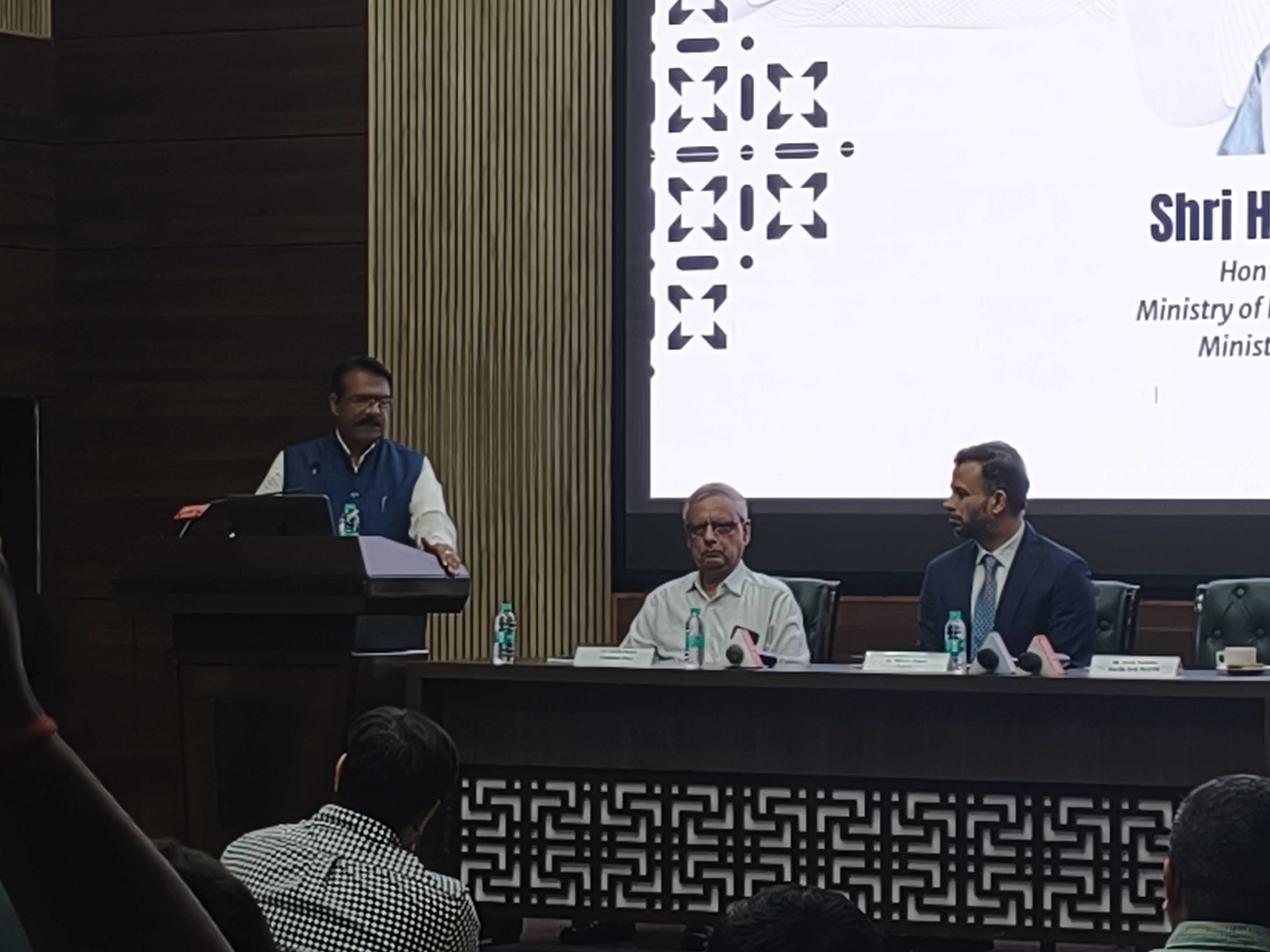
The Honourable Minister of State for Road Transport and Highways, Mr Harsh Malhotra, launched the report and acknowledged the problem. "There are hassles and challenges in the transfer of ownership," he said, blaming uneven implementation across states. He told the authors the ministry would examine their recommendations, but announced no rule change or timeline.
Mr Harsh also stated, “We spend 3 lakh crore on road infrastructure annually, not only to build roads, but also to find innovative ways to make the lives of commuters easier. We have implemented technology for FASTag so tolls can now capture a Tag even at 80 kmph, eradicating toll congestion. We are making continuous efforts to digitise as many processes as possible.”
Another key process in the works is a revamped toll deduction system, where a commuter who needs to travel only 15 km after a toll, rather than the usual 60 to 80 km, will be charged only for the 15 kms covered. This is currently a work in progress and is expected to be implemented in the near future.
The stakes are rising. The report values India's pre-owned vehicle market at USD 36.4 billion in 2025, heading past USD 73.5 billion by 2030. Used cars already outsell new ones 1.3 to 1, and 60% to 65% of buyers in the organised segment are first-time car owners.
5.91 to 2.47: How the 15 States Ranked
Only Andhra Pradesh and Kerala made the index's "moderate ease" band, which runs from 5 to 7.5. No state reached "high ease". Eight states are packed into a narrow 3.8 to 4.3 band, which the report reads as a sign that most states have made incremental progress but are stuck on the same structural problems. West Bengal, Bihar and Uttar Pradesh trail the field, all below 2.6.
The ranking also shows that a high score does not guarantee a fast or cheap RC transfer.
| Rank | State | EVOI score (out of 10) | Typical RC transfer time | All-in cost per transfer (₹) |
| 1 | Andhra Pradesh | 5.91 | 7 to 10 days | 3,000 to 3,500 |
| 2 | Kerala | 5.74 | 20 to 25 days | 500 to 2,400 |
| 3 | Tamil Nadu | 4.58 | 10 to 15 days | 7,000 to 8,000 |
| 4 | Delhi | 4.58 | 20 to 25 days | 3,000 to 3,600 |
| 5 | Karnataka | 4.30 | 25 to 30 days | 2,000 to 2,500 |
| 6 | Gujarat | 4.16 | 15 to 30 days | 5,000 |
| 7 | Madhya Pradesh | 4.10 | 10 to 15 days | 3,000 to 5,000 |
| 8 | Maharashtra | 4.09 | 25 to 30 days | 2,500 to 4,500 |
| 9 | Telangana | 4.09 | 7 to 14 days | 3,000 to 5,000 |
| 10 | Punjab | 4.03 | 15 to 20 days (Amritsar 3+ months) | 6,500 |
| 11 | Rajasthan | 3.97 | 10 to 12 days | 4,500 to 6,500 |
| 12 | Haryana | 3.86 | 14 to 18 days | 2,000 to 4,000 |
| 13 | West Bengal | 2.56 | 15 to 20 days | 2,000 to 4,000 |
| 14 | Bihar | 2.51 | 25 to 30 days | 13,000 to 14,000 |
| 15 | Uttar Pradesh | 2.47 | 30+ days | 5,000 to 8,000 |
7.90 vs 2.22: Why the Topper Stops Short of 6
The EVOI scores states on six pillars, weighted from 10% (transparency) to 20% (policy, digital infrastructure and process efficiency), and combines them with a geometric mean. Unlike a simple average, that lets one weak pillar drag down the whole score.
Andhra Pradesh shows the effect. Its policy score of 7.90 and digital score of 7.51 are the only pillar scores above 7.5 in the entire index, built on a biometric process that has nearly eliminated RTO visits. But its dealer-support score of 2.22 is the lowest of all 15 states, and it has only three registered dealers under the deemed ownership framework. A simple weighted average would have put Andhra Pradesh at about 6.35; the geometric mean holds it at 5.91. Kerala, with more even scores, loses only about 0.05 points the same way.
Rajasthan is the mirror image. It posts the best dealer-support score in the index at 7.32, yet ranks 11th, pulled down by a transparency score of 2.52 and a policy score of 3.39.
100% Used an Agent: What 1,000-Plus Buyers and Sellers Reported
The index draws on a survey of more than 1,000 people who transacted through organised platforms, 79.9% of them sellers. Since 90.8% were dealing in loan-free vehicles, the delays cannot be blamed on hypothecation paperwork.
- Every respondent relied on an agent or intermediary to complete the RC transfer.
- Only 9.6% saw the RC transfer completed within two weeks. Another 39.1% waited between two weeks and six months, and 12.5% waited longer than six months.
- About 39% said the RC transfer was still pending after the sale.
- 62.7% could not say how much they had paid in total. Of those who could, 13.8% paid more than ₹5,000.
- 61.5% learnt about "party peshi", the mandatory in-person appearance at the RTO, only after reaching the office.
28.1% of sellers received challans or legal notices after handing over their vehicle.
That last figure is the one industry players dwell on. "A car may change hands, but ownership and liability do not always follow," said Vikram Chopra of Cars24, adding that buyers often wait to be recognised as legal owners long after paying.
The appetite for a simpler system is there: 52.5% said they would handle the RC transfer themselves if it were fully online and well documented. The report flags one caveat: respondents were reached through industry networks, which may tilt results toward the organised segment.
₹530 Fee, ₹3,000 Bill: The 10x Cost Gap
Cost and affordability is the index's weakest pillar. Twelve of the 15 states score below 3.5, and Uttar Pradesh's 0.56 is the lowest pillar score anywhere in the study.
For a service with an official fee of ₹530, users reported paying upwards of ₹3,000, with most of the surplus going into informal payments. Across states, the report puts the real cost of a RC transfer at nearly 10 times the official fee.
The outliers are steep. Bihar's Muzaffarpur recorded the study's highest cost at ₹13,000 to ₹14,000 per RC transfer, driven by court notaries, vehicle inspections and multiple departmental signatures. At Tamil Nadu's border RTOs in Hosur and Krishnagiri, an official fee of about ₹800 becomes a ₹7,000 to ₹8,000 bill. In Punjab, where physical file submission is still common, navigating the RTO process costs about ₹5,000, roughly six times the ₹900 it costs in fully digitised Chandigarh.
Removing a bank's hypothecation can double the bill, from about ₹2,500 to ₹4,500 in Maharashtra. Only a handful of states, notably Gujarat, Tamil Nadu and Haryana, publish flat-rate fee schedules. "At every step there are people in positions; everyone wants to be kept satisfied," a Haryana respondent told the researchers.
7 Days vs 30-Plus: Where RC Transfers Stall
RC transfers take 7 to 10 days in Andhra Pradesh, where the buyer, seller and, in loan cases, the bank all authenticate biometrically. Telangana takes 7 to 14 days through mandatory slot booking. Uttar Pradesh takes more than 30 days, partly because it demands an inter-RTO NOC for every cross-jurisdiction RC transfer within the state.
The common thread is digitisation that stops halfway. In 13 of the 15 states, applicants who file online must still deliver physical copies to the RTO, and staff in all but four states (Madhya Pradesh, Delhi, Kerala and Andhra Pradesh) insist on physical originals over DigiLocker documents. Karnataka's 25 to 30 days stem largely from pulling a physical "Master File" for vehicles registered at another RTO.
Rules also shift between RTOs in the same state. Amravati and Chhatrapati Sambhajinagar in Maharashtra require party peshi for premium cars, while Mumbai and Pune generally do not.
Then there is the challan trap. Fines on the Parivahan portal can only be paid with an OTP sent to the registered mobile number, which often belongs to a previous owner who can no longer be reached. "If the portal is down for the day, we lose around ₹10,000 worth of productivity," one dealer said.
3% vs 14%: The ₹66,000 Road Tax Gap
For a ₹6 lakh petrol car, road tax ranges from 3% in Uttar Pradesh (about ₹18,000) to 14% in Karnataka and Telangana (about ₹84,000), a gap of more than ₹66,000 on an identical vehicle.
The gap bites when a car crosses a state line. The buyer pays the destination state's tax upfront, while the seller must claim a refund from the original state under its own depreciation schedule. In Karnataka, the refund falls from 93% of the tax in the first year to 25% after 14 years.
Only Andhra Pradesh and Telangana have a working refund pathway, with survey findings pointing to 15 to 30 days and an 80% to 90% return. In Rajasthan, Punjab, Gujarat, Karnataka, Madhya Pradesh and Delhi, refunds exist on paper, but dealers say none has succeeded in over a decade. West Bengal, Uttar Pradesh, Haryana and Bihar have no working route at all. A March 2026 CAG audit of 145 Karnataka refunds, cited by the authors, found a mean processing time of 436 days.
Rajasthan also levies a "repeat transfer tax" of 10% to 25% of the original registration tax on every ownership change. IndiaTech.org chief executive Dhiraj Gyani argued that cars cross borders freely while the paperwork behind them does not, and pushed for one national road tax.
2,032 Dealers, 875 in Kerala: Deemed Ownership's Slow Start
The 2022 amendments to the Central Motor Vehicles Rules, notified as GSR 901(E), let Authorised Dealers of Registered Vehicles (ADRVs) be treated as deemed owners of cars in their stock, shielding sellers from post-sale liability. The report says 22 states have adopted the framework. Uptake tells a different story.
As of August 19, 2026, the Parivahan portal listed 2,032 registered ADRVs nationwide. Kerala alone has 875, or 43%; with West Bengal (332) and Rajasthan (261), three states hold 72% of the total. Delhi, Karnataka and Telangana have none, while Andhra Pradesh, Gujarat, Haryana, Punjab and Uttar Pradesh are in single digits. Maharashtra has 16.
Entry rules are one obstacle. ADRV status requires GST registration, which shuts out small traders below the GST threshold, and Uttar Pradesh adds net-worth and owned-land conditions the central rules do not prescribe. Meanwhile, dealers in Delhi and Rajasthan rely on private custody agreements that put liability on the dealer in writing.
Lenders are another weak link: none of the 15 states has a seamless workflow for removing hypothecation.
From 30 Days to 48 Hours: What the Report Wants Changed
The report's central ask is legally binding deadlines. It proposes amending Section 50 of the Motor Vehicles Act, 1988 and Rule 55 of the Central Motor Vehicles Rules, 1989 to set maximum turnaround times.
| Stage | Proposed maximum time |
| Application, e-KYC and fees | Instant |
| Automated verification checks | 24 hours |
| Ownership transfer approval | 24 to 48 hours |
| RC generation and dispatch | 2 to 3 days |
| Interstate NOC | 48 hours |
| Road tax refund | 14 days |
Alongside, it calls for DigiLocker and mParivahan documents to be accepted as primary evidence at every RTO, real-time links between banks and VAHAN for automatic lien removal, and a "One Bharat, One Road Tax" framework. It also wants to allow dealers to clear pending challans without the owner's OTP, a national registry so an ADRV in Kerala is recognised in Telangana, and own-damage insurance to carry over automatically on sale, as third-party cover already does under Section 157 of the Motor Vehicles Act.
Mr Vikram Chopra, founder and CEO of Cars24, stated, “Digitisation has already achieved a level where a passport application process that earlier took 15 days can now be completed in 15 minutes with the help of technology, so why can’t we bring the same level of advancement for the used-car market and augment the RC transfer process through technology.”
IndiaTech.org says it will take the scorecards to the transport secretary or commissioner of each surveyed state and convene a national workshop. Malhotra, for his part, cited Delhi's three automated vehicle testing centres as digitisation that eases business and curbs corruption. Whether the states follow will show up in the next edition of the index.