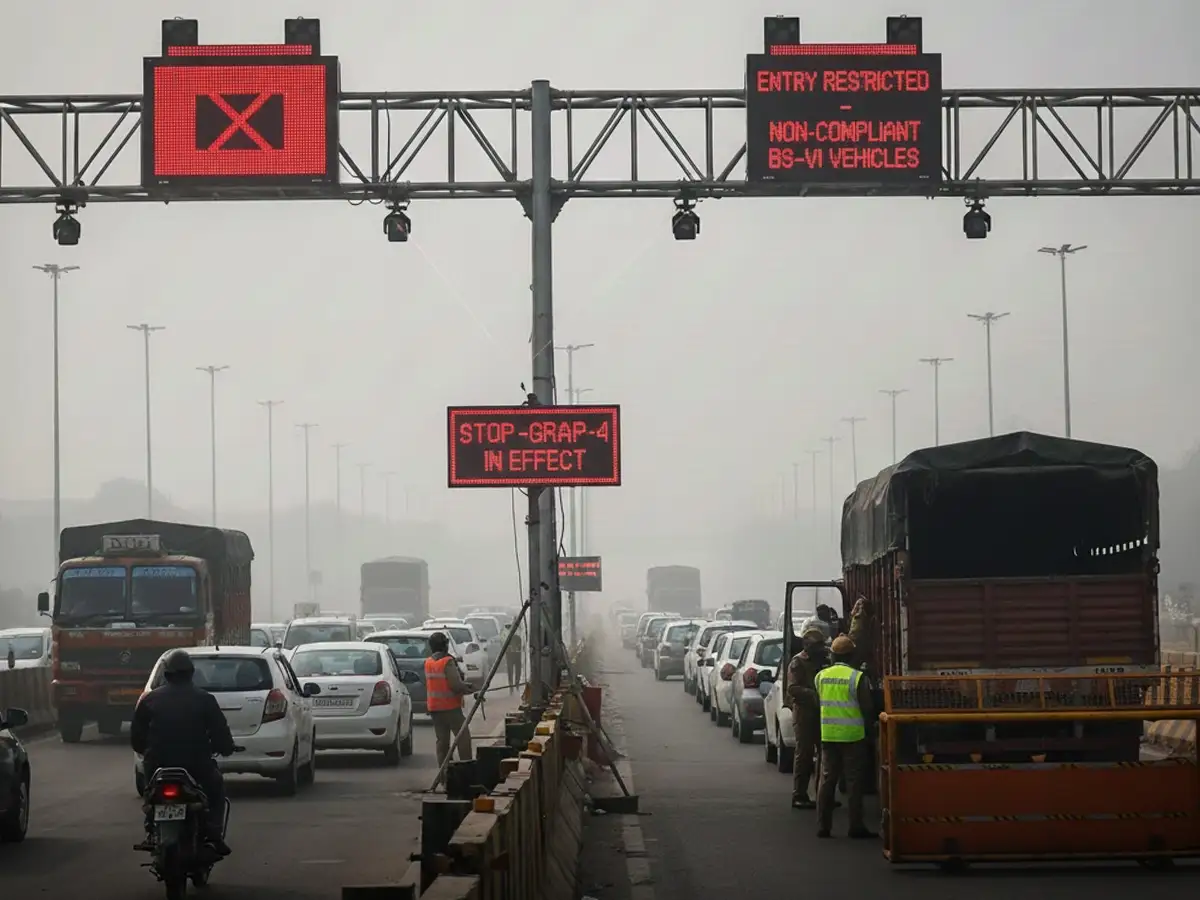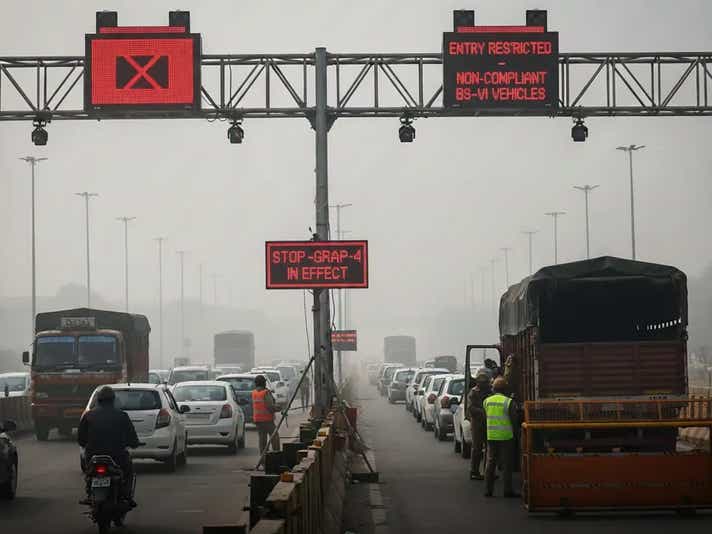
Delhi Implements GRAP-4 as Pollution Worsens; Entry Restricted for Nearly 1.2 Million Vehicles
- 1Only BS-VI vehicles registered outside Delhi allowed under GRAP-4 curbs
- 2ANPR cameras, fines and fuel denial enforced to check polluting vehicles
- 3Entry ban impacts NCR commuters as Delhi air quality slips into severe zone
The National Capital Region (NCR) woke up to stringent vehicular restrictions and heightened enforcement measures on Thursday as authorities invoked Stage 4 of the Graded Response Action Plan (GRAP) to combat hazardous pollution levels.
Effective 18 December 2025, the Delhi government has operationalised a comprehensive ban on the entry of older, non-compliant vehicles from neighbouring states, significantly impacting inter-state commuters.
The sequence of regulatory steps reflects heightened concern over persistently high Air Quality Index (AQI) readings in the “severe” category, which have prompted coordinated action by the Delhi government and the Commission for Air Quality Management (CAQM) to mitigate vehicular contributions to the city’s pollution burden.
Entry Ban on Non-BS-VI Vehicles Registered Outside Delhi
With air quality remaining in the “Severe+” category, authorities have enforced GRAP Stage-4, the strictest level under the pollution control framework. Vehicular emissions have been identified as a major contributor to rising particulate levels, prompting tighter controls on vehicle movement.
According to directives issued by Delhi Environment Minister Manjinder Singh Sirsa, the ban, which came into immediate effect this morning, explicitly targets non-Delhi-registered vehicles compliant only with BS3 or BS4 norms. Only BS-VI compliant vehicles are permitted to enter and operate in Delhi for the duration of GRAP Stage-4.
Officials have clarified that the ban is based solely on emission standards. BS6 norms were mandated nationwide in April 2020, which offered a drastic reduction in nitrogen oxides and particulate matter compared to the previous BS4 standards.
Impact on NCR Commuters and Vehicle Movement
The scale of this restriction is massive, with estimates suggesting that approximately 1.2 million vehicles across the NCR will be barred from entering Delhi. Commuters travelling from satellite cities such as Gurugram, Noida, Faridabad, and Ghaziabad are expected to face significant disruptions.
The restrictions are not limited to private cars; commercial trucks carrying non-essential goods have also been stopped at the borders, with exceptions granted only to those carrying essential commodities or running on cleaner fuels like CNG, or electricity.
No PUC, No Fuel Policy
Simultaneously, a “No PUC, No Fuel” rule has come into effect citywide. Under the “No PUC, No Fuel” policy, fuel station attendants are mandated to verify the validity of a vehicle's Pollution Under Control (PUC) certificate before dispensing petrol or diesel. The integrated camera systems at fuel stations assist in this verification, flagging non-compliant vehicles instantly. This measure aims to force motorists to maintain their vehicle's emission control systems, as data indicates a high volume of vehicles plying without valid certification.
High-Tech Enforcement with ANPR Cameras
To ensure strict compliance, the Delhi Traffic Police and transport department have deployed advanced surveillance technology. Automatic Number Plate Recognition (ANPR) cameras installed at key entry points and petrol pumps are being utilised to scan vehicle registration plates in real-time. These systems cross-reference the license plate data with the national "Vahan" database to instantly verify the vehicle's age, fuel type, and BS compliance status. Vehicles found violating the entry ban face immediate penalties, including potential seizure and heavy fines under the Motor Vehicles Act.
Penalties under the Motor Vehicles Act and related pollution control statutes have been clearly outlined: drivers caught operating banned vehicles can face monetary fines, and vehicles without valid PUC certificates may attract significant penalties. In addition to fines, enforcement officials have the authority to impound vehicles found in breach of GRAP-4 norms, particularly repeat offenders or those operating prohibited vehicles within Delhi’s jurisdiction.
Advisory for Motorists
For motorists and commuters, the new regulations carry immediate implications. Owners of non-BS-VI vehicles registered outside Delhi must avoid entering the city or risk being turned away at border checkpoints. Likewise, all vehicle owners are required to maintain up-to-date PUC certificates to refuel and to ensure their vehicles are in compliance with emission control requirements. Enforcement teams have indicated that these measures will remain in place until air quality shows sustained improvement and GRAP authorities formally scale back the response level.