Car Stuck in Floodwater? Here's What Actually Gets Damaged and What to Do Next
- 1Water doesn't compress; an engine that tries to crank through it usually loses
- 2An engine that starts right after a flood can still be quietly failing underneath
- 3A clean-looking used car and a flood-free used car are two different claims
- Ground Clearance Helps, But It Doesn't Tell You How Deep Your Car Can Wade
- Hydrolock: The Damage That Happens the Moment You Restart
- The Damage You Won't See Until Months Later
- Beyond the Engine: Gearbox, Differential, Fuel and Brakes
- What to Actually Do the Moment Your Car Floods
- What a Proper Post-Flood Inspection Actually Covers
- What Your Insurance Actually Pays For
- Electric and Hybrid Vehicles Need a Different Response
- Preventing the Problem in the First Place
- Buying a Used Car? Flood Damage Hides Extremely Well
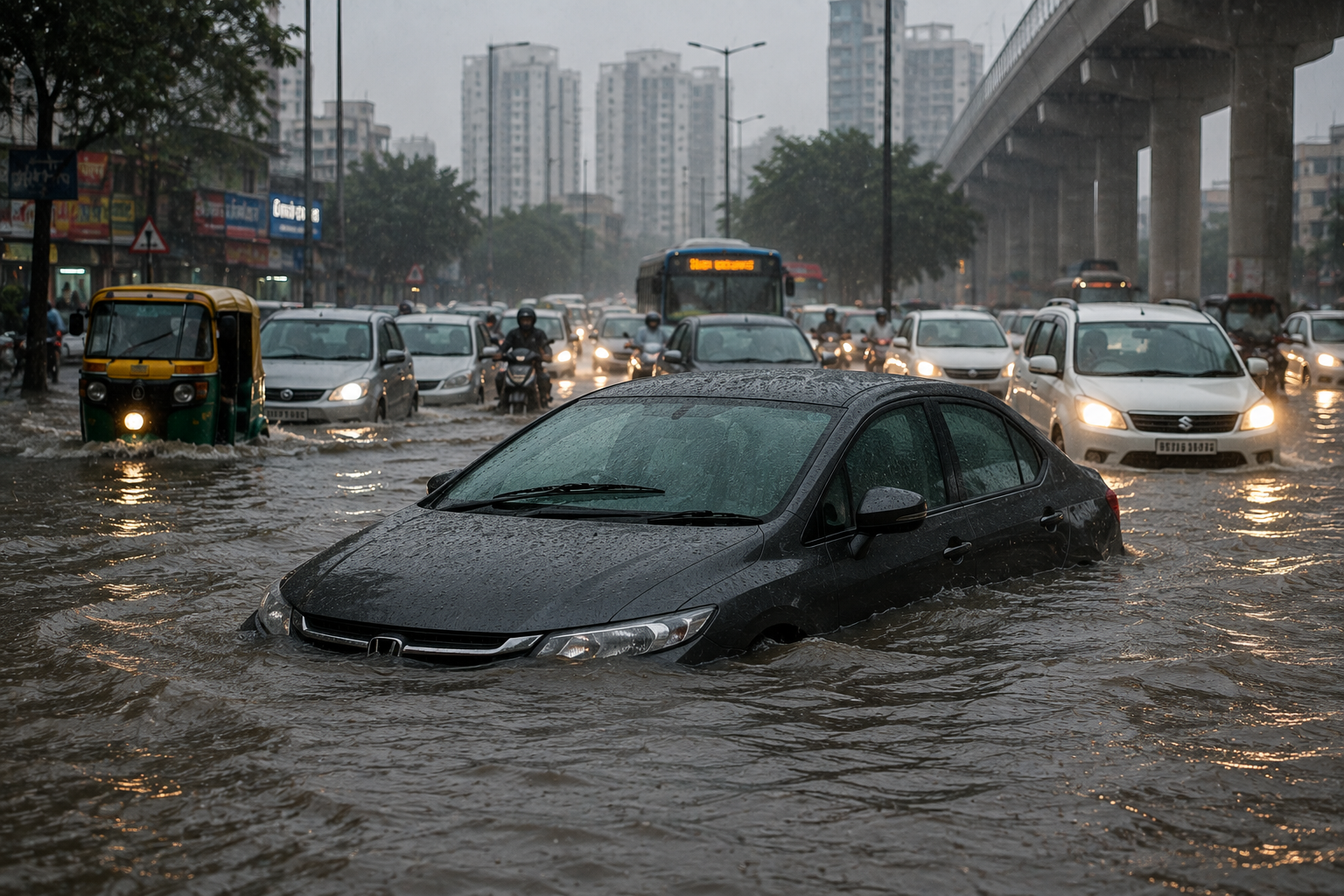
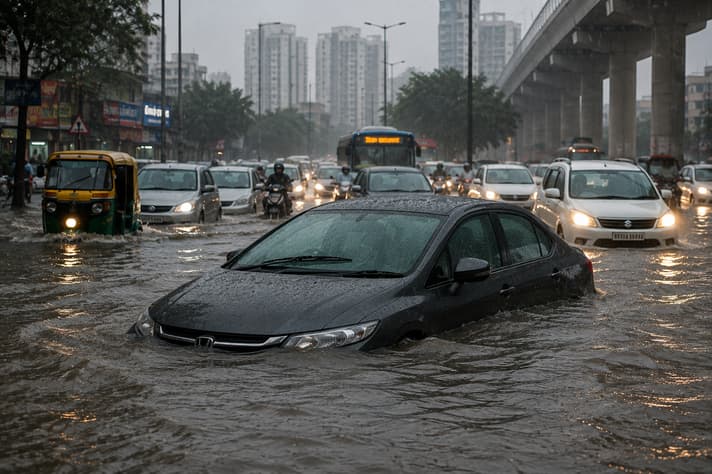
Floodwater has a nasty way of making a perfectly normal drive turn into an expensive repair bill. A road that looks passable from a distance may be deep enough to stall a car, flood its electronics or, in the worst case, destroy the engine. And because the SUV in front of you made it through, it can be tempting to assume your own car should manage the same crossing.
That is where things can go wrong. A car's ground clearance tells you how far its lowest point sits from the road, but it doesn't tell you how much water the vehicle is actually designed to wade through. The location of the engine air intake, the sealing of electrical components, the position of transmission and differential breathers and the manufacturer's rated wading depth all matter. Once water gets deep enough, the consequences can range from temporarily wet brakes to contaminated fluids, electrical failures and catastrophic engine damage.
The most important thing to remember is that a stalled car in floodwater is not a car you should try to restart. What happens in the next few minutes can determine whether you're looking at a recovery bill or an engine rebuild. Here's what actually gets damaged when a car is caught in floodwater, what you should do immediately and what needs to be checked before the car goes back on the road.
Ground Clearance Helps, But It Doesn't Tell You How Deep Your Car Can Wade
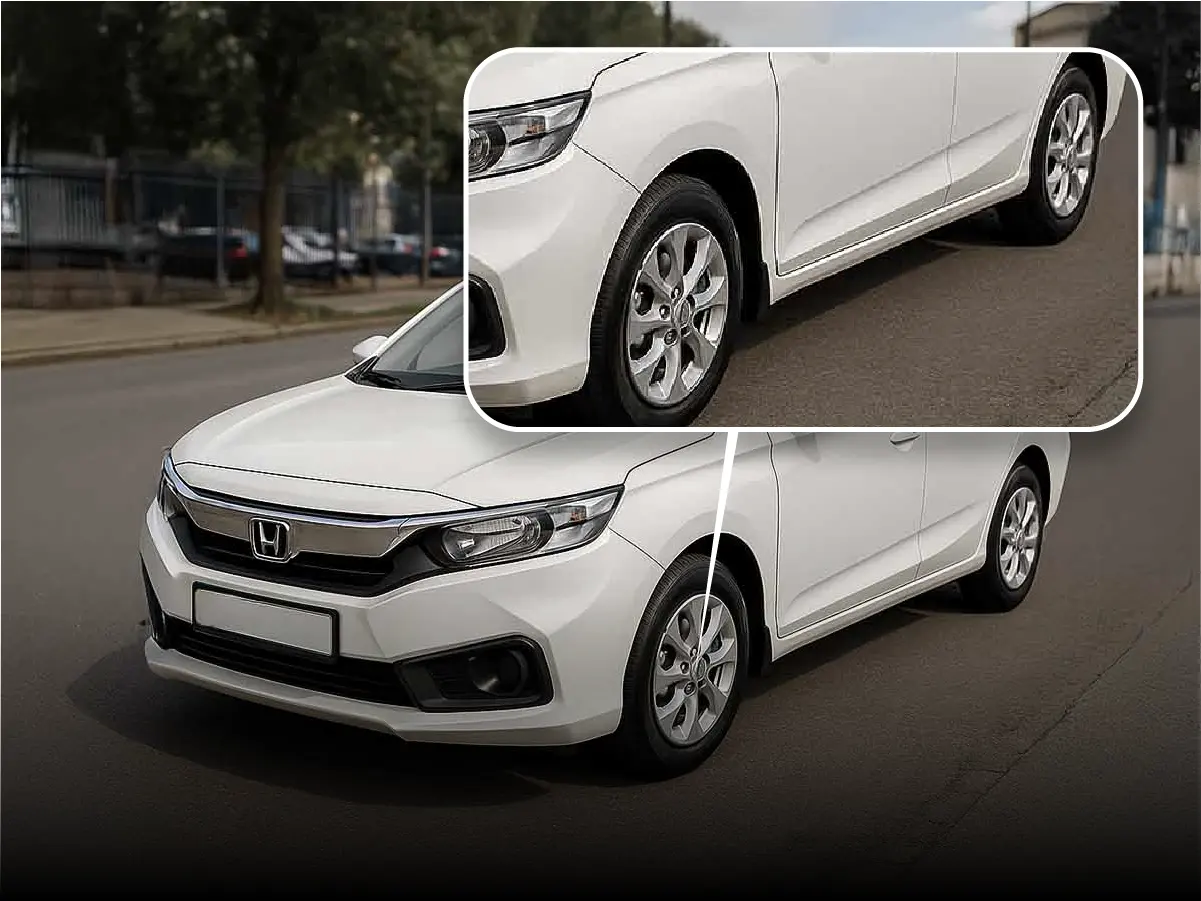
Every monsoon, somebody drives a hatchback into knee-deep water because the SUV ahead made it through, assuming those extra millimetres of ground clearance automatically translate into greater water-wading ability. They don't. Ground clearance is useful because it tells you how high the water can rise before reaching parts of the underbody, but it is only one piece of the puzzle.
What matters just as much, and often more, is where the engine's air intake sits and how well critical components such as electrical modules, fuse boxes, transmission breathers and differentials are protected from water. This is why manufacturers of genuinely capable off-road vehicles often publish a separate maximum wading depth rather than asking owners to work it out from ground clearance alone. Ford, for example, listed the Endeavour with 225 mm of ground clearance but an 800 mm water-wading capability.
For an ordinary hatchback or sedan without a manufacturer-specified wading depth, ground clearance should therefore not be treated as a safe-water limit. If you cannot see the road surface, the water is moving, the depth is unknown or you're simply unsure whether your car can make it through, the safest option is to stop or turn around. The SUV ahead of you may have been designed for conditions your car was never meant to handle.
Hydrolock: The Damage That Happens the Moment You Restart
The single most expensive mechanical risk in a flooded car has a name: hydrolock, short for hydrostatic lock. Hydrostatic lock happens when water is drawn into a running engine's cylinders, and since water doesn't compress the way air does, the piston slams into a solid wall of liquid on the next stroke instead of compressing a gas. Something has to give, and it's usually a connecting rod, sometimes the piston itself, occasionally the crankshaft.
This is precisely why restarting a stalled car in floodwater is the worst possible instinct, however tempting it feels in the middle of a monsoon jam with traffic building up behind you. Revving the engine harder doesn't help either. That's a persistent myth, and it does the opposite of what people assume. The failure route people worry about most, water entering through the exhaust, matters far less in practice than water pulled in through the intake while the engine is running.
The Damage You Won't See Until Months Later
Hydrolock announces itself immediately. Electrical damage takes its time. Floodwater works its way into wiring connectors, fuse boxes, ABS sensors, airbag modules and alternators, and a car can start and drive normally right after drying out. Then, weeks or months down the line, the central locking starts acting up, an airbag warning light appears on the dashboard, or the infotainment screen begins glitching for no obvious reason.
Cabin materials carry a second, quieter problem. Carpet, underlay and seat foam soak up water, silt and whatever the floodwater picked up along the way, and they hold onto that moisture long after the surface looks dry. A shampoo and a spritz of air freshener doesn't fix what's underneath; it just masks it for a while.
Beyond the Engine: Gearbox, Differential, Fuel and Brakes
Flood exposure doesn't stop at the engine bay. Water can enter automatic gearboxes through breathers or a worn seal, and differential housings face the same risk, both of which turn into significantly pricier repairs than a straightforward engine clean. Engine oil, gearbox oil and fuel can all pick up water contamination too, which is one reason a proper post-flood inspection tests fluids rather than just checking whether the engine starts.
Even a shallow water crossing, nowhere near flood depth, can leave brakes temporarily less responsive, since a thin film of water on the pads and discs briefly cuts stopping power. Driving slowly afterwards and pumping the brakes gently a few times usually dries them out. Anything beyond a shallow crossing, meaning the car was properly submerged, calls for a full check of brakes, wheel bearings, suspension components and the underbody before the car goes anywhere near regular traffic again.
What to Actually Do the Moment Your Car Floods
- Switch the engine off. Don't restart it, don't jump-start it, and don't push-start it either, since all three routes risk cranking a cylinder that already has water sitting in it.
- Get yourself and any passengers to safety first. Rising water is not a scenario worth staying in for the sake of the car.
- Once safe, photograph the water level against the car, the interior, and any visible damage, since this documentation matters for the insurance claim that follows.
- Call your insurer and roadside assistance, and arrange flatbed recovery rather than attempting to drive the car out.
Get the car to a workshop for a proper inspection rather than a quick dry-out and restart attempt.
What a Proper Post-Flood Inspection Actually Covers
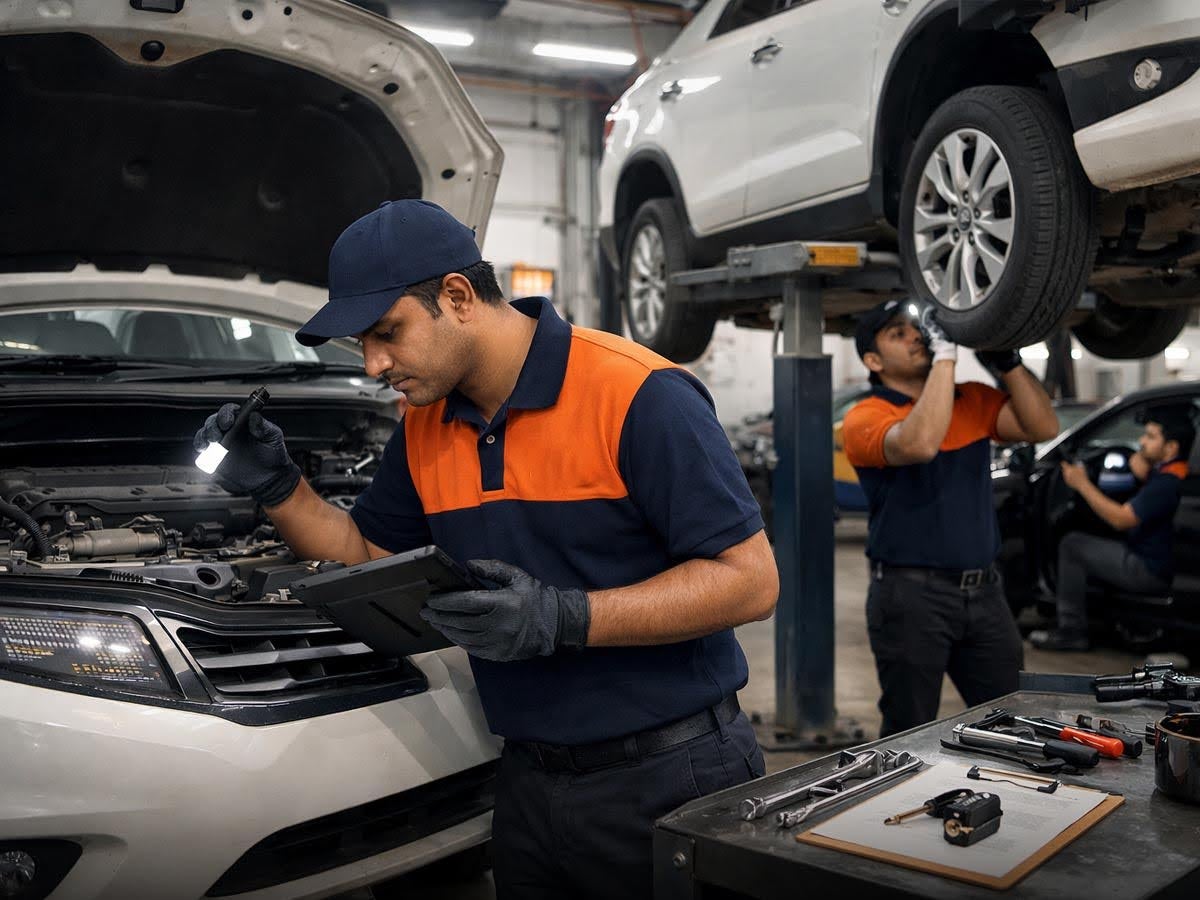
A workshop that takes flood recovery seriously checks considerably more than whether the engine turns over. That includes the intake system and cylinders, engine and gearbox fluids, differential fluid, the fuel system, every electrical connector and fuse box, brakes, airbags, carpets and underlay, and the underbody. A pressure wash and a verbal "it's dried out and starting fine" is not the same thing as this kind of inspection, and treating it as equivalent is how owners end up with the delayed electrical failures described earlier.
What Your Insurance Actually Pays For
This is where a lot of owners get an unpleasant surprise. Third-party insurance, by design, covers damage you cause to someone else's vehicle or property. It does not extend to your own car at all, flood or otherwise.
A comprehensive or own-damage policy covers your vehicle, but even that has a specific gap worth knowing about before the monsoon arrives rather than during it. Direct flood or inundation damage to the car's body is typically covered under a standard comprehensive policy. Engine damage from water ingress, including hydrostatic lock, usually sits outside that standard cover and needs a separate engine protection add-on. The engine protection add-on typically costs somewhere in the range of ₹500 to ₹2,500 a year, against a hydrostatic lock repair bill that can run from roughly ₹20,000 to well over ₹1.5 lakh depending on the vehicle.
A few things are worth doing well before the season starts: confirm whether your policy already includes engine protection, read the exact wording rather than assuming, and keep your insurer's contact and roadside assistance number saved somewhere you can actually find it standing in ankle-deep water.
Electric and Hybrid Vehicles Need a Different Response
For EV and hybrid owners, the immediate fear is usually electrocution, and that turns out to be the rarer outcome. The bigger risk is a delayed battery fire, which can develop hours or even days after the water recedes. Public safety research on lithium-ion batteries flags that a pack submerged for hours to days, especially in saltwater, can become unstable well after the flood itself is over.
The guidance across manufacturers and safety bodies converges on the same steps: don't drive it, don't charge it, and don't let anyone poke around under the bonnet who isn't a trained EV technician. Move the vehicle to open ground away from buildings if it's safe to do so, and call the manufacturer for a proper inspection and flatbed recovery rather than treating it like a regular breakdown.
Preventing the Problem in the First Place
If you live somewhere that floods on a predictable schedule, a handful of habits do more than any single gadget:
- Park on the highest available level during heavy rain alerts, and skip basement parking altogether when warnings are out.
- Save your insurer's claims number and roadside assistance contact where you can find them without digging through old messages.
- Read through your policy and add-on coverage well before the monsoon starts, when there's time to actually understand the fine print instead of arguing with a call centre from ankle-deep water.
Treat any water crossing you can't clearly assess- depth unknown, surface unclear, current moving- as a reason to stop rather than follow the vehicle ahead of you.
Buying a Used Car? Flood Damage Hides Extremely Well
A flood-damaged car can look completely clean at a glance, and that's exactly the problem for anyone shopping secondhand. Checking for this kind of damage is one of the most important things a buyer can do, arguably more important than most cosmetic checks, because the failures show up months after the sale rather than during a test drive.
| What to check | Where to look | What it might indicate |
| Floor mats and seat rails | Lift the mats, inspect rails and seatbelt anchorages underneath | Rust here suggests standing water in the cabin |
| Spare wheel well and toolkit | Under the boot floor | Mud, silt or corrosion points to submersion |
| Seatbelts | Pull each one fully out | Water staining or a musty smell on the webbing |
| Air conditioning | Run it and smell the vents | Dampness or an aggressive air freshener masking odour |
| Boot, engine bay seams, door drains, lamp housings | Look for trapped silt or grit | A common spot where floodwater residue collects |
| Carpet and trim | Compare wear against the car's age | A suspiciously new carpet or mismatched trim on an otherwise worn interior |
| Underbody coating | Check for a fresh, uneven coat | May be hiding recent corrosion rather than routine protection |
| Electricals | Test central locking, windows, airbag light, infotainment | Intermittent faults are a classic delayed flood symptom |
If a seller resists a proper used car inspection on a hoist with a full diagnostic scan, that reluctance is itself useful information. A cheap flood-damaged car carries an unresolved repair bill that a new owner inherits along with the discount.
This is exactly the gap a pre-delivery inspection is built to close, since it includes the underbody, electrical, and fluid checks a quick test drive simply can't reveal. If you're shopping for a used car, getting one inspected by a platform that actually puts it on a hoist rather than eyeballing the paint is the difference between a clean deal and someone else's drowned problem becoming yours.
Frequently Asked Questions
Expand all