Why Your Catalytic Converter Is a Thief's Favourite Target, and How to Protect It
- 1Replacement cost varies from roughly ₹10,000 to well over ₹1 lakh depending on model
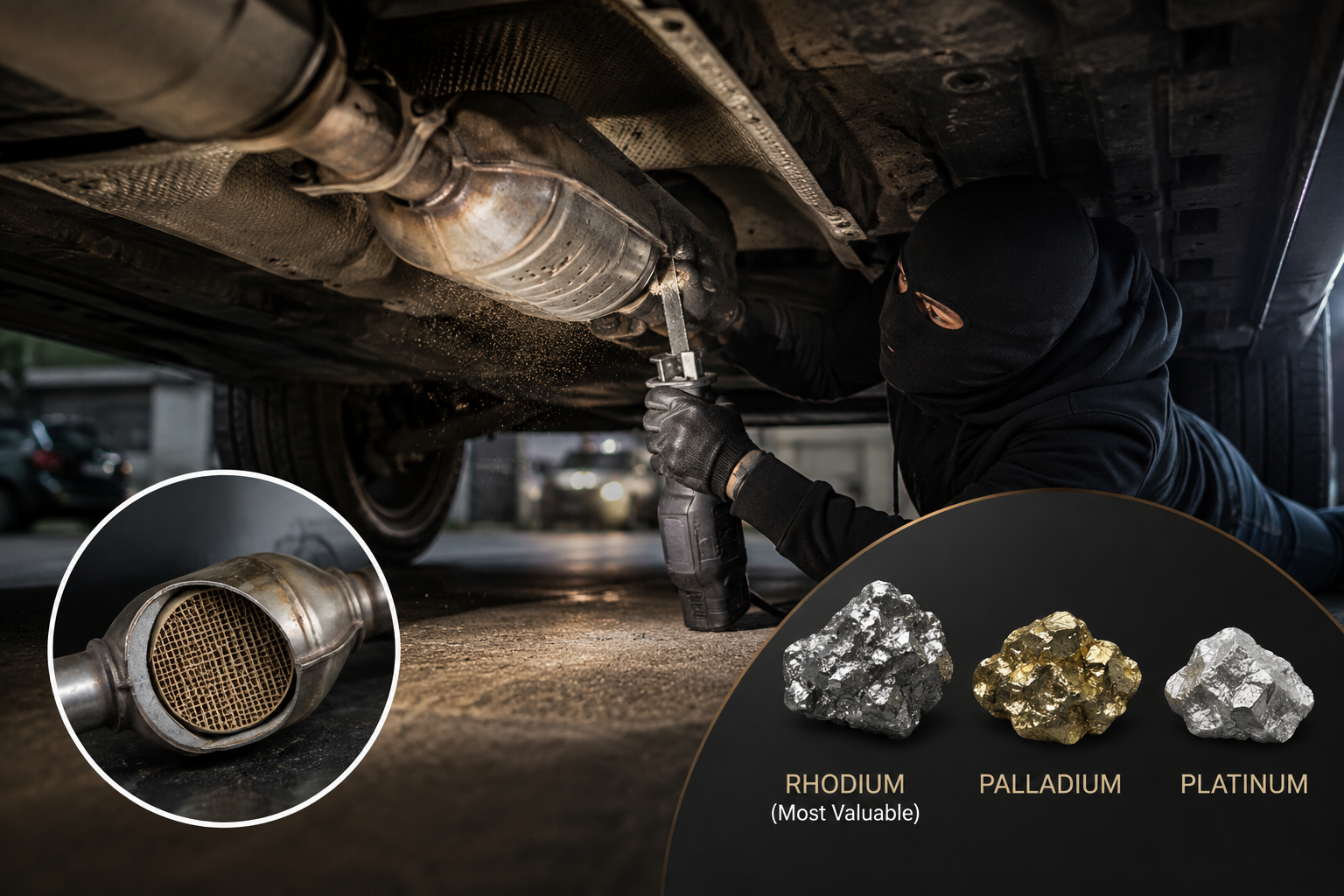
- 2Precious metals including platinum, palladium, and rhodium makes them so valuable
- 3Checking a used car's underbody catches what a walkaround never will
- What This Metal Box Is Actually Doing Under Your Car
- The Metals Inside Are Extremely Valuable
- Why the Replacement Bill Varies So Much by Car
- Why Thieves Specifically Target This Part
- Is This Actually Rising in India?
- How to Actually Protect Yours
- What to Do If Yours Gets Stolen
- Buying a Used Car? This Is Worth Checking Too
Few parts on a car attract a thief quite like the catalytic converter. It sits underneath the vehicle, largely out of sight, looks like an unremarkable metal box, and can be removed in minutes. Yet inside that box are tiny quantities of some of the world's most valuable precious metals.
That combination makes the catalytic converter an unusually attractive target. Platinum, palladium and rhodium are used inside it to clean up harmful exhaust gases, but those same metals also give the part a value far beyond what its size or appearance suggests.
The good news is that understanding why catalytic converters are targeted also makes it easier to protect yours. From where you park to physical shields and simple identification measures, a few precautions can make your car a considerably less attractive target.
What This Metal Box Is Actually Doing Under Your Car
Every petrol or diesel engine runs on a controlled explosion: fuel mixes with air, ignites, and releases energy. No engine burns that fuel with perfect efficiency, so alongside the power you actually want, it also produces carbon monoxide, nitrogen oxides, and assorted unburnt hydrocarbons. Left untreated, those gases are genuinely harmful, both to the air outside and to anyone breathing near a running engine.
The catalytic converter exists to fix that before it ever reaches the tailpipe. Every bit of exhaust gas has to pass through it, and inside sits a ceramic honeycomb coated in a thin layer of precious metal. That coating triggers chemical reactions without being consumed in the process, turning carbon monoxide into carbon dioxide, nitrogen oxides into harmless nitrogen and oxygen, and unburnt fuel into carbon dioxide and water. All of this happens in a fraction of a second, at exhaust temperatures running into the hundreds of degrees Celsius.
The Metals Inside Are Extremely Valuable
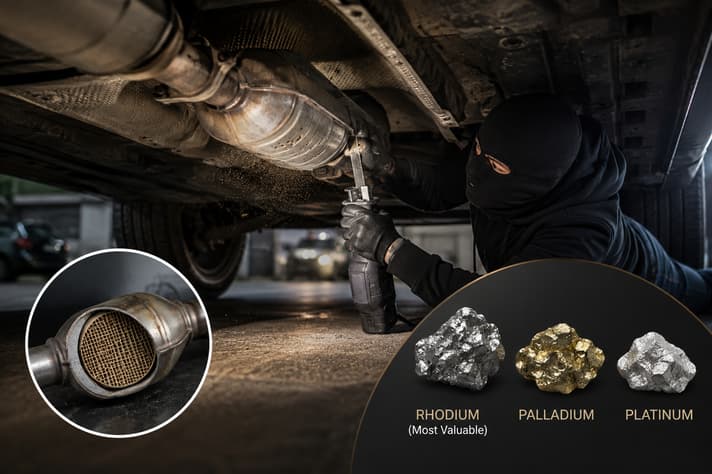
The catalytic converter's target for organised theft comes down to the extraordinary valuation of platinum group metals (PGMs): platinum, palladium, and rhodium. Mined in exceptionally limited global quantities, these elements sit at the apex of precious metal values due to strict supply constraints and critical industrial demand. Rhodium prices are way more than even the price of gold.
Market prices across the group can shift dramatically, driven by global supply disruptions and tightening environmental regulations worldwide. Rhodium, in particular, has demonstrated some of the most extreme price volatility ever recorded in commodity markets.
Despite their immense value, an individual catalytic converter contains only a microscopic application of these metals, typically just a few grams lightly coated across the ceramic honeycomb. The financial incentive behind illicit converter harvesting relies entirely on processing volume. By collecting hundreds of stolen units, refining operations can consolidate these trace amounts into highly valuable quantities for resale on secondary raw metal markets.
Why the Replacement Bill Varies So Much by Car
The precious metal content of a catalytic converter, and therefore its replacement cost, scales with engine size and emission standard rather than with how expensive the car looks:
| Vehicle segment | Example | Typical replacement cost |
| Entry hatchback | Maruti Alto | ₹10,000 to ₹15,000 |
| Mid-size sedan | Honda City | Around ₹30,000 |
| Compact/midsize SUV | Tata Harrier, Hyundai Creta | Around ₹50,000 |
| Luxury vehicles | Various premium marques | Can exceed ₹1 lakh |
*Actual pricing depends on whether you're buying an OEM part or an aftermarket equivalent, and on your specific engine variant, so it's worth getting a workshop quote.
Why Thieves Specifically Target This Part
A catalytic converter checks every box a thief looks for in a target: it's fast to remove, it's rarely marked with any identifying number, and it converts to cash almost immediately through scrap and recycling channels that rarely ask hard questions about where a part came from.
An amateur with a basic reciprocating saw can cut a converter free in under two minutes, working from underneath a parked car with minimal noise beyond the saw itself. Once removed, the ceramic honeycomb gets crushed and put through a chemical refining process to recover the platinum, palladium and rhodium. Those recovered metals then re-enter the legitimate industrial supply chain, at which point tracing them back to a specific stolen part becomes close to impossible.
Is This Actually Rising in India?
Catalytic converter theft has been a well-documented problem in the United States and parts of Europe for years, with national tracking bodies there publishing detailed year-by-year figures. India doesn't yet have an equivalent centralised, publicly tracked dataset for this specific crime.
What does exist is a pattern of individual police cases, particularly out of Delhi NCR, Bengaluru, Mumbai, Hyderabad and Pune, involving organised groups targeting parked vehicles for their converters. Three structural factors make India a plausible growing market for this crime specifically. Newer BS6 and BS6 Phase 2 vehicles need more sophisticated, precious-metal-heavier catalytic converters than older BS4 vehicles did, which raises the payout per theft. Global metal prices have remained high for an extended stretch, which keeps the financial incentive alive. And this kind of theft doesn't require stealing an entire car, just a few minutes underneath one, which lowers the risk profile for the person doing it compared with full vehicle theft.
How to Actually Protect Yours
A few measures genuinely reduce the odds of becoming a target, roughly in order of cost and effort:
- Park smart. A well-lit spot, ideally inside a gated compound or covered parking area, removes the easy access a thief needs to work underneath your car undisturbed.
- Etch or engrave your registration number onto the converter. This doesn't stop a theft physically, but it makes the part far harder for a scrap dealer to accept without questions, and it helps police link a recovered part back to your case if one ever turns up.
- Fit a physical shield or cage. Aftermarket catalytic converter shields bolt around the part and add enough time and difficulty to the removal process that many thieves simply move to an easier target instead.
Install a vibration- or tilt-sensitive alarm if your car doesn't already have one sensitive enough to trigger on underbody tampering rather than just door and window entry.
What to Do If Yours Gets Stolen
You'll usually know immediately. The car starts with a loud, rough roar that sounds nothing like normal, and the check engine light typically comes on within moments of driving off. File a police report first, since you'll need it for both the investigation and your insurance claim. Contact your insurer next: comprehensive policies with theft cover generally include catalytic converter theft, though the exact terms and any applicable deductible depend on your specific policy, so confirm the details with your insurer directly rather than assuming.
For replacement itself, you'll typically choose between an OEM part matched exactly to your vehicle and a compliant aftermarket equivalent. Either way, get the part fitted at a workshop that can confirm the replacement still meets your vehicle's emission compliance requirements, since an incorrectly rated converter can trip the check engine light again or fail a future emissions check.
Buying a Used Car? This Is Worth Checking Too
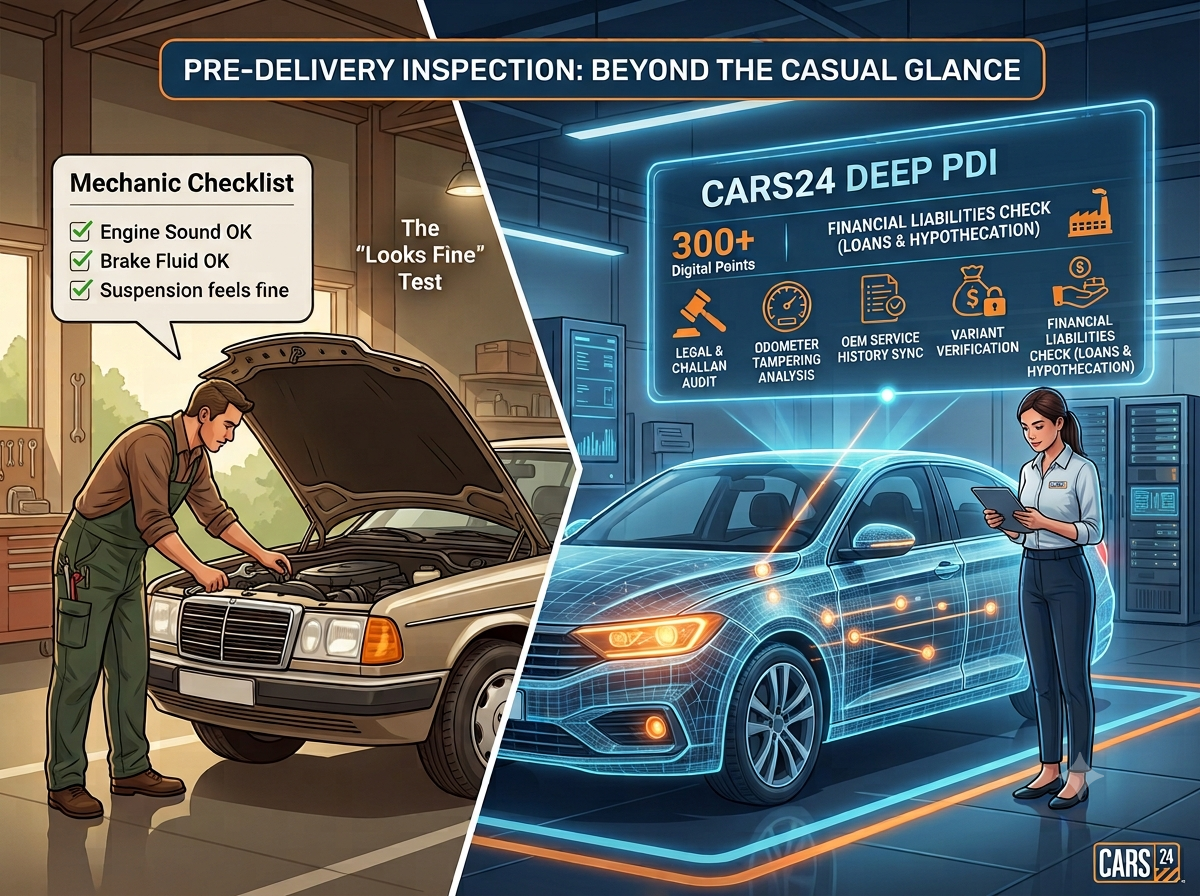
A replaced or tampered catalytic converter isn't always obvious from a casual look under the car, particularly if the replacement was done with a lower-cost aftermarket part rather than a proper OEM equivalent. That matters if you're shopping secondhand, since a mismatched or poorly fitted converter can mean anything from a straightforward past theft repair to a car that's been quietly running non-compliant emissions hardware.
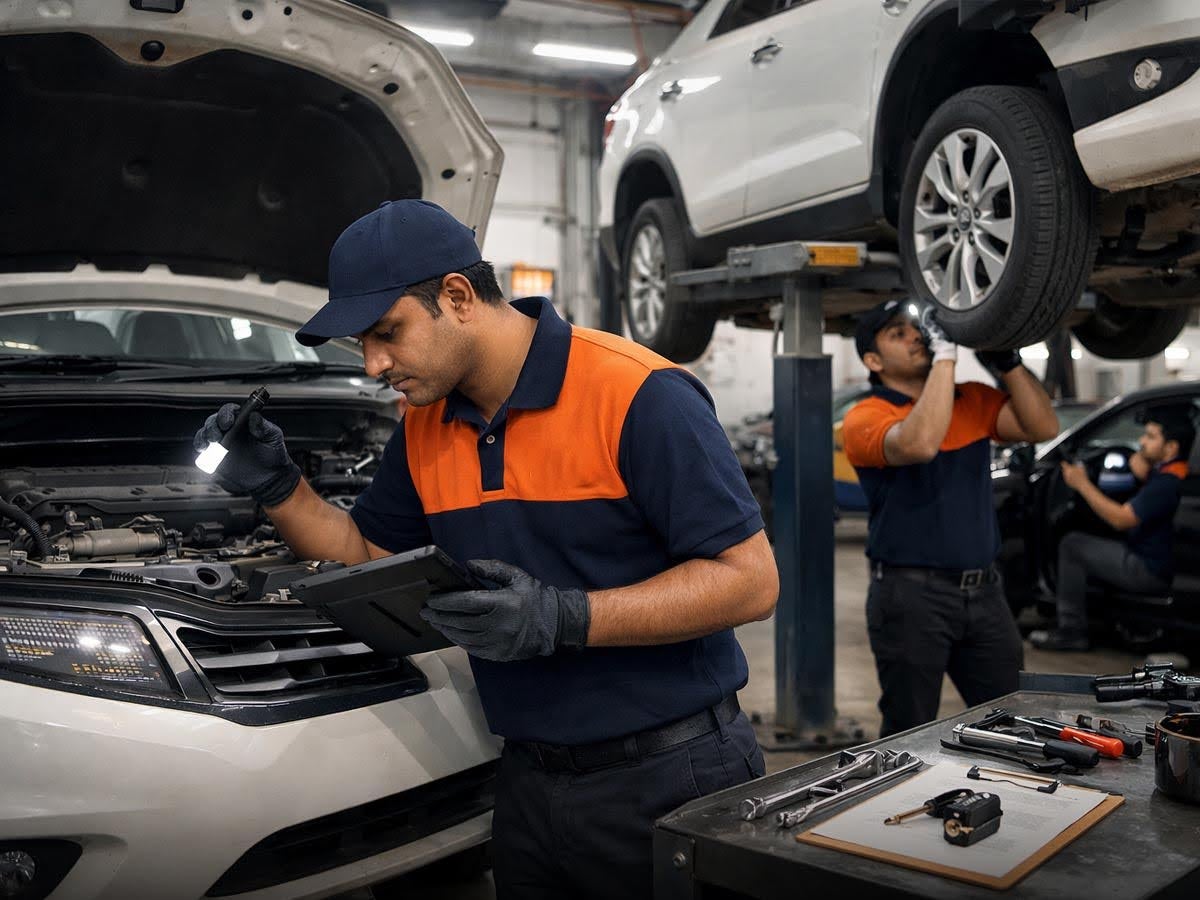
A proper pre-delivery inspection includes exactly this kind of underbody check, alongside the exhaust and emissions components a quick test drive won't reveal.
Frequently Asked Questions
Expand all