How to Check a Used Car Battery Before You Buy It in India
- 1Check the battery's age, condition and terminals before buying.
- 2Slow cranking can indicate battery or wider electrical problems.
- 3A professional battery and charging-system test can reveal hidden faults.
You found the car. Paint looks fresh, the cabin smells reasonably clean, and the engine bay has been scrubbed to a shine that borders on suspicious. You negotiate, you pay, you drive home happy. The next morning, the car won't start.
That scenario plays out more often than it should, and the battery is usually the culprit nobody thought to inspect properly. It's cheap compared to almost everything else under the bonnet, which is exactly why sellers and even some inspectors treat it as an afterthought. A weak or badly maintained battery can mean a jump start on a bad morning, sure, but it can also point to corroded terminals, a failing alternator, incorrect replacement parts, or wiring faults that cost far more to fix than the battery itself.
What follows is a full rundown of what to check yourself, and what a professional test can catch that your eyes and ears simply can't.
Start With the Crank
The first and most honest signal a battery gives you is how the engine turns over. Crank the ignition and pay attention. A healthy battery spins the starter motor quickly and confidently, no hesitation, no drama.
Watch for the opposite: slow, sluggish cranking, a repeated clicking sound, a single click followed by silence, interior lights dimming hard the moment you turn the key, or an engine that only catches after two or three attempts. Rapid clicking from the starter usually means the battery can't deliver enough current to turn the engine over, but resist the urge to diagnose it that fast. Loose terminals, corroded cables, a poor ground connection, or a failing starter motor can all produce the exact same symptom. Treat slow cranking as a flag that something in the starting circuit needs a closer look before anyone starts talking about a battery replacement.
Watch the Dashboard Light
Turn the ignition to the on position before starting the engine, and the battery warning light should illuminate. That's normal and expected. The moment the engine actually starts and runs, that light needs to go out. If it stays lit with the engine running, something in the charging system isn't right.
This is worth repeating because sellers get it wrong constantly: a lit battery light while driving just as often points to the alternator, a slipping or worn belt, damaged wiring, a faulty voltage regulator, or a loose battery connection, rather than a dead battery itself. In practice, this means the battery might not be receiving a proper charge while the car runs, and if that's the case, even a brand new battery installed the week before will die again soon enough. If a seller waves this off with a quick "battery is just a bit weak," don't take that explanation at face value. Ask what's actually causing the light, and don't move forward until someone can answer that specifically.
Push the Electricals
With the engine running, cycle through everything electrical. Headlights, power windows, the horn, infotainment screen, blower motor, central locking, every switch you can find. A struggling battery reveals itself through small inconsistencies well before it fails outright: dim headlights, flickering cabin lights, sluggish power windows, a weak or hoarse horn, an infotainment system that randomly reboots, central locking that behaves erratically, or warning lights that pop up without an obvious cause.
Modern cars run on dozens of small computers, and unstable voltage from a tired battery can make several of these systems misbehave at once in ways that look unrelated on the surface. One odd warning light by itself proves very little. Three or four different electrical quirks showing up together during the same test drive is a pattern worth taking seriously.
Open the Bonnet and Actually Look
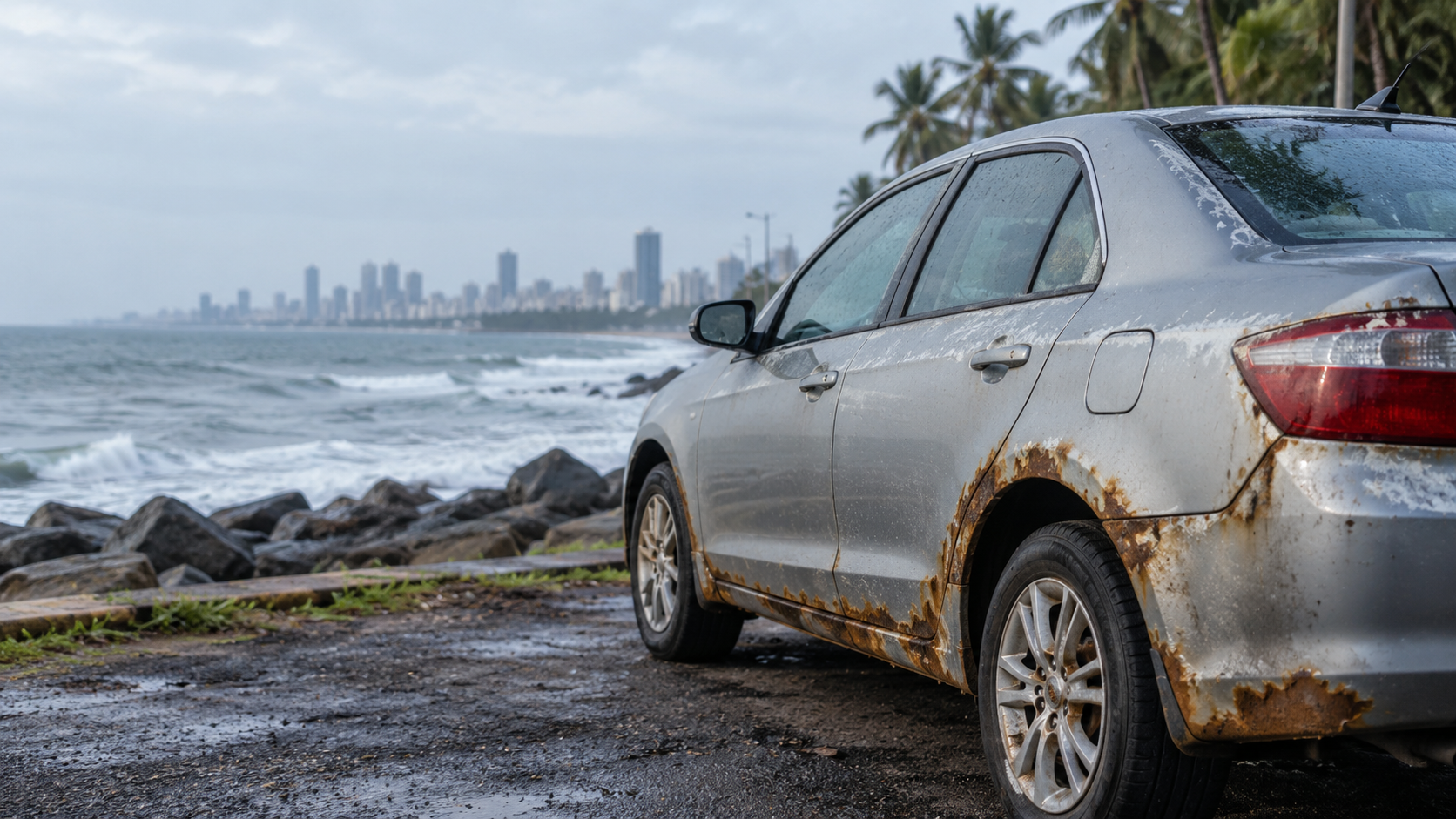
Dealers routinely clean the engine bay before a showing, and there's nothing wrong with that on its own. Your job is to look past the shine and inspect the battery itself. A battery in good health looks dry, sits flush in its tray, and shows no visible distortion. Walk away or insist on a professional check if you spot a swollen or bulging case, visible cracks, wetness pooling around the base, white or crusty acid deposits, rust forming on the battery tray, or a battery that isn't clamped down securely.
A swollen battery deserves particular attention. It typically results from overheating, chronic overcharging, or internal cell failure, none of which are minor. If the casing is visibly bulging, that's not a bargaining chip to knock a few thousand rupees off the price. Either get it inspected by someone qualified on the spot or walk away from the deal entirely.
Read the Terminals
The terminals are the positive and negative connection points on top of the battery, and the powder or crust that sometimes forms around them tells you more than most buyers realize. White, ashy buildup is typically lead sulfate, and it usually points to a battery that's been chronically undercharged or is simply aging. Blue or green crystalline buildup is a different compound, copper sulfate, and it forms when heat or an overcharging condition reacts with the copper in the terminal clamps rather than the lead post itself. A small amount of buildup after a few years is fairly ordinary. Heavy corrosion in either color is not, and it can cause hard starting, inconsistent electrical supply, poor charging, or a complete no-start.
Check for looseness too, though don't yank on the clamps to test it. A visual check of whether the terminal clamps sit tight and properly seated is enough. Loose terminals can mimic a dying battery almost perfectly. The car starts fine at 9 am and refuses at 9 pm, with nothing else having changed.
Trust Your Nose
This one is simple and non-negotiable. If you catch a whiff of rotten eggs anywhere near the battery, stop what you're doing. That smell comes from hydrogen sulfide gas, typically released when a lead-acid battery is being overcharged or is failing internally, and it's not a smell to investigate up close. Hydrogen sulfide is genuinely dangerous to breathe once you can smell it, and your nose actually becomes less sensitive to it the longer you're exposed, which makes lingering near the source worse rather than safer. Don't open anything, don't poke at the battery, and don't try to be your own mechanic here. Step back and call in a professional. A sulfur smell around a used car's battery is serious enough to pause the entire purchase until someone qualified has looked at it.
Check the Battery's Actual Age
In most of India, a car battery holds up for roughly 3 to 5 years under normal conditions, though that number shrinks in practice. In cities that regularly cross 40 to 45 degrees Celsius through summer, real-world lifespan often runs closer to 2.5 to 3.5 years even for a well maintained battery. Heat evaporates the electrolyte faster than moderate climates would, and cars used exclusively for short city hops can actually wear a battery down quicker too, since the alternator rarely gets a long enough run to fully recharge it between trips.
Before you finalize anything, ask for the battery's purchase invoice, its warranty card, the replacement date if it's been swapped, service records, the serial number stamped on the case, and confirmation that the specifications match what the manufacturer recommends for that exact model. If a seller insists the battery was recently replaced but can't produce a single piece of paperwork to back it up, assume it wasn't. Call it financially literate skepticism, the kind that saves you money on the next car too.
This matters even more if the car uses start-stop technology, which shuts the engine off at traffic lights and restarts it automatically. These systems typically require an EFB or AGM battery built to handle far more frequent charge cycles than a standard battery. Fitting a regular battery in place of the correct EFB or AGM unit leads to rapid deterioration and eventual breakdown, even though it may physically fit and work for a few weeks. It's an easy detail for a seller to get wrong or gloss over, and an expensive one for you to inherit.
The Restart Test
Almost nobody thinks to run this small test. After your test drive, switch the car off, wait about a minute, and try starting it again. A battery on its last legs frequently performs fine on the first start of the day but struggles noticeably on a second attempt shortly after, especially in hot weather. If that first crank was smooth but the second one is lazy, hesitant, or clicky, take that seriously. A car shouldn't need a moment to gather its courage before restarting after a short drive.
What a Professional Check Adds
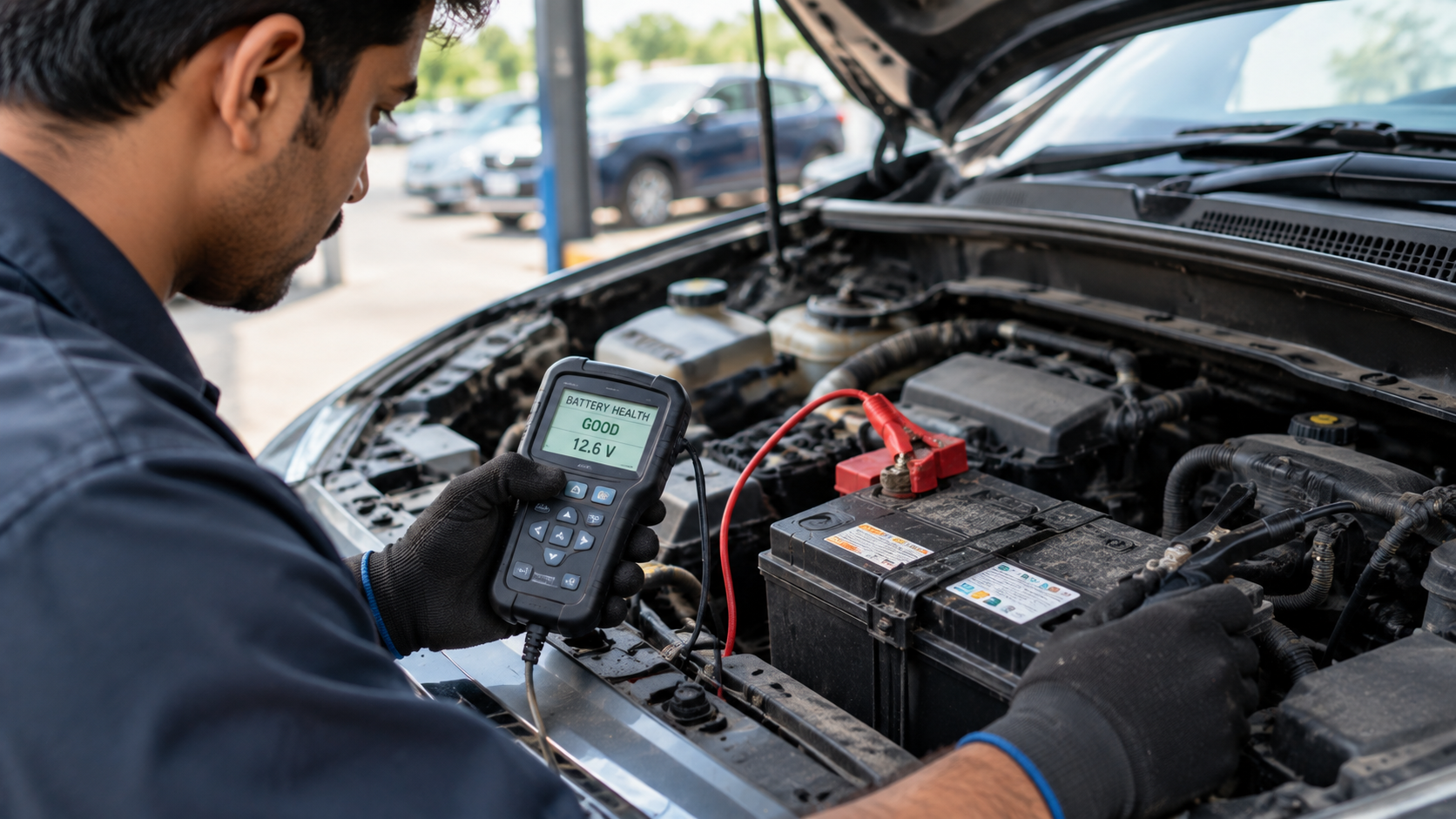
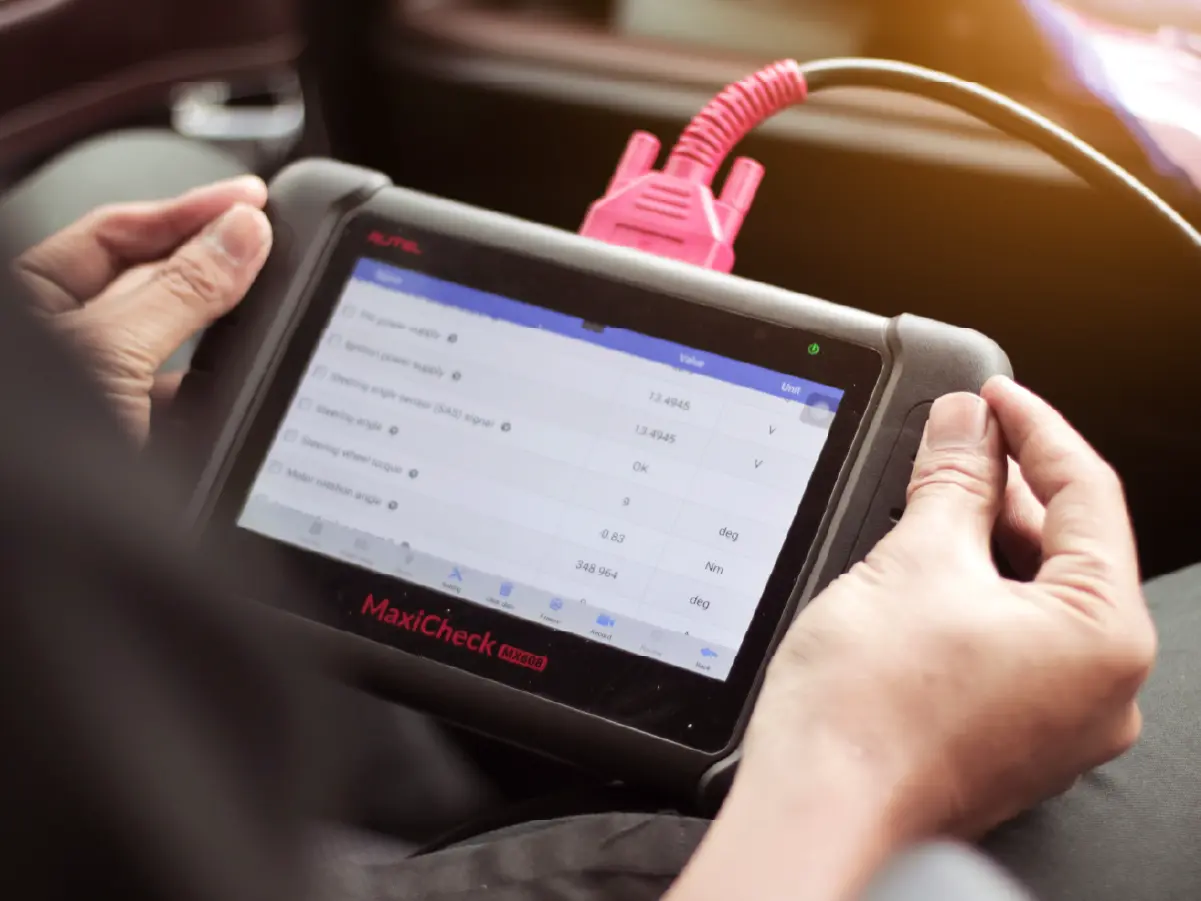
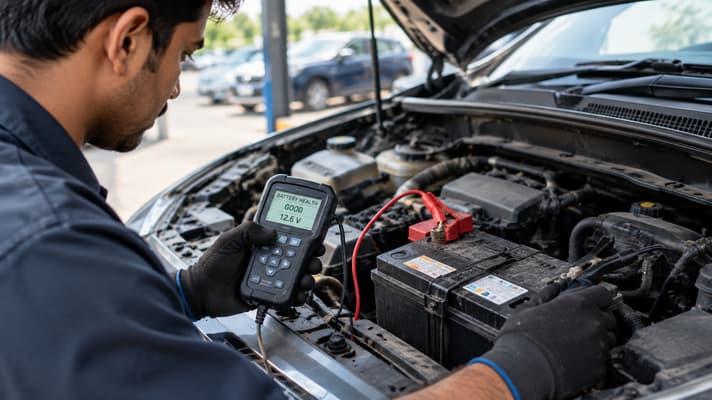
Everything above gets you a long way, but a handful of tests genuinely need trained hands and proper equipment. A battery load test applies a controlled high current draw and measures how the voltage holds up under stress, which reveals the battery's real capacity rather than just its surface charge. A charging system test confirms the alternator is putting out the correct voltage while the engine runs, typically in the 13.5 to 14.5 volt range, with anything meaningfully outside that band pointing to a failing alternator or a bad regulator. A parasitic drain test checks whether something is quietly pulling current while the car sits parked overnight, which can flatten an otherwise healthy battery for reasons that have nothing to do with the battery itself. On top of these, a full inspection of the alternator belt and wiring, plus a proper battery health report, round out what a competent pre-purchase check should include.
Most buyers aren't equipped to run these tests themselves, and that's exactly the gap a proper pre-delivery inspection is meant to close. Cars24's used car inspection services specifically tests battery and alternator health using dedicated diagnostic tools as part of its broader mechanical and electrical checks, rather than leaving it to a quick visual glance. If you're evaluating a car from any source and want that same depth of check done independently, Cars24's pre-delivery inspection service covers this along with the rest of the car, and the resulting report is written in plain enough language that you don't need to be an electrician to make sense of it, something our guide to reading a PDI report walks through if you want to know what to expect before booking one.
Why This Matters More Than the Price Tag on a Battery
A used car battery is rarely the most expensive part of the vehicle, but it's one of the easiest components to use as evidence of how the whole car was actually treated. A seller who let a dying battery slide is more often than not the same seller who skipped tyre rotations, ignored fluid changes, and let service intervals lapse. Checking the battery this closely gets you a read on everything else you can't see in a fifteen minute test drive.
Running through this checklist takes maybe ten minutes at the seller's location. Getting stuck with a car that won't start reliably can cost you weeks of frustration and a repair bill you didn't budget for. Before you commit to any used car, pop the bonnet, run the checks above, ask for the paperwork, and get a professional test done the moment anything feels off. If you'd rather have all of this handled for you from the start, browsing Cars24's own used car inventory means the battery check, along with everything else on this list, has already been done before the car is ever listed.
Frequently Asked Questions
Expand all