Buying a Used Car in Coastal India: The Rust and Corrosion Checklist Most Buyers Skip
- 1Coastal cars need closer checks for rust and underbody corrosion.
- 2Inspect brake lines, fuel lines, wiring, battery terminals and seals.
- 3Low mileage does not always mean a coastal car has had an easy life.
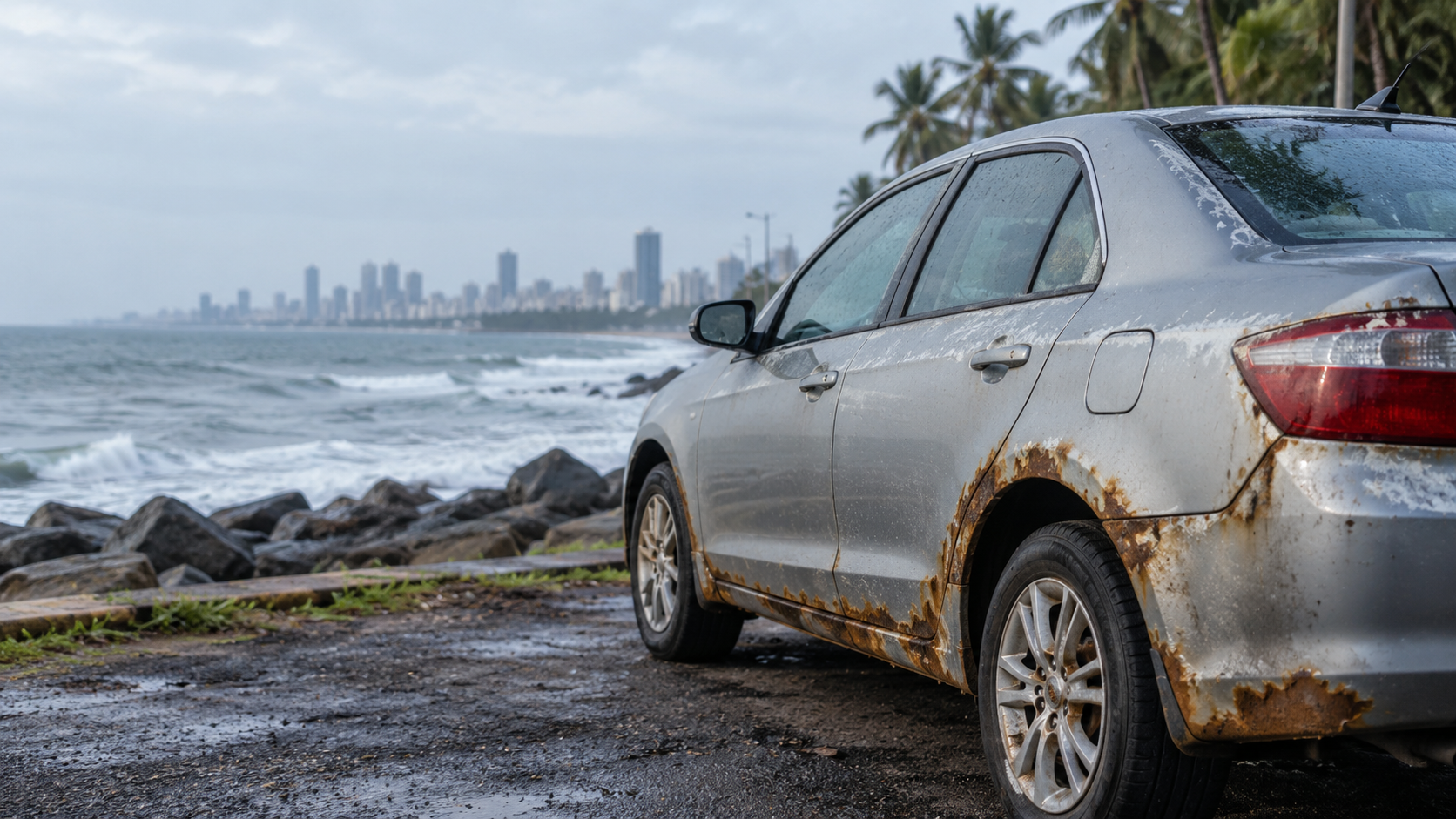
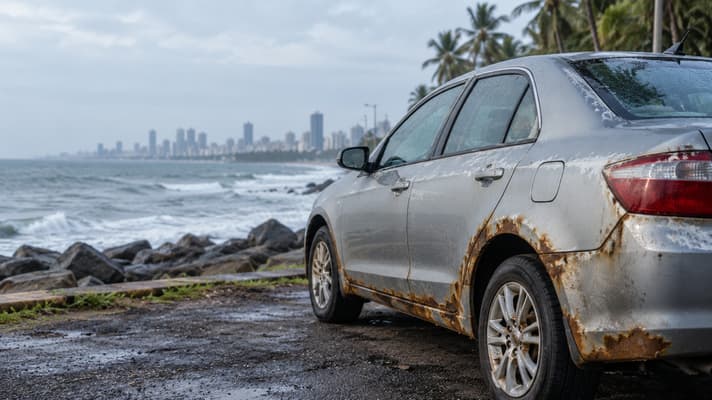
Buying a used car from a coastal city calls for a slightly different inspection. Mumbai, Chennai, Goa, Kochi and Visakhapatnam expose vehicles to high humidity and salty air, which can accelerate corrosion in areas that are easy to miss during a routine walk-around.
The exterior may look clean, the engine may start without hesitation, and the car may drive perfectly well. But the condition underneath can tell a very different story. Chassis components, brake lines, fuel lines, electrical connectors and other exposed parts can develop corrosion over time, particularly if the car has spent years parked outdoors near the coast.
That does not make coastal cars a category to avoid. It simply means mileage, age and appearance do not tell the whole story. If you're considering one, the underbody and service history deserve as much attention as the paint, tyres and cabin. Here are the checks that can help you understand what you're actually buying.
What Actually Makes a Coastal Car Different
Most buyers assume a car is a car regardless of where it's lived, same engine, same parts, same everything. That assumption is exactly what trips people up. The real difference lives in the environment the car has spent years sitting in, and the single word behind almost all of it is salt.
Sea air carries sodium chloride, and once humidity climbs high enough, that salt stops behaving like harmless dust and starts acting as an electrolyte, the ingredient that turns ordinary oxidation into fast, aggressive electrochemical corrosion. Moist salt air corrodes bare metal roughly five times faster than dry, salt-free air, a figure that shows up consistently across corrosion engineering literature. Manufacturers design vehicles for average climate conditions. A shoreline in peak monsoon humidity is nowhere close to average.
This kind of damage compounds within a handful of years, and dedicated research backs that up. A study out of IIT Bombay, examining several hundred vehicles across coastal Mumbai, found widespread underbody corrosion in non-galvanised cars within just five years, while factory-galvanised vehicles held their structural integrity far longer over the same stretch. Separately, a 2024 survey by the Federation of Automobile Dealers Associations (FADA) put the figure at 68 percent of cars in coastal Indian cities showing visible underbody corrosion inside five years. A car sitting a short drive inland might show only cosmetic surface rust after 8 to 10 years. Park that same car near the sea, and structural corrosion can be well underway in a fraction of that time. If you're looking at a five-year-old coastal car, that clock has already been running for a while, and none of it shows up in a normal walk-around.
Where the Damage Actually Hides
The paint looks glossy, the cabin smells clean, the engine turns over smoothly, and none of that tells you anything about the chassis, brake lines, or fuel lines running underneath. That's exactly where salt does its worst, quietly, along the parts of the car almost no private buyer ever gets down on the ground to inspect.
Electrical systems take a slower, sneakier hit. Coastal humidity works its way into wiring connectors, sensors, and contact points over months rather than days. One month the AC gets a little weak. A few weeks later a window starts sticking. Then a warning light appears for no obvious reason. Each incident looks like its own small, unrelated glitch, but in a coastal car these are frequently symptoms of the same underlying moisture problem surfacing in different places, one after another, in a cycle that rarely stops on its own.
The Damage Profile Changes City to City
What counts as a red flag in Chennai isn't quite the same as what you'd watch for in Mumbai, since each coastal city stacks its own additional stress on top of the basic salt problem.
Mumbai carries a double burden: coastal salt exposure plus some of the worst stop-start traffic in the country, with commuters losing roughly 126 hours a year to congestion according to the TomTom Traffic Index 2025, placing the city among the most congested in the world. That combination means undercarriage corrosion and accelerated mechanical wear happening simultaneously, particularly on cars that have spent time parked near the sea front. Parking conditions in Mumbai also vary wildly building to building, so two otherwise identical cars from the same model year can be in genuinely different condition depending on whether one lived in a covered basement and the other sat on the open street. Asking a seller directly where the car was usually parked isn't an odd question here. It's one of the more useful ones you can ask.
Chennai gets underestimated as a tough environment, and it shouldn't be. Summer highs regularly cross 40 degrees Celsius, and relative humidity in the city runs somewhere between 63 and 76 percent through most of the year, climbing toward 80 percent in the post-monsoon months around October and November. That heat-humidity combination is brutal on rubber specifically. Door seals, hoses, and gaskets turn brittle faster than most owners expect, and the consequences go beyond cosmetics: a failed door seal means water gets into the cabin during rain, and a brittle coolant hose can fail mid-drive. For a Chennai car, the AC compressor and the broader cooling system deserve extra scrutiny, since a failed AC in Chennai's summer isn't a minor inconvenience.
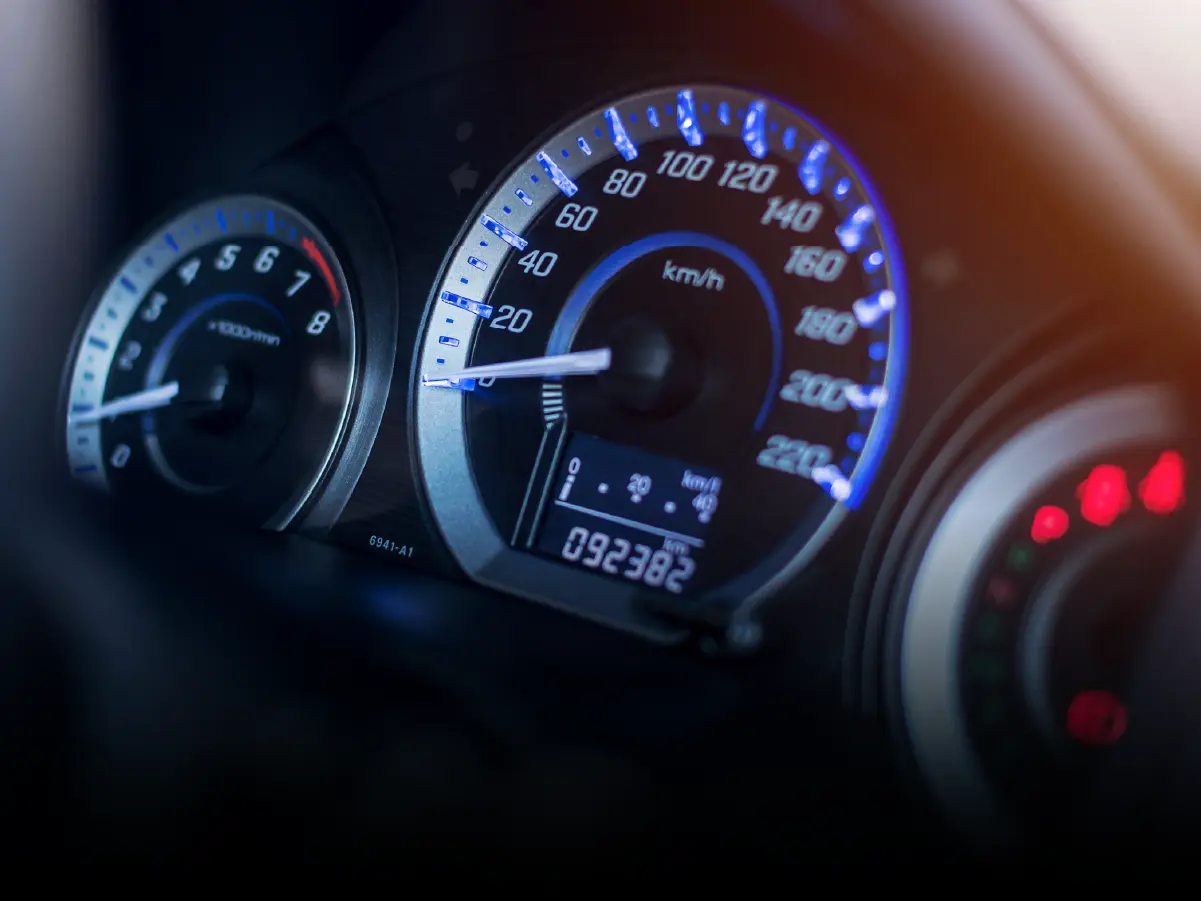
Goa is arguably the trickiest of the three, because it's where buyers get most optimistic. Distances in Goa are short and the state is small, so it's entirely normal to find a 4 to 5 year old car showing only 30,000 to 40,000 kilometres on the odometer, which looks like an obvious bargain on paper. But an odometer only measures movement. A car parked in an open compound near a beach for four years has absorbed salty air every single day it sat there, regardless of how little it actually drove. The engine may barely have worked, while the body and undercarriage took a steady, unglamorous beating the whole time.
Five Checks That Aren't Optional
If a seller won't give you the time or access to run through these, treat that reluctance itself as useful information.
- Get under the car properly. Not a glance from the side. Crouch down with a torch and inspect the chassis, undercarriage, and floor pans directly. Flaky orange surface rust is a warning worth noting. Soft spots, holes, or deeply pitted metal on structural components are a hard stop. Walk away rather than try to negotiate around them. A seller with a genuinely clean underside won't mind you checking.
- Inspect the brake lines and fuel lines. These are thin metal tubes running the length of the undercarriage; they're safety-critical, and they corrode readily in coastal conditions. Visible pitting or surface corrosion means factoring in a real replacement cost, since these repairs go well beyond a cosmetic touch-up.
- Check the battery terminals. White or bluish powdery buildup signals corrosion. While you're at it, manually test every window, lock, and switch in the car. Anything slow, sticky, or inconsistent is worth flagging, since buyers routinely dismiss these as minor snags when they're often part of a larger pattern in a coastal car.
- Read the service history closely. A carefully maintained coastal car tends to accumulate extra entries in its service book, since owners in these conditions typically service more often to stay ahead of corrosion. A thin or missing service history usually means the car has had a rougher life than the listing suggests.
Test drive through real stop-start traffic, the kind of driving the car has actually lived in, rather than a smooth open stretch. Stop-start driving reveals clutch wear, brake feel, and how the AC copes under actual load in a way a clear road never will. Make the car work a little before you commit.
Is a Coastal Used Car Actually Worth Buying?
Yes, provided you approach it with the right checks and the right price expectations. There's nothing inherently wrong with a coastal car, and most owners in these cities maintain their vehicles reasonably well. The mistake is treating a coastal car exactly like any other used car and skipping the checks that specifically matter here. The bar for buying one is higher. That's different from the answer being no.
Pricing should reflect that reality too. A coastal car matched on age and mileage to an equivalent inland car should generally cost less, since its wear profile genuinely differs even when the numbers on paper look identical.
If you already live in a coastal city and you're buying locally, the calculus actually gets a little simpler in some ways. You understand the local conditions, your mechanic understands them too, and registration and insurance stay straightforward. What doesn't change is the inspection itself. Familiarity with coastal cars doesn't make the underlying corrosion risk any smaller, so every check on the list above still applies just as much.
Certified Platform Versus Private Seller
Buying through a certified platform shifts a lot of this burden off your shoulders, since the inspection has already happened independently before the car is ever listed, and you get documented proof of condition rather than a seller's word for it. CARS24's 300-point inspection specifically checks body panels for non-factory welding and hidden filler, exactly the kind of structural repair work that coastal corrosion and rust remediation tend to leave behind, alongside legal, financial, and ownership verification. If you're shopping in one of these cities directly, CARS24's used car listings in Mumbai, Chennai, and Goa already carry this level of inspection on all their own-stock listed vehicle.
None of this means a coastal car is a category to avoid outright. It means it's a category that demands you actually do the legwork, ask pointed questions, and price the condition honestly rather than going on kilometres and a clean photo set alone.