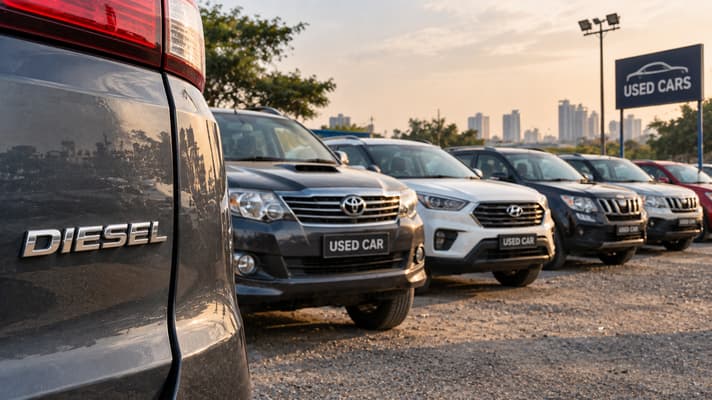
Diesel Is Fading From Showrooms, But It's Thriving in India's Used Car Market
- 1Diesel is disappearing from new-car showrooms but remains common in used cars
- 2Higher mileage and highway use can make a used diesel more practical
- 3Delhi NCR buyers should consider age-based diesel restrictions before buying
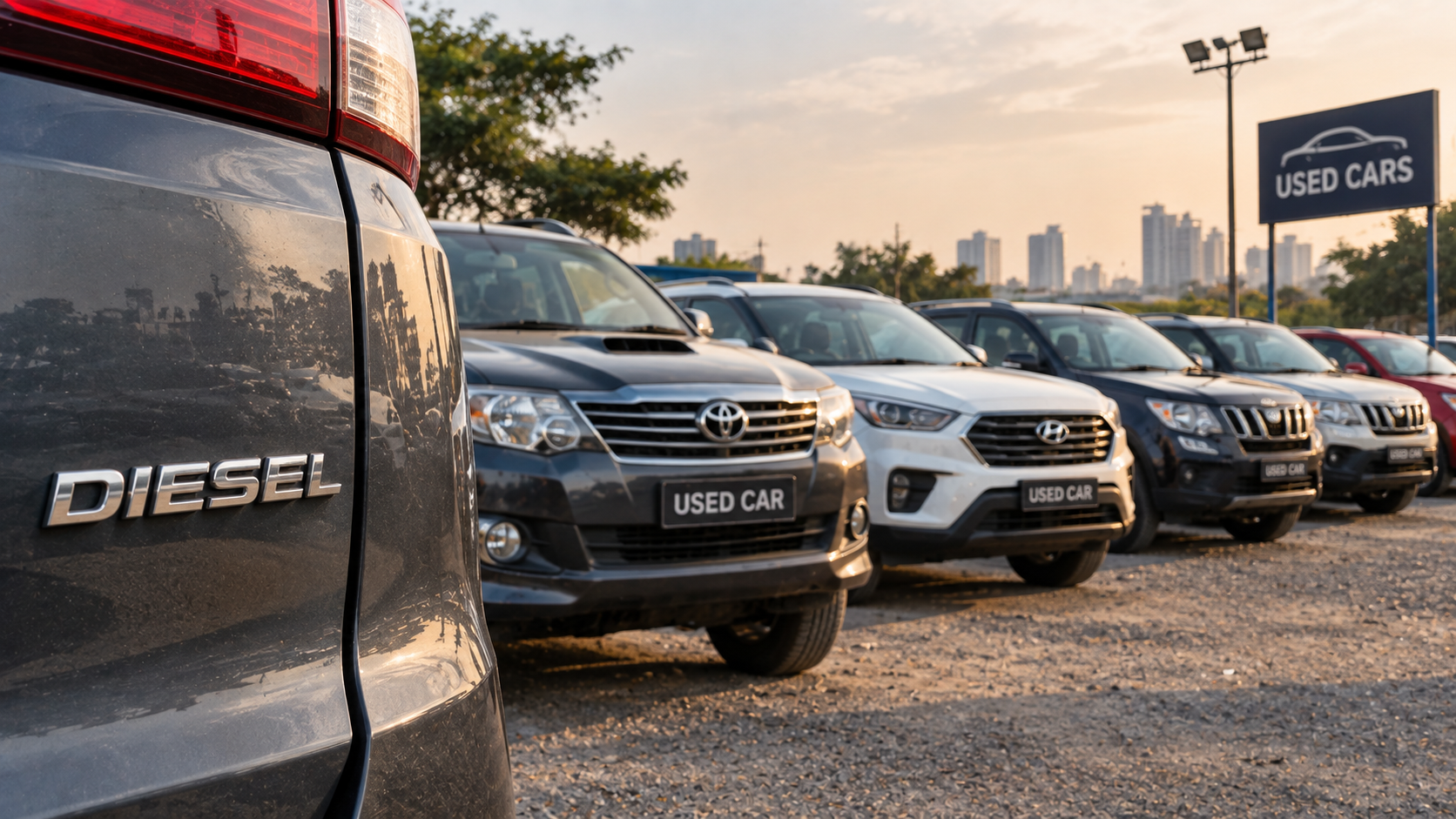
Open any used car listing right now and search for a diesel Innova, a diesel Fortuner, a diesel Thar, a diesel Creta. You'll find plenty. You'll even find a ten year old Swift DDiS that nobody seems in a hurry to give up. This is a strange thing to notice in a country where every headline for the past five years has insisted diesel is finished.
Both things are true at once, and that's really the whole story. Diesel is dying in the showroom. It is very much alive in the parking lot next door. Understanding why requires separating two different markets that happen to sell the same fuel type: new cars, where manufacturers set the terms, and used cars, where buyers do.
Why Manufacturers Actually Walked Away From Diesel
Start with the fact that triggered most of the panic. Maruti Suzuki, India's largest carmaker by volume, pulled diesel passenger cars from its lineup entirely as BS6 emission norms came into force on April 1, 2020. This wasn't a small side project getting axed. When Maruti first announced the plan in 2019, diesel accounted for close to 30 percent of the company's total sales. By the time the exit actually took effect in January 2020, that share had already slid to 17 per cent, as buyers had already started drifting toward petrol ahead of the deadline. Across the whole industry, diesel's share of passenger vehicle sales fell from roughly 60 per cent in the early 2010s to about 25 percent by January 2020, the same source reports. The economics were straightforward: BS6 compliance costs hit small diesel engines hardest, and the fuel price gap between petrol and diesel had narrowed enough to erode diesel's core selling point.
Then came the regulation everyone in Delhi NCR has heard of in one form or another. The National Green Tribunal barred diesel vehicles older than 10 years and petrol vehicles older than 15 years from plying in Delhi NCR back in 2015, a ruling the Supreme Court upheld in 2018. In practice, this rule has had a chaotic few years. Delhi tried to enforce a fuel ban on these end of life vehicles using ANPR cameras at petrol pumps starting July 1, 2025, only to suspend it within two days after public backlash. The Commission for Air Quality Management then pushed the enforcement timeline to November 2025 for Delhi and five high density NCR districts, and April 2026 for the rest of the region. The Supreme Court has since granted interim relief on multiple occasions, ordering that no coercive action be taken against owners of these aging vehicles while it reviews the underlying rule. As of writing, the situation remains genuinely unsettled. If you're shopping for an older diesel specifically in Delhi NCR, treat this as an active legal risk that needs verifying right up to the day you pay, since the rule has flipped back and forth enough times in the past year that even the courts haven't settled it yet.
Between compliance costs pushing manufacturers out and a headline-grabbing ban creating years of bad press, it's not hard to see why the average buyer developed a reflexive distrust of diesel. But that story belongs to new cars. Used car economics run on a different set of assumptions entirely, and that's where this gets interesting.
When India Fell in Love With Diesel
Before diesel became a liability, it was the default choice for anyone who could afford the premium. Roughly between 2012 and 2020, diesel passenger vehicles claimed as much as 60 percent of industry sales at their peak, spanning hatchbacks, sedans, and every compact SUV in between. This wasn't a niche preference. It was the mainstream.
That era produced a long list of engines that are now scattered across India's used car lots: the Swift and Dzire with their DDiS diesel, the i20 and Verna with Hyundai's CRDi units, the first generation Creta with the U2 CRDi, the EcoSport with Ford's TDCi, the Duster with Renault's K9K, the XUV500 with Mahindra's mHawk, and the Innova with Toyota's 2GD. Every one of these contributed heavily to monthly sales charts at their peak. None of them vanished when manufacturers changed strategy in 2020. They simply moved out of the showroom and into the used car market, where they keep changing hands, sometimes for a decade or more after their original owner moved on.
If you're browsing that segment right now, a good chunk of what's listed on Cars24's used Hyundai Creta inventory or its used Toyota Innova listings still carries one of these engines, and for a specific kind of buyer, that's exactly the point.
The Actual Math Behind a Used Diesel
Take the Hyundai Creta as a working example, since it's sold in big enough numbers across both fuel types to make a fair comparison. Petrol manual variant returns roughly 12.5 to 14 kmpl in mixed city and highway driving, while the diesel manual returns roughly 16 to 17.5 kmpl under the same conditions. Highway numbers open the gap further: petrol tops out around 16.5 kmpl on the open road, diesel climbs to 18 to 20 kmpl.
Run the numbers on a driver who covers 20,000 km a year, a reasonable assumption for anyone doing a daily commute plus the occasional highway trip. At a mixed mileage of 13 kmpl for petrol and Delhi's fuel price of roughly Rs 94.77 a litre as of early 2026, annual fuel spend comes to just over Rs 1.45 lakh. The same distance on diesel, at 16 kmpl and roughly Rs 87.67 a litre, comes to around Rs 1.10 lakh. That's a gap of about Rs 36,000 a year, and it widens noticeably for anyone who drives more highway kilometres than city ones. Fuel prices move by state and by the month, so treat these as a working estimate rather than a number to bank on exactly, but the direction of the gap holds consistently across most fuel price environments in India.
Thirty six thousand rupees a year isn't life changing money for everyone. But stack it over five or six years of ownership, which is typical for a used car bought to be driven rather than flipped, and it becomes a meaningful chunk of what you paid for the car in the first place.
Torque Still Wins on the Highway
Fuel economy is only half of why diesel holds appeal for a specific kind of driver. The other half is torque. Diesel engines deliver strong pulling power at low RPM, which translates into less downshifting on inclines, easier overtakes on two lane highways, and a noticeably more relaxed cruise at 100 kmph plus. This is precisely why a diesel Innova feels effortless with seven people and luggage on board, and why nearly every traditional body-on-frame SUV in India, from the Fortuner to the Endeavour to the Thar, has historically leaned on diesel power. For someone who spends real time on the highway rather than crawling through city traffic, that low-end shove matters more than a spec sheet number.
Why Fear Makes Used Diesels a Bargain
The used car market behaves differently here, and this is where an informed buyer can find real value. Perception moves faster than utility. When a large share of buyers wrongly assume every diesel car is a ticking compliance problem, demand softens across the board, even for cars that carry none of that risk. A seven year old diesel SUV registered in Pune or Coimbatore has no exposure to the Delhi NCR age rule whatsoever, yet it often gets priced as if that risk applies everywhere.
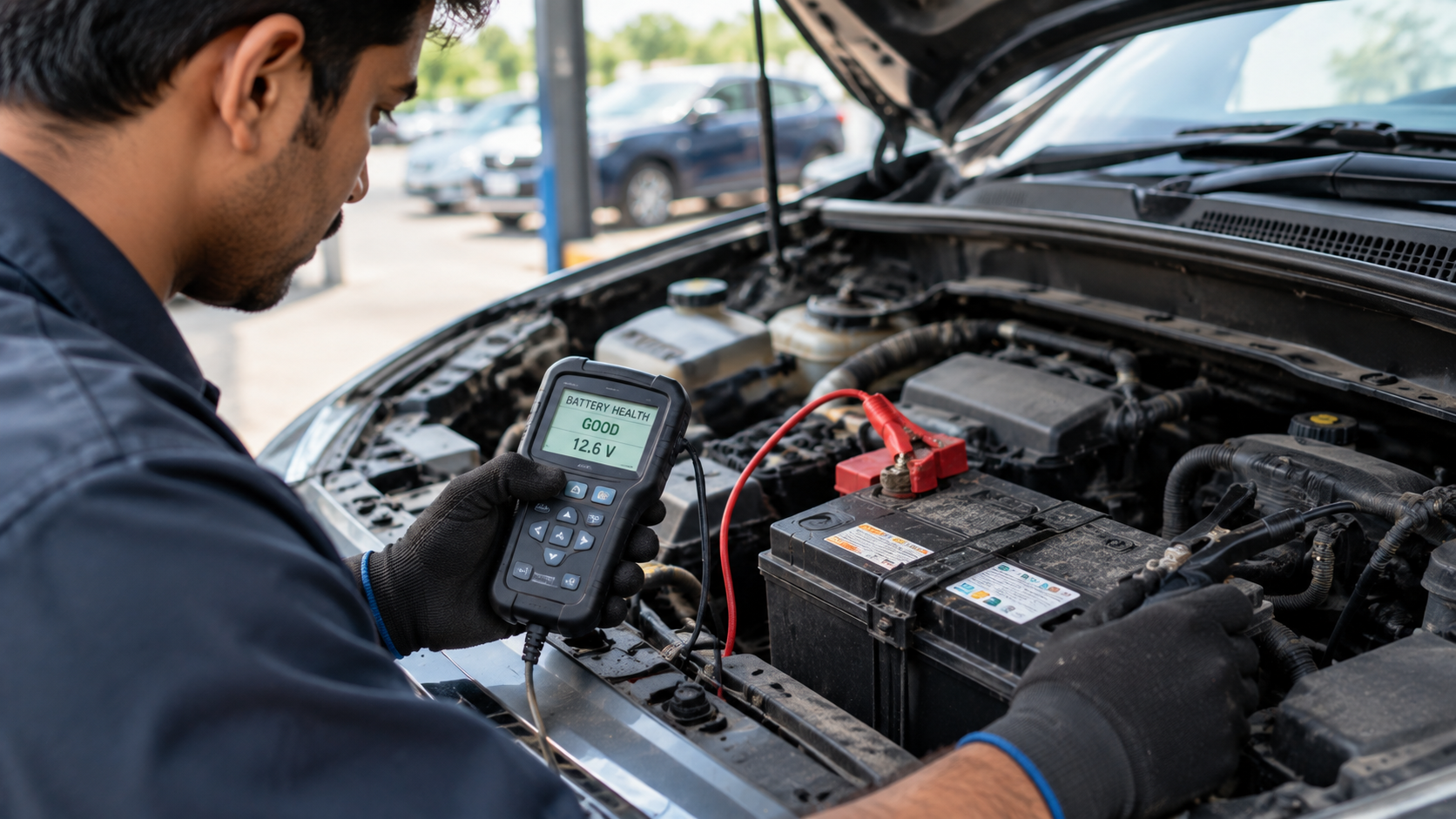
That gap between perceived risk and actual risk is where the arbitrage sits. A cautious buyer sees an older diesel SUV and walks away purely on fuel type. A buyer who has actually checked the registration state, the vehicle's usage history, and their own annual mileage sees the same car and recognises a genuinely rational purchase, often at a price that reflects irrational fear rather than the car's real condition or utility. Both buyers are looking at the same metal. Only one of them did the math.
Where Diesel Still Doesn't Make Sense
None of this makes diesel a universal recommendation, and treating it as one would be dishonest. A few situations rule it out clearly.
Buying an older diesel in Delhi NCR right now means accepting genuine regulatory uncertainty. Given the back and forth on enforcement described earlier, confirm the current status of the age based restrictions before you commit money to a diesel vehicle approaching or past the 10 year mark in this region specifically.
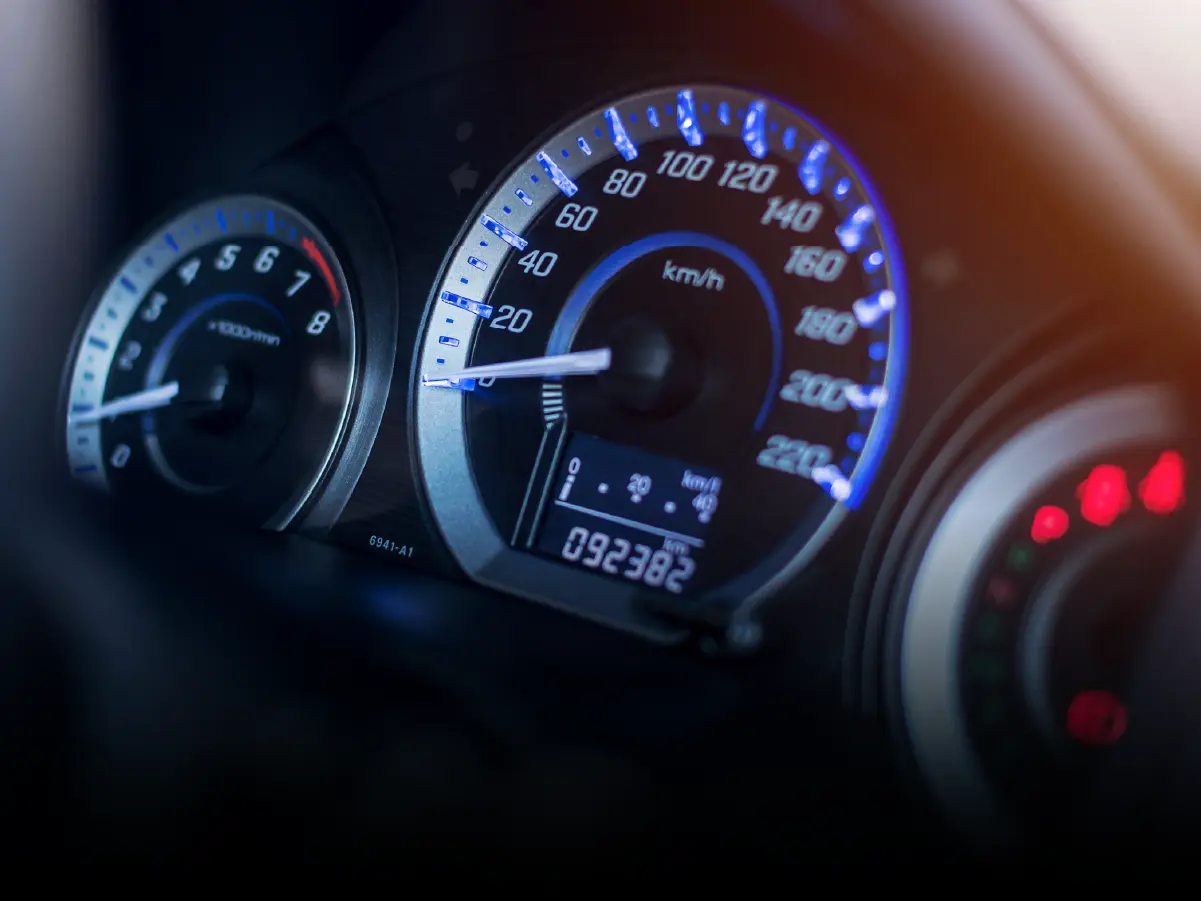
Low annual mileage kills the diesel argument regardless of location. If you're covering 8,000 to 10,000 km a year, the fuel savings shrink to a level that won't offset diesel's typically higher upfront cost and maintenance, and you're unlikely to recover the difference over a normal ownership period.
There's also a mechanical issue specific to modern diesels. BS6 diesel engines carry a diesel particulate filter, which needs sustained highway-speed driving to burn off accumulated soot properly. Owners who mostly do short city trips, quick grocery runs, school pickups, and little else, report the filter clogging and triggering warning lights that end in an unplanned workshop visit. If your car rarely leaves city traffic, a modern diesel will fight you rather than reward you.
So, Is Diesel Actually Dead?
For new cars, largely yes. Manufacturers have moved on, compliance costs keep climbing, and public sentiment has shifted hard enough that most brands see little reason to reintroduce small diesel engines. Diesel's overall share of India's passenger vehicle market hasn't collapsed the way that sentiment would suggest. It sat at around 18 percent through 2023 and 2025, and diesel volumes actually grew 15 percent year on year in the first half of 2026, driven almost entirely by SUV demand. The fuel is simply concentrating into the segment where its strengths, torque, range, and running cost, actually matter.
For used cars, the answer is closer to no. Buying used comes down to a numbers exercise: run your own annual mileage and driving mix against the math above, and the case for or against diesel becomes obvious fairly quickly. If your annual mileage is high, your driving skews toward highways, and you're not shopping in a Delhi NCR age bracket that's currently caught up in legal limbo, a used diesel remains a financially sound purchase in 2026, just as it was five years ago. Diesel simply moved out of the showroom and into the used car lot, and it's likely to stay there for a good while yet.
Ready to see what's actually available? Browse Cars24's used diesel car inventory and run your own numbers before you decide either way.
Frequently Asked Questions
Expand all