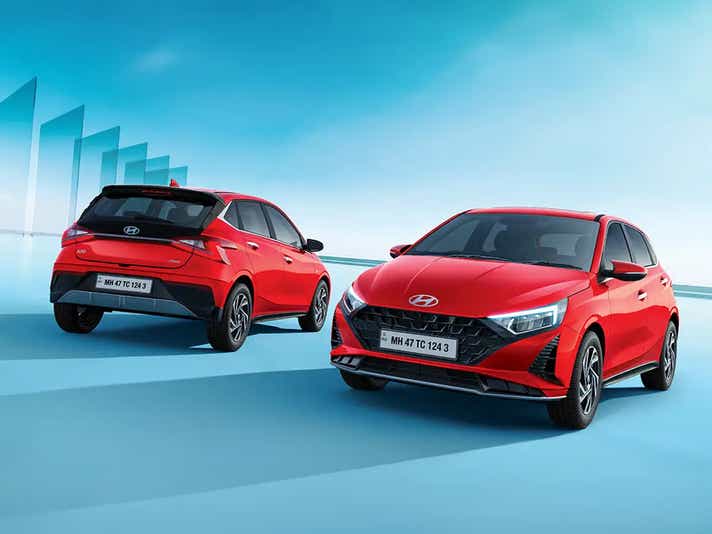
Hyundai i20 Real World Mileage: The Complete Guide
The Hyundai i20 has firmly established itself as a benchmark in the premium hatchback segment in the Indian automotive market. For over a decade, it has been the vehicle of choice for buyers who want an upmarket cabin, sharp styling, and a host of modern features without stepping into the compact sport utility vehicle territory. However, beyond its striking looks and tech-loaded interior, buyers consistently seek clarity on its fuel economy.
It is important to acknowledge that the real world fuel efficiency is frequently different from the claimed ARAI numbers. Therefore, expecting to achieve the exact ARAI fuel economy in your daily life is simply not practical. It is crucial to set realistic expectations regarding the Hyundai i20 real world mileage before bringing the vehicle home. A well-informed buyer is a happy owner, and knowing the actual figures prevents post-purchase disappointment.
Numbers to Consider When Buying the Hyundai i20
Before we evaluate the practical fuel economy, we must examine the mechanical hardware that dictates these figures. Currently, the standard Hyundai i20 is exclusively offered with a refined naturally aspirated petrol engine, as the brand has streamlined its offerings and moved away from diesel engines in this specific category.
| Specification | 1.2L Kappa Petrol Engine |
| Engine Capability | 1197 cc |
| Maximum Power | 82 bhp (Manual) / 87 bhp (Automatic) @ 6000 rpm |
| Maximum Torque | 114.7 Nm @ 4200 rpm |
| Transmission Options | 5-Speed Manual, Intelligent Variable Transmission (Automatic) |
| Fuel Options | Petrol |
| ARAI Claimed Economy | 16.00 kmpl (Manual) / 20.00 kmpl (Automatic) |
| Fuel Tank Capacity | 37 Litres |
Hyundai i20 Real World Mileage
When examining the Hyundai i20 real world mileage, you must take its 37-litre fuel tank capacity into account. On a complete refuel, an owner can expect an aggregate practical range of approximately 480 to 550 kilometres, depending heavily on the chosen transmission and the specific driving environment. It is important to establish that this range depends on various factors such as your personal driving behaviour, tyre pressure maintenance, and the level of traffic congestion you face daily. Let us break down the figures comprehensively based on the available transmission options.
Hyundai i20 Manual Petrol Mileage
| Driving Condition | Expected Practical Mileage |
| City Traffic | 11.5 to 13.0 kmpl |
| Highway Cruising | 16.5 to 18.0 kmpl |
| Mixed Usage | 13.5 to 15.0 kmpl |
From a driver's perspective, the five-speed manual transmission paired with the 1.2 litre Kappa engine is tuned predominantly for smooth urban commutes rather than aggressive acceleration. In dense city traffic, the Hyundai i20 petrol real world mileage typically hovers around the 12 kmpl mark. The engine requires frequent gear shifts in stop-and-go traffic, which naturally consumes more fuel as the vehicle fights inertia. However, the clutch is incredibly light, which significantly reduces driver fatigue. Once you transition to the open highway and maintain a steady cruising speed of 80 to 90 kmph, the efficiency improves significantly. Drivers can realistically extract up to 18 kmpl on long highway trips if they maintain a light foot on the accelerator. The mixed usage figure gives a very realistic picture for an average buyer commuting daily.
Hyundai i20 Automatic Petrol Mileage
| Driving Condition | Expected Practical Mileage |
| City Traffic | 11.0 to 12.5 kmpl |
| Highway Cruising | 16.0 to 17.5 kmpl |
| Mixed Usage | 13.0 to 14.5 kmpl |
The automatic variant utilises an Intelligent Variable Transmission, which is a highly refined continuously variable transmission. While it offers unparalleled convenience and a stress-free driving experience in bumper-to-bumper traffic, there is a slight compromise when it comes to the Hyundai i20 automatic real world mileage.
In severe city congestion, the constant braking and accelerating can cause the numbers to drop to around 11 kmpl. The typical rubber band effect means the engine revs higher than the actual road speed if you press the throttle aggressively, thereby burning noticeably more fuel.
To maximise the Hyundai i20 real world mileage with the automatic gearbox, drivers must adopt a very relaxed driving style. Smooth inputs on the accelerator allow the transmission to keep engine speeds low. On the highway, the transmission settles into a relaxed ratio, allowing the vehicle to deliver 17.5 kmpl during steady cruising.
Claimed vs Real World Mileage
Whether you are adding a new i20 to your garage or picking up a used Hyundai i20 for comfortable city cruising, the actual fuel economy you extract will depend heavily on traffic congestion.
To provide absolute clarity on what you can realistically expect, here is a tabular comparison highlighting the difference between the laboratory-tested ARAI figures and the practical figures you will see on the road.
| Engine and Transmission | ARAI Claimed Figure | Practical Average Expectation |
| 1.2L Petrol Manual | 16.00 kmpl | 14.50 kmpl |
| 1.2L Petrol Automatic | 20.00 kmpl | 13.50 kmpl |
A notable difference between real world and ARAI mileage exists due to the fundamental nature of the testing protocols. The claimed 20 kmpl for the automatic variant is achieved in a highly controlled, enclosed environment without any heavy passenger load, aerodynamic wind drag, or the use of the climate control system. Real life driving forces the vehicle's engine to work considerably harder to navigate unpredictable traffic, carry the weight of passengers and luggage, and maintain cabin cooling under the hot sun, all of which directly pull the overall fuel efficiency down to much more realistic numbers.
Real World Mileage By Owners
To present a truly objective and unbiased view, we analysed multiple user reports from reputable automotive forums to understand exactly how the Hyundai i20 real world mileage behaves in the hands of actual everyday owners across various terrains and usage patterns.
Air Conditioning Usage: Owners unanimously agree across forums that running the automatic climate control continuously, especially during the harsh Indian summers, results in a noticeable drop of roughly 1.5 to 2.0 kmpl. The air conditioning compressor draws significant mechanical power from the naturally aspirated engine.
Passenger Load: When driven solo or with just one front passenger, the engine feels peppy and efficient. However, forum data indicates that fully loading the hatchback with five adults and a boot full of luggage noticeably strains the engine, dropping the fuel economy by up to 15 percent, especially when navigating highway inclines.
Driving Style Variations: Aggressive drivers who constantly push the engine past 3000 rpm in lower gears complain of figures as low as 10 kmpl in the city. In stark contrast, owners who practice defensive driving, anticipate traffic flow, and brake smoothly often report achieving mixed figures exceeding 15 kmpl quite effortlessly.
Comparison of Hyundai i20 with Key Rivals
The premium hatchback segment is fiercely competitive, with multiple brands fighting for dominance. Here is a tabular comparison of how the practical fuel efficiency of this vehicle stacks up against three of its direct and most popular segment competitors.
| Car Model (Petrol Manual) | Engine Capacity | Expected Practical Mixed Mileage |
| Hyundai i20 | 1.2 Litre Naturally Aspirated | 13.5 to 15.0 kmpl |
| Maruti Suzuki Baleno | 1.2 Litre Naturally Aspirated | 16.0 to 18.0 kmpl |
| Toyota Glanza | 1.2 Litre Naturally Aspirated | 16.0 to 18.0 kmpl |
| Tata Altroz | 1.2 Litre Naturally Aspirated | 13.0 to 14.5 kmpl |
When compared directly to its rivals, the Maruti Suzuki Baleno and its mechanical twin, the Toyota Glanza, clearly lead the segment in terms of absolute fuel efficiency. However, the i20 strategically trades a small margin of that efficiency for a significantly more refined engine note, a quieter cabin, and a highly premium interior experience, closely matching the efficiency figures delivered by the heavier Tata Altroz.
On the other hand, if you want to switch to a compact sedan design for added boot space, taking a look at the Honda Amaze real world mileage reveals some very practical fuel-saving figures.
Running Cost of Hyundai i20
Since a diesel engine is no longer available in the standard lineup, we will calculate the overall running cost of the vehicle using the petrol engine variants strictly. We will use the current petrol price in Delhi, which stands at approximately Rs 94.77 per litre. Let us consider an example of daily driving of 30 km for the entire month, translating to exactly 900 kilometres.
Manual Petrol Running Cost: Assuming an average practical economy of 14.5 kmpl for the manual version, you will require roughly 62 litres of fuel each month to cover the 900 kilometres. This translates to an estimated monthly running cost of Rs 5,875.
Automatic Petrol Running Cost: Assuming an average practical economy of 13.5 kmpl for the automatic version due to city congestion, you will need about 66.6 litres of fuel every month. This pushes the monthly fuel bill slightly higher to approximately Rs 6,311.
Five-Year Ownership Difference: Over a five-year ownership period, assuming fuel prices remain constant for calculation purposes, the manual variant will cost you roughly Rs 3,52,500 in total fuel expenses. The automatic variant, primarily due to its slightly lower operational efficiency, will cost around Rs 3,78,660 over the same period. Therefore, choosing the automatic transmission for its undeniable daily convenience will result in an additional running cost of approximately Rs 26,160 over five years compared to the manual counterpart.
For a broader view on how the naturally aspirated setup differs from other choices, you can read our Hyundai i20 mileage comparison to comprehensively compare the mileage and running costs of different powertrain options in detail.
Tips to improve the Mileage of the Hyundai i20
Achieving the absolute best possible Hyundai i20 real world mileage is entirely in the hands of the driver. Adopting mindful driving habits can drastically reduce your monthly fuel bills and improve engine longevity. Here are five highly practical tips to improve your vehicle's fuel economy.
Maintain Correct Tyre Pressure: Always ensure your Hyundai i20 tyre pressure matches exact specifications mentioned on the driver side door pillar. Under-inflated tyres create excessive rolling resistance on the tarmac, forcing the engine to burn considerably more petrol just to keep the vehicle moving forward at a constant speed.
Use Gentle Throttle Inputs: The naturally aspirated Kappa engine rewards smooth, linear driving. Avoid mashing the accelerator pedal to the floor when the traffic light turns green. Gradual acceleration prevents the engine from dumping excess fuel into the combustion cylinders, yielding much better economy over time.
Limit Excessive Idling: If you anticipate being completely stationary for more than forty five seconds at a major traffic intersection or a railway crossing, turn the engine off. Idling yields zero kilometres per litre and severely impacts your overall trip average without you even realising it.
- Adhere to Service Schedules: Replace the engine oil, oil filter, and the air filter strictly according to the manufacturer's guidelines. A clean air filter ensures the engine breathes properly, maintaining the precise optimal air-to-fuel ratio necessary for maximum combustion efficiency.
Frequently Asked Questions
Expand all