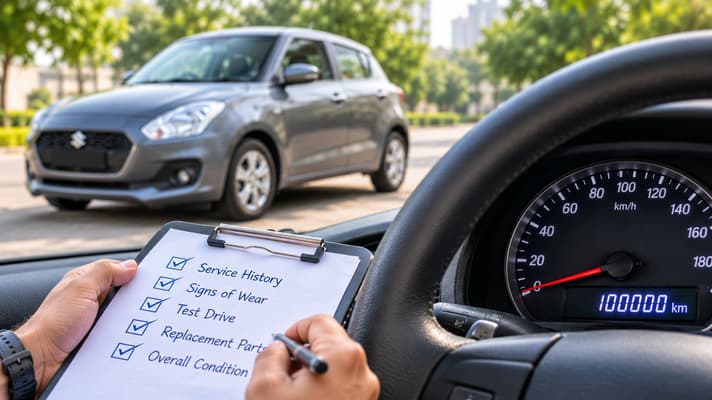
Should You Buy a Used Car With a High Odometer Reading? How to Check a 1 Lakh km Car
- 1One lakh km is a service milestone, not an expiry date
- 2A well-maintained 1 lakh km car can be a better buy than a less driven neglected one
- 3How the kilometres were driven and how the car was cared tells you far more
- Is 1 Lakh km Too Much for a Used Car?
- How the Kilometres Were Driven Matters More Than the Number
- How to Verify the Odometer Reading
- What Should Have Been Replaced by 1 Lakh km?
- The Cold Start and Leak Check
- Test Drive Checklist for a High Mileage Car
- Electricals and AC: The Small Faults That Add Up
- Body and Structural Damage: The Check That Matters Most
- Extra Checks for Diesel, Turbo Petrol, DCT and CNG Cars
- 5 Questions to Ask Before Buying a 1 Lakh km Car
- How to Use Your Findings to Negotiate
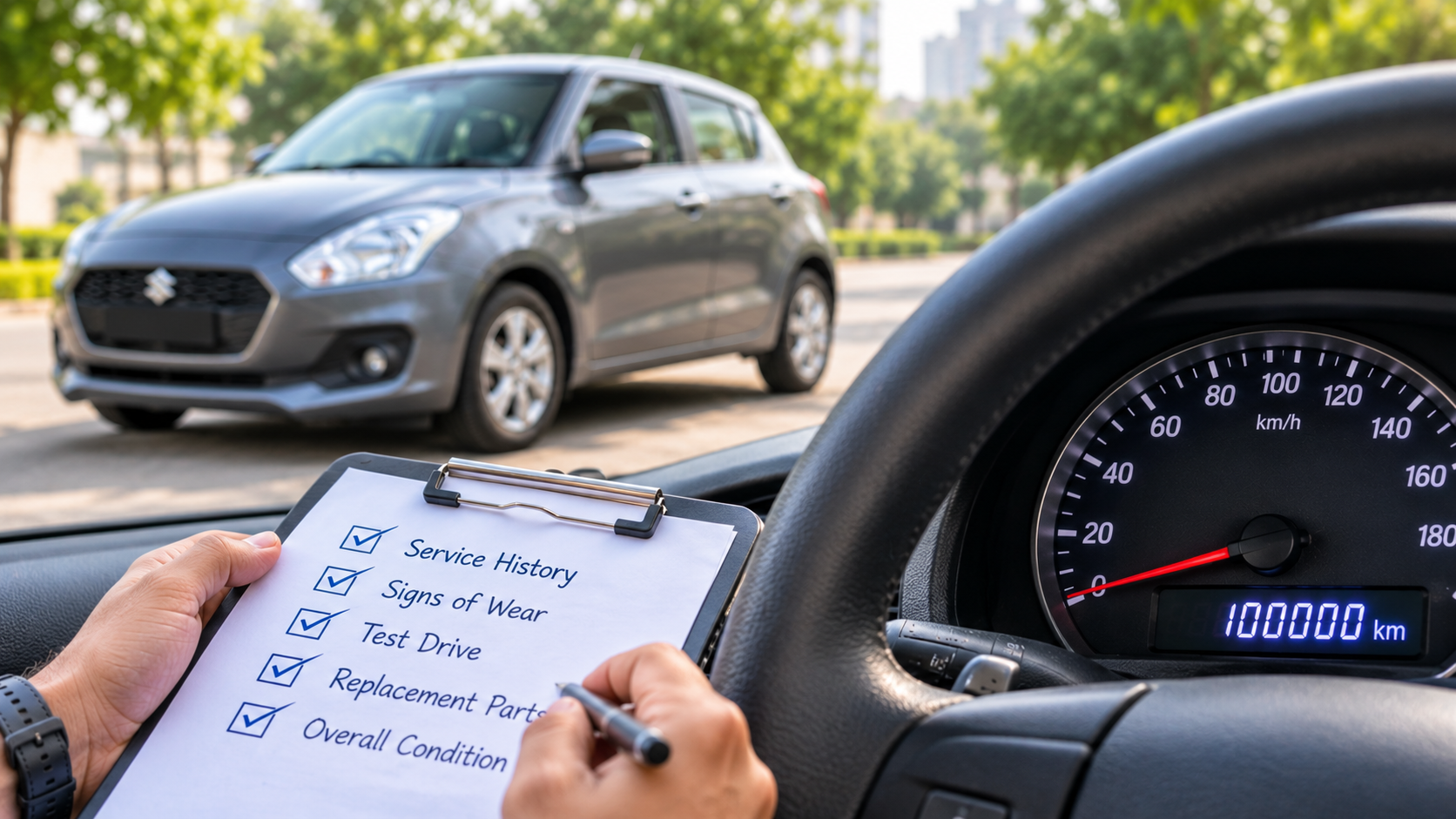
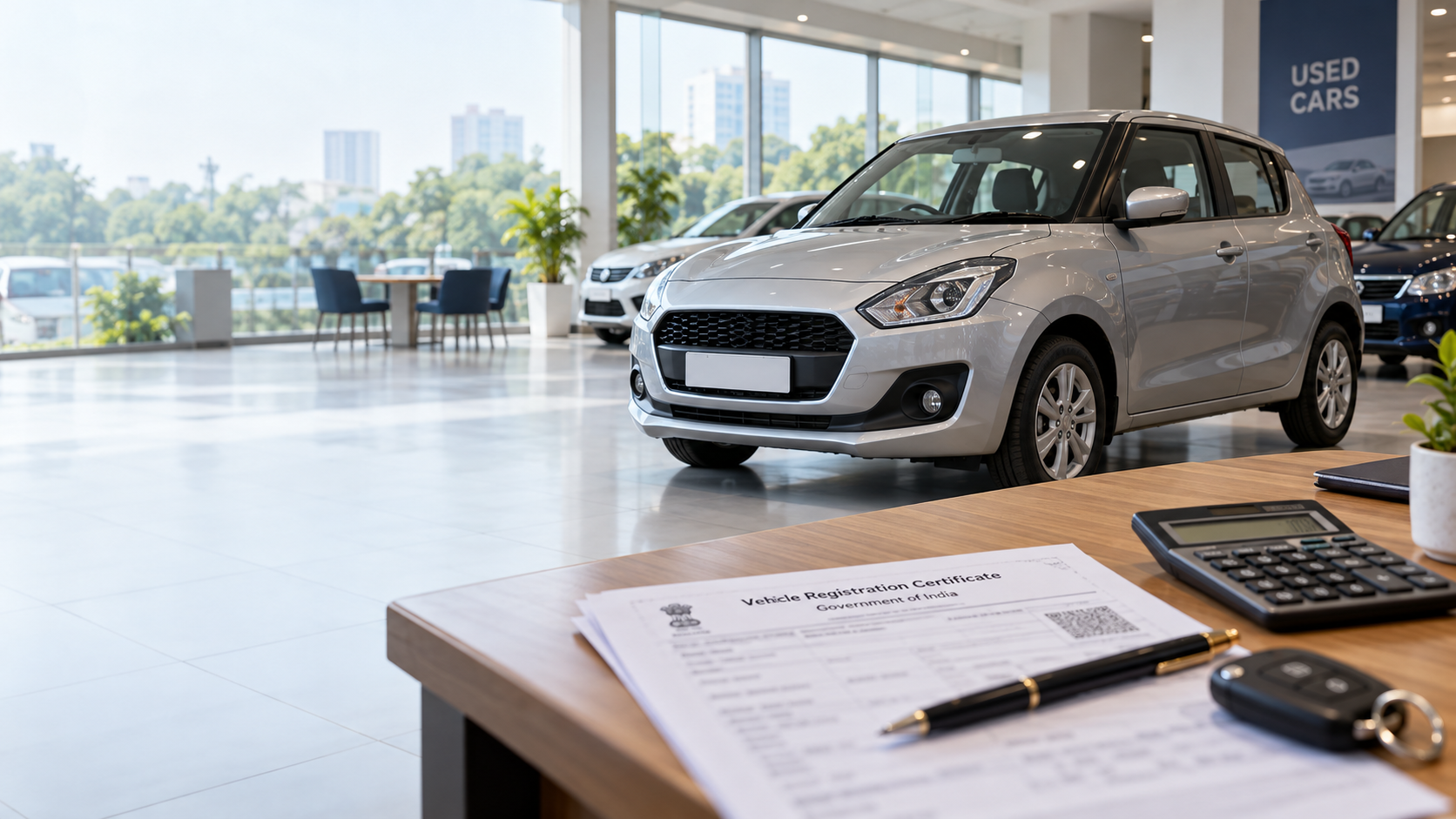
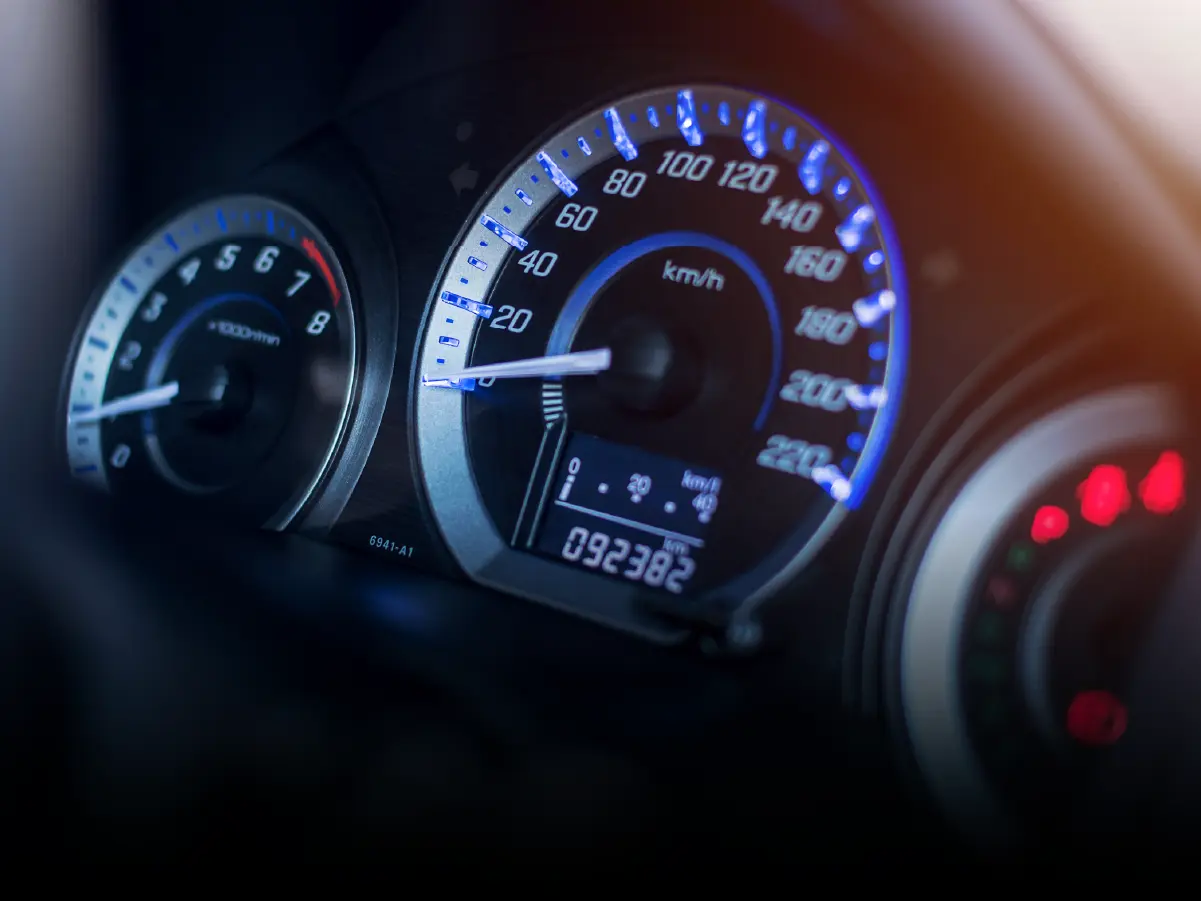
Picture a 2019 Maruti Suzuki Swift VXI. Clean paint, familiar shape, one of the most popular hatchbacks India has ever bought. Then you glance at the odometer: just over 1,00,000 km.
For many buyers, that six-digit number ends the conversation. It sounds like a car that is ready for the scrapyard.
It usually isn't. A car does not run perfectly at 99,999 km and fall apart at 1,00,001. What matters is the life behind that number: where the kilometres were driven, how the car was serviced, what has already been replaced and whether the body has ever taken a serious hit. This guide shows you how to read that history, step by step, so you can decide whether a high-mileage used car is a bargain or a liability.
Is 1 Lakh km Too Much for a Used Car?
No, not by itself. Modern petrol and diesel engines from mainstream brands are built to run well past 1 lakh km when they are serviced on time. What wears out by this point is mostly the consumable stuff: clutch, brakes, suspension bushes, tyres, battery. Those parts are designed to be replaced. If they have been, or if the price reflects that they soon will be, the car can still have many years of use left.
The real risk with a high mileage car is not the number. It is not knowing how the number got there. That is why this guide spends more time on evidence than on the odometer.
There is also an upside for you as a buyer. High mileage cars usually sell for noticeably less than low mileage examples of the same model and year. If the car checks out, that discount is money in your pocket.
How the Kilometres Were Driven Matters More Than the Number
Two cars can show the same 1,00,000 km and have lived completely different lives.
| Scenario | Average per year | What it usually means |
| 1 lakh km over 7 to 8 years | Roughly 12,500 to 14,300 km | Regular daily use; a fairly typical life for an Indian family car |
| 1 lakh km over 3 years | Over 33,000 km | Heavy use: long commutes, touring, or commercial-style running |
| Mostly highway kilometres | Any | Less wear on clutch, brakes and gearbox; more stone chips and front-end wear |
| Mostly city kilometres | Any | More clutch, brake and suspension wear; more engine idle hours per km |
A highway-driven car that has done 1 lakh km in long, steady runs can be in better mechanical shape than a city car with 60,000 km of bumper-to-bumper crawling. Each stop-start cycle works the clutch, brakes and engine mounts harder than an hour of cruising at a steady speed.
So before you even drive the car, ask the seller where and how it was used. Then look for evidence that supports the answer.
How to Verify the Odometer Reading
Don't just ask the seller, "Is the mileage genuine?" They will say yes. Ask for proof instead.
Documents that tell the real story
- Service records and invoices: Most service invoices record the odometer reading. A steady climb that matches the car's age is a good sign. A sudden drop, or an unexplained gap of several years, is not.
- Authorised workshop history: For brands with a large network like Maruti Suzuki, an authorised workshop can often pull up the car's service history.
- Insurance history: Policy renewals and claim records can carry odometer readings and repair details.
- Previous inspection reports: If the car was inspected before, compare the readings.
Mileage progression: Line up every reading you can find against the dates. The numbers should only go up, and at a rate that makes sense.
Wear that should match the number
Look at the parts your hands and body touch every day:
- Steering wheel rim and leather or plastic wrap
- Gear knob
- Pedal rubbers
- Driver's seat, especially the outer side bolster you slide over to get in
Door handles and window switches
Worn interiors do not prove the odometer has been tampered with. Some owners are hard on cabins. But if a car supposedly has 60,000 km and the cabin looks like it has done three times that, investigate further. The odometer should tell the same story as the rest of the car.
What Should Have Been Replaced by 1 Lakh km?
Here is the question that separates a smart buyer from a nervous one: what has already been done, and what is still due?
A replaced part is not bad news on a high-mileage car. If the clutch was replaced at 90,000 km, that does not mean you should walk away. It often means the owner looked after the car. Parts that have never been replaced by 1 lakh km are the ones you should budget for.
| Component | What to check | Likely cost impact if due |
| Tyres | Tread depth, even wear, manufacture date on sidewall | Medium (a full set of four adds up fast) |
| Battery | Age, invoice, how readily the car cranks on a cold start | Low |
| Brake pads, shoes and discs | Records, pedal feel, vibration under braking | Low to medium |
| Clutch (manual cars) | Replacement record, bite point, slip test | Medium |
| Suspension parts | Bushes, links, shock absorbers; noises over bumps | Medium |
| Belts | Accessory belt condition; timing belt replacement record if the engine uses a belt | Low to high (a timing belt that fails can damage the engine) |
| Fluids | Engine oil, coolant, brake fluid, gearbox oil change records | Low |
| Engine mounts | Vibration at idle, jerks when shifting from reverse to first | Low to medium |
| Wheel bearings | Humming or grinding that rises with speed | Low to medium |
Check the owner's manual for the replacement schedule on that specific engine. Some engines use a timing chain designed to last the life of the engine; others use a timing belt with a fixed replacement interval. On a belt-driven engine, a missing replacement record at 1 lakh km is a real cost to factor in.
The Cold Start and Leak Check
Insist on a cold start
If you are serious about a car, ask the seller not to start it before you arrive. A warm engine can hide things a cold one cannot.
When you turn the key or press the start button:
- Does it start cleanly, without long cranking?
- Is the idle steady, or does it hunt up and down?
- Any unusual vibration through the steering or floor?
- Any knocking, ticking or belt squeal?
Warning lights: They should all light up when you switch on the ignition, then go out once the engine starts, as appropriate. If a warning light stays on, don't brush it aside because the car "feels fine". Get it diagnosed.
Look for leaks
Check for engine oil, coolant, gearbox oil, brake fluid and power steering fluid where applicable. Don't just look at the ground under the car. Look around the engine bay and underneath for fresh wet patches or heavy oily grime.
A light film of old grime on a high-mileage car is not a disaster. An active leak is different. It needs a proper diagnosis before you buy. This is the recurring theme of the whole inspection: don't diagnose the problem yourself. Spot the red flag, then get it checked.
Test Drive Checklist for a High Mileage Car
Don't settle for a lap around the block. Try to include a rough road, a few speed breakers, some traffic and a stretch where you can reach highway speeds.
Suspension
Drive over broken patches and speed breakers with the music off. Clunks, knocks or excessive bouncing usually point to worn suspension parts.
Steering
- Does the car pull to one side on a straight road?
- Is there excessive free play before the wheels respond?
Any groaning or clicking at full lock?
Brakes
- Does the car stop in a straight line?
- Is the pedal feel firm and consistent?
Any vibration through the steering wheel or pedal under braking?
Tyres
Check tread depth and look for uneven wear, which can point to alignment or suspension problems. Then check the tyre age. The last four digits of the DOT code on the sidewall show the week and year of manufacture, so "3421" means week 34 of 2021. Most carmakers recommend replacing car tyres around six years after manufacture, regardless of how much tread is left. Four tyres that are due for replacement can turn a good deal into an expensive one.
Clutch (manual cars)
The clutch deserves special attention on a 1 lakh km manual car.
- Does it engage smoothly, without judder?
- Is the bite point unusually high? A clutch that only bites at the very top of the pedal travel is usually close to worn out.
Do all the gears slot in cleanly?
Simple clutch slip test: On a clear stretch, shift into a relatively high gear at a modest speed and press the accelerator firmly. If the revs climb but the car doesn't pick up speed to match, the clutch may be slipping.
A worn clutch is not a reason to reject the car. It is a reason to add the repair cost to your negotiation.
Automatic gearboxes
Look for delayed engagement when you shift into Drive or Reverse, jerky shifts, slipping, unusual whining or warning lights. Not all automatics carry the same risk. A conventional torque converter, an AMT, a CVT and a dual-clutch gearbox all wear differently, so your checks should match the gearbox the car actually has.
Electricals and AC: The Small Faults That Add Up
People are surprisingly casual about this part. An engine rebuild is expensive, but a string of small electrical and AC faults can quietly cost you just as much.
Test everything:
- AC: Don't just switch it on. Check that it actually cools, both at idle and while driving.
- Infotainment and speakers
- Power windows on all four doors
- Central locking and remote key
- ORVM adjustment and folding
- Reverse camera and parking sensors
- Steering-mounted controls
- Every exterior and interior light
- Wipers and washers, front and rear
- Rear defogger
Horn
Body and Structural Damage: The Check That Matters Most
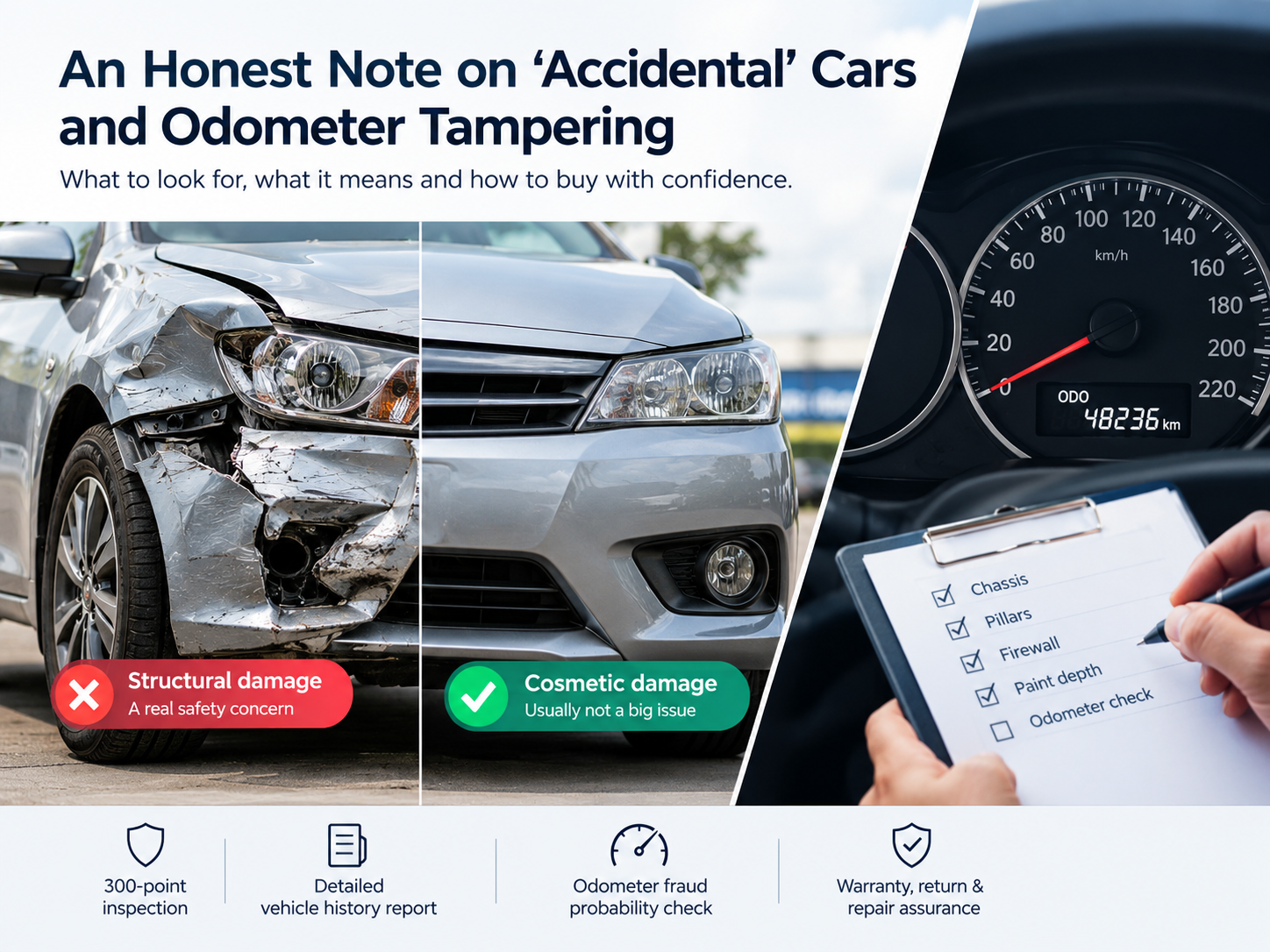
If there is one thing more important than the odometer reading, it is what has happened to the car's body.
Look for:
- Uneven panel gaps between doors, bonnet and boot
- Paint that doesn't match from one panel to the next
- Overspray on rubber seals, glass edges or plastic trim
Uneven shut lines when doors and boot close
Then look under the bonnet and under the boot floor carpet. You are trying to tell the difference between cosmetic repairs and structural damage.
A repainted bumper or door is common and usually harmless. A repaired chassis rail, apron or pillar is a different matter entirely. It can affect how the car behaves in a crash, how it drives and what it is worth.
If you are not confident spotting structural repairs yourself, get a professional used car inspection done. Saving a few thousand rupees here can cost you far more later.
Extra Checks for Diesel, Turbo Petrol, DCT and CNG Cars
Everything above applies to every car. But each powertrain has its own weak spots at high mileage, so the smarter question is not "How many km has it done?" but "What tends to wear out on this particular powertrain?"
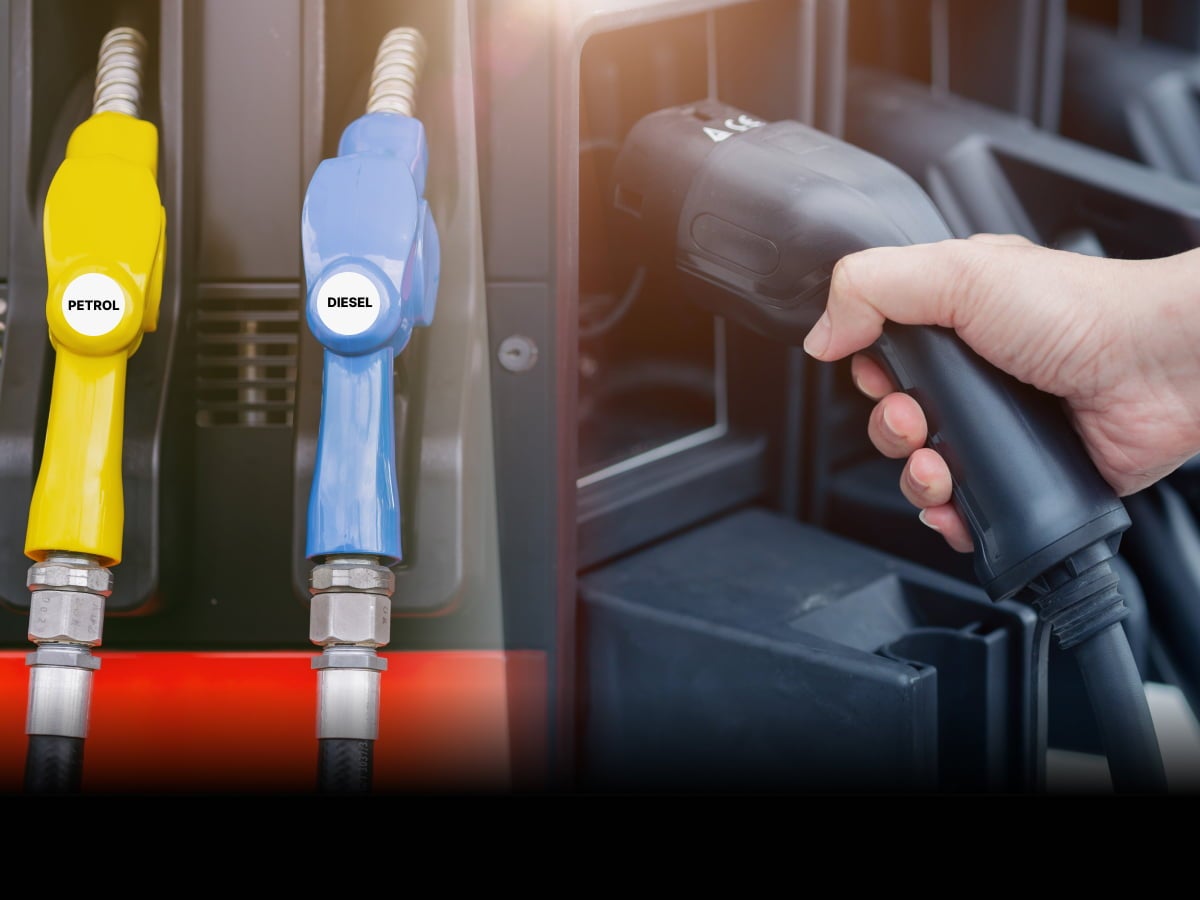
| Powertrain | Extra things to check |
| Diesel | Turbocharger (whistle, smoke, lag), injectors (rough idle, smoke), EGR valve, and on newer BS-VI diesels the DPF and related emission systems |
| Turbo petrol | Turbo health, oil leaks around the turbo, service history showing correct oil grade and on-time changes |
| Dual-clutch automatic (DCT) | Judder at low speeds, hesitation when pulling away, any gearbox warning messages, software or clutch pack work in the records |
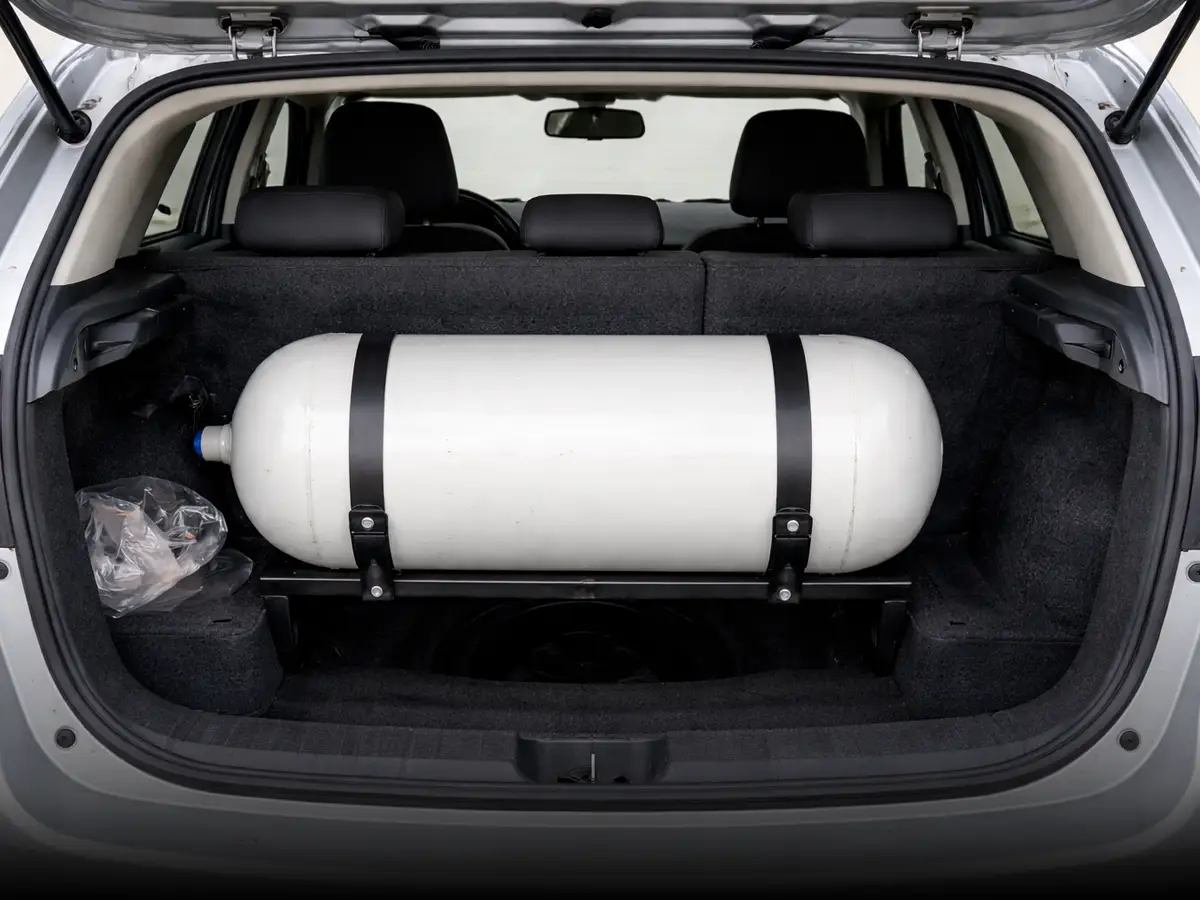
| CNG (factory or retrofitted) | Cylinder hydrotest certificate, kit installation endorsed on the RC, leaks, and how smoothly the car switches between fuels |
On CNG: Cylinders must be hydro-tested every three years. In August 2026, pumps in Noida and Greater Noida were told not to refuel vehicles without a valid hydrotest certificate. Ask for that certificate before you buy any used CNG car.
On age limits in Delhi NCR: Delhi NCR has long applied 10-year limits on diesel and 15-year limits on petrol vehicles. In December 2025, the Supreme Court allowed action against such over-age vehicles only where they fall below BS-IV norms. These rules have changed several times, so check the current position and the emission norm on the RC before buying a diesel in NCR.
5 Questions to Ask Before Buying a 1 Lakh km Car
If you were buying the car tomorrow, these are the five questions to answer:
- Can I verify the kilometres? Service records, invoices and insurance history should back up the odometer.
- How were those kilometres accumulated? Highway, city, or a mix, and over how many years?
- Is there a proper maintenance history? Regular services, on time, ideally at authorised or reputable workshops.
- What expensive components have been replaced, and what is due? Clutch, tyres, battery, suspension, belts.
Has the car suffered serious structural or chassis-level damage? Cosmetic repairs are fine; structural repairs need a very good reason and a very good price.
If you can answer all five confidently, 1 lakh km should not scare you away.
How to Use Your Findings to Negotiate
Everything you find during the inspection has a value. Use it.
- Price in what is due: If the clutch is near the end of its life and the tyres are five years old, get rough quotes and factor them into your offer.
- Separate deal-breakers from repairs: A worn clutch is a repair. A bent chassis rail or an engine that smokes heavily is a deal-breaker for most buyers.
- Value good records: A car with a complete, authorised service history is worth more than one with gaps, even at the same mileage. Be prepared to pay a little extra for a well-documented car.
- Check the protection on offer: Buying a used car from a platform with post-purchase cover reduces your risk. Cars24 owned stock cars come with a 30-day free repair assurance, a 12-month warranty, and an optional lifetime warranty valid up to 12 years from first registration or 1.5 lakh km. Read how Cars24 protects buyers after purchase for the full terms and eligibility.
Budget for the loan, too: If you are financing, compare EMIs on an EMI calculator with and without the repair budget included.
High mileage used car: pros and cons
| Pros | Cons |
| Noticeably cheaper than low-km cars of the same model and year | Consumable parts are more likely to be due for replacement |
| Highway-driven cars can be mechanically healthier than their km suggests | Harder to verify the history if records are missing |
| Major replacements may already have been done | Lower resale value when you sell |
| Lets you afford a better model or variant on the same budget | Some extended warranties have km caps you may be close to |
| Mainstream engines with good service history often have plenty of life left | Diesel, DCT and CNG cars need extra, specialist checks |
Frequently Asked Questions
Expand all