Maruti Fronx Mileage Comparison: Petrol vs Turbo vs CNG (2026)
- 1Maruti Fronx mileage reaches up to twenty-one for petrol on highways.
- 2This Maruti Fronx mileage comparison reveals excellent daily CNG savings.
- 3Read to find which Maruti Fronx variant have CNG for daily commutes.
The Maruti Fronx is a highly popular compact crossover in India. It offers exceptional style, great comfort, and amazing daily practicality. You can choose between naturally aspirated petrol, turbo petrol, and CNG. The standard petrol engine gets a manual or AMT automatic gearbox. The CNG version comes exclusively with a five-speed manual transmission. The turbo petrol features a manual or a torque converter automatic.
This Maruti Fronx mileage comparison matters for your overall running costs. Buyers wanting high refinement usually prefer the smooth petrol automatic variant. Budget-conscious high-milers focus on the superior fuel efficiency of the CNG. Performance enthusiasts appreciate the immense power of the turbo petrol engine.
Variant-Wise Price Difference
Before we proceed with the comparison, let us examine the prices. It is vital to know the premium demanded for different options. We will compare the popular Delta and Delta Plus manual variants. Let us look at the ex-showroom price differences very closely.
| Powertrain & Variant | Ex-Showroom Price |
| Petrol (Delta MT) | Rs. 7.65 lakh |
| CNG (Delta MT) | Rs. 8.59 lakh |
| Turbo (Delta Plus MT) | Rs. 8.92 lakh |
There is a typical premium for choosing alternative powertrain options. You pay an extra Rs. 0.94 lakh for the CNG variant. The turbo petrol demands a premium for its explosive power output.
Official ARAI Mileage Figures
Here are the official laboratory testing figures for the Maruti Suzuki Fronx mileage.
| Engine & Transmission | Official Mileage |
| 1.2 Petrol Manual | 21.79 km/l |
| 1.2 Petrol AMT | 22.89 km/l |
| 1.0 Turbo Manual | 21.50 km/l |
| 1.0 Turbo Automatic | 20.01 km/l |
| 1.2 CNG Manual | 28.51 km/kg |
Disclaimer: Official testing mileage is never equivalent to real-world average.
While these numbers are tested under controlled conditions, real roads differ.
Car mileage vs competitors for the available engine options
| Car Model | Petrol Mileage | CNG Mileage |
| Maruti Fronx | 21.79 km/l | 28.51 km/kg |
| Maruti Baleno | 22.35 km/l | 30.61 km/kg |
| Tata Punch | 20.09 km/l | 26.99 km/kg |
The Maruti Baleno delivers a slightly higher petrol average figure overall. The Tata Punch offers lower CNG fuel efficiency compared to others. The Fronx remains highly competitive despite its slightly heavier crossover build.
The Maruti Fronx delivers a remarkably high petrol average thanks to its aerodynamic design. However, buyers looking for a more traditional boxy SUV shape will find the Maruti Brezza mileage comparison highly appealing, offering a robust 19.89 km/l on petrol and a highly efficient 25.51 km/kg on CNG.
Real-World Fuel Efficiency (City vs Highway)
Below is the real-world average of the Maruti Fronx engines.
| Condition | Petrol | Turbo | CNG |
| City | 13-15 km/l | 12-14 km/l | 20-22 km/kg |
| Highway | 18-21 km/l | 18-20 km/l | 25-28 km/kg |
- Real-world numbers differ significantly from official laboratory testing figures.
- Official tests completely exclude heavy traffic and constant air conditioning.
- City traffic severely impacts petrol efficiency due to constant engine idling.
- Smooth driving styles will significantly improve highway fuel efficiency overall.
Because under-inflated tyres drag the engine down, maintaining the right Maruti Suzuki Fronx tyre pressure is important to obtain the right mileage.
Performance Comparison
Beyond fuel efficiency, let us compare the engine performance specifications directly.
| Spec | Petrol | Turbo | CNG |
| Engine size | 1197 cc | 998 cc | 1197 cc |
| Power | 89 bhp | 99 bhp | 76 bhp |
| Torque | 113 Nm | 148 Nm | 98.5 Nm |
| Transmission | MT / AMT | MT / AT | MT |
The real-world drivability difference is noticeable during quick highway overtakes. The turbo petrol provides explosive acceleration and thrilling straight-line speed. The naturally aspirated petrol engine feels incredibly smooth during city commutes. You will notice the CNG engine feels slightly slower on steep inclines.
Cost Comparison
Per km running cost
To understand true running costs, we must use real-world average mileage. We cannot rely strictly on the official testing figures alone.
For calculation purposes:
- Petrol price assumed at Rs. 100 per litre.
CNG price assumed at Rs. 80 per kg.
| Fuel Type | Avg Real-World Mileage | Fuel Price | Cost Per Km |
| Petrol | 14 km/l | Rs. 100/litre | Rs. 7.14 per km |
| Turbo | 13 km/l | Rs. 100/litre | Rs. 7.69 per km |
| CNG | 23 km/kg | Rs. 80/kg | Rs. 3.47 per km |
When you factor in realistic driving conditions, the difference becomes massive. The CNG variant costs significantly less per kilometre compared to petrol. Your running cost with the standard petrol is noticeably higher daily. The turbo version remains the most expensive powertrain for daily commuters.
Monthly & 5-Year Fuel Cost Projection
Let us assume a realistic scenario of driving 1500 kilometres monthly. This will help find your total fuel expenses over time.
| Timeframe | Petrol Cost | Turbo Cost | CNG Cost |
| Monthly | Rs. 10,710 | Rs. 11,535 | Rs. 5,205 |
| Yearly | Rs. 1,28,520 | Rs. 1,38,420 | Rs. 62,460 |
| 5-Year | Rs. 6,42,600 | Rs. 6,92,100 | Rs. 3,12,300 |
The savings with CNG are massive over a five-year period. You save roughly Rs. 5,505 every single month over standard petrol. You will recover the upfront Rs. 0.94 lakh premium very quickly. It takes about seventeen months to cover this initial CNG difference. After that period, you enjoy pure savings on daily commutes.
City vs Highway Efficiency Difference
City Use
Stop-and-go traffic drastically reduces fuel efficiency for all three engines. The turbo petrol suffers greatly from constant acceleration and heavy braking. The CNG engine retains better efficiency and provides excellent daily savings.
Highway Use
Consistent cruising speeds allow all engines to reach peak fuel efficiency. The CNG engine shines brightest during long, uninterrupted highway journeys. The petrol engines become much more efficient without frequent gear shifts.
Practical Ownership Tradeoffs
Whether you are buying a new or a used Maruti Fronx, here are the things you need to consider before deciding between the powertrain options:
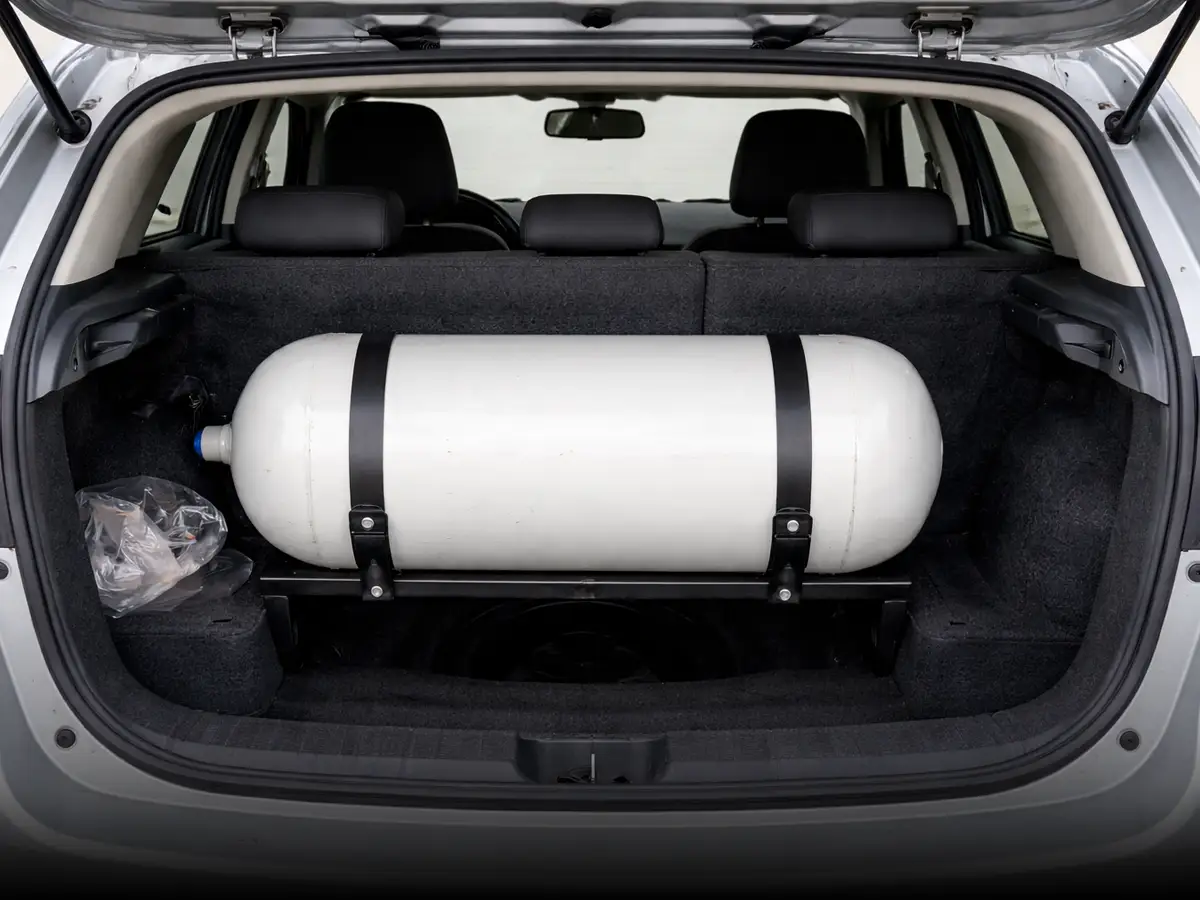
- The CNG engine offers massive savings but sacrifices valuable boot space.
- The standard petrol engine is the most flexible and hassle-free option. It is completely straightforward and relatively cheaper to maintain over time.
- The turbo petrol requires high-quality fuel for optimal, long-lasting performance.
- CNG cars may require slightly more frequent spark plug replacements overall.
All three powertrain variants currently enjoy incredibly strong resale value demand.
Who Should Buy Which
Here is a quick summary for your final buying decision.
Choose Petrol if:
- Your daily running is strictly less than thirty kilometres.
- You want a silent, highly refined, and incredibly smooth engine.
You want the maximum boot space for your family's luggage.
Choose Turbo if:
- You crave thrilling acceleration and sporty driving dynamics.
- You do not mind paying slightly higher daily running costs.
You want the quickest and most powerful engine available today.
Choose CNG if:
- Your daily commute exceeds fifty kilometres in heavy traffic.
- You want excellent savings for your massive daily driving distances.
- You do not mind sacrificing boot space for lower running costs.
Frequently Asked Questions
Expand all