Tata Harrier Real World Mileage: The Complete Guide
- 1The Harrier diesel manual delivers around 13 kmpl in cities and 15 kmpl on highways.
- 2Automatic variant offers 10.5–12 kmpl in city traffic and 14.5–16 kmpl on highways.
- 3Using Eco mode, smooth driving, and proper tyre pressure boosts real world mileage.
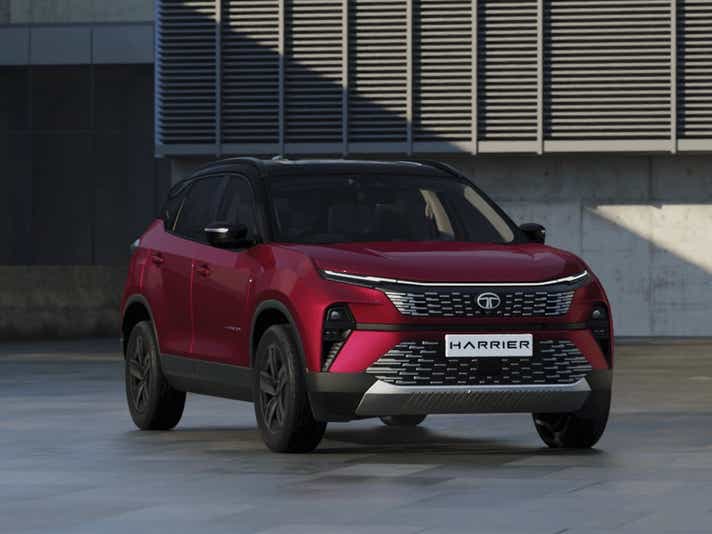
The Tata Harrier stands as a formidable contender in the Indian premium mid size SUV segment, drawing heavily from its robust Land Rover derived architecture to deliver an authoritative road presence. Ever since its highly anticipated launch, it has remained a strong favourite for automotive enthusiasts who appreciate a solid build, spacious interiors, and a highly capable powertrain suited for grand touring. While it is celebrated for its dominant highway cruising abilities, it is also a popular vehicle when it comes to users preferring mileage that perfectly balances performance with everyday running economics.
However, real world mileage is often different from claimed ARAI mileage, which is done in a strictly controlled testing environment, and expecting ARAI mileage in real life is simply not practical due to unpredictable urban traffic congestion, varying passenger loads, and constant air conditioning usage in tropical climates. Therefore, it is thoroughly important to set realistic mileage expectations before bringing the Tata Harrier home to ensure it perfectly aligns with your monthly financial budget.
Numbers To Consider When Buying the Tata Harrier
Analysing the true running capability of this dominant SUV requires a comprehensive look at its underlying mechanical specifications. The Indian market receives this vehicle strictly with a solitary but highly robust diesel powertrain, engineered to move its substantial kerb weight with absolute ease. Here is a detailed breakdown of the critical numbers you need to know before making your final purchase decision.
| Specifications | Details |
| Model Name | Tata Harrier |
| Engine Specs | 2.0-litre Kryotec Diesel (170 PS power, 350 Nm torque) |
| Available Transmission Options | 6-speed Manual, 6-speed Torque Converter Automatic |
| Fuel Options | Diesel |
| ARAI Mileage | 16.80 kmpl (Manual), 16.80 kmpl (Automatic) |
| Fuel Tank Capacity | 50 Litres |
Tata Harrier real world mileage
Understanding the baseline Tata Harrier real world mileage begins with noting its practical 50-litre fuel tank capacity. When driven sensibly under standard Indian road conditions, this capacity allows for a highly usable practical range of approximately 600 to 700 kilometres, creating an expected aggregate range on a complete refuel that is excellent for both daily urban commutes and long-distance touring.
Establishing this practical range in a user's individual specific lifestyle depends heavily on various dynamic factors, including peak city congestion, average highway cruising speeds, ambient temperature affecting air conditioning load, tyre pressure maintenance, and general driving habits.
Tata Harrier diesel manual real world mileage
| Driving Conditions | Real World Mileage Range |
| City | 11.5 to 13.0 kmpl |
| Highway | 15.0 to 17.0 kmpl |
| Mixed | 13.5 to 15.0 kmpl |
From a driver's perspective, the manual iteration of this large SUV offers a commanding and deeply engaging experience while maintaining highly respectable fuel efficiency for its overall size and weight. The clutch travel is relatively long, which can feel slightly fatiguing in dense stop-and-go traffic, naturally causing a slight dip in the urban city fuel economy. However, once you transition away from congested streets to open motorways, the tall sixth gear allows the robust 2.0-litre engine to cruise effortlessly at surprisingly low engine revolutions. This highly relaxed cruising state is precisely where the Tata Harrier real world mileage truly peaks.
Drivers who proactively shift gears, anticipate traffic flow, and keep the engine in its optimal torque band will easily see efficiency figures touching the upper end of the stated highway range. Overtaking slower commercial traffic does not require aggressive downshifting due to the immense torque available, meaning you can easily maintain your forward momentum and preserve your overall average fuel economy over long distances.
Tata Harrier diesel automatic real world mileage
| Driving Conditions | Real World Mileage Range |
| City | 10.5 to 12.0 kmpl |
| Highway | 14.5 to 16.0 kmpl |
| Mixed | 12.5 to 14.0 kmpl |
The six-speed torque converter automatic transmission brings exceptional driving convenience to the table, making it highly recommended for buyers navigating highly congested urban environments on a daily basis. From a driver's perspective, this specific automatic gearbox is beautifully tuned for smooth, seamless shifts rather than lightning-fast, aggressive responses. In slow-moving city traffic, the torque converter naturally experiences a slight degree of power loss through fluid coupling, which consumes a bit more fuel compared to the direct mechanical link of its manual counterpart.
On the open highway, the Tata Harrier diesel real world mileage remains quite impressive because the transmission management software ensures the engine is always spinning at a very relaxed pace at standard triple-digit cruising speeds. It is worth noting that using the dedicated Eco drive mode alters the throttle response significantly, ensuring upshifts happen much earlier to prioritise maximum fuel conservation over outright acceleration.
Claimed vs Real World Mileage
| Powertrain Combination | Claimed ARAI Mileage | Real World Mixed Mileage |
| 2.0L Diesel Manual | 16.80 kmpl | 14.0 kmpl |
| 2.0L Diesel Automatic | 16.80 kmpl | 13.0 kmpl |
There is a very noticeable difference between the laboratory-tested certification figures and the practical Tata Harrier real world mileage. This distinct difference exists primarily because ARAI tests are conducted on enclosed dynamometers in strictly controlled indoor climates entirely without the aerodynamic drag of wind resistance, the rolling friction of rough Indian road surfaces, or the heavy parasitic draw of the automatic climate control compressor.
Real driving involves constant braking for obstacles, accelerating to match traffic speeds, and idling at long intersections, all of which naturally degrade fuel economy and widen the gap between the heavily advertised claimed numbers and practical everyday figures.
Tata Harrier real world mileage by owners
When looking closely at extensive data gathered from reputable automotive forums, enthusiastic owners present a very clear and remarkably consistent picture regarding the heavy vehicle's overall fuel efficiency. We have analysed multiple user reports from reputable automotive forums to fully understand how the vehicle performs under vastly different daily usages and driving environments.
Constant air conditioning usage in extreme Indian summer months typically drops the overall fuel economy by one to one and a half kilometres per litre.
A fully loaded cabin with five adult passengers and a boot full of heavy luggage reduces the highway average by roughly 1.5 to 2.0 kmpl due to the significantly increased weight and aerodynamic drag.
Owners frequently report that aggressive driving styles, particularly hard acceleration from a standstill using the Sport drive mode, significantly and negatively impact the urban city average.
Maintaining a steady cruising speed of 85 to 95 kmph on the highway yields the absolute best fuel efficiency, with efficiency dropping rather sharply at speeds exceeding 110 kmph due to wind resistance against the large frontal area.
The automatic transmission owners highly recommend using smooth, progressive throttle inputs, as sudden, deep throttle presses prompt the gearbox to drop multiple gears unnecessarily, consuming excess fuel.
Comparison of Tata Harrier with Key Rivals
| Car Model | Powertrain | Real World Mixed Mileage |
| Tata Harrier | 2.0L Diesel Manual / Auto | 12.5 to 15.0 kmpl |
| MG Hector | 2.0L Diesel Manual | 12.0 to 14.0 kmpl |
| Mahindra XUV700 | 2.2L Diesel Manual / Auto | 11.5 to 14.5 kmpl |
| Jeep Compass | 2.0L Diesel Manual / Auto | 12.5 to 14.5 kmpl |
Running Cost of Tata Harrier
Calculating the comprehensive overall running cost requires a detailed look at current local fuel rates to properly understand the long term financial commitment associated with owning this premium vehicle. Using the current March 2026 diesel price in Delhi, which currently stands firmly at Rs. 87.67 per litre, we can easily and accurately estimate the monthly expenditure for a typical urban owner.
Consider a practical example of daily commuting driving covering 30 km for the entire month, meaning the total driven distance amounts to 900 km. With a mixed Tata Harrier real world mileage of 13.5 kmpl for the automatic variant, the vehicle will consume approximately 66.66 litres of premium diesel in a single month. This specifically brings the monthly running cost to roughly Rs. 5,844.
The expected annual fuel expenditure for a typical daily driver comes to around Rs. 70,128.
Compared to similarly sized petrol SUVs in the segment, the diesel engine offers substantial monthly savings.
Minor fluctuations in daily traffic routes and seasonal temperature changes can alter the monthly budget by roughly five to ten per cent.
Owners driving primarily on open highways will see their total running costs decrease by up to fifteen per cent compared to exclusive city commuters.
Tips to improve mileage of the Tata Harrier
Utilise the Eco driving mode: Engaging the dedicated Eco setting significantly alters the engine fuel mapping and dulls the throttle response to heavily prioritise fuel efficiency, boosting your daily average considerably.
Maintain optimal tyre pressure: The substantial heavy build of the SUV means underinflated tyres dramatically increase road rolling resistance, which forces the engine to work considerably harder and ruins the Tata Harrier real world mileage.
Anticipate forward traffic flow: Avoid harsh braking and sudden acceleration by looking far ahead on the road and coasting to a halt, which saves fuel, reduces brake pad wear, and keeps your forward momentum perfectly steady.
Keep the engine in the right gear: For manual variants, shift up early and smoothly to keep the engine spinning between 1500 and 2000 rpm, as this is precisely where the diesel torque band is most efficient and economical.
- Limit excessive engine idling: If you are waiting at a railway crossing or a particularly long traffic light, manually turn the engine off, as a large 2.0-litre diesel engine consumes a highly significant amount of fuel while idling.
Frequently Asked Questions
Expand all