Why 1 in 4 Used Cars Has Accident History (And How to Spot It)
- 125% of used cars inspected have undisclosed accident history
- 2Well-repaired collision damage is invisible without specialist tools
- 3Accident history cuts resale value by 15-30% instantly
If you're buying a used car in India, there's a 1-in-4 chance it has been in an accident and the seller isn't going to volunteer that information. According to pre-delivery inspection (PDI) data, accidental history is detected in 25% of used cars that undergo a thorough third-party inspection. That's not a minor stat. It means one out of every four cars on the used market has been through a collision, and without the right checks, you could be driving home a vehicle with compromised safety, hidden repair costs, and a sharply reduced resale value.
Why Accident History Is So Commonly Hidden
The used car market in India and globally runs largely on information asymmetry. Sellers know everything. Buyers know very little. A car that's been repainted after a collision can look showroom-fresh to the untrained eye. Panel replacements, straightened chassis, and repaired bumpers don't announce themselves. Unless you know exactly what to look for, or have a trained inspector do it for you, the history of the vehicle stays buried.
Beyond cosmetics, accident-repaired cars carry bigger risks. A chassis that's been bent and straightened is never quite as rigid as it originally was. Airbags that've been deployed once may not deploy correctly again. Repaired suspension geometry can affect handling in ways you won't notice until an emergency.
What the Data Tells Us
Our PDI data reveals that accidental history at 25% is the second most common issue found during used car inspections, just behind tyre health (45%) and tied with engine issues (25%). What makes it particularly concerning is that it's the hardest to detect without specialised tools and expertise. Unlike a worn tyre or a sputtering engine, a well-repaired accident job hides in plain sight.
7 Ways a Trained Inspector Spots Accident History
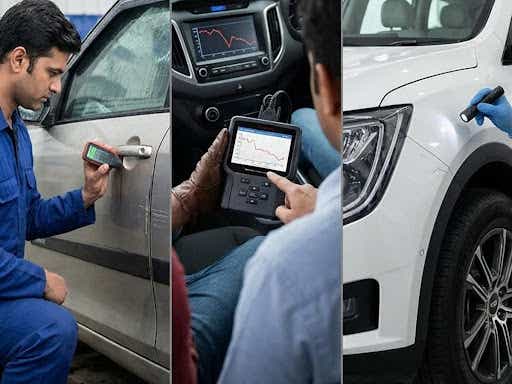
- Paint thickness measurement: A paint thickness gauge detects where extra layers of paint have been applied over repaired panels. Factory paint is uniform; repaired panels show significantly higher readings.
- Panel gap analysis: Factory-assembled cars have consistent, even gaps between doors, bonnets, and bumpers. Accident repairs almost always result in slightly uneven gaps, even on good repair jobs.
- Chassis inspection: Inspectors look for weld marks, straightening scars, and stress fractures on the frame that indicate the car absorbed significant impact.
- Undercarriage check: Rust patterns that don't match the vehicle's age, or fresh undercoating applied only to specific areas, can indicate damage concealment.
- Boot and bonnet lining: The fabric lining inside the boot and bonnet often shows wrinkles, glue marks, or replacement signs after accident repairs.
- Airbag system diagnostics: A scan of the airbag ECU can reveal if airbags were ever deployed, even if new ones were installed.
Alignment and pull testing: A car that pulls to one side even after alignment may have underlying chassis damage that no alignment machine can fully correct.
What Accident History Actually Costs You
The financial implications are significant. A used car with a proven accident history typically sells for 15-30% less than a comparable clean-history vehicle. If you buy one without knowing, you're absorbing that loss entirely. And that's before accounting for increased maintenance costs, potential structural failures, and difficulties renewing comprehensive insurance after hidden damage comes to light.
The Bottom Line
No amount of a seller's assurances replaces a professional inspection. Given that 1 in 4 used cars inspected carries accident history, and that this history is rarely disclosed voluntarily, a thorough pre-delivery inspection isn't optional. It's essential protection. Before signing any documents, ensure the car goes through a 300+ point third-party inspection that specifically includes accident history detection.
Frequently Asked Questions
Expand all