Why 30% of Used Cars Fail Suspension Checks, and How Bad Roads Make This India's Silent Car Killer
- 130% of used cars show suspension faults in a pre purchase car inspection
- 2Suspension damage is often invisible but causes major safety and cost risks
- 3India's road conditions accelerate suspension wear far faster than global norms
Suspension is one of those car systems that rarely announces its failure with a warning light or an obvious symptom. Instead, it creeps up on you: a slight pull to one side, a bounce that takes a moment too long to settle, a clunk on speed bumps that you eventually stop noticing. By the time most drivers realise their suspension needs attention, significant damage has already been done.
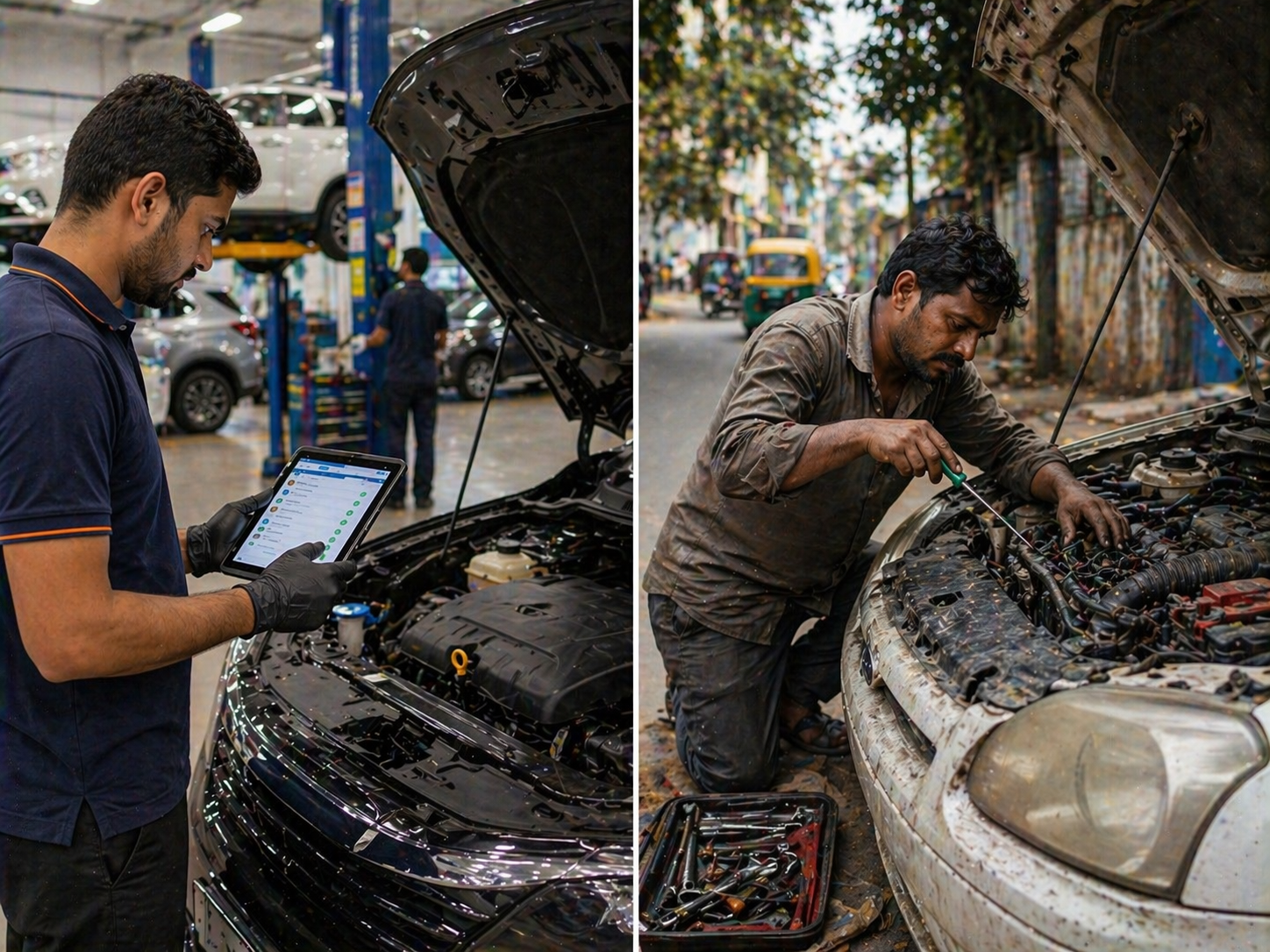
Used car inspection data shows that 30% of vehicles have suspension-related issues. That is nearly one in three cars. And in a country where road conditions range from smooth expressways to crater-riddled city roads within the same commute, the stress on suspension components is extraordinary. A proper vehicle PDI treats suspension health as a safety-critical check, not an optional add-on.
What Suspension Actually Does and Why It Fails
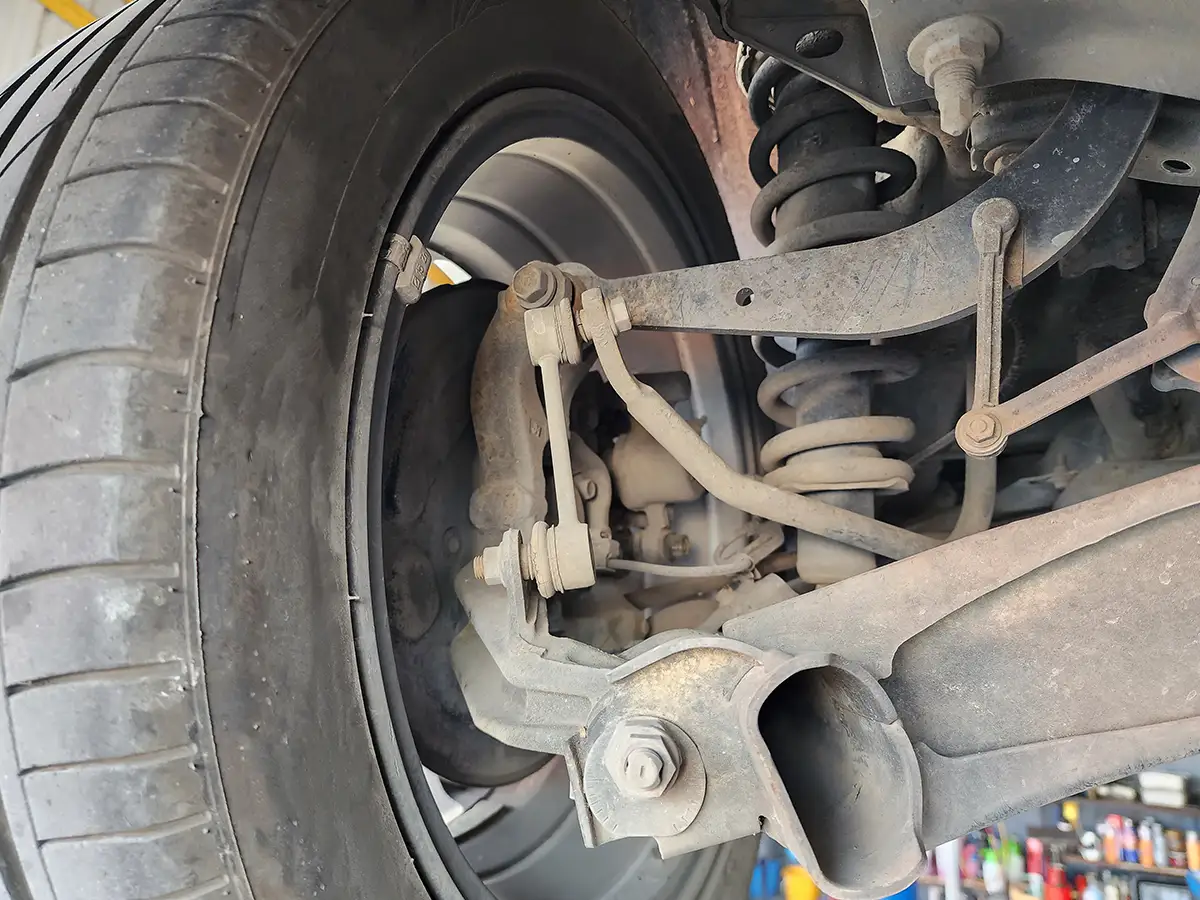
A car's suspension system has one job: keep the tyres in contact with the road at all times while absorbing shocks and providing steering stability. It does this through a combination of springs, shock absorbers (dampers), control arms, bushings, tie rods, and stabiliser bars.
Every pothole, speed breaker, and badly graded road surface sends an impact through this system. Springs compress and release thousands of times per trip. Shock absorbers damp those oscillations. Rubber bushings at pivot points absorb micro-movements. Over time, each of these components fatigues and fails.
What makes suspension particularly relevant to the used car inspection context is that sellers often do not disclose suspension issues, and casual buyers rarely know what to look for. The problems are mostly hidden underneath the car, and a short test drive may not reveal anything unless the road conditions are right.
The Road Condition Factor: Why India Is Different
In markets where road infrastructure is uniformly good, suspension wear follows predictable patterns tied to mileage and age. In India, the picture is far more complex.
City roads often combine smooth stretches with sudden potholes that can be half a foot deep. Speed breakers, many of them unofficial and poorly designed, send sharp vertical loads through the suspension. Flooding during monsoons accelerates corrosion in suspension components. Overloading, whether cargo or passengers, compresses springs beyond their design limits.
The practical consequence is that a 5-year-old car driven predominantly in an Indian city may have suspension wear equivalent to a 10-year-old vehicle elsewhere. This is why a pre delivery car inspection must pay extra attention to suspension in the Indian context and not rely on age or mileage as reliable proxies for component health.
What a Used Car Inspection Looks For in the Suspension
Shock Absorber Condition
The bounce test is the most basic field check: push down hard on each corner of the car and release. A healthy shock absorber returns the corner to its resting position in one smooth motion. If it bounces two or three times before settling, the damper is weak. This dramatically increases stopping distance and reduces control on uneven surfaces.
Inspectors also look for oil leaks on shock absorber bodies, which are a definitive sign of failure.
Bushings and Control Arms
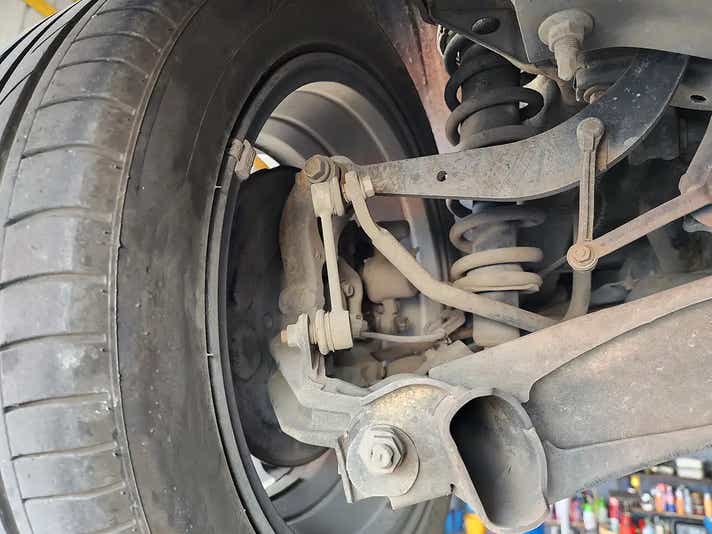
Rubber bushings at control arm joints, strut mounts, and anti-roll bar ends dry out and crack over time. Worn bushings cause imprecise steering, a vague or wandering feel on the road, and clunking noises over bumps. They are cheap to replace individually but are often ignored until multiple bushings are worn, at which point the full assembly may need replacing.
During a vehicle PDI, inspectors check for cracked or collapsed bushings visually and also listen for any knocking under load.
Tie Rods and Steering Linkage
Worn tie rod ends cause steering play, uneven tyre wear, and instability at high speeds. Inspectors check for looseness by rocking the tyre from side to side with the car on a jack. Any detectable play in the steering linkage is flagged in a professional used car inspection.
Springs and Ride Height
Broken or sagged springs are visible to a trained eye. A car that sits lower on one corner than another has either a broken spring or a heavily sagged one. Both affect handling, tyre wear, and alignment. Broken springs can cause the coil to contact the tyre at full suspension compression, which is a serious safety hazard.
The Cost of Ignoring Suspension Issues
Suspension repair costs vary widely based on what has failed. A set of four shock absorbers can cost between Rs 8,000 and Rs 40,000 for a mid-size car, parts and labour combined. Control arm replacement runs Rs 6,000 to Rs 25,000 per side. Tie rod ends are relatively affordable at Rs 2,000 to Rs 6,000 per side, but left unaddressed they accelerate tyre wear, adding another hidden cost.
Beyond direct repair costs, worn suspension causes premature tyre wear and degrades braking performance. A car with failing shocks takes longer to stop, particularly in emergency braking. This is the safety dimension that makes suspension not just a comfort concern but a critical inspection point in any pre purchase car inspection.
What You Can Observe on Your Own Test Drive
Seek out speed breakers during your test drive. Cross them slowly and at normal speed. Listen for clunks, bangs, or creaking sounds from any corner of the car. A healthy car crosses a speed breaker and returns to composure quickly. Any bouncing, swaying, or noise warrants investigation.
Also test on a highway stretch if possible. Vague steering or a car that requires constant correction to go straight suggests worn tie rods or alignment issues caused by suspension damage.
These observations are useful starting points, but they are not a substitute for a professional used car inspection. Many suspension faults are only detectable when the car is lifted and components are inspected under proper lighting.
Conclusion
A 30% suspension failure rate in used cars is not surprising given India's roads. What is surprising is how rarely buyers check for it. Suspension affects safety, comfort, tyre life, and handling. It is one of the core areas that a comprehensive vehicle PDI covers, and the one area where skipping the inspection can have consequences that go beyond money. Always insist on a full suspension check as part of your used car inspection.
Frequently Asked Questions
Expand all