Tata Harrier EV vs Sierra EV: 5 Key Differences You Need to Know Before Buying
- 1Sierra EV offers a larger 622-litre boot despite being smaller than the Harrier EV
- 2Both electric SUVs offer over 600 km of claimed range on their larger battery packs
- 3Sierra EV undercuts the Harrier EV on price while offering similar features
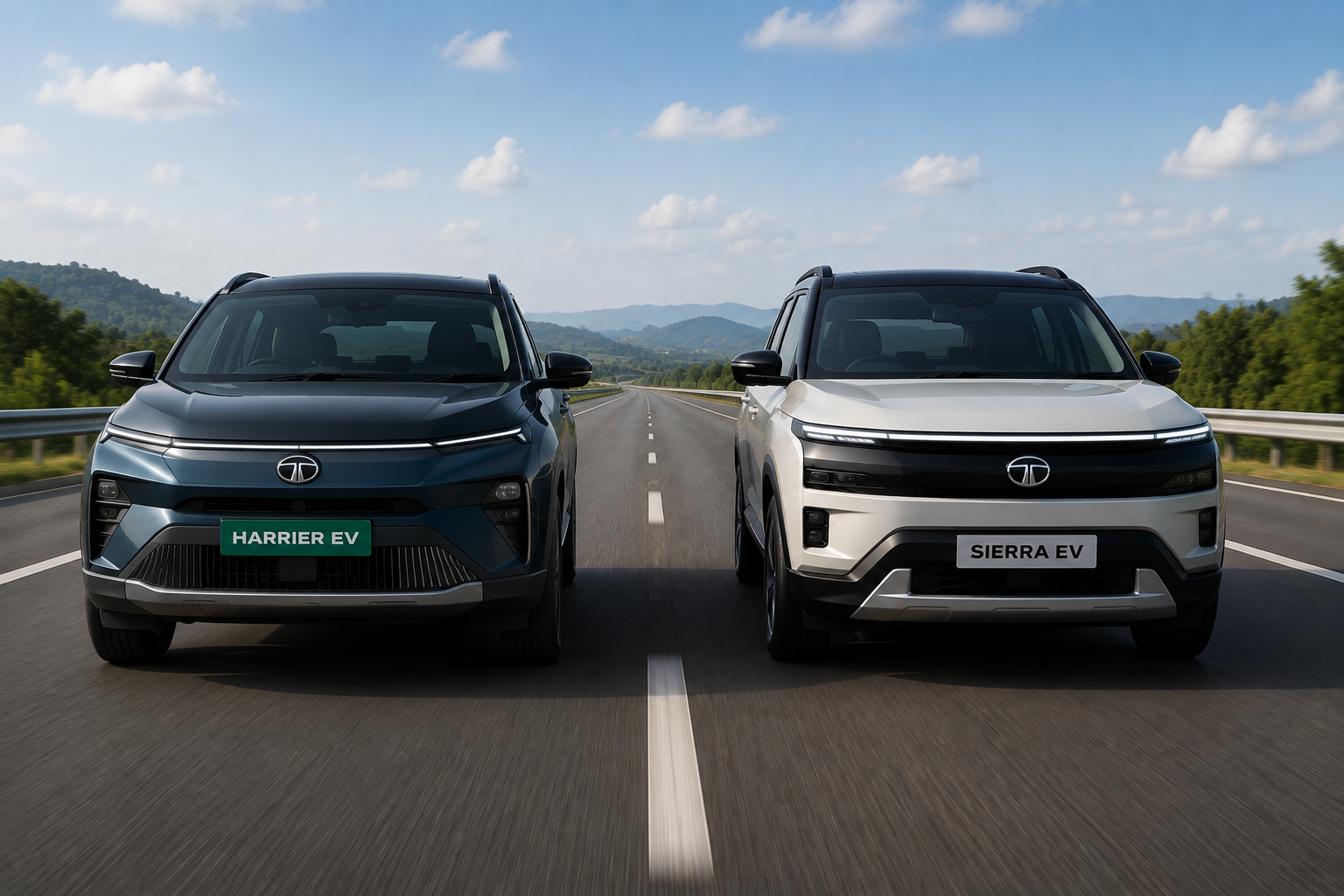
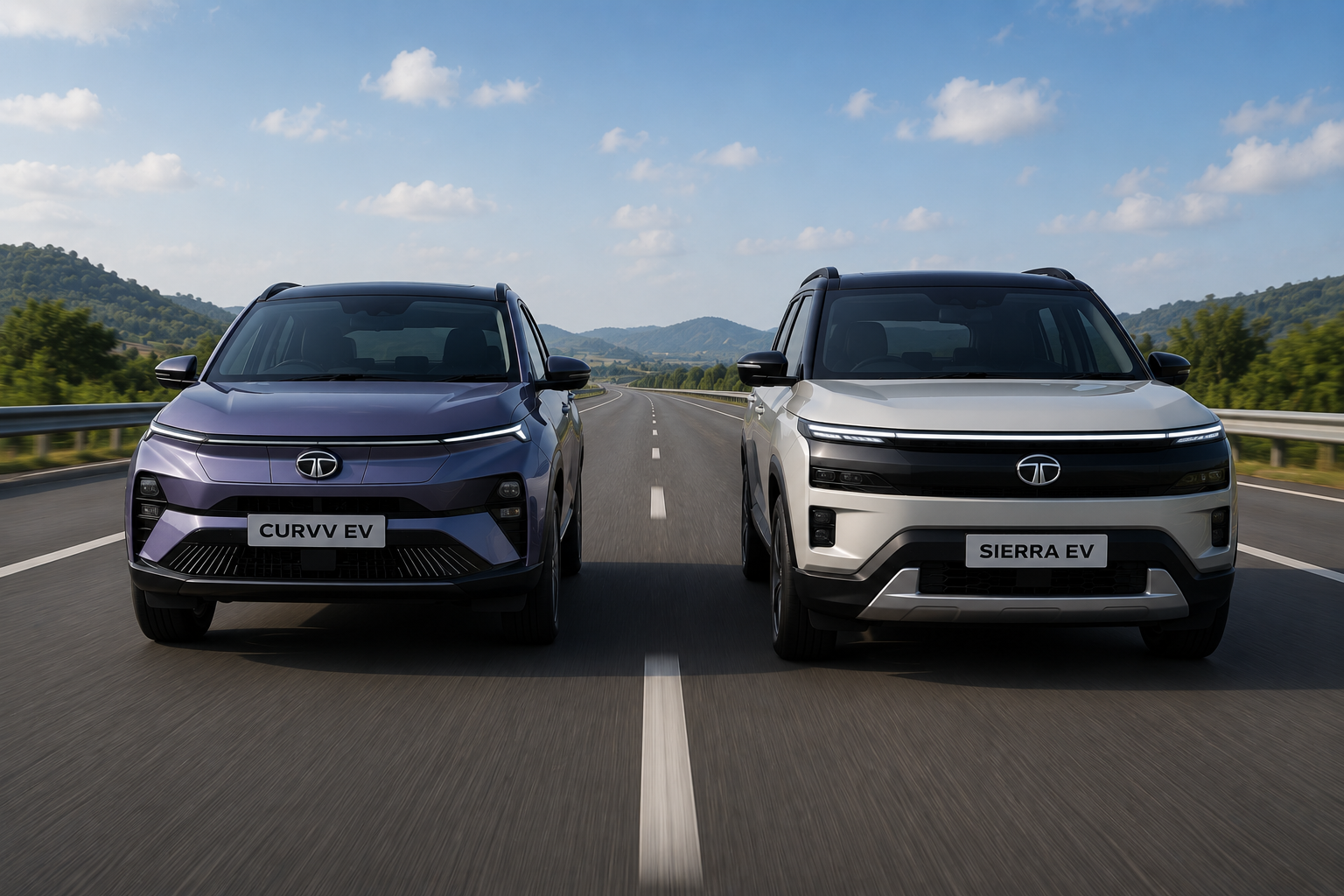
Tata now sells three electric SUVs that all overlap in price at some point, and that's exactly the problem facing anyone comparing Harrier EV vs Sierra EV right now. Both wear the same badge, share a lot of the same underlying EV architecture, and yet Tata clearly built them for different buyers. The Harrier EV is the flagship, positioned as the bigger, more powerful option, while the Sierra EV plays the role of a slightly smaller, boxier alternative that costs less to get into.
The price bands genuinely overlap. The Sierra EV starts around 18.79 lakh rupees and tops out near 26.49 lakh, while the Harrier EV starts around 21.5 lakh and climbs to roughly 30.4 lakh, both ex-showroom. A straight Harrier EV vs Sierra EV price comparison shows a loaded Sierra EV can cost more than a base Harrier EV, which is exactly the kind of overlap that makes this decision genuinely confusing. This guide breaks down where the real differences lie, beyond just the size of the number on the price tag.
Design, Stature & Visual Presence
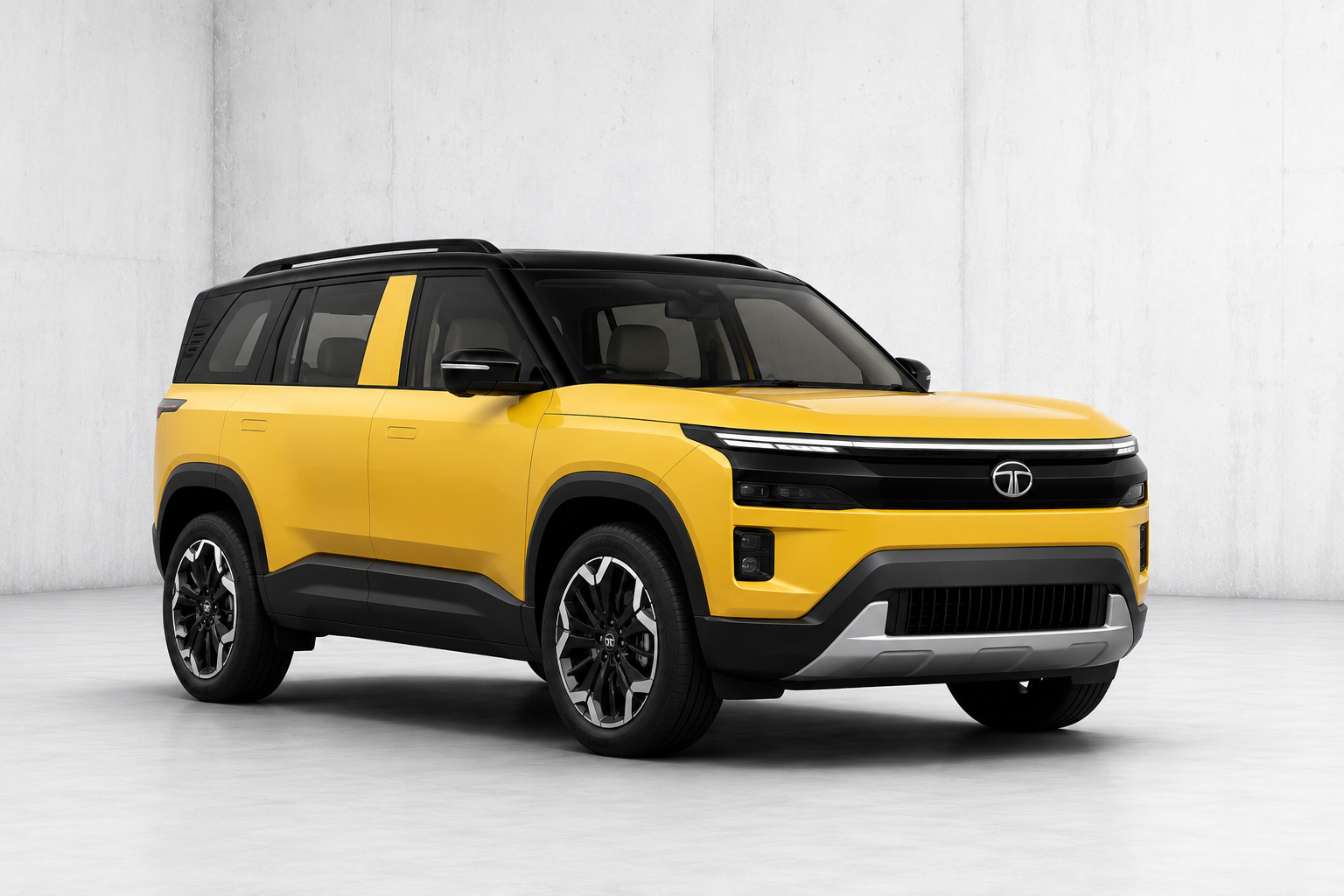
The Harrier EV carries over the standard Harrier's broad, muscular stance, with a closed-off EV-specific grille and tweaked bumpers for better aerodynamics. It's a big, wide SUV that projects serious road presence from any angle. The Sierra EV goes a different route, reviving the original Sierra's tall, upright, slightly boxy silhouette, complete with a distinctive two-tone roof treatment.
| Metric | Tata Harrier EV | Tata Sierra EV |
| Length | 4,607 mm | 4,340 mm |
| Width | 1,922 mm | 1,841 mm |
| Height | 1,740 mm | 1,750 mm |
| Wheelbase | 2,741 mm | 2,730 mm |
| Ground clearance | Around 205 mm | 205 mm |
| Boot space | Around 502 litres, plus a small frunk (front trunk, possible because there's no engine up front) | 622 litres |
This is where the design trade-off gets interesting. The Harrier EV is longer and wider overall, yet the Sierra EV actually has the bigger boot, since its taller, boxier body prioritises upright cargo space over the Harrier's sleeker, more sloped rear glass and tailgate. That sloped design on the Harrier looks sportier, but it does eat into outright loading volume.
Practically speaking, the Harrier EV's extra width shows up as more shoulder room for five occupants, while the Sierra EV's taller roofline makes it slightly easier to climb in and out of, especially for older passengers. Neither car has a glaring blind spot problem, though the Harrier EV's wider rear pillars are marginally more noticeable while reversing than the Sierra EV's more upright glass area.
Powertrain, Performance & Driving Dynamics
Both SUVs use LFP batteries, short for lithium iron phosphate, a battery chemistry that Tata favours for its stability and longevity over a car's lifetime. The Sierra EV offers a 63kWh or 75kWh pack, while the Harrier EV offers a 65kWh or 75kWh pack, so the entry points are close but not identical.
In their base rear-wheel-drive form, both cars use a single motor mounted at the rear. The Sierra EV's 63kWh variant makes 235bhp and 315Nm of torque, comparable to the Harrier EV's 65kWh variant, which also makes 235bhp and 315Nm. Step up to the flagship dual-motor setup on either car, which Tata brands QWD, short for Quad Wheel Drive, and the numbers diverge sharply. The Harrier EV's QWD variant makes a combined 390bhp and 504Nm, reaching 100kmph in a claimed 6.3 seconds in Boost mode. The Sierra EV's QWD variant pairs a rear motor with a smaller front induction motor, producing a combined torque figure of around 504Nm as well, but with a claimed 0 to 100kmph time of 5.8 seconds, making it the quicker car of the two on paper.
| Spec | Tata Harrier EV | Tata Sierra EV |
| Battery options | 65kWh, 75kWh (LFP) | 63kWh, 75kWh (LFP) |
| Base motor output | 235bhp, 315Nm (RWD) | 235bhp, 315Nm (RWD, 63kWh) |
| Flagship AWD output | 390bhp, 504Nm | Combined torque around 504Nm |
| Claimed 0 to 100kmph | 6.3 seconds (Boost mode) | 5.8 seconds (QWD) |
| Claimed range | Up to 627 km (75kWh RWD) | Up to 665 km (75kWh RWD) |
| DC fast charging | 120kW, 20 to 80 per cent in about 25 minutes | 120kW, 20 to 80 percent in about 25 to 26 minutes |
A Harrier EV vs Sierra EV mileage and real-world range comparison is close enough that it shouldn't be your deciding factor. Both claim well over 600 km on their bigger battery packs, and actual range on either car will depend far more on your driving style and air conditioning use than on which badge is on the tailgate.
On the road, both SUVs feel composed in city traffic, with the instant torque of an electric motor making gaps in traffic easy to close. NVH levels, referring to noise, vibration, and harshness, are low in both cars at city speeds, since there's no engine to generate mechanical noise. At highway speeds, the Harrier EV's extra width and weight give it a slightly more planted, high-speed stability, while the Sierra EV's suspension tuning, which Tata calls Ultra Glide, keeps things flat over broken patches without feeling floaty. Steering on both stays light around town and firms up acceptably once you're cruising, though neither is tuned to feel particularly sporty.
Cabin Experience, Space & Technology Integration
Rear seat comfort follows the same logic as the exterior dimensions. The Harrier EV's wider body gives rear passengers more shoulder room and a reasonably reclined backrest angle, while the Sierra EV's taller roofline translates into noticeably better headroom and a more upright, airy feeling in the back seat, helped by its larger glass area.
Both cars lean heavily into big screens. The Harrier EV's standout feature is its 14.5-inch Samsung QLED display, a genuinely premium touchscreen that responds quickly and looks sharp even in bright sunlight. The Sierra EV counters with a triple-screen dashboard layout on higher trims, splitting the driver display, infotainment, and a dedicated passenger screen across three separate panels. Both support wireless Android Auto and Apple CarPlay, and both offer reasonably intuitive HVAC controls that avoid burying temperature adjustment inside a touchscreen menu.
On feature democratisation, meaning which features you get without stretching to the priciest trim, the Sierra EV's base Pure variant is already well equipped with a proper touchscreen and digital cluster as standard. The Harrier EV reserves some of its most talked-about tech, like Summon mode, which lets you move the car forward or backwards remotely using your phone without sitting inside it, and Auto Park, a self-parking feature, for its higher trims only. If those specific party-trick features matter to you, budget for a higher Harrier EV variant rather than the base model.
Safety Architecture & Structural Integrity
The Harrier EV has been independently tested and carries a 5-star Bharat NCAP rating, giving buyers a clear, certified benchmark for crash protection. It comes with 6 to 7 airbags depending on variant, electronic stability control, and a 360-degree camera system as standard on most trims.
The Sierra EV shares its body structure with the recently launched ICE Sierra, which itself scored a 5-star Bharat NCAP rating, but a separate, EV-specific crash certificate for the Sierra EV wasn't confirmed at the time of writing. Treat that shared structural pedigree as a strong indicator rather than a guaranteed identical result until Tata publishes a dedicated test score.
Both SUVs offer Level 2 ADAS on their higher trims, referring to camera and radar-based systems that manage functions like adaptive cruise control, lane keep assist, and automatic emergency braking. In real-world Indian traffic, these systems work reliably on well-marked highways but can occasionally misread faded lane markings or erratic two-wheeler movement, so they're best treated as a helpful backup rather than a replacement for attentive driving.
Long-Term Ownership, Maintenance & Value Proposition
Both the Harrier EV and Sierra EV use LFP battery chemistry, which tends to degrade more slowly over repeated charge cycles than some alternative battery chemistries, and Tata backs both with a lifetime battery warranty for the first owner. That warranty structure meaningfully reduces the single biggest financial risk in EV ownership: the cost of eventually replacing a degraded battery pack.
Because both SUVs share a large chunk of their underlying EV platform and componentry, a Harrier EV vs Sierra EV maintenance cost comparison should come out broadly similar too, keeping the total cost of ownership close between them. Where they differ is upfront price and the potential value of stepping down a segment. If you don't need the Harrier EV's extra power or width, a well-specced Sierra EV can free up a meaningful amount of budget without giving up much in terms of core comfort or safety features.
Resale value is still an open question for both, since electric SUVs from Tata are a relatively recent category in India's used car market. That said, the Harrier nameplate has a longer track record and stronger brand recall than Sierra does in its current EV-only form, which could give it a slight edge in resale confidence over a typical 5-year ownership period, though this remains a reasonable expectation rather than confirmed data.
Final Verdict: Which Should You Buy?
Buy the Harrier EV if:
- You want the most powerful, quickest-feeling Tata EV for confident highway overtaking
- Shoulder room and outright road presence matter more to you than a bigger boot
You want flagship tech like Summon mode and Auto Park, and are fine paying for the higher trims that unlock them
Buy the Sierra EV if:
- You're chasing the best electric SUV under 25 lakh rupees with genuine boot space to match
- Rear headroom and an airy cabin feel matter more to your family than outright width
You want most of the Harrier EV's core comfort and safety tech at a noticeably lower entry price
So, Harrier EV or Sierra EV? If budget is no constraint and you want Tata's most capable, most powerful electric SUV, the Harrier EV earns its premium. But if you're looking for genuine space and safety without stretching to the top of Tata's EV range, the Sierra EV covers almost everything most families actually need for meaningfully less money.
Frequently Asked Questions
Expand all