Tata Sierra EV vs Curvv EV: Which is the Better Buy for You in 2026?
- 1Tata Sierra EV offers a bigger 622-litre boot and a roomier cabin than the Curvv EV
- 2Curvv EV undercuts the Sierra EV on price with a smaller battery
- 3Sierra EV packs a longer claimed range and higher performance
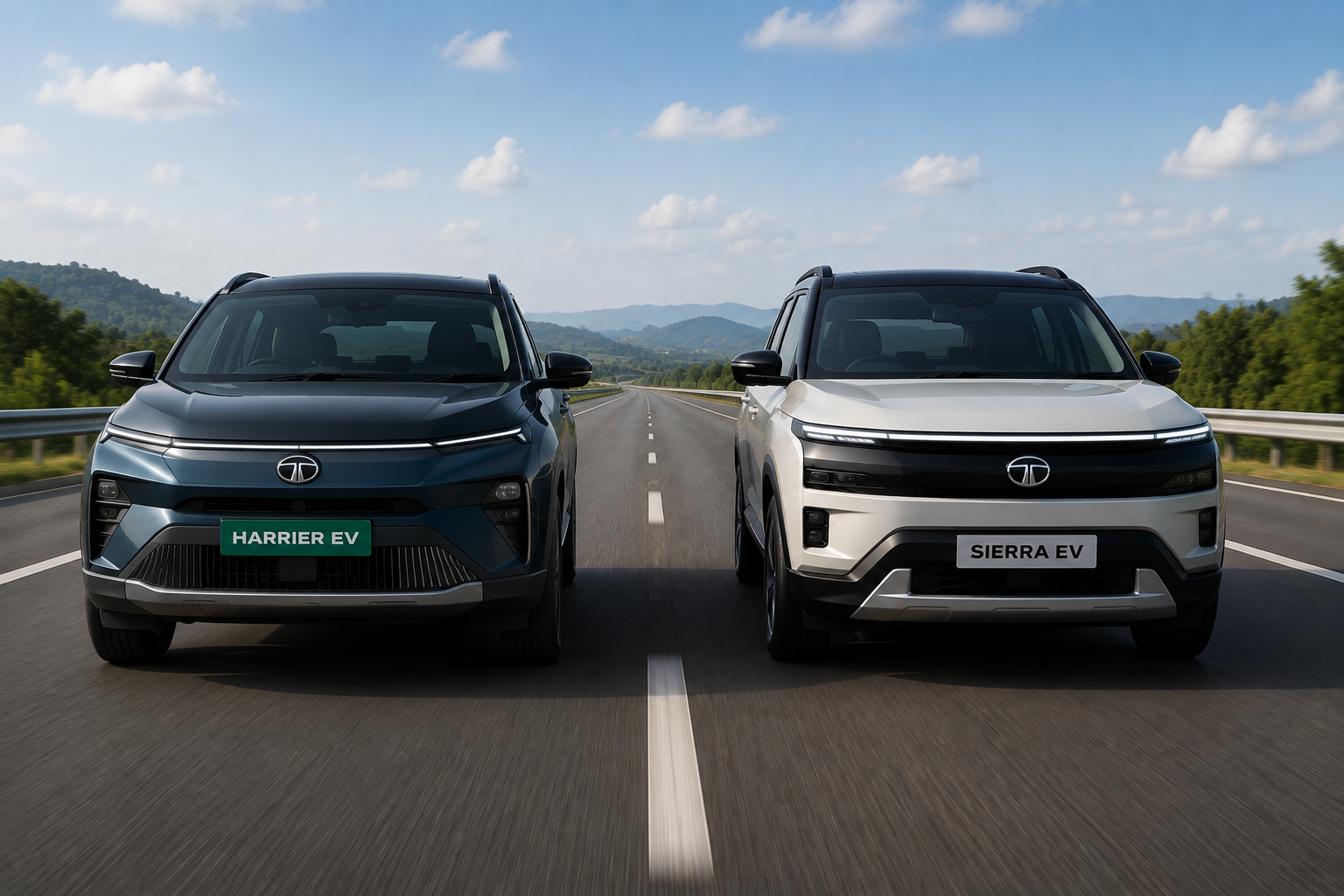
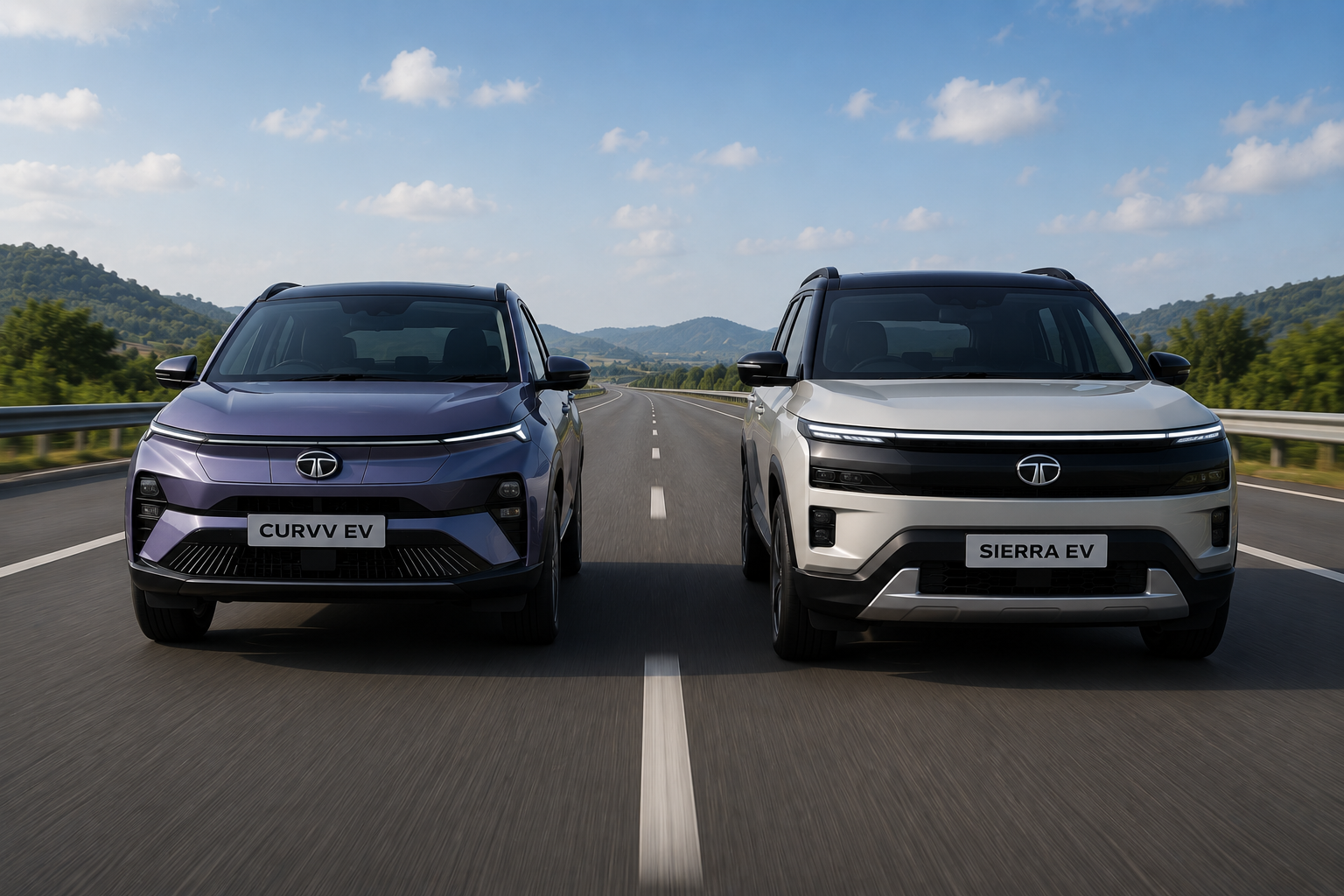
Tata's showroom floor has become a genuinely confusing place if you're shopping for the best electric SUV under 20 lakh rupees. Two of its own models now compete for the exact same buyer's attention. That's the real story behind Tata Sierra EV vs Curvv EV: a boxy, upright revival going up against a sleek, coupe-styled sibling, both wearing the same badge and both built on the same electric underpinnings.
The Sierra EV starts at around 18.79 lakh rupees, while the Curvv EV's current lineup runs from about 16.99 lakh to 19.49 lakh rupees, so a straight Sierra EV vs Curvv EV price comparison shows real overlap rather than a clean split. One leans into boxy, upright practicality, and the other leans into style-first, coupe-like flair. This guide skips the marketing language and walks through exactly how these two differ in daily use, so you can decide with confidence rather than guesswork.
Design, Stature & Visual Presence
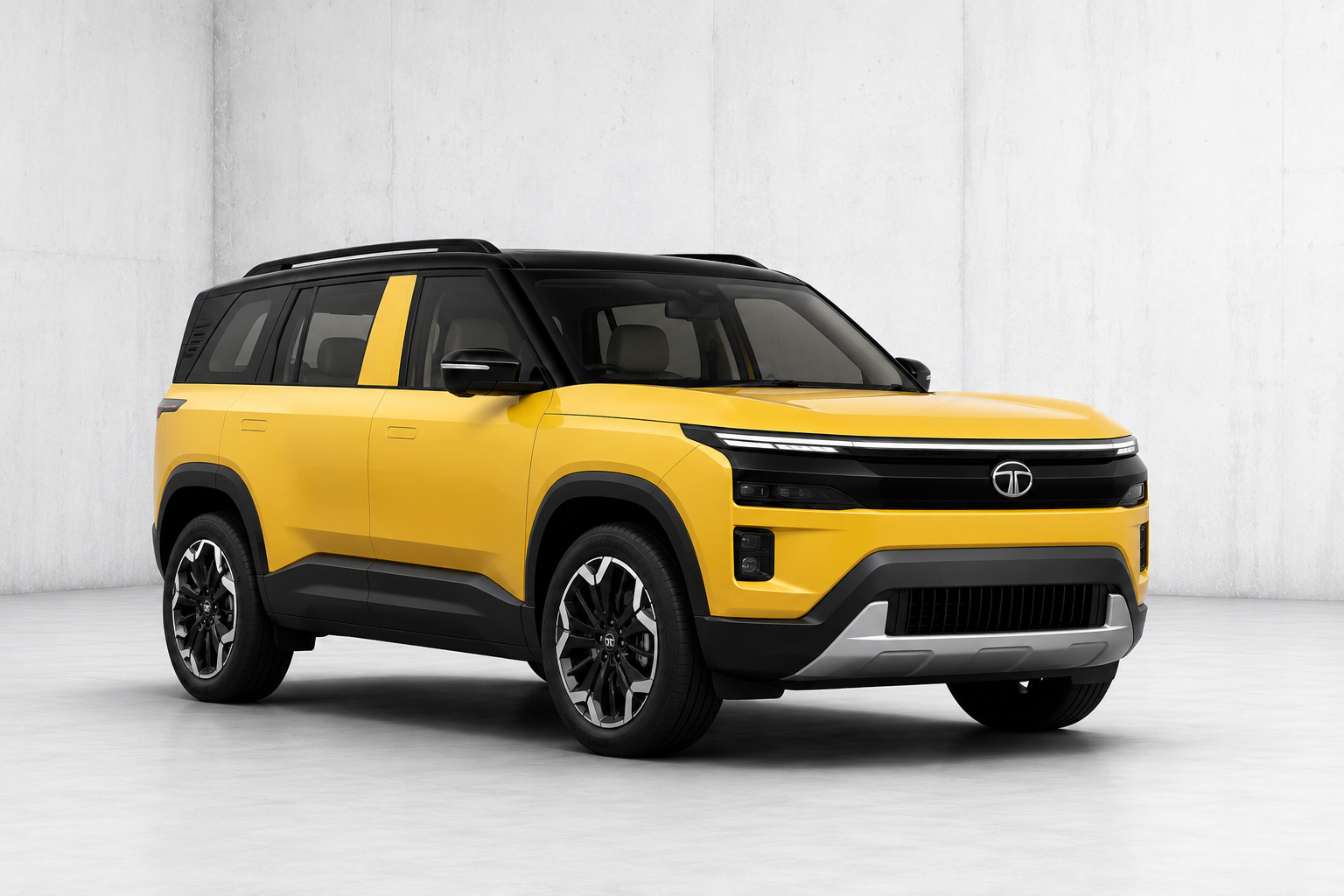
The Sierra EV revives the original Sierra's tall, upright silhouette, complete with a two-tone roof and a boxy stance that immediately signals SUV rather than crossover. The Curvv EV takes the opposite approach, with a sloping, coupe-like roofline that looks sportier but comes with a real trade-off in rear headroom and outward visibility for back-seat passengers.
That height difference isn't just cosmetic. The Sierra EV's taller build translates into easier ingress and egress, especially for older passengers who find it awkward to duck into a low-slung cabin. The Curvv EV's sloped tailgate does look sharper in photos, but it also means a slightly higher loading lip and a more restricted rear windshield, which can affect visibility while reversing.
| Metric | Tata Sierra EV | Tata Curvv EV |
| Length | 4,340 mm | 4,310 mm |
| Width | 1,841 mm | 1,810 mm |
| Height | 1,750 mm | 1,637 mm |
| Wheelbase | 2,730 mm | 2,560 mm |
| Ground clearance | 205 mm | Approximately 186 to 190 mm |
| Boot space | 622 litres | 500 litres, plus an 11.6 litre frunk (a small front trunk, made possible since there's no engine under the hood) |
On paper, the Sierra EV is the bigger, more spacious vehicle in almost every dimension, and that shows up directly in its considerably larger boot. The Curvv EV counters with genuine style credentials and that useful frunk for charging cables or a soft bag, something the Sierra EV doesn't offer in the same way. Neither approach is objectively better here, since it really comes down to whether you prioritise outright space or a sportier road presence.
Powertrain, Performance & Driving Dynamics
The Sierra EV is offered with two battery packs, a 63kWh unit and a larger 75kWh pack, both measured in kilowatt-hours, which is simply the standard unit for describing how much energy a battery can store. Base variants run a single motor with rear-wheel drive, while select higher trims add a second motor for what Tata calls Quad Wheel Drive, essentially all-wheel drive with power sent to all four wheels for better traction. Tata claims a maximum range of up to 665 km on the bigger battery under test-cycle conditions, though real-world range will typically run lower depending on how you drive.
The Curvv EV, after its 2026 lineup update, is now sold with a single 55kWh battery option, having dropped its smaller 45kWh pack. Its single motor sends power to the front wheels only, making 167 PS and 215 Nm of torque, which is the twisting force that determines how urgently the car accelerates off the line. Tata's official 0 to 100 kph claim sits around 8.6 to 8.8 seconds, though some independent tests have recorded slower real-world figures, so treat that number as a best-case scenario rather than a guarantee.
| Spec | Tata Sierra EV | Tata Curvv EV |
| Battery options | 63kWh, 75kWh | 55kWh only (current lineup) |
| Claimed range | Up to 665 km (75kWh, test-cycle) | Up to 502 km (ARAI-claimed) |
| Drivetrain | Single motor RWD standard, dual-motor AWD on select trims | Single motor FWD |
| Power and torque | Varies by variant | 167 PS, 215 Nm |
| DC fast charging | 120kW, 20 to 80 per cent in about 26 minutes | 70kW, 10 to 80 per cent in about 40 minutes |
A straight Sierra EV vs Curvv EV mileage and real-world range comparison favours the Sierra EV on paper, mainly because it offers the option of a bigger 75kWh battery. Actual range on both cars will depend heavily on your driving style, air conditioning use, and whether you're in the city or on the highway.
In everyday city driving, both SUVs feel composed at low speed, with the instant torque typical of electric motors making traffic manoeuvring easy. Where they differ is highway stability and suspension tuning. The Sierra EV's longer wheelbase and Ultra Glide suspension setup, which uses frequency-dependent damping to react differently to small bumps versus larger undulations, keeps things flatter over broken patches at speed. The Curvv EV feels similarly planted in a straight line, but its shorter wheelbase means it can feel slightly busier over rougher stretches. Steering on both cars stays light in city traffic and firms up acceptably on the highway, though neither is tuned for outright driver engagement.
Cabin Experience, Space & Technology Integration
Rear seat comfort is where the design trade-offs from Section 1 really show up. The Sierra EV's taller roofline gives rear passengers noticeably more headroom and a more upright seating position, with better under-thigh support on longer drives. The Curvv EV's sloping roofline eats into rear headroom, and taller passengers may find their head brushing the ceiling on bumpy roads, even though outright knee room is competitive between the two.
Both SUVs lean into large touchscreens and digital instrument clusters, and both support wireless Android Auto and Apple CarPlay. The Sierra EV goes a step further on some variants with a triple-screen layout, adding a dedicated screen for the front passenger. The Curvv EV keeps things simpler with a floating 12.3-inch touchscreen and a 10.25-inch digital driver display, which is still comprehensive but slightly less elaborate than the Sierra EV's top-spec cabin.
On feature democratisation, meaning which features you get without paying for the most expensive trim, the Curvv EV holds a slight edge in its current SeriesX lineup, since Tata simplified the range to just two well-equipped trims after discontinuing the base 45kWh models. The Sierra EV's base Pure variant is generously kitted out too, with a 12.3-inch touchscreen and a 10.25 inch cluster as standard, but its most desirable comfort features, like ventilated seats and the full ADAS suite, remain locked to the higher trims.
Safety Architecture & Structural Integrity
Both models come with 6 airbags as standard equipment, along with electronic stability control, hill hold assist, and a tyre pressure monitoring system on higher variants. The Curvv EV carries a 5-star safety rating from crash testing authorities, giving buyers a clear, independently verified benchmark for occupant protection.
The Sierra EV shares its body structure with the recently launched ICE Sierra, which scored a 5-star Bharat NCAP rating with 31.14 out of 32 points for adult occupant protection and 44.73 out of 49 for child occupant protection. A separate, EV-specific crash test certificate for the Sierra EV wasn't confirmed at the time of writing, so treat that strong structural pedigree as a reasonable indicator rather than a guaranteed identical score.
Both SUVs offer Level 2 ADAS on their higher trims, referring to camera and radar-based systems that handle functions like adaptive cruise control, lane keep assist, and automatic emergency braking. In real-world use, these systems work well on clearly marked highways but can behave inconsistently in unmarked Indian traffic, so they're a helpful safety net rather than a substitute for attentive driving.
Long-Term Ownership, Maintenance & Value Proposition
Electric vehicles generally cost less to run than petrol or diesel cars, since there's no engine oil, spark plugs, or exhaust system to service, and that logic applies to both SUVs here. Tata backs the Sierra EV with a lifetime battery warranty covering 15 years for the first owner, which meaningfully reduces the biggest long-term financial risk of EV ownership: battery degradation or replacement cost.
Warranty terms on the Curvv EV have varied across its update cycle, with some listings citing an 8-year or 1,60,000 km battery warranty and others suggesting extended coverage on the newer SeriesX trims. It's worth confirming the exact current warranty terms with your dealer before signing, since this detail affects your total cost of ownership more than almost anything else on the spec sheet.
Because both cars share Tata's EV platform and a lot of common componentry, a Sierra EV vs Curvv EV maintenance cost comparison should come out broadly similar, since day-to-day service costs and parts availability track closely between them. Resale value is harder to call this early, since both are relatively new nameplates in the EV space, but the Sierra name carries stronger brand recognition among Indian buyers than Curvv does, which could work in its favour over a 5-year ownership period.
Final Verdict: Which Should You Buy?
Buy the Sierra EV if:
- You need maximum boot space and rear headroom for a growing family
- Long highway drives are a regular part of your routine and range matters more than styling
You want the reassurance of a longer, 15-year first-owner battery warranty
Buy the Curvv EV if:
- You prioritise a sportier, more contemporary silhouette over outright interior space
- Most of your driving happens in the city, where the smaller footprint helps with parking and manoeuvring
You want a well-equipped SUV at a slightly lower entry price point
If you're still torn, here's the bottom line on Tata Sierra EV vs Curvv EV: the Sierra EV is the more practical, family-first pick with a genuine edge in space, range, and warranty peace of mind, while the Curvv EV rewards buyers who want a stylish daily driver and are willing to trade some cabin airiness for it. Test drive both before you decide, since the difference in seating position alone might settle this for you faster than any spec sheet.
Frequently Asked Questions
Expand all