What Is a Halo Car, and Why Do Automakers Keep Building Cars That Barely Sell?
- 1A halo car's job is making people care. The sales chart is a secondary concern
- 2Import duty alone can double a fully-built car's price in India
- 3Scarcity is frequently the strategy itself rather than an accident of weak demand
- Why Brands Manufacture Scarcity Around Halo Cars
- Case Study: The Octavia RS in India
- The Enthusiast-to-Buyer Gap Is Real, and It's Large
- Case Study: Even Porsche Sells Mostly SUVs in India
- Why Practicality Wins on Indian Roads
- Owning One Costs More Than Buying One
- What a Halo Car Actually Does for the Brand
- Buying or Selling a Halo Car Secondhand? A Few Things Change
We have often looked at certain car launches in India and wondered why a brand would bring such a specialised model to the country in the first place. The question becomes even more interesting when the car is fully imported, carries a premium price tag and is positioned far above the brand’s mainstream offerings.
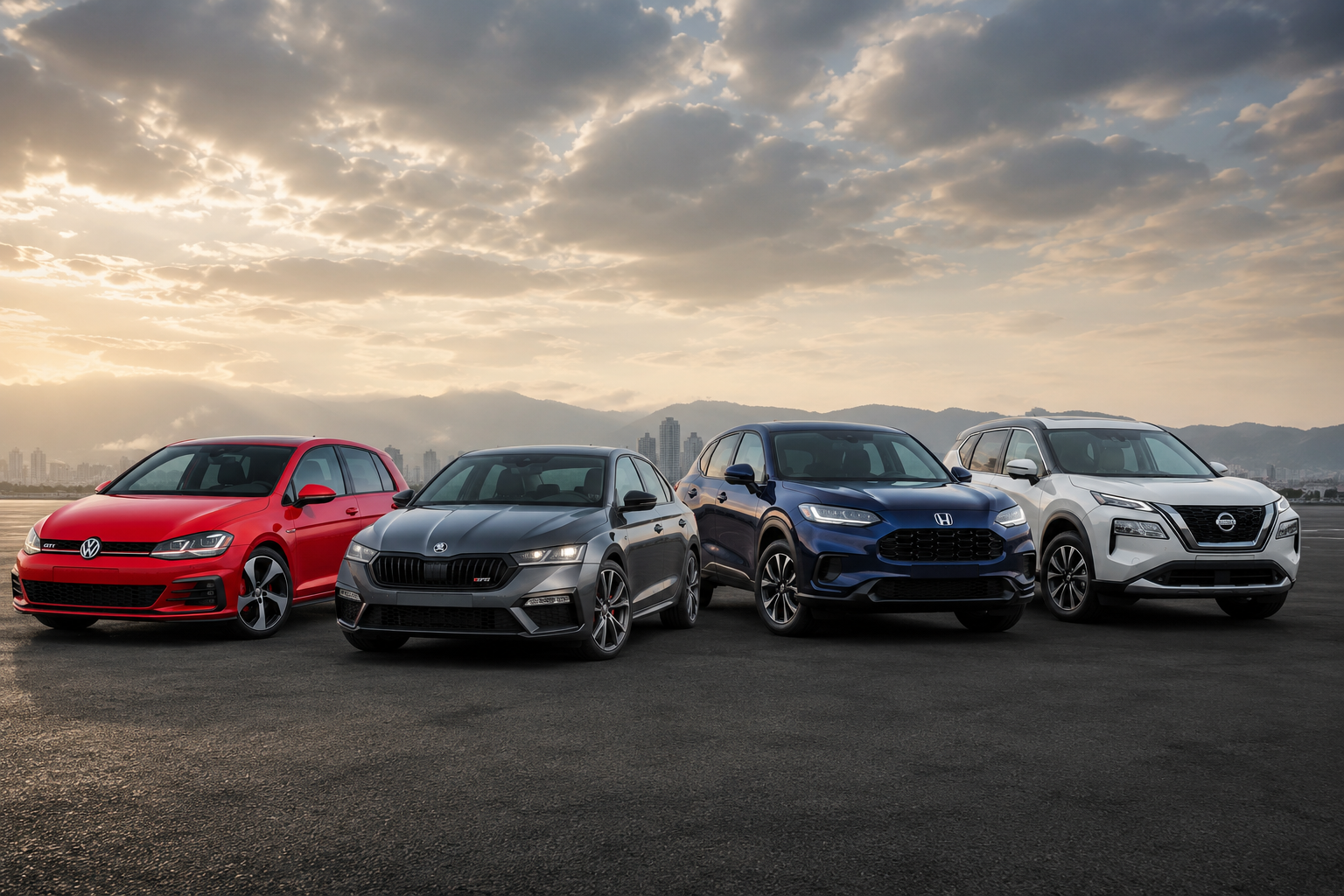
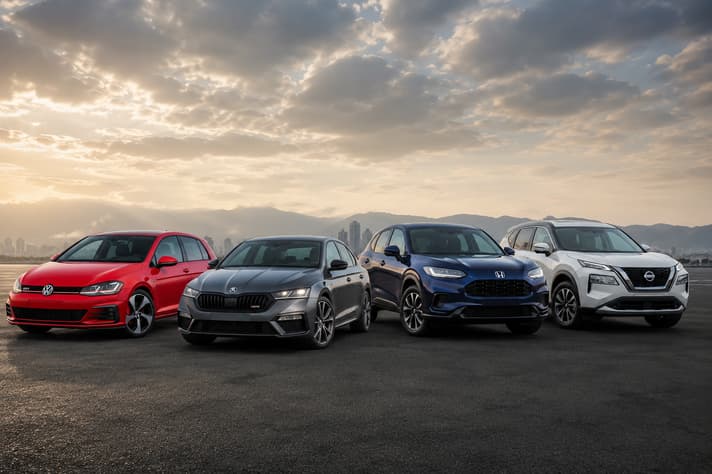
We have seen this with cars such as Volkswagen’s hot hatch, the Golf GTI or the Skoda’s performance sedan, the Octavia vRS. These are not cars designed to chase mass-market volumes. Instead, their positioning, pricing and limited availability make them feel more exclusive from the outset.
That exclusivity is rarely accidental. For certain products, manufacturers deliberately create a sense of scarcity by keeping volumes tightly controlled, bringing them in through the CBU route or offering them only to a small pool of customers. The result is a car that feels harder to obtain, more distinctive and, consequently, more desirable. This is where the concept of a halo car comes in.
Why Brands Manufacture Scarcity Around Halo Cars
A halo car typically sits at the top of a brand’s lineup and exists primarily to generate desire rather than sales volume. It is the model that grabs headlines, draws enthusiasts into showrooms and elevates the brand’s image. It is the vehicle a brand puts at the very top of its image pyramid, the one that ends up on posters, wallpapers and video thumbnails rather than in most driveways.
Limited availability is an important part of that positioning. When a car is expensive, imported and available in controlled numbers, ownership itself becomes a marker of exclusivity. The fact that you are unlikely to see one at every traffic signal is part of the appeal.
For manufacturers, the objective is therefore bigger than the number of units sold. A halo car can create aspiration around an entire brand, giving its more accessible models some of the excitement, technology or performance associated with the flagship.
The Volkswagen Golf GTI plays this role for VW, and the Škoda Octavia RS does something similar under the same corporate umbrella. Both exist to make an otherwise practical badge feel sharper and more enthusiast-friendly, even though the vast majority of buyers who walk into a VW or Škoda showroom leave with something considerably more sensible.
Case Study: The Octavia RS in India
The 2025 Octavia RS is a genuinely useful example of how deliberately small a halo car's footprint can be. Skoda brought it to India as a Completely Built Unit, meaning it arrives fully assembled from Europe rather than being locally built, with an allocation capped at just 100 units, all of which sold out around launch. It runs a 2.0-litre TSI turbo-petrol engine producing roughly 265 PS (261 bhp) and 370 Nm, paired with a 7-speed DSG automatic, and it's priced at ₹49.99 lakh ex-showroom.
That price tag isn't really about the car's underlying cost. Fully imported vehicles with engines over 1,500cc typically face a combined basic customs duty and cess load of roughly 110% of the vehicle's CIF value, on top of which sits 28% GST and a further compensation cess that can run between 15% and 22% depending on engine size. Add those together, and more than half the Octavia RS's final price is tax and duty rather than the car itself. That structure alone explains why India almost never gets large allocations of genuinely enthusiast-focused imports.
The Enthusiast-to-Buyer Gap Is Real, and It's Large
Online enthusiasm for performance cars looks enormous the moment a teaser drops. Comment sections fill with people promising to buy one immediately. Actual sales tell a very different story, and the gap comes down to simple market math.
India's passenger vehicle market closed FY2025-26 at 46.43 lakh domestic units, a record for the segment, according to SIAM's own sales data. Shrink that down to the luxury segment specifically, and the number falls off a cliff: India's entire luxury car market, spanning Mercedes-Benz, BMW, Audi, JLR, Volvo and similar brands combined, sold somewhere between roughly 45,000 and 51,500 units across recent years. Now narrow that further to buyers who specifically want a stiff-riding performance sedan or coupe over a comfortable SUV, and the addressable market shrinks to a few hundred people nationwide. Enthusiasm is loud. Genuine, cheque-signing demand for a niche performance car is a fraction of that noise.
Case Study: Even Porsche Sells Mostly SUVs in India
Porsche is arguably the strongest test of this pattern, since sports cars are literally the brand's entire founding identity. In 2024, Porsche India crossed 1,000 units for the first time, selling 1,006 cars in total, according to Porsche's own newsroom announcement. Of that total, the 911 sports car and the 718 Cayman and Boxster together accounted for just 156 units. The Cayenne and Macan SUVs, meanwhile, alone made up 713 units, or 71% of everything Porsche sold in India that year.
Even a brand built entirely around the sports car mystique sells mostly SUVs on the ground. The 911 still matters enormously to Porsche's identity. It just isn't what pays for the Porsche net margins in India.
Why Practicality Wins on Indian Roads
Part of the answer sits outside pure economics. Indian luxury buyers, even wealthy ones, tend to still be practical: they have families, drivers, speed breakers, mall parking ramps, and relatives who judge rear-seat space with real scrutiny. Low ground clearance, stiff suspension, and a low-slung nose that scrapes on the first badly designed ramp are genuine daily friction points on Indian roads in a way they simply aren't in markets with smoother, more predictable infrastructure.
That mismatch pushes a huge share of even genuinely wealthy, genuinely enthusiastic buyers toward an SUV instead of the sports car they might actually prefer on a track day. The car becomes a weekend toy rather than a daily driver, and weekend toys sell in smaller numbers than anything meant for the daily commute, almost by definition.
Owning One Costs More Than Buying One
A halo car's price tag is only the entry fee. The ongoing cost of ownership is its own filter on the buyer pool. Specialised tyres, performance brakes, insurance premiums, and imported body panels all run considerably higher than on a mainstream car, and a single careless valet scraping a splitter or curbing an alloy can turn a minor mishap into a genuinely expensive repair bill. Waiting on an imported spare part can also take considerably longer than sourcing one for a locally built car, which matters if the halo car in question is meant for regular use rather than the occasional weekend drive.
What a Halo Car Actually Does for the Brand
Judging a halo car purely by sales volume misses the point of why it exists. A mainstream model selling 100 units in a year is a genuine failure. A halo car selling exactly 100 units, if that was always the plan, sold out quickly, and generated significant buzz, has done its job about as well as it could.
| Metric | Mainstream car | Halo car |
| Success measured by | Sales volume | Attention and brand lift |
| Typical buyer pool | Broad, price-sensitive | Narrow, enthusiast-driven |
| Ownership cost profile | Predictable, low | High, specialised |
| Role in the lineup | Generates revenue | Generates desire |
| Effect on cheaper models | Minimal | Makes them feel more desirable by association |
The Golf GTI made Volkswagen feel like an enthusiast brand rather than just an appliance maker with good build quality. The 911 does the same for Porsche, lending the Macan and Cayenne a badge worth paying a premium for. Nobody buys a Skoda Slavia because the Octavia RS exists, but the RS makes the whole Skoda range feel a little sharper by proximity, and that halo effect is worth more to a brand's long-term image than the hundred units it directly sells.
Buying or Selling a Halo Car Secondhand? A Few Things Change
Halo cars eventually reach the used market, and they behave differently there too. Depreciation curves can be steeper than on mainstream models, since the buyer pool for a used performance sedan or coupe is just as narrow as it was when the car was new, and specialised maintenance costs continue to filter out casual buyers even at a lower price point.
If you're selling one, a generic ballpark figure rarely reflects what a niche, low-volume model is actually worth in the current market. Running it through a used car valuation tool grounded in real transaction data gives a more honest starting number than guessing based on what similar-looking mainstream cars fetch. If you're buying one, the maintenance history matters even more than usual, given how specialised and often imported the parts can be, so a proper used car inspection is worth the extra step before committing to something that isn't cheap to get wrong.
Frequently Asked Questions
Expand all