Why Cars24 doesn't haggle on used car prices, and why that works in your favour
Every Cars24-owned car listed on Cars24 is priced at the best available market rate, benchmarked in real time against dealers, classifieds, and other organised platforms. That's the claim. I handle transaction business at Cars24, and I'm going to make the case for it in order: first the proof, then why that makes negotiation pointless, then why the haggle model is a bad deal for buyers even when the seller plays fair.
Is the Cars24 listed price actually competitive, or is that just marketing?
Let’s start with evidence, not just a promise. Cars24 has one of the strongest inventory sell-through rates in India's used car market, with cars moving significantly faster than the organised-sector average. Inventory doesn't move fast if the price is wrong. It doesn't move fast if the product is wrong. Fast sell-through means that used car buyers across India find the price right and the car to be of good quality. You can't manufacture that signal with advertising spend.
Here's the test I'd put to anyone who doubts it. Take any car in Cars24's inventory. Price it across comparable listings on OLX, local dealers, and other organised platforms. Adjust for year, mileage, and condition. You won't consistently find a better price for the same package. Cars24 benchmarks every listing against live market data at the point of pricing, and that benchmark runs continuously. A 2019 Hyundai Grand i10 Petrol with 38,000 km in Bangalore is priced against every similar Grand i10 listed in Bangalore that week, not against a quarterly average.
So why doesn't Cars24 just let buyers negotiate?
Because there's no padded number to negotiate down from.
In a standard local dealer transaction, the listing price is inflated. The dealer knows their floor. You don't. The entire negotiation exists to close the gap between their real number and the number they opened with. It rewards whoever blinks last, and it runs entirely on the information asymmetry between a company that prices cars every day and a buyer who does it once every five years.
On Cars24, the listed price for every Cars24 owned car is already the market number, arrived at by comparing against live listings on the day the car is priced. You're not negotiating down from an inflated sticker because there is no inflated sticker. Haggling against a price that's already benchmarked to market isn't getting a better deal. It's spending your Saturday to arrive at the same number you were given on day one.
What's actually wrong with the negotiation model, beyond Cars24?
Even if Cars24's price weren't already the best available, I still wouldn't want to run a negotiation model. Three reasons-
One. It structurally can't produce a satisfied buyer. Negotiate hard and win, you wonder if you could have pushed further. Negotiate and lose, you feel cheated. Don't negotiate at all because you hate confrontation; you leave knowing you overpaid. Every outcome leaves doubt. That isn't a problem with how negotiation is implemented. It's built into what negotiation is.
Two. It punishes the buyers least equipped for it. Over 70% of Cars24 buyers are purchasing their first car ever. In a negotiation, this group sits across from a company that has processed over 10 lakh used car transactions. That isn't a negotiation. That's an ambush dressed up as one. And even among experienced buyers, the haggle just sorts by personality. The confident arguer pays less. The conflict-averse buyer pays more. Same car, same platform, different price based on who felt more comfortable pushing back. That isn't a fair pricing system.
Three. Negotiation is the dealer's tool, not the buyer's. It exists to extract maximum value from each buyer individually, and it runs on the gap between what the seller knows and what you don't. Cars24 is trying to be the structural opposite of that.
Why is a Cars24 car cheaper even when the on road price is the same?
Because the products aren't the same. Our price is already benchmarked to the lowest comparable market rate, so the honest comparison isn't a cheaper car somewhere else. It's a car priced level with ours. And at the same price, the two cars aren't the same purchase. This trips up a lot of buyers and it's worth being direct about it.
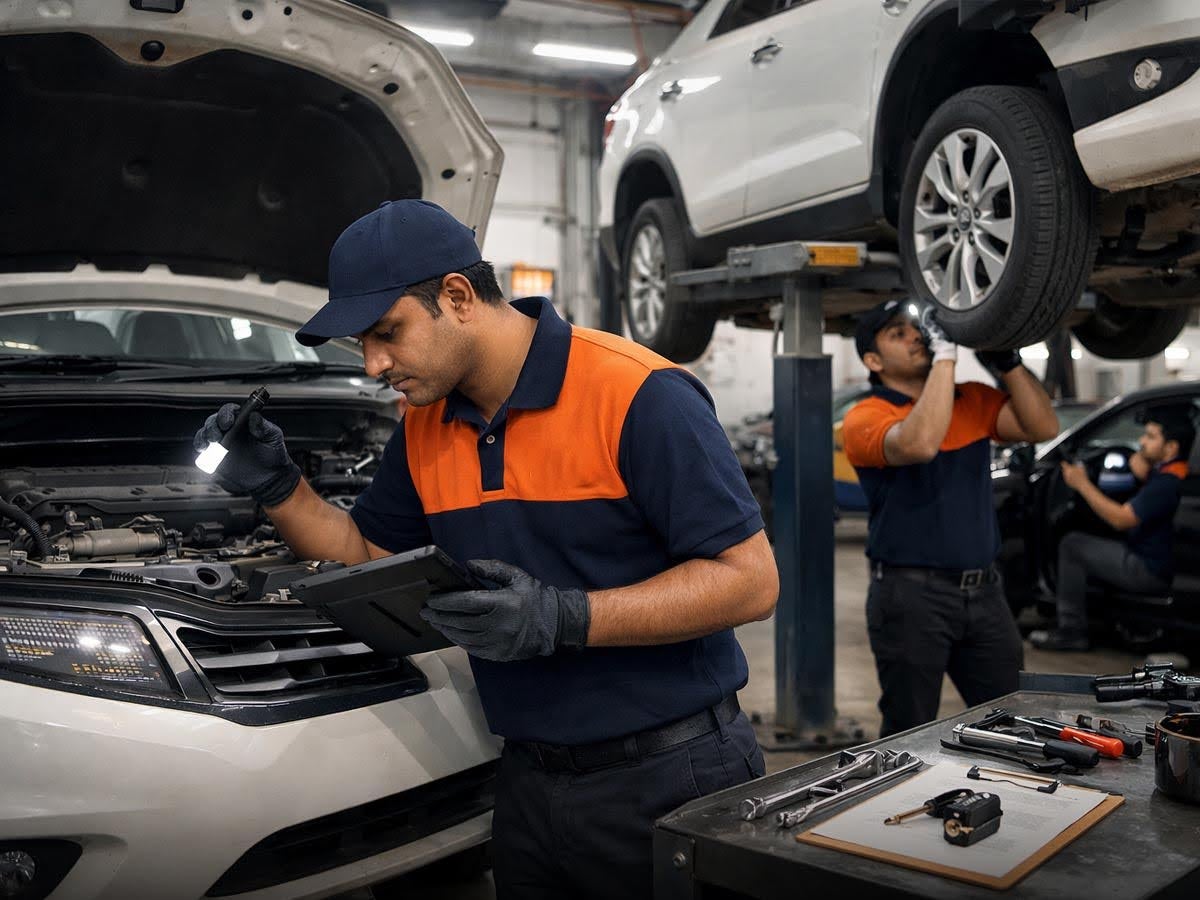
Every car in Cars24's inventory has been through a 300-point physical inspection covering mechanical, electrical, structural, and legal parameters, which takes over 10 hours per vehicle. The documentation is verified. RC transfer is handled. A 30-day return window applies from delivery. Warranty coverage starts the day you drive it home. Take a direct seller or local dealer car listed at the same Rs 5.5 lakh, for the same model and year. It includes none of this. Put a value on the inspection, the documentation, the legal verification, and the post-purchase safety net, and that same-priced car is effectively far more expensive than ours. For the same money, the Cars24 car is the cheaper one.
A buyer without a trusted mechanic, without the experience to read an inspection report, without the time to chase an RC transfer issue for three months, isn't comparing two prices. They're comparing a protected purchase against an unprotected one. The unorganised market doesn't price that risk into the listing. The buyer absorbs it later.
How do I verify that a Cars24 price is actually the best available before I commit?
Run the comparison yourself. Here's how to do it in a way that's actually accurate, not just a quick glance at classifieds.
Step 1: Note the car details from the Cars24-owned stock listing. Make, model, year, fuel type, variant if shown, and kilometre reading.
Step 2: Search for the same car on dealer listings in your city. Match the year and mileage. Go to at least three sources.
Step 3: Get to comparing the real on-road number. Add Rs 30,000 to Rs 50,000 to any unverified listing for documentation charges, and inspection costs. These costs exist whether the seller mentions them or not.
Step 4: Check what's actually included. Does the dealer or classified listing come with a verified inspection report you can read? A return policy? Warranty coverage? RC transfer support? If not, you aren't comparing two prices. You're comparing two entirely different risk profiles.
Step 5: Read the inspection report on the Cars24 listing. Two cars that look identical at the same price often have different inspection findings. The inspection report is the document that explains any price difference.
After doing this properly, most buyers find the Cars24 price isn't higher. It's more complete.
What should I actually spend my time on if the price question is already settled?
This is the real point I want to make, and it's the one most buyers miss.
Once you know the Cars24 price is market-benchmarked and already the best available, the price question is off the table. The questions that determine whether you'll be happy with this car two or three years from now are the ones most buyers spend the least time on before they commit.
Does this car actually suit how you use it? If you're driving 60 km a day on highways, a petrol hatchback is a materially different decision than if you're doing 15 km of city stops. Does the boot and seating fit your life right now, and in two years if your family grows? What does the mileage tell you about maintenance coming in the next 12 to 18 months — because at 60,000 km on a petrol car, certain costs are predictable, and you should factor them in before you fall in love with the listing.
Price is the smallest question in the room. My job is to take it off the table entirely so you can spend energy on the questions that actually decide whether you'll be happy. That's what the 7-day return policy and the 30-day repair assurance are built around, too. The entire post-purchase structure at Cars24 is designed to protect the decision you made, not just the moment you made it.
Frequently Asked Questions
Expand all