Honda City facelift takes on the Hyundai Verna — Full head to head comparison
- 1Verna comes with dual 10.25-inch integrated screens, the biggest in its segment
- 2City offers the e:HEV strong hybrid option rated at 27.26 km/L; Verna has no hybrid
- 3Both get Level 2 ADAS but Verna's suite is wider across more variants
- Honda City facelift vs Hyundai Verna design comparison
- Honda City facelift vs Hyundai Verna interior comparison
- Honda City facelift vs Hyundai Verna features comparison
- Honda City facelift vs Hyundai Verna safety comparison
- Honda City facelift vs Hyundai Verna engine comparison
- Honda City facelift vs Hyundai Verna dimensions comparison
- Honda City facelift vs Hyundai Verna price comparison
The premium sedan space in India is not a large one, but it is fiercely contested. The Honda City and the Hyundai Verna have been at each other's throats for years, and in 2026, both have arrived with significant updates.
The Honda City facelift brings a completely new design language and the e:HEV hybrid option. The Hyundai Verna, refreshed last year, counters with class-leading screen real estate, a proper turbo petrol engine, and more safety tech across more variants. If you are trying to pick between the two, this comparison should help you get there.
Honda City facelift vs Hyundai Verna design comparison
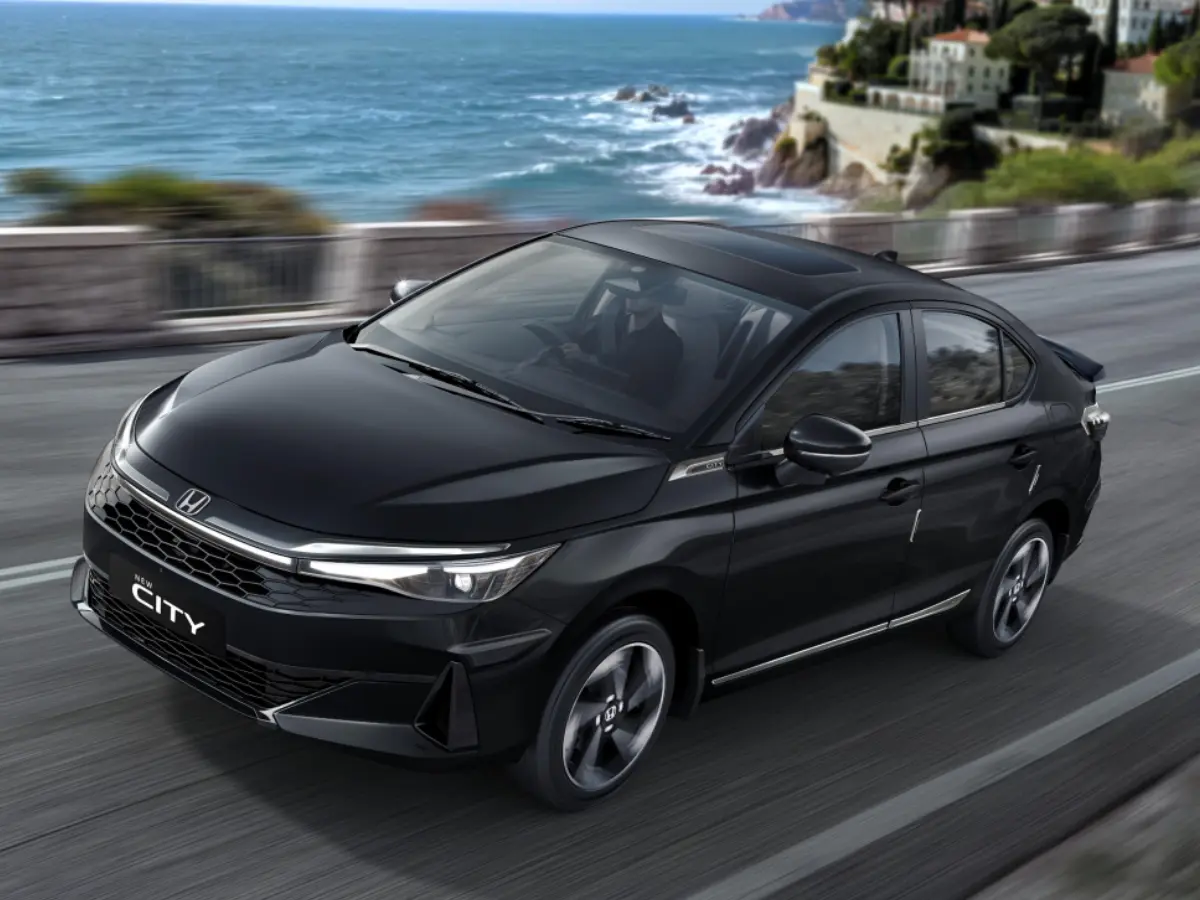
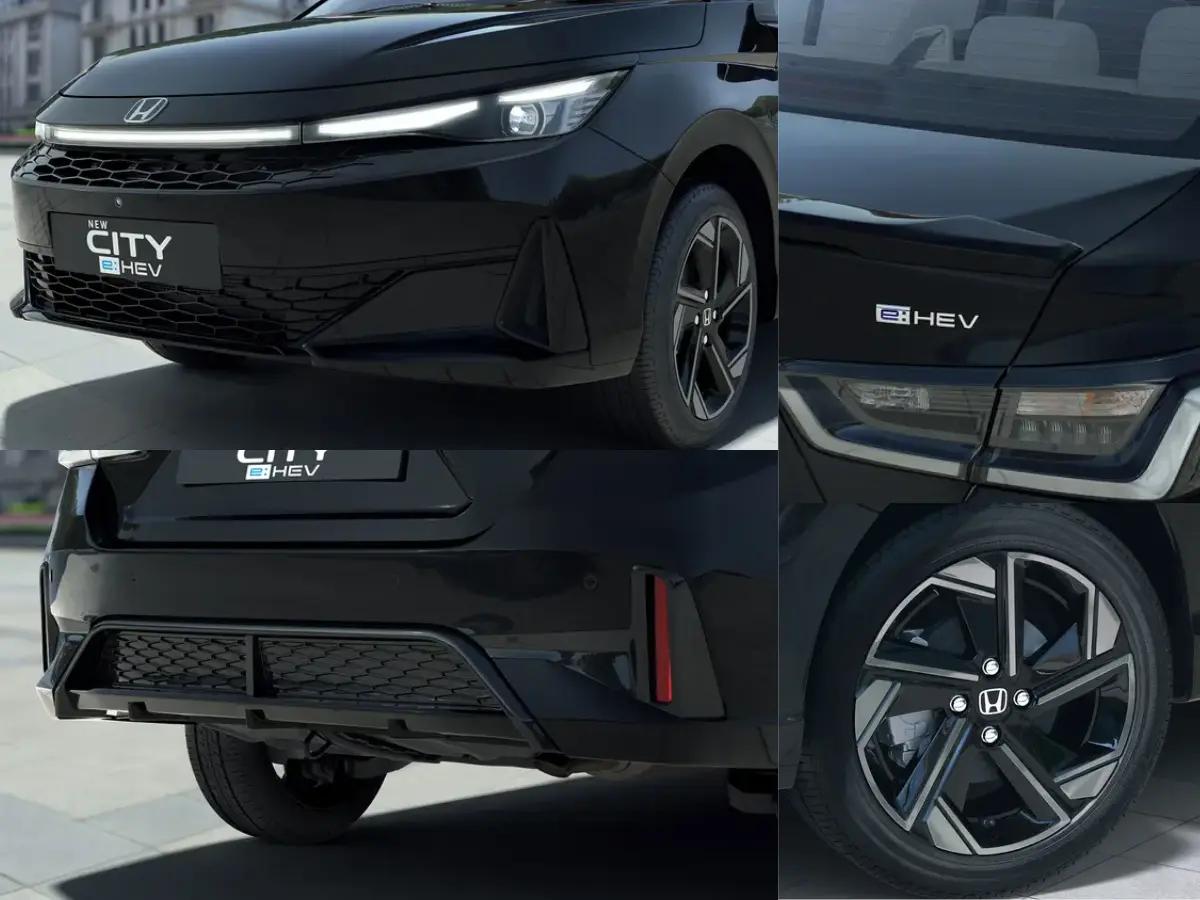
The new Honda City has gone through one of its biggest design updates yet, with Honda giving it a sharper and more futuristic look. The front now gets the new Blade-Eye Signature LED lighting setup with a thin LED strip stretching across the grille, along with split DRLs and a gloss-black Matrix-Mesh grille design. The rear also looks more modern with Z-Edge wrap-around LED tail lamps, while higher ZX+ variants add a sporty trunk spoiler and new Aero-Blade diamond-cut alloy wheels. The e:HEV hybrid version also gets its own unique badging.
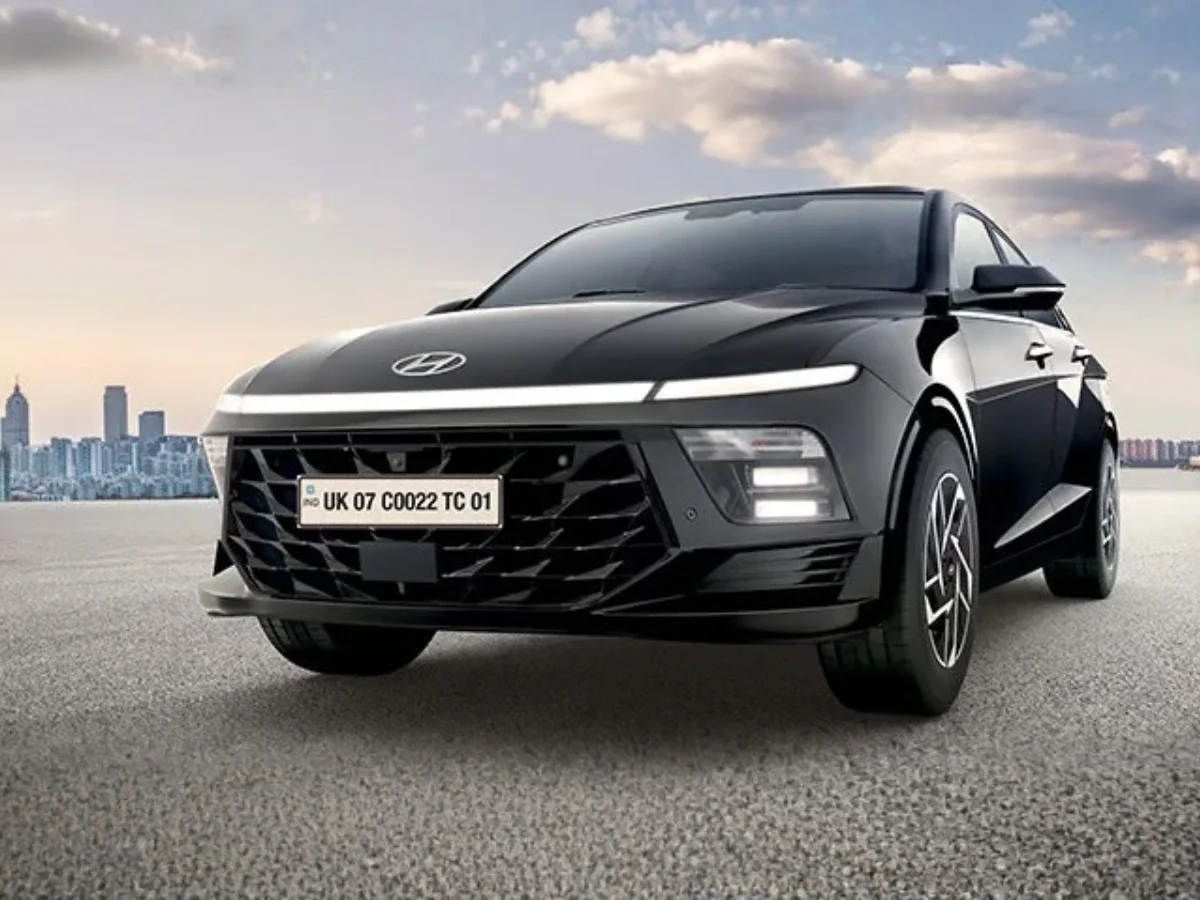
In comparison, the Hyundai Verna follows a sleeker and more coupe-like approach with a lower stance and more sculpted body lines. It gets dual LED projector headlamps, a black chrome grille, connected LED lighting elements, and diamond-cut alloy wheels on higher trims. Turbo variants further stand out with darker alloy wheels and red brake calipers. Overall, the Verna does feel slightly more aggressive and premium in its design, especially in the top variants.
Honda City facelift vs Hyundai Verna interior comparison
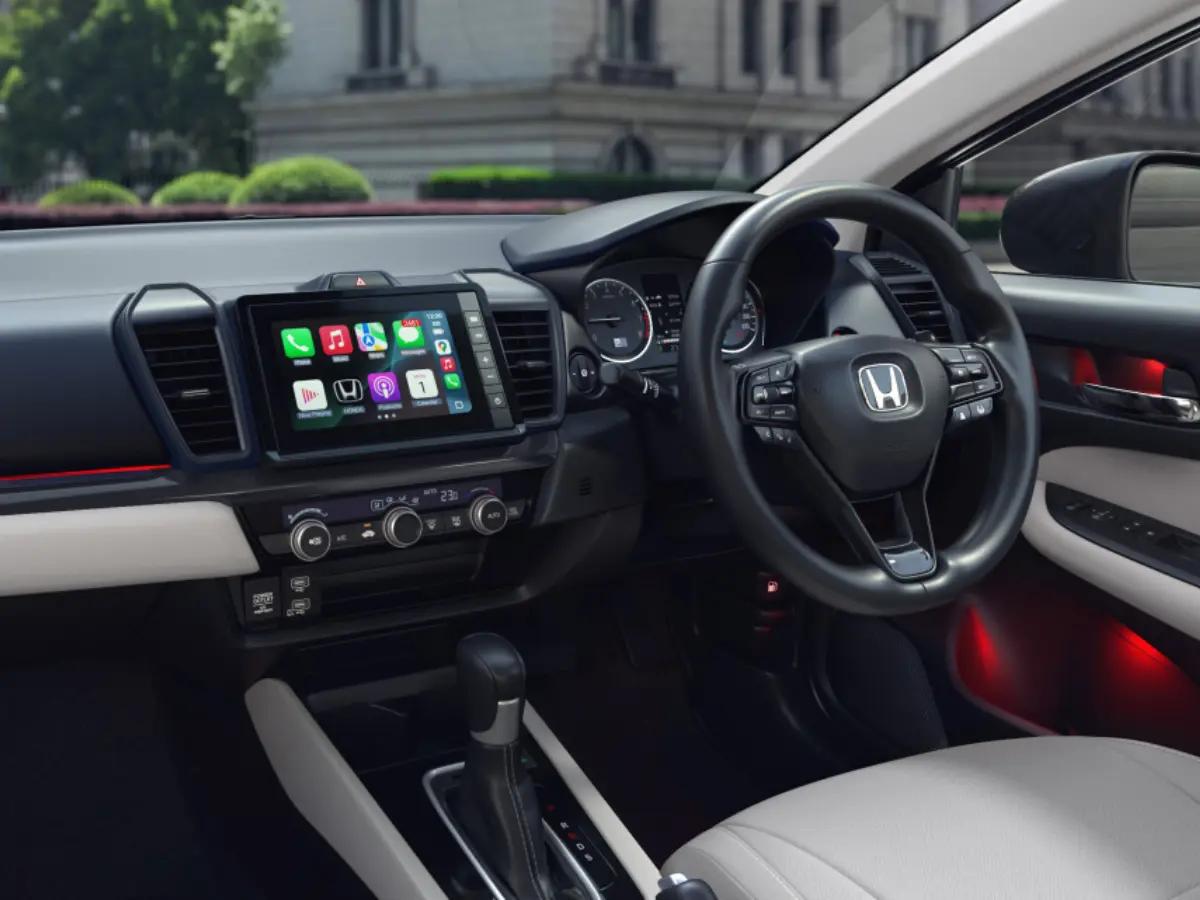
The Honda City focuses more on comfort and a premium feel, especially in the higher trims that get an Ivory and Black two-tone cabin theme with perforated leather seats and a dark iron-pattern dashboard finish. A slim ambient light strip across the dashboard adds to the upscale feel. The ZX and ZX+ variants come with a 10.1-inch floating touchscreen and an 8-speaker audio system, while lower variants use a smaller 8-inch screen. The cabin overall feels refined and practical, and the 506-litre boot remains one of the biggest highlights in the segment.
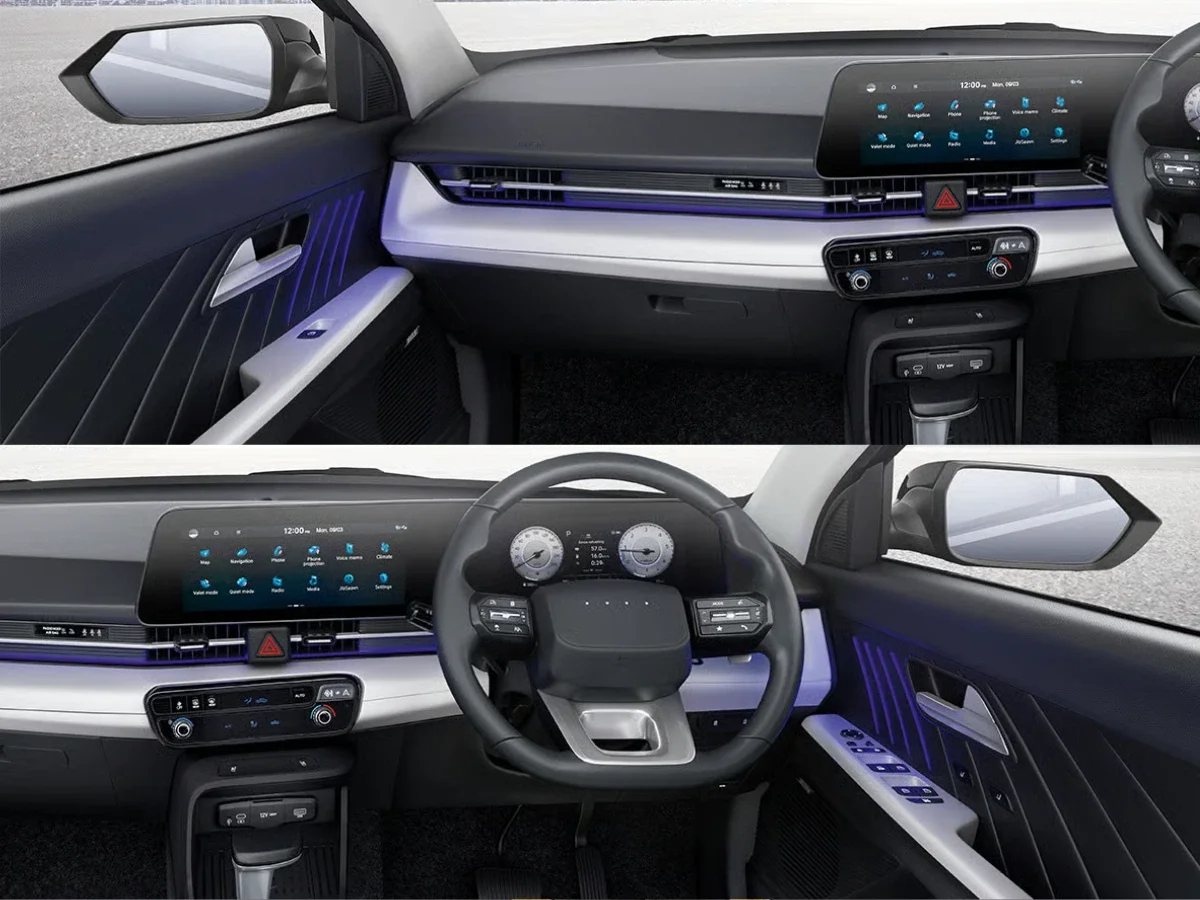
The Hyundai Verna, meanwhile, leans more toward a tech-heavy and sporty cabin experience. Its biggest highlight is the dual 10.25-inch connected screen setup for the infotainment system and digital instrument cluster, giving it a much more modern dashboard layout. Higher petrol variants get beige and black interiors, while Turbo trims use an all-black theme with red accents for a sportier look. The Verna also offers ventilated front seats from the HX 6+ variant, a powered driver seat with memory function from HX 8, and a Bose 8-speaker sound system from HX 6+ DT onward.
Honda City facelift vs Hyundai Verna features comparison
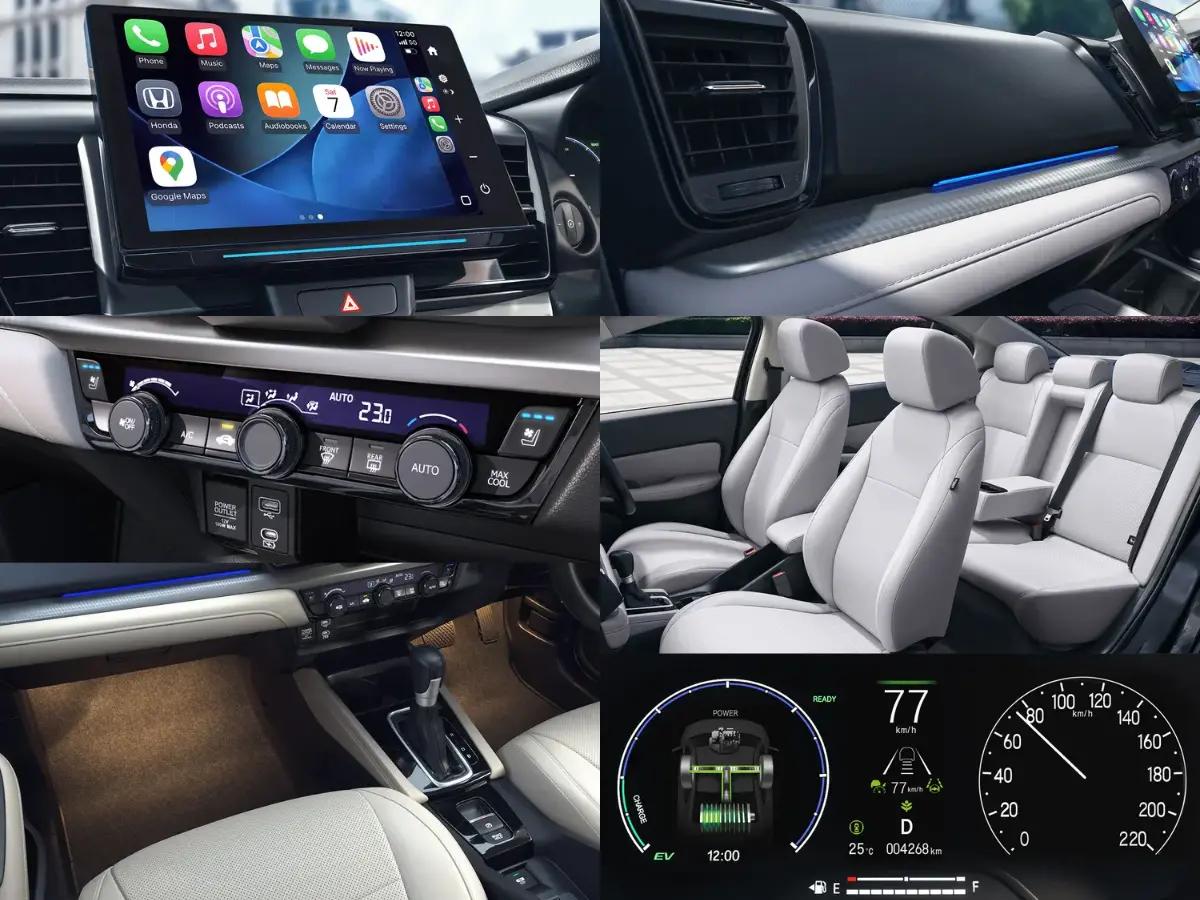
Honda City facelift features — ZX and ZX+ trim highlights
- 10.1-inch floating touchscreen with wireless Android Auto and Apple CarPlay
- 8-speaker sound system
- One-touch electric sunroof
- Ventilated front seats on ZX+
- 360-degree camera on ZX+
- LaneWatch side-view camera, still one of the most practical visibility aids in city driving
- Wireless charger with different layouts depending on variant
- Auto-dimming IRVM and rain-sensing wipers
- Remote engine start on CVT and e:HEV variants
- Walk Away Auto Lock for added convenience
- Honda Connect with 39 connected features, Alexa support, and smartwatch connectivity
- Rear sunshade and rear AC vents with USB-C charging ports
- Electronic parking brake and four-wheel disc brakes on the e:HEV
- Paddle shifters on CVT variants
- PM 2.5 air filter for cabin air quality
- 506-litre boot space remains one of the strongest practical advantages in the segment
Hyundai Verna features — HX 6+ to HX 10 trim highlights
- Dual 10.25-inch integrated screens for infotainment and digital instrumentation
- Wireless Android Auto and Apple CarPlay from HX 8 onward
- Bose 8-speaker premium audio system from HX 6+ DT
- Electric sunroof
- Smart trunk with hands-free opening function
- Hyundai Bluelink connected tech with over 70 features
- Ventilated front seats from HX 6+
- Powered driver seat with memory function from HX 8 onward
- Powered passenger seat and walk-in function on HX 10
- Wireless phone charger from HX 6
- Ambient lighting across dashboard and door trims
- Built-in dashcam on higher variants
- Surround view monitor and blind-spot view monitor on HX 10
- D-cut steering wheel for a sportier cabin feel
- Glovebox cooling and drive mode select
- Paddle shifters on iVT and DCT variants
- Front parking sensors from HX 6 onward
- Four-wheel disc brakes on higher turbo variants
The Honda City focuses more on everyday usability and convenience. Features like LaneWatch, Walk Away Auto Lock, rear sunshade, PM 2.5 filter, and Honda Connect with Alexa support make it feel practical and easy to live with daily. The hybrid variant also gets exclusive additions like an electronic parking brake and four-wheel disc brakes.
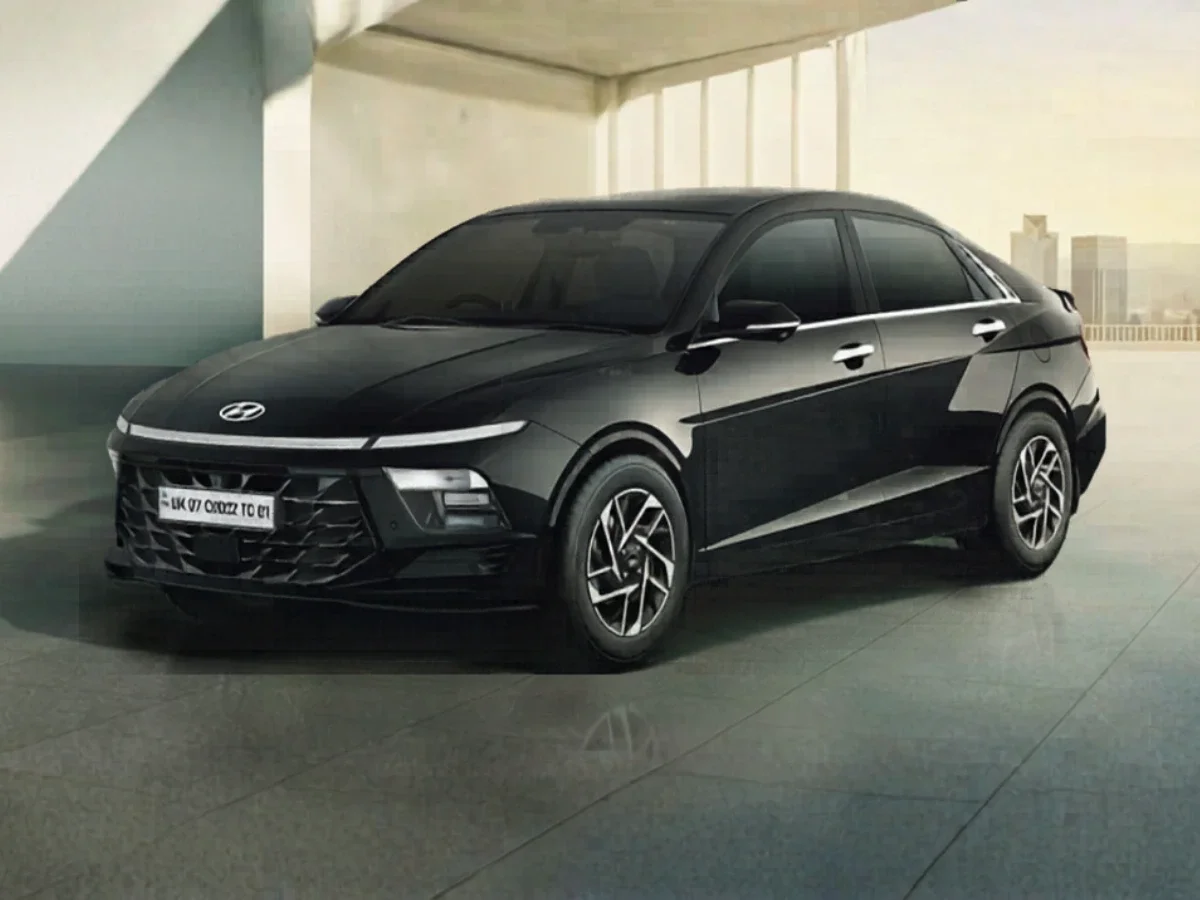
The Hyundai Verna takes a more tech-heavy and premium approach. The dual-screen layout immediately feels more modern, while features like the built-in dashcam, blind-spot monitor, powered passenger seat, and surround-view monitor give it a more feature-loaded appeal in higher trims.
Honda City facelift vs Hyundai Verna safety comparison
Honda City facelift safety (Standard safety across all variants)
- 6 airbags as standard across the range
- ACE body structure for better crash protection
- Vehicle Stability Assist (VSA) with Electronic Stability Control
- Agile Handling Assist for better corner stability
- ABS with EBD and Brake Assist
- Hill Start Assist
- Emergency Stop Signal
- Tyre Pressure Monitoring System
- Rear parking sensors
- Multi-angle rear camera with guidelines
- ISOFIX child seat mounts
One big advantage for the Honda City is that six airbags and core safety equipment are standard right from the base variant, without needing to move to higher trims.
Honda SENSING ADAS (from V trim onward)
- Collision Mitigation Braking System
- Adaptive Cruise Control
- Lane Keeping Assist
- Road Departure Mitigation
- Auto High Beam
- Lead Car Departure Notification
The City’s ADAS package becomes available much earlier in the lineup compared to the Verna, which is important for buyers who do not want to spend on top-end variants just for safety tech.
Additional safety on e:HEV ZX+
- Four-wheel disc brakes
- Electronic Parking Brake with Auto Hold
- AVAS sound alert for EV driving mode
Hyundai Verna safety (Standard safety across all variants)
- 6 airbags standard, with a 7th centre airbag on HX 10
- ABS with EBD and Brake Assist
- ESC with Vehicle Stability Management
- Hill-start Assist Control
- Emergency Stop Signal
- Rear parking sensors
- Automatic headlamps
- ISOFIX mounts
- Seatbelt reminders for all seats
The Hyundai Verna adds a few extra premium safety touches in higher trims, especially around visibility and parking assistance.
Additional safety from HX 6 onward
- Rear view camera
- Front parking sensors
- Driver Rear View Monitor
- Highline TPMS from HX 4
Hyundai SmartSense ADAS (HX 8 turbo and HX 10)
- Forward Collision Avoidance Assist
- Blind-spot Collision Warning and Avoidance
- Lane Keeping Assist and Lane Following Assist
- Driver Attention Warning
- Safe Exit Warning
- Rear Cross Traffic Collision Avoidance
- High Beam Assist
- Dashcam system
The Verna’s ADAS suite is more feature-rich overall, especially with blind-spot monitoring and rear cross-traffic functions, but these features are mostly limited to the higher trims.
Additional safety on HX 10
- Surround View Monitor
- Blind-spot View Monitor
- Smart Cruise Control with Stop & Go
- Rear disc brakes
- Electronic Parking Brake with Auto Hold
- 7th centre airbag
The City focuses more on giving important safety features earlier in the lineup. Buyers get six airbags as standard and Honda SENSING ADAS from the V variant itself, making the package feel more accessible and practical.The Verna, meanwhile, pushes harder on advanced safety tech in its top trims. Features like blind-spot monitoring, surround-view monitor, rear cross-traffic alert, dashcam, and the 7th airbag make it feel more premium and technology-heavy.
Honda City facelift vs Hyundai Verna engine comparison
| Specification | Honda City | Honda City e:HEV | Hyundai Verna | |
|---|---|---|---|---|
| Engine | 1.5L Petrol | 2.0-litre petrol hybrid | 1.5L Petrol | 1.5L Turbo Petrol |
| Max Power | 121PS at 6,600 rpm | 100PS (engine) | 115PS at 6,300 rpm | 160PS at 5,500 rpm |
| System Power | — | 126PS combined | — | — |
| Max Torque | 145Nm at 4,300 rpm | 253Nm (motor) | 143.8Nm at 4,500 rpm | 253Nm at 1,500–3,500 rpm |
| Transmission | 6MT / 7-speed CVT | Two-motor e-CVT | 6MT / iVT | 6MT / 7-speed DCT |
| Drive Type | FWD | FWD | FWD | FWD |
The Honda City petrol and the standard Hyundai Verna 1.5 MPi are fairly close in everyday performance, though the City makes slightly more power at 121 PS compared to the Verna’s 115 PS. The City also feels smoother at higher revs, while the Verna is tuned more for relaxed city driving.
The City’s biggest advantage is the e:HEV strong hybrid option, which the Verna does not offer. It produces 253 Nm through the electric motor, giving it quick response in traffic along with much better efficiency. The Verna fights back strongly with its 1.5 Turbo GDi engine. With 160 PS and 253 Nm, it is easily the most powerful option here and feels much quicker on highways and during overtakes. The 7-speed DCT also feels more responsive than Honda’s CVT setups.
Honda City facelift vs Hyundai Verna dimensions comparison
| Dimension | Honda City | Hyundai Verna | Difference |
|---|---|---|---|
| Length | 4,594 mm | 4,565 mm | City is 29 mm longer |
| Width | 1,748 mm | 1,765 mm | Verna is 17 mm wider |
| Height | 1,489 mm | 1,475 mm | City is 14 mm taller |
| Wheelbase | 2,600 mm | 2,670 mm | Verna has a 70 mm longer wheelbase |
| Fuel Tank Capacity | 40 L | 45 L | Verna gets 5 L larger fuel tank |
| Boot Space | 506 L (petrol) | Not specified | City officially offers 506 L boot space |
The Verna is wider and has a notably longer wheelbase by 70mm, which translates directly to more rear legroom. The City, meanwhile, is slightly longer overall and offers a significantly larger boot of 506 litres on petrol variants, which is a clear advantage for families who use the boot regularly.
Honda City facelift vs Hyundai Verna price comparison
Honda City facelift prices (Ex-Showroom, Delhi)
| Honda City facelift | MT | CVT | e:HEV |
|---|---|---|---|
| SV | Rs 11,99,900 | – | – |
| V | Rs 13,29,900 | Rs 14,29,900 | – |
| ZX | Rs 15,25,900 | Rs 16,25,900 | – |
| ZX+ | Rs 16,14,900 | Rs 17,14,900 | Rs 20,99,900 |
Pearl exterior colours attract an additional charge
Hyundai Verna prices (Ex-Showroom, Delhi)
| Hyundai Verna | 1.5 MPi MT | 1.5 MPi IVT | 1.5 Turbo GDi IVT | 1.5 Turbo GDi DCT |
|---|---|---|---|---|
| HX 2 | Rs 10,98,400 | — | — | — |
| HX 4 | Rs 12,25,400 | — | — | — |
| HX 6 | Rs 13,19,400 Rs 13,34,400 (DT) | Rs 14,40,400 Rs 14,55,400 (DT) | — | — |
| HX 6+ | Rs 13,81,400 Rs 13,96,400 (DT) | Rs 15,02,400 Rs 15,17,400 (DT) | — | — |
| HX 8 | Rs 14,88,400 Rs 15,03,400 | Rs 16,09,400 Rs 16,24,400 (DT) | Rs 16,28,400 Rs 16,43,400 (DT) | Rs 17,62,400 Rs 17,77,400 (DT) |
| HX 10 | — | Rs 17,15,400 Rs 17,30,400 (DT) | — | Rs 18,25,400 Rs 18,40,400 (DT) |
Matte colour option available for select mono tone trims at an additional Rs 15,000
The Honda City starts slightly higher in the mid variants, but Honda keeps the lineup simpler and easier to understand with fewer combinations. The biggest price jump comes with the e:HEV hybrid at Rs 20.99 lakh, which sits well above the regular petrol lineup but also brings the strong hybrid system that the Verna does not offer.
The Hyundai Verna gives buyers far more variant and powertrain choices, especially if someone wants a turbo-petrol engine. Its entry price is lower than the City, and even the top-spec turbo DCT remains below the City e:HEV hybrid. Hyundai also spreads premium features across more trims, while Honda reserves many key features for ZX and ZX+ variants.
Stay updated with all the latest happenings & developments in the automotive world by joining our official AUTOVERSE WhatsApp community. Also, don’t forget to check out our YouTube channel, AUTOVERSE by Cars24, for key details & visuals.