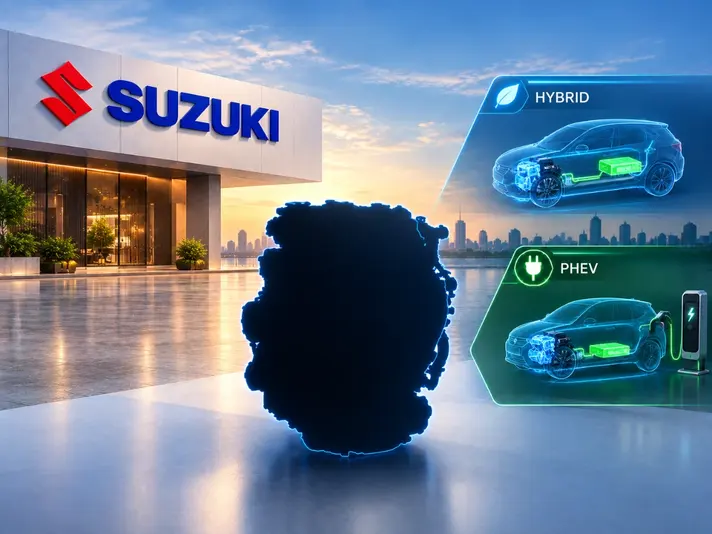
Suzuki developing new turbo-petrol engine for India — Hybrid and PHEV plans
- 1Suzuki is developing a new direct-injection turbocharged engine, called DITC
- 2Suzuki has confirmed a plug-in range extender for compact cars called REEV Light
- 3Suzuki plans to halve new vehicle development time by 2030
Suzuki is developing a new direct-injection turbocharged petrol engine for growth markets, including India. The company has also confirmed plans for a plug-in range-extender hybrid for compact cars and is working to reduce the time needed to develop new models. These announcements were made at a recent technology briefing and offer an early look at Suzuki and Maruti Suzuki's future powertrain plans for India.
Suzuki new turbo-petrol engine for India
Suzuki has referred to the new engine as DITC in its technology briefing. It is a direct-injection turbo-petrol engine designed to offer stronger performance while improving fuel efficiency. India is one of the markets Suzuki has identified for this project.
The company has not yet revealed the engine's capacity, power output or the first model that will use it. Maruti Suzuki already offers turbo-petrol engines in India, and the new unit could add another powertrain option as its product range expands.
Suzuki plans to improve engine thermal efficiency
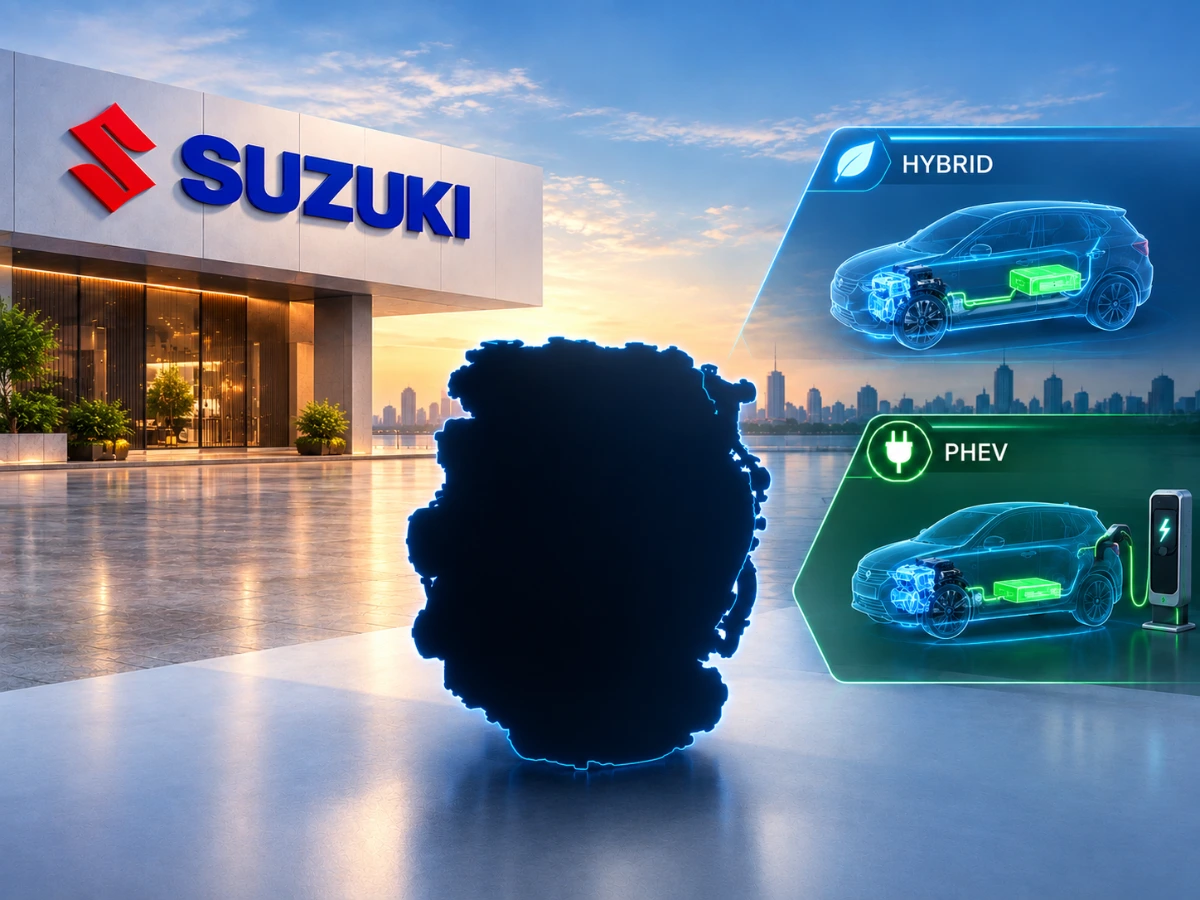
Suzuki says its current internal combustion engines have thermal efficiency of around 40%, and it is researching ways to increase this to around 50%. The company is building this work around the Z12E engine and is exploring lean combustion, waste-heat recovery and lower-viscosity engine oil. It is also working on reducing heat loss, friction and the energy required to draw air into the engine. Suzuki has not confirmed which of these technologies will be used in the production DITC engine.
Suzuki REEV Light plug-in hybrid for compact cars
Suzuki has also confirmed plans for a range-extender hybrid for compact cars, called REEV Light. In this type of hybrid system, the engine works as a generator while an electric motor drives the wheels.
The REEV Light system will add a charging port and a battery sized for compact-car use. This will allow owners to charge the battery for shorter trips, while the engine can generate electricity for longer journeys. Suzuki says it does not want to use an unnecessarily large battery for this system.
Autocar India had earlier reported that Maruti Suzuki was developing an in-house series-hybrid system using the 1.2-litre, three-cylinder Z12E engine as a generator. The Fronx and Baleno were among the models reportedly being considered. However, Suzuki has not confirmed which engine or model will use the REEV Light system.

Suzuki estimates that its compact-car series hybrid could reduce CO2 emissions by around 29% compared with its 2022 reference level. This would work out to roughly 300kg of CO2 over 10,000km. The company has not revealed the battery capacity or electric-only range of the REEV Light.
Suzuki targets faster development and 4 million units in India
Suzuki also plans to reduce the time needed to develop new vehicles. The company aims to halve its new vehicle development time by 2030, while targeting a 30% improvement in development efficiency and a 50% improvement in production efficiency. The development targets are measured against FY20, while the production efficiency target uses the Manesar plant as its benchmark.
Maruti Suzuki is separately working to reduce its vehicle development cycle from 48 months to 36 months. The company plans to introduce nine new models over three years, including seven SUVs.
Suzuki is also targeting annual production capacity of around four million vehicles in India from fiscal 2030.
Stay updated with all the latest happenings & developments in the automotive world by joining our official AUTOVERSE WhatsApp community.