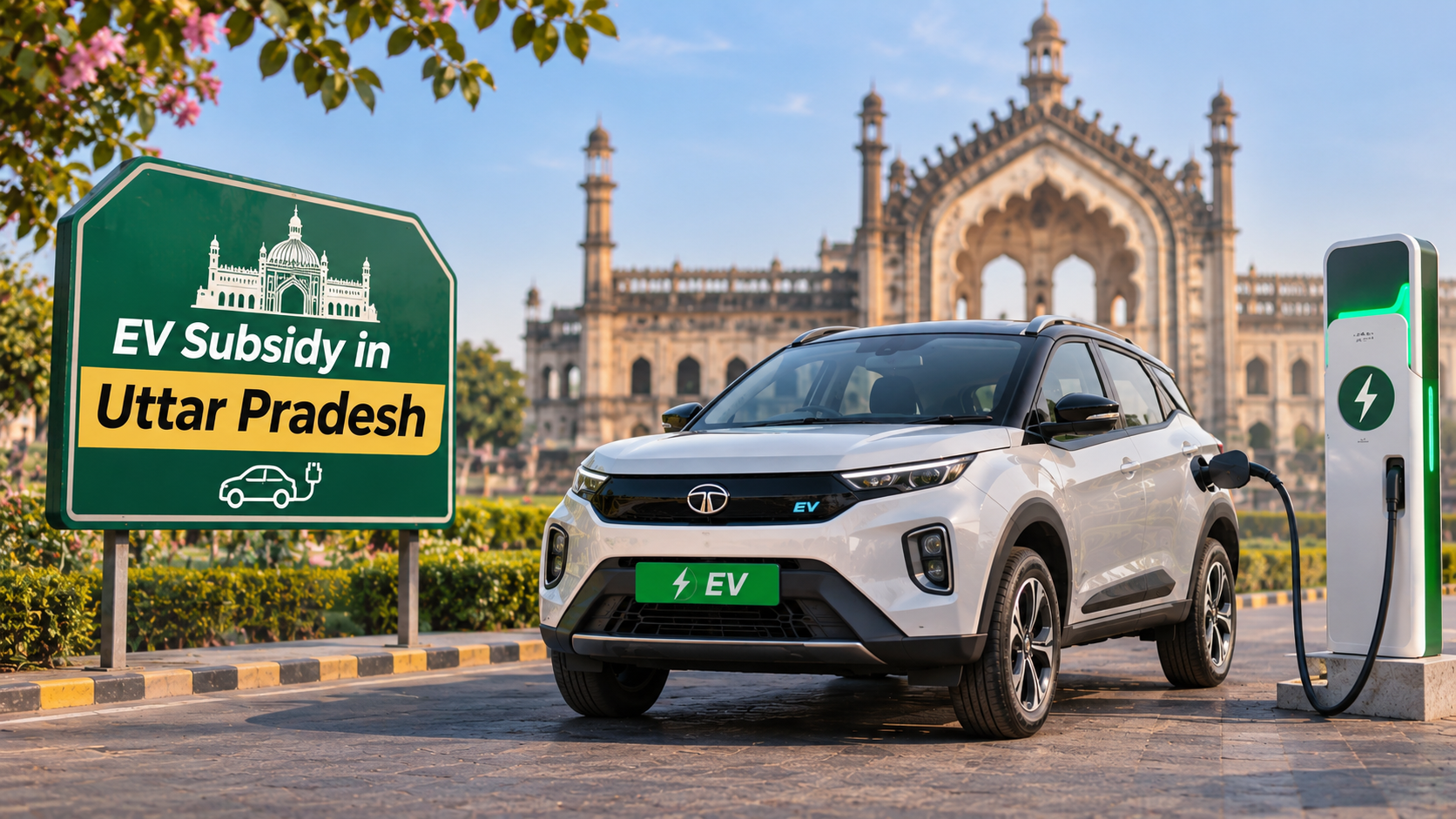
EV Subsidy in Uttar Pradesh 2026: Road Tax Waiver, Subsidy & How to Apply
- 1No road tax or registration fee on pure EVs registered in UP till 13 October 2027
- 2Electric two-wheelers can get up to ₹5,000 from UP, on top of the central ₹5,000
- 3You claim the UP subsidy online, and the money is paid into your bank account
Uttar Pradesh treats EV buyers differently from most states: its biggest benefit is not a cash subsidy but a tax waiver. Under the Uttar Pradesh Electric Vehicle Manufacturing and Mobility Policy 2022, which runs until 13 October 2027, pure electric vehicles registered in the state pay no road tax and no registration fee. For an electric car, that saving often runs well past ₹1 lakh, because UP charges petrol cars 9 to 11 per cent in one-time road tax.
The waiver has had an uneven run. It lapsed for most EVs on 13 October 2025, when the policy's first three years ended, and buyers were briefly charged full tax. A notification in November 2025 restored it for pure EVs bought and registered in UP until 13 October 2027. Strong hybrids, which had enjoyed the same waiver for a while, are no longer covered.
The policy also offers a purchase subsidy of 15 per cent of the ex-factory price, up to ₹5,000 on two-wheelers and ₹1 lakh on cars. It covers a fixed number of vehicles in each category, and the car allocation is now close to fully used. Two-wheeler buyers still have room, and they also get the central PM E-DRIVE incentive.
This guide covers the waiver, the subsidy, what you save on popular EVs, who qualifies and how to apply. For a comparison with other states, see our guide to state-wise EV subsidy in India.
UP EV policy at a glance
| Item | Details |
| Policy | Uttar Pradesh Electric Vehicle Manufacturing and Mobility Policy 2022 |
| Validity | 14 October 2022 to 13 October 2027 |
| Road tax and registration waiver | Pure EVs bought and registered in UP, valid until 13 October 2027 |
| Purchase subsidy | 15% of ex-factory price, for a capped number of vehicles per category |
| Subsidy portal | UP EV Subsidy Portal (upevsubsidy.in) |
| Payment | Direct to the buyer's bank account after approval |
EV subsidy amounts in UP by vehicle type
The purchase subsidy is paid as 15 per cent of the ex-factory price, which is the manufacturer's selling price before dealer margin and taxes, subject to a cap per vehicle.
| Vehicle type | Subsidy | Maximum per vehicle | Vehicles covered |
| Electric two-wheeler | 15% of ex-factory price | ₹5,000 | 2,00,000 |
| Electric three-wheeler | 15% of ex-factory price | ₹12,000 | 50,000 |
| Electric car | 15% of ex-factory price | ₹1,00,000 | 25,000 |
| Electric goods carrier | 10% of ex-factory price | ₹1,00,000 | 1,000 |
| Private electric bus | 15% of ex-factory price | ₹20 lakh | 400 |
By mid-2026, approvals for electric cars had reached almost the full 25,000, so new car buyers are unlikely to receive the subsidy. Two-wheeler approvals were well short of the 2,00,000 cap at that point. The subsidy runs until the policy ends in 2027 or until funds run out, whichever comes first. If you buy a vehicle without its battery, under a battery subscription plan, you receive half the subsidy.
Road tax and registration fee exemption in UP
Pure electric vehicles bought and registered in UP between 14 October 2025 and 13 October 2027 pay no road tax and no registration fee. The waiver is applied automatically at registration, and there is no price ceiling.
For context, UP revised its standard road tax in 2025. A petrol car pays 9 per cent up to ₹10 lakh and 11 per cent above that. Petrol two-wheelers pay 7 per cent up to ₹40,000 and 8 per cent above. An EV pays none of this while the waiver lasts.
Two points need care. First, the original 2022 rules extended the waiver beyond October 2025 only for EVs made in UP, and some buyers were told the same condition still applies. The November 2025 restoration describes the waiver as covering pure EVs bought and registered in UP, with no manufacturing condition, but check that your dealer's on-road quote shows zero road tax before you pay. Second, buyers who paid road tax during the gap between mid-October and early November 2025 should ask their RTO whether a refund applies.
Popular EVs and how much you save in UP
These are rough estimates for popular variants. Road tax savings use UP's petrol rates above, applied to approximate ex-showroom bands; vehicle prices themselves are left out because they change too often to stay accurate.
Electric two-wheelers
| Model (variant, battery) | Central PM E-DRIVE | UP subsidy | Road tax saving (approx.) | Total saving (approx.) |
| TVS iQube (3.5 kWh) | ₹5,000 | ₹5,000 | ₹10,000 to ₹12,000 | ₹20,000 to ₹22,000 |
| Hero Vida VX2 Plus (3.4 kWh) | ₹5,000 | ₹5,000 | About ₹10,500 | About ₹20,500 |
| Bajaj Chetak C3502 (3.5 kWh) | ₹5,000 | ₹5,000 | ₹9,500 to ₹11,000 | ₹19,500 to ₹21,000 |
| Ather Rizta S (2.9 kWh) | ₹5,000 | ₹5,000 | ₹9,500 to ₹10,500 | ₹19,500 to ₹20,500 |
| Ola S1 X (4 kWh) | ₹5,000 | ₹5,000 | ₹8,000 to ₹9,000 | ₹18,000 to ₹19,000 |
The UP subsidy figure assumes your model is eligible on the state portal and the two-wheeler allocation is still open.
Electric cars
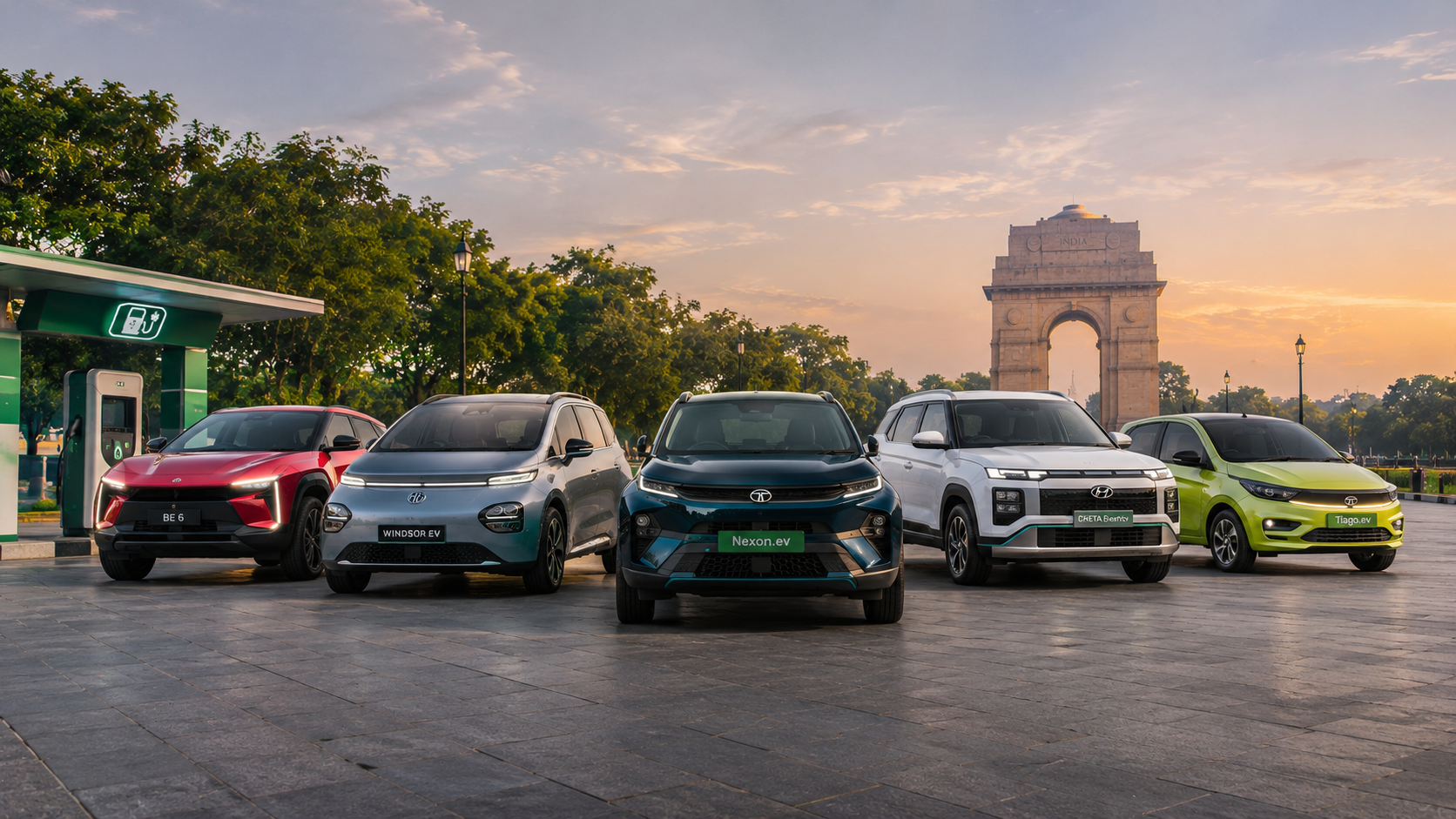
| Model (variant, battery) | Central PM E-DRIVE | UP subsidy | Road tax saving (approx.) |
| Tata Punch EV (40 kWh) | None | Allocation nearly used up | ₹1.2 lakh to ₹1.4 lakh |
| Tata Nexon EV (45 kWh) | None | Allocation nearly used up | ₹1.5 lakh to ₹1.7 lakh |
| MG Windsor EV (52.9 kWh) | None | Allocation nearly used up | ₹2.0 lakh to ₹2.1 lakh |
| Mahindra XEV 9e (59 kWh) | None | Allocation nearly used up | ₹2.4 lakh to ₹2.5 lakh |
For car buyers in UP, the road tax waiver is effectively the whole benefit, and it ends on 13 October 2027 unless the state extends it.
Who is eligible for EV subsidy in UP
Eligibility depends on where the vehicle is bought and registered, and on the category allocation still being open.
Vehicle conditions
- Pure electric only. The road tax waiver applies to battery electric vehicles. Strong hybrids and plug-in hybrids are no longer covered.
- Bought and registered in UP. Both the purchase and the registration must happen in the state.
- Registration date. For the road tax waiver, the vehicle must be registered on or before 13 October 2027.
- Allocation open. The purchase subsidy covers a fixed number of vehicles in each category, approved in order.
Battery included. Vehicles bought without a battery get half the subsidy.
Buyer conditions
- One vehicle per individual. An individual can claim the subsidy for one vehicle only.
- Name match. The bank account must be in the name of the registered owner. The portal asks for a cancelled cheque in the buyer's name.
- Identity. Individuals need Aadhaar. Firms use their GST registration or PAN.
Fleet buyers. Businesses can claim for a limited number of buses or goods carriers; the portal states the current limit.
Noida and Ghaziabad buyers follow the same UP rules. If you are weighing a purchase across the border, Delhi pays a much larger two-wheeler subsidy but only to Delhi residents with Delhi registration, as our guide to EV subsidy in Delhi explains.
How to apply for EV subsidy in UP
Yes, the UP subsidy claim can be completed fully online. You apply yourself on the UP EV Subsidy Portal after the vehicle is registered. The road tax waiver needs no application, since it is applied when the vehicle is registered. Buying and registering the vehicle still involves the dealer.
- Complete the PM E-DRIVE e-voucher. For a two-wheeler, finish the Aadhaar face authentication at the dealership. The central ₹5,000 is deducted from the price.
- Register the vehicle in UP. Check that the road tax and registration fee show as zero.
- Log in to the portal. Sign in on upevsubsidy.in with the vehicle's registration number and the mobile number linked to it.
- Upload documents. Upload your photo and signature as used at registration, Aadhaar (or GST/PAN for firms) and a cancelled cheque in your name.
- Wait for verification. The dealer verifies the application within three days, followed by the RTO within three days.
Receive the payment. Once approved, the subsidy is paid into your bank account, with a target of 30 days. You can track it with the vehicle number and the last five digits of the chassis number.
Recent changes to the UP EV policy
| When | What changed |
| November 2025 | Road tax and registration waiver restored for pure EVs bought and registered in UP until 13 October 2027 |
| October 2025 | The waiver lapsed for most EVs on 13 October, and buyers were charged full road tax for a few weeks |
| April 2025 | UP revised its one-time road tax rates for petrol and diesel vehicles |
| July 2024 | Strong hybrids and plug-in hybrids were added to the road tax waiver, until October 2025 |
| July 2024 | The purchase subsidy was extended beyond its first year, to run until 2027 or until funds run out |
| October 2022 | UP EV Manufacturing and Mobility Policy 2022 came into force on 14 October |
EV subsidy in other states
If you live in the NCR or are comparing other states, these guides cover each one:
You can also compare EV subsidies across states in one place.
Frequently Asked Questions
Expand all