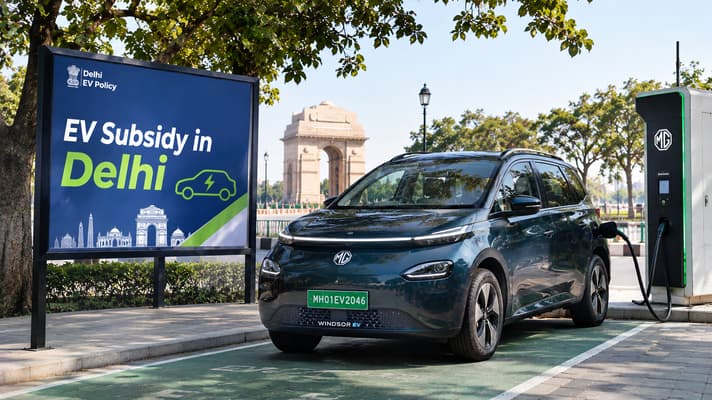
EV Subsidy in Delhi 2026: EV Policy 2.0, Road Tax & How to Apply
- 1Electric two-wheelers get up to ₹30,000 in the policy's first year, less after that
- 2No road tax or registration fee on electric cars up to ₹30 lakh ex-showroom
- 3The claim is fully online, and the money is paid into your bank account
- Delhi EV Policy 2026 at a glance
- EV subsidy amounts in Delhi by vehicle type
- Road tax and registration fee exemption in Delhi
- Scrappage incentive and other benefits
- Popular EVs and how much you save in Delhi
- Who is eligible for EV subsidy in Delhi
- How to apply for EV subsidy in Delhi
- Recent changes to the Delhi EV policy
- EV subsidy in other states
Delhi pays amongst the highest electric two-wheeler subsidy of all states, but its incentives are uneven across vehicle types. The Delhi Electric Vehicles Policy 2026, often called EV Policy 2.0, came into force on 1 July 2026 and runs until 31 March 2030. It pays a cash subsidy on electric two-wheelers, three-wheelers and light goods vehicles. Private electric cars get no purchase subsidy at all. What car buyers get instead is a full waiver of road tax and registration fees, provided the car costs up to ₹30 lakh ex-showroom.
The two-wheeler subsidy is calculated on battery size and steps down every year, which rewards early buyers. There is also a separate bonus if you scrap an old BS-IV or older vehicle when you buy. All of this sits on top of the central PM E-DRIVE incentive for two-wheelers, so a Delhi scooter buyer can stack two subsidies. The conditions are stricter than in most states: you must be a Delhi resident, the model must be on Delhi's approved list, and a subsidised vehicle cannot be moved to another state for three years.
This guide covers the amounts for each vehicle type, what you save on popular EVs, who qualifies and how to apply. For a comparison with other states, see our guide to state-wise EV subsidy in India.
Delhi EV Policy 2026 at a glance
| Item | Details |
| Policy | Delhi Electric Vehicles Policy 2026 (EV Policy 2.0) |
| Validity | 1 July 2026 to 31 March 2030 |
| Replaced | Delhi EV Policy 2020, which had been extended until the new policy came in |
| Nodal agency | Transport Department, Government of Delhi |
| Subsidy portal | Delhi EV Subsidy Portal (evsubsidy.delhi.gov.in) |
| Who can claim | Delhi residents: individuals, proprietorships, agencies and companies |
| Payment | Direct Benefit Transfer (DBT) to your bank account, within 60 days of applying |
EV subsidy amounts in Delhi by vehicle type
The two-wheeler, three-wheeler and goods vehicle subsidies fall under each policy year. Year 1 runs for twelve months from the policy's notification at the end of June 2026, so it covers vehicles bought until around mid-2027.
| Vehicle type | Year 1 | Year 2 | Year 3 | Condition |
| Electric two-wheeler | ₹10,000 per kWh, max ₹30,000 | ₹6,600 per kWh, max ₹20,000 | ₹3,300 per kWh, max ₹10,000 | Ex-showroom price up to ₹2.25 lakh |
| Electric three-wheeler (passenger, L5M) | ₹50,000 | ₹40,000 | ₹30,000 | Battery of at least 4 kWh |
| Light goods vehicle (N1, above 1.75 tonnes) | ₹1,00,000 | ₹75,000 | ₹50,000 | Electric goods carriers |
| Light goods vehicle (N1, up to 1.75 tonnes) | ₹50,000 | ₹37,500 | ₹25,000 | Electric goods carriers |
| Private electric car | No purchase subsidy | No purchase subsidy | No purchase subsidy | Road tax and registration waiver instead |
Battery-swapping two-wheelers qualify along with plug-in models.
Road tax and registration fee exemption in Delhi
Electric cars priced up to ₹30 lakh ex-showroom pay no road tax and no registration fee until 31 March 2030. Above ₹30 lakh, there is no waiver at all; the car pays the full rate. Strong hybrids and plug-in hybrids get no concession under this policy.
The waiver is applied automatically when the car is registered, so car buyers do not file anything on the subsidy portal. For a sense of scale, a comparable petrol car priced above ₹10 lakh pays one-time road tax of 10 per cent of its ex-showroom price in Delhi. On a mid-size electric SUV, that is the single largest saving available.
Scrappage incentive and other benefits
If you scrap an old vehicle and buy an EV, Delhi pays an extra amount on top of the purchase subsidy. The old vehicle must be registered in Delhi, must be BS-IV or older, and must be in your name. You then need to buy the EV within six months of receiving the Certificate of Deposit from the scrapping centre.
| New EV | Scrappage incentive |
| Electric car (up to ₹30 lakh, first 1 lakh applicants) | ₹1,00,000 |
| Light goods vehicle (N1) | ₹50,000 |
| Electric three-wheeler | ₹25,000 |
| Electric two-wheeler | ₹10,000 |
For car buyers, this is the only cash incentive in the policy. Beyond money, the policy also expands public charging: every EV dealer must host a public charger, and the city plans about 30,000 public charging and swapping points.
Popular EVs and how much you save in Delhi
The figures below are rough estimates for popular variants bought in the first policy year. They include the central PM E-DRIVE incentive where it applies, and they leave out vehicle prices, which change too often to stay accurate. The model must also be on Delhi's approved list, so confirm your exact variant with the dealer.
Electric two-wheelers
| Model (variant, battery) | Central PM E-DRIVE | Delhi subsidy (Year 1) | Total cash incentive |
| TVS iQube (3.5 kWh) | ₹5,000 | ₹30,000 | ₹35,000 |
| Bajaj Chetak C3502 (3.5 kWh) | ₹5,000 | ₹30,000 | ₹35,000 |
| Hero Vida VX2 Plus (3.4 kWh) | ₹5,000 | ₹30,000 | ₹35,000 |
| Ola S1 X (4 kWh) | ₹5,000 | ₹30,000 | ₹35,000 |
| Ather Rizta S (2.9 kWh) | ₹5,000 | ₹29,000 | ₹34,000 |
Road tax and registration fees are waived on all of these as well. Scrapping an old two-wheeler adds ₹10,000. In the second policy year, the Delhi amount drops to ₹20,000 for most of these scooters and to about ₹19,100 for the Rizta S.
Electric cars
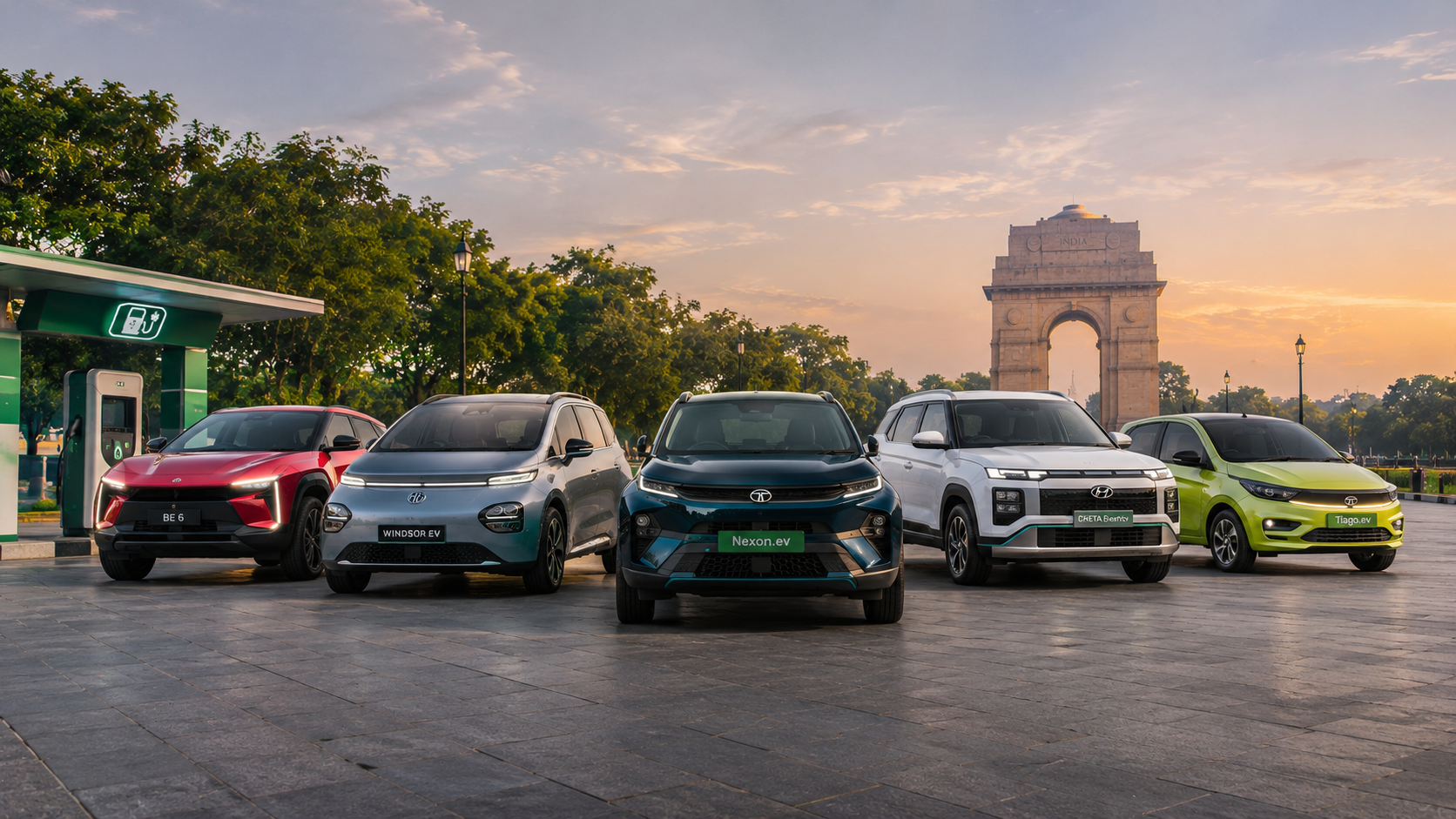
| Model (variant, battery) | Central PM E-DRIVE | Delhi purchase subsidy | Road tax saving (approx.) | With scrappage bonus |
| Tata Punch EV (40 kWh) | None | None | ₹1.1 lakh to ₹1.3 lakh | Add ₹1 lakh |
| Tata Nexon EV (45 kWh) | None | None | ₹1.4 lakh to ₹1.5 lakh | Add ₹1 lakh |
| MG Windsor EV (52.9 kWh) | None | None | ₹1.8 lakh to ₹1.9 lakh | Add ₹1 lakh |
| Mahindra XEV 9e (59 kWh) | None | None | ₹2.2 lakh to ₹2.3 lakh | Add ₹1 lakh |
The road tax saving is worked out at Delhi's 10 per cent rate for petrol cars above ₹10 lakh. Higher variants that cross ₹30 lakh ex-showroom lose the waiver completely, so check where your chosen trim sits.
Who is eligible for EV subsidy in Delhi
To get the subsidy, both you and the vehicle have to meet the policy's conditions.
Buyer conditions
- Delhi residency. You must be a Delhi resident. Individuals, proprietorships, agencies and companies can all apply.
- Registration in Delhi. The vehicle must be bought and registered in Delhi.
- Documents in your name. You will need Aadhaar, a Voter ID and the vehicle's registration certificate (RC). The bank account must be in the buyer's name, since payment is Aadhaar-authenticated.
- Deadline. You must apply within 30 days of the RC being generated. A late application is not accepted.
Scrappage bonus. Only the registered owner of the scrapped vehicle can claim it.
Vehicle conditions
- Approved models only. A Model Approval Committee under the Transport Department empanels eligible models. If a variant is not on the list, it gets no subsidy, even if it meets every other rule.
- Price limits. Two-wheelers must cost up to ₹2.25 lakh ex-showroom. Cars must cost up to ₹30 lakh ex-showroom for the road tax waiver.
- Battery size. Passenger three-wheelers need a battery of at least 4 kWh.
Three-year lock-in. A vehicle that receives a Delhi purchase incentive cannot get a No Objection Certificate (NOC) to move to another state for three years from the policy's notification, which takes it to mid-2029. If a job change could take you out of Delhi, factor this in.
Buyers in Noida and Ghaziabad do not qualify, since the vehicle has to be registered in Delhi. Uttar Pradesh has its own rules, covered in our guide to EV subsidy in UP.
How to apply for EV subsidy in Delhi
Yes, the Delhi claim can be completed fully online. The policy describes the process as paperless, and you apply yourself after the vehicle is registered. The purchase and registration still go through the dealer, as they do anywhere.
- Buy an approved model. At the dealership, complete the PM E-DRIVE e-voucher with Aadhaar face authentication if you are buying a two-wheeler. The central ₹5,000 is deducted from the price on the spot.
- Collect the paperwork. Ask the dealer for the purchase certificate and invoice. You will upload these later.
- Register the vehicle. Once the RC is generated, your 30-day application window starts.
- Sign up on the portal. Register on the Delhi EV Subsidy Portal with your mobile number and verify it with an OTP.
- Upload documents and submit. Upload Aadhaar, Voter ID, the RC and the dealer's purchase certificate, then enter your bank details.
- Track the status. The portal shows the application's progress. After verification, the subsidy is paid by DBT within 60 days.
Car buyers who only want the road tax waiver do not need to apply; it is applied at registration. Car buyers claiming the scrappage bonus do need to apply on the portal, with the Certificate of Deposit.
Recent changes to the Delhi EV policy
| When | What changed |
| July 2026 | Delhi EV Subsidy Portal launched for online applications |
| July 2026 | Delhi EV Policy 2026 came into force on 1 July, replacing the 2020 policy |
| June 2026 | Delhi Cabinet approved the 2026 policy; a draft 50% road tax concession for hybrids was dropped |
| July 2025 | The 2020 policy was extended until 31 March 2026 or until a new policy, whichever came first |
| August 2020 | Delhi EV Policy 2020 launched |
Two dates further ahead matter for buyers. From 1 January 2027, only electric versions of passenger three-wheelers and light goods vehicles can be newly registered in Delhi. From 1 April 2028, the same applies to two-wheelers; existing petrol bikes and scooters can keep running.
EV subsidy in other states
If you live outside Delhi, or are comparing what other states pay, these guides cover the rules in each:
You can also compare EV subsidies across states in one place.
Frequently Asked Questions
Expand all