Decoding the Hyundai Venue Safety Rating: Crash Tests, Platform, and Features Explained
- 1Achieved a perfect 5-star rating in the latest Bharat NCAP tests
- 2Built on a highly reinforced K1 platform for unmatched metal strength
- 3Six standard airbags and ESC provide peace of mind in every single trim
Choosing a new family car is a huge deal. While you want aesthetics, features, and a good driving experience, above everything else, you demand absolute safety for your loved ones. And in case you are in the market for a subcompact SUV, the Hyundai Venue might be one of the top cars in your radar.
It recently underwent the highly rigorous Bharat NCAP crash test protocols. The results were spectacular. The Hyundai Venue smashed records to score a flawless 5-star rating. It actually beat some of the toughest rivals in its segment. We are going to look way beyond the headlines today. You will learn exactly why its platform is so strong and how its standard features work together to bring your family home safely every single day.
A Quick Glance: Hyundai Venue Bharat NCAP Score (2026 Model)
| Test Category | Score / Rating |
| Overall Rating | 5 Stars |
| Adult Protection (AOP) | 31.15 / 32.00 |
| Child Protection (COP) | 44.46 / 49.00 |
| Bodyshell Integrity | Stable |
How is the Hyundai Venue Tested?
To find out if the Venue is truly safe, BNCAP crashes it at 64 km/h into a heavy deformable barrier. This perfectly mirrors a dangerous head-on collision on a fast, two-lane road. Next, they slam a massive metal block into the side of the car at 50 km/h. Finally, they drag the car sideways into a rigid steel pole. This side-pole test is a nightmare for weak cars. It tests the core strength of the doors and the roof. The Hyundai Venue underwent these tests and held its ground beautifully. High-tech crash dummies inside the car measured every single bump and shock.
Decoding the Venue Crash Test Rating: What the Numbers Actually Mean
Adult Occupant Protection (AOP): The Venue scored a jaw-dropping 31.15 out of 32 points here. During the severe frontal crash, the dummies showed 'good' protection for the driver’s head, neck, and thighs. The chest protection was rated as 'adequate'. The airbags deployed instantly to cushion the blow. In the side impact and pole tests, the SUV scored full marks.
Child Occupant Protection (COP): Protecting children is the ultimate test. The Venue scored an incredible 44.46 out of 49 points. The rear seats feature standard ISOFIX anchor points. These mounts locked the child car seats tightly in place. During the crash, the 18-month-old and 3-year-old child dummies remained securely seated. There was zero dangerous head movement. If you drive with kids, this score is a massive relief.
Bodyshell Integrity: This is one of the most vital metrics of all. Bharat NCAP rated the Venue's metal bodyshell as 'stable'. This means the steel frame did not buckle or bend during the heavy impacts. It can easily withstand further stress without severely harming the people inside.
The Foundation: Analysing the Hyundai Venue's Platform
A 5-star rating does not happen by accident. It starts from the ground up. The Hyundai Venue is built on an enhanced version of the global K1 platform. Hyundai heavily upgraded this architecture specifically to handle strict modern crash tests. This updated K1 platform uses a massive 71% Advanced High-Strength Steel (AHSS).
When a crash occurs, the front of the car is designed to crumple. This absorbs the heavy shock. The high-strength steel cabin then acts as a rigid safety cage. It pushes the crash energy to flow around the cabin, keeping the deadly impact away from your family.
Intra-Brand Comparison: How does this platform compare to other cars in the showroom? The larger Hyundai Creta relies on the K2 platform. While the older Creta safety rating isn’t something to write home about, the updated Venue's K1 platform has proven its worth right now. The Venue boasts a highly rigid, ultra-modern structure that is officially certified as stable.
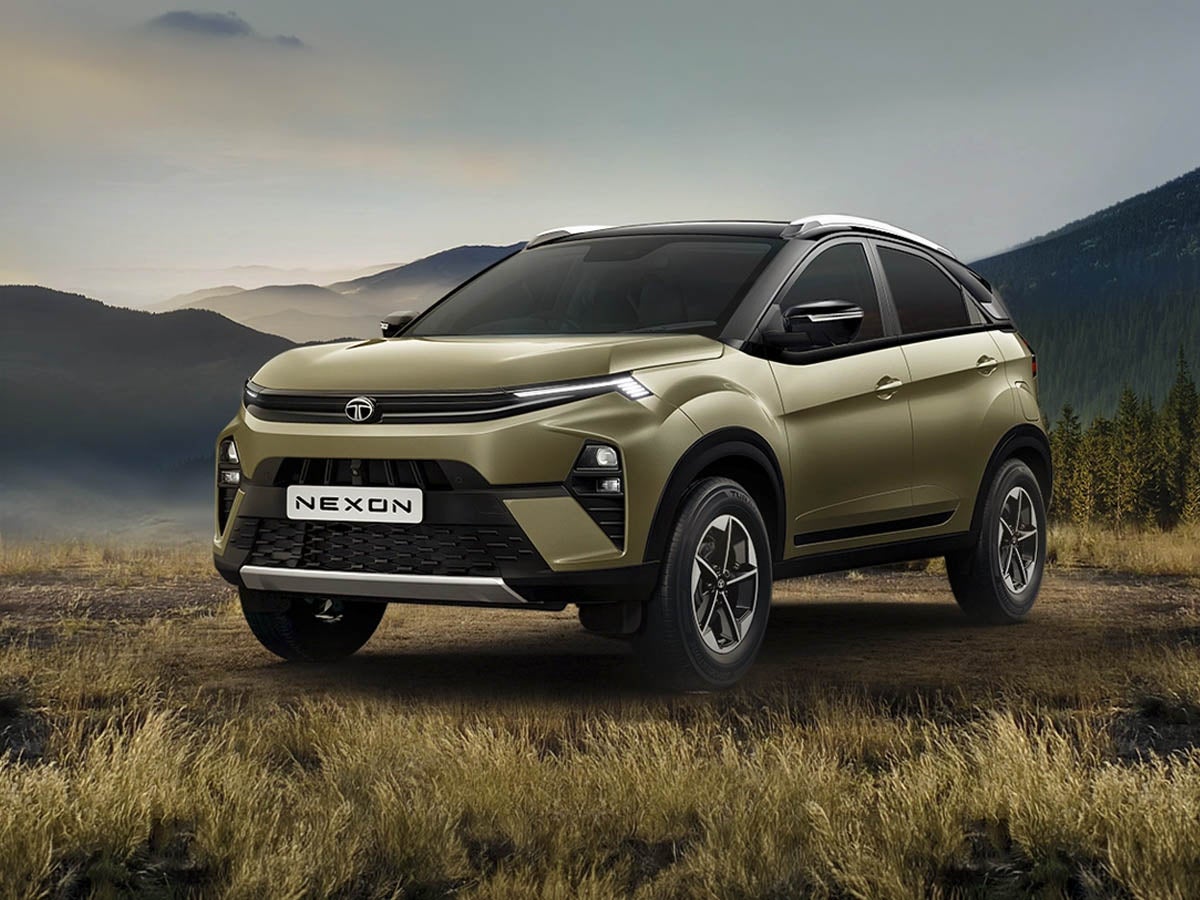
Segment Comparison: How does it compare to its toughest rivals? The Tata Nexon is famous for its safety. Yet, the Hyundai Venue actually outscored the Nexon in Adult Occupant Protection (31.15 vs 29.41). It also beat the Mahindra XUV 3XO (29.36).
Which Variant Was Tested? (And Why It Matters)
Some brands only test their expensive, fully loaded models. This leaves buyers of the base model completely at risk. Bharat NCAP removes this doubt entirely.
For this test, they crashed the entry-level HX2 diesel manual and the higher HX10 automatic variants. Because the core steel frame and the basic safety kit are identical across the range, this 5-star rating applies to every single variant. It even covers the sporty Venue N Line models. You are guaranteed top-tier safety, no matter how much you spend.
Hyundai Venue Safety Features: Standard vs. Advanced Features
Let us break down the exact safety kit you get for your hard-earned money.
| Feature Category | What You Get | Which Variant? |
| Standard Airbags | 6 Airbags (Front, Side, Curtain) | All Variants (Standard) |
| Braking Tech | ABS with EBD and Hill-Start Assist | All Variants (Standard) |
| Stability | Electronic Stability Control (ESC) | All Variants (Standard) |
| Child Safety | ISOFIX Child Seat Mounts | All Variants (Standard) |
| Advanced Tech | 360-Degree Surround View Monitor | Higher Variants |
| Active Safety | Level 2 ADAS (21 Features) | Higher Variants |
The Non-Negotiables (Standard Features): Hyundai refuses to cut corners here. Every single Venue rolls out of the factory with six airbags. You also get a Tyre Pressure Monitoring System (TPMS) and 3-point seatbelts for all passengers. Most crucially, Electronic Stability Control (ESC) is standard. ESC is your best friend on a rainy day. It instantly brakes individual wheels to stop the car from spinning out of control during an emergency turn.
Active vs. Passive Safety: Passive safety features do their job after an accident happens. Active safety tools work constantly to prevent the crash entirely. If you opt for the higher variants, you get Hyundai SmartSense Level 2 ADAS. This suite packs 21 intelligent features. The car uses cameras and radar to watch the road. It will actually steer and brake for you if it senses a disaster.
Hyundai Venue Safety Rating vs. Competitors
The compact SUV market is a brutal battlefield. Let us see how the Venue stacks up against the heavyweights.
| Car Model | BNCAP Score (Adult/Child) | Bodyshell Rating | Standard Safety Features | Starting Price |
| Hyundai Venue | 5 Stars (31.15 / 44.46) | Stable | 6 Airbags, ESC, TPMS | ₹8.00 Lakh |
| Tata Nexon | 5 Stars (29.41 / 43.83) | Stable | 6 Airbags, ESC | ₹8.00 Lakh |
| Mahindra XUV 3XO | 5 Stars (29.36 / 43.00) | Stable | 6 Airbags, ESC | ₹7.49 Lakh |
| Kia Sonet | Not Yet Tested | TBD | 6 Airbags, ESC | ₹7.99 Lakh |
The Hyundai Venue currently wears the crown. While the Nexon and XUV 3XO are incredibly tough 5-star machines, the Venue scored slightly higher points in both adult and child protection tests. It is officially the highest-scoring sub compact SUV evaluated by Bharat NCAP to date.
Final Verdict: Should You Trust the Hyundai Venue with Your Family?
The answer is a resounding yes. In the past, you had to choose between a fun, feature-packed Korean car and a tough, heavy-built Indian car. The new Hyundai Venue has shattered that old rulebook. It gives you the best of both worlds.
By heavily reinforcing the K1 platform with high-strength steel, Hyundai has built a true fortress. The flawless 5-star Bharat NCAP rating is proof of its metal integrity. Furthermore, offering six airbags and ESC right from the base variant shows a deep commitment to buyer security. Whether you are battling chaotic city traffic or cruising down a long highway, the Hyundai Venue is built to protect you at all costs. It is easily one of the safest investments you can make for your family today.
Frequently Asked Questions
Expand all