India's first E85 fuel pump opens in Delhi at Pusa Road — Can your car actually use it?
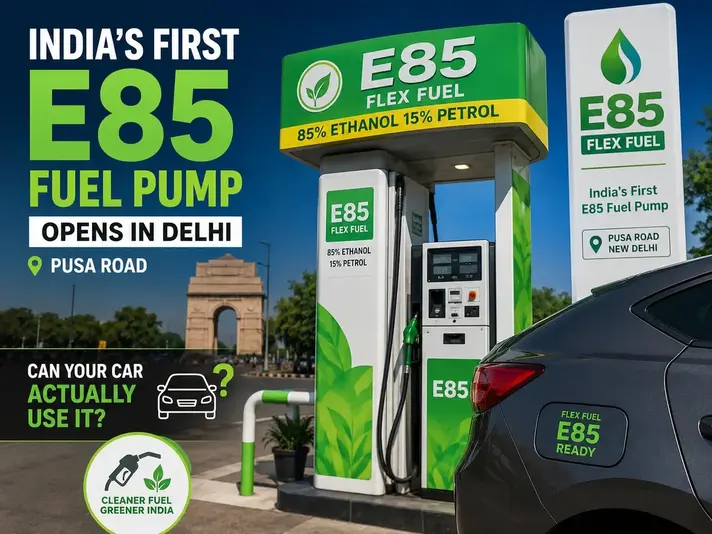
- 1India's first E85 dispensing pump has been opened at Pusa Road, Delhi
- 2E85 is priced at Rs 82.12 per litre
- 3E85 contains up to 85% ethanol and 15% petrol
India's long-pending push into high-ethanol fuels has reached a tangible milestone. The country's first E85 dispensing pump has opened at Pusa Road in New Delhi, offering fuel priced at Rs 82.12 per litre. At around Rs 20 cheaper than regular petrol, which costs approximately Rs 102.12 per litre in Delhi, the new fuel immediately draws attention. But two questions matter more than the headline price: can your car actually use it, and will it actually save you money?
Not all ethanol fuels are the same — Understanding E85 and E20
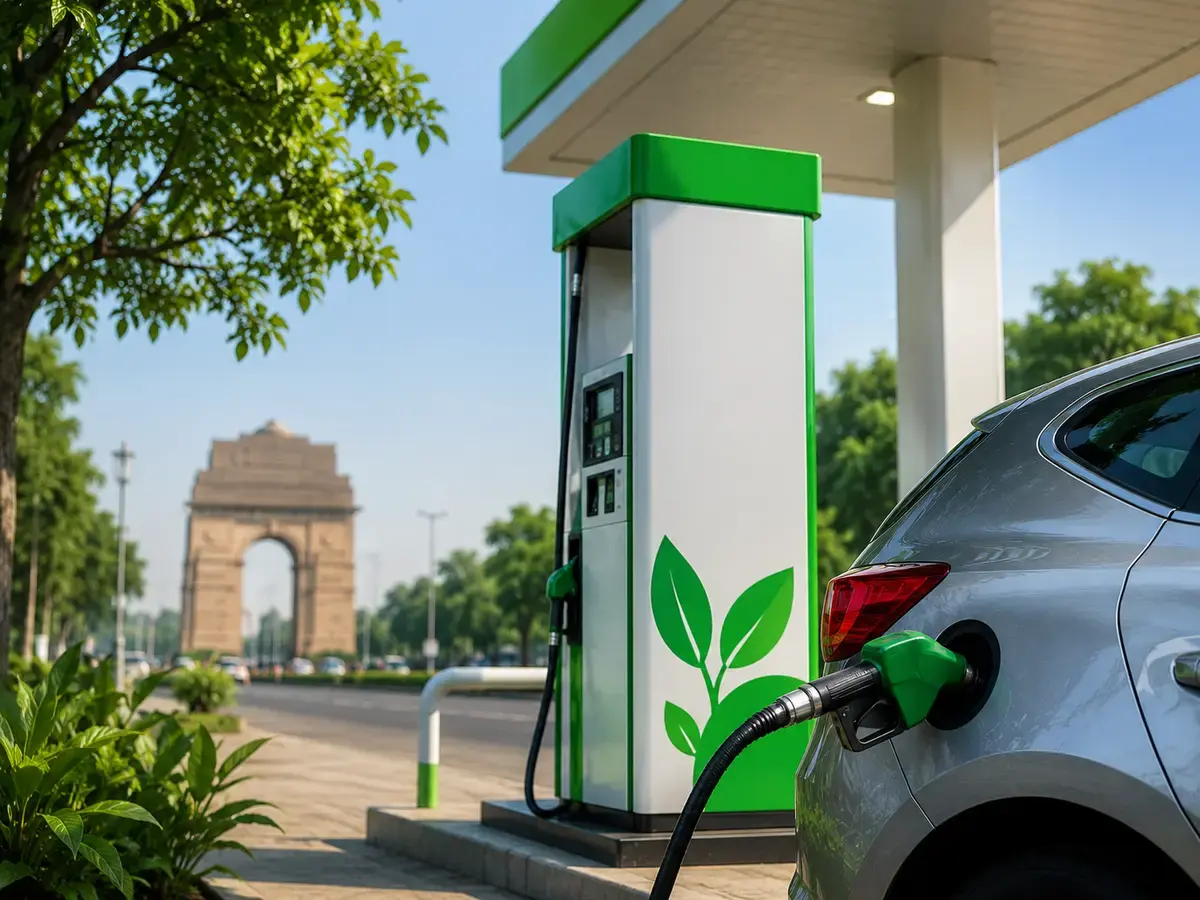
E85 is very different from the E20 petrol currently available across India. While E20 contains 20% ethanol and 80% petrol, E85 contains 85% ethanol and 15% petrol. Because of this much higher ethanol content, E85 requires an engine and fuel system specifically designed to handle different combustion characteristics, fuel-system requirements, and air-fuel ratios.
As a result, most petrol cars on Indian roads today cannot run on E85. Even vehicles that are certified for E20 are not automatically compatible with E85. Using E85 in a regular petrol vehicle can lead to reduced performance and may even cause long-term mechanical damage.
To use E85, a vehicle must be a flex-fuel vehicle (FFV). These vehicles can automatically adjust engine settings to run on different ethanol-petrol blends, ranging from standard petrol to E85. As of June 2026, the only mass-market flex-fuel car available in India is the Maruti Suzuki Wagon R Flex Fuel.
Will E85 actually save you money?
The Rs 20 per litre price advantage of E85 may seem attractive at first, but the calculation is not that simple. Ethanol contains less energy than petrol, which means a vehicle running on E85 generally uses more fuel to cover the same distance. In markets such as Brazil and the United States, flex-fuel vehicles typically see fuel efficiency drop by around 20-30% when running on E85.
For example, if a car delivers 15 kmpl on petrol priced at Rs 102.12 per litre, the running cost works out to about Rs 6.81 per kilometre. If the same vehicle's fuel efficiency drops by 25% on E85, it would return around 11.25 kmpl. At an E85 price of Rs 82.12 per litre, the running cost would be roughly Rs 7.30 per kilometre. In this scenario, the lower fuel price does not necessarily translate into lower running costs.
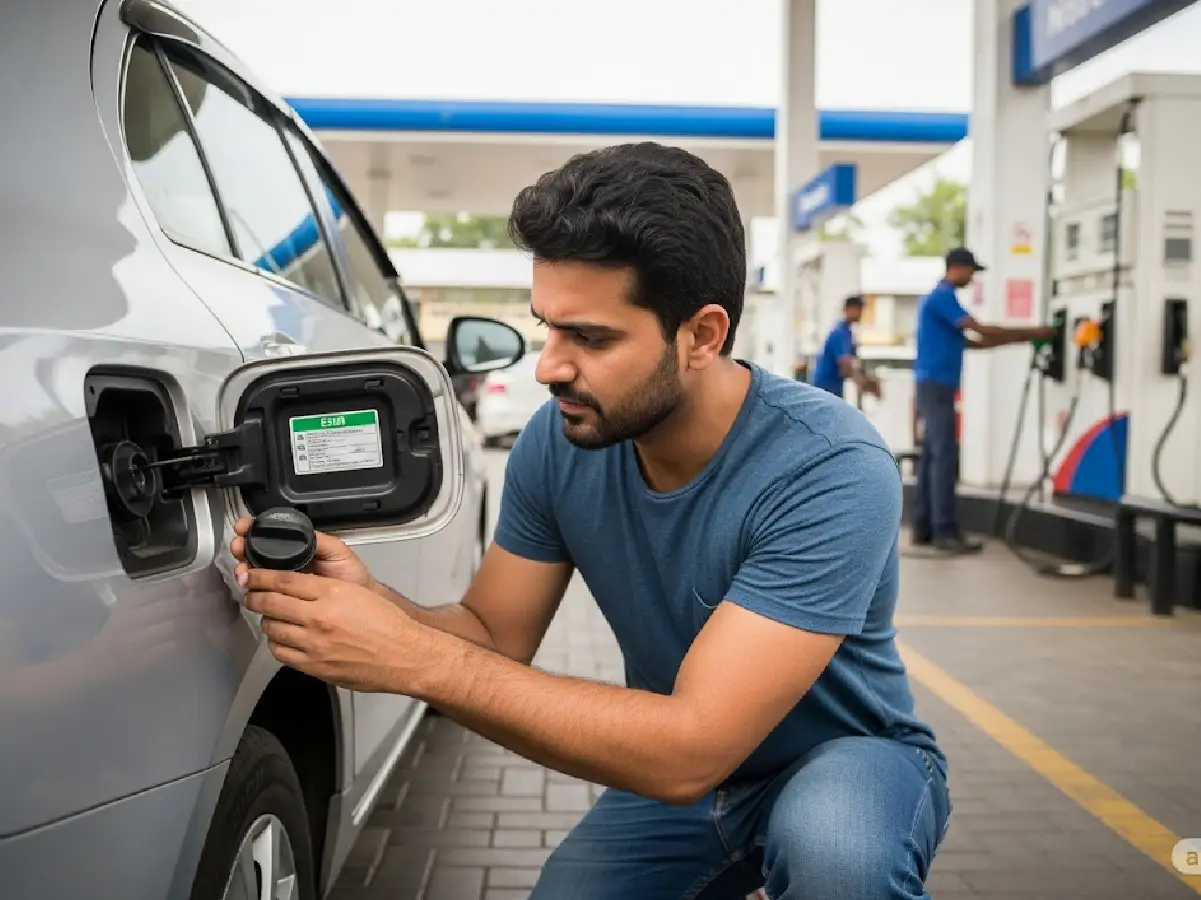
That said, the actual impact will vary from one vehicle to another. Fuel efficiency on E85 depends on the engine, vehicle tuning, and driving conditions. Buyers should compare the expected fuel economy and running costs for their specific vehicle rather than assuming that a lower per-litre fuel price will automatically save money.
Why is India pushing E85 fuel?
The main objective behind E85 is not necessarily to reduce fuel costs for consumers. Instead, the government wants to lower India's dependence on imported crude oil by replacing a portion of petrol with domestically produced ethanol. Since ethanol is made from agricultural crops such as sugarcane and grains, it helps support local industries while reducing fuel imports and foreign exchange outflow.
E85 also offers environmental benefits. Ethanol generally produces lower lifecycle carbon emissions than conventional petrol, making it a cleaner fuel alternative. At present, E85 is available at only a limited number of fuel stations. However, the government plans to expand the network to 5,000 E85 dispensing outlets across India by the end of 2027. The success of E85 will depend on both this infrastructure expansion and the introduction of more flex-fuel vehicles in the market. If both grow together, E85 could become a mainstream fuel option in the coming years.
Meanwhile, stay updated with all the latest happenings & developments in the automotive world by joining our official AUTOVERSE WhatsApp community. Also, don’t forget to check out our YouTube channel, AUTOVERSE by Cars24, for key details & visuals.