Decoding the Tata Sierra Safety Rating: Crash Tests, Platform, and Features Explained
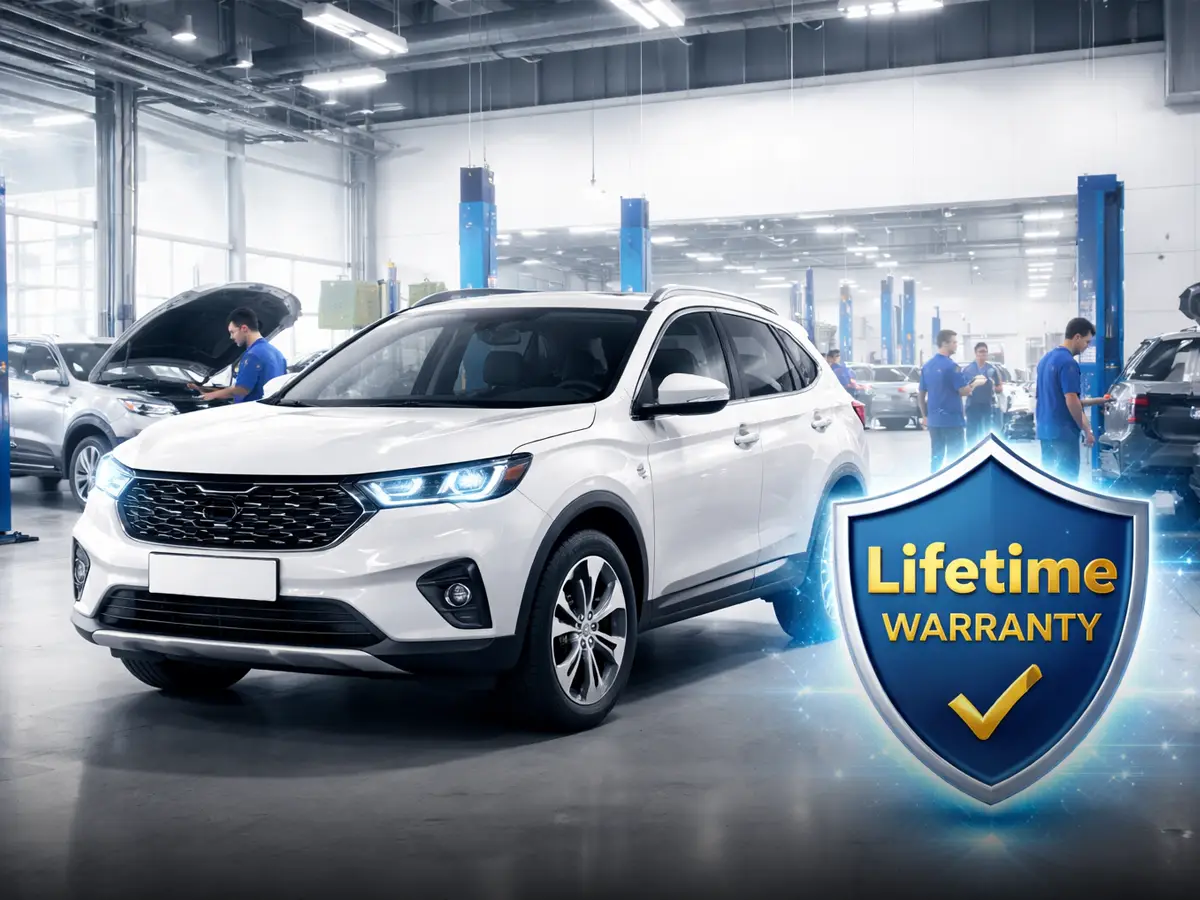
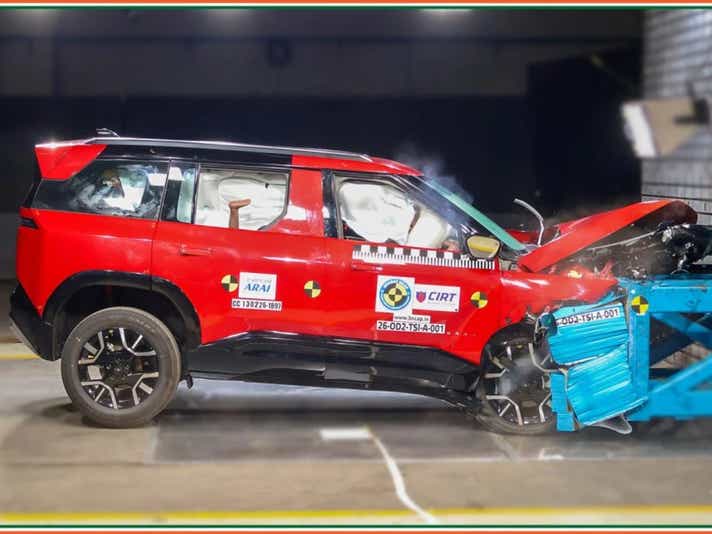
- 1The Sierra achieves a stellar 5-star rating in the latest Bharat NCAP tests
- 2Built on the rugged OMEGA-ARC platform derived from Land Rover’s D8 DNA
- 3Six airbags and Electronic Stability Control come standard across all trims
The Tata Sierra is a piece of Indian automotive royalty that has returned to claim its throne. Once a cult classic that defined the lifestyle SUV segment in the 90s, the modern avatar has been reimagined for a market that is far more demanding and safety-conscious. In today’s Indian landscape, a car's appeal isn't just about the panoramic glass or the muscular stance; it's about the peace of mind it offers when you’re cruising at triple-digit speeds.
Judging safety today goes much deeper than just counting stars on a brochure. While those yellow and blue stickers provide a baseline, we need to look under the skin. Was the base variant tested? How did the child occupants fare during a side-impact collision? Is the chassis designed to deflect energy or just absorb it? In this breakdown, we will move past the marketing jargon to see why the Tata Sierra is positioned as one of the safest cars for your family.
Tata Sierra Crash Test Scores at a Glance
| Testing Body | Overall Rating | Adult Protection (AOP) | Child Protection (COP) | Bodyshell Integrity |
| Bharat NCAP | 5 Stars | 30.00 / 32.00 | 44.50 / 49.00 | Stable |
Check out the safest cars in India according to BNCAP to see how the Sierra stacks up against other 5-star rated cars.
How is the Tata Sierra Tested?
Bharat NCAP (BNCAP) puts vehicles through a series of rigorous trials that simulate the most common and most lethal types of road accidents in India. Imagine a car being propelled at 64 km/h into a stationary, offset deformable barrier. This isn't just a bump; it represents a head-on collision where the driver tries to swerve at the last second, putting immense pressure on one side of the vehicle’s structure.
The testing doesn't stop there. The Sierra also undergoes a side-impact test, where a 950 kg barrier is slammed into the side of the car at 50 km/h. For a high-riding SUV like the Sierra, this tests whether the doors cave in or if the side pillars (B-pillars) are strong enough to maintain a survival space for the passengers. These tests use sophisticated dummies equipped with hundreds of sensors to measure the exact G-forces acting on the head, neck, chest, and femurs.
Decoding the Sierra Crash Test Rating: What the Numbers Actually Mean
When you see a 5-star rating, it is a cumulative score of several critical areas:
- Adult Occupant Protection (AOP): The Sierra scored high because the "crumple zones" did their job. The engine bay is designed to fold like an accordion, absorbing the kinetic energy before it reaches the cabin. During the tests, the driver’s head and neck were found to have "Good" protection (the highest rating), and the chest showed "Adequate" protection, preventing life-threatening internal injuries.
- Child Occupant Protection (COP): This is where many SUVs fail, but the Sierra excels. By using ISOFIX anchorages and a high-quality Child Restraint System (CRS), the car prevented excessive forward movement of the 3-year-old dummy’s head. It ensures that in a crash, the child isn't thrown forward into the seatback.
Bodyshell Integrity: This is the most crucial part for long-term safety. BNCAP rated the Sierra’s bodyshell as "Stable." This means that after the 64 km/h impact, the A-pillar didn't buckle, the doors could still be opened, and the footwell area remained intact. An "unstable" rating would mean the car cannot take any more load, making it a "one-hit-wonder" in the worst possible way.
The Foundation: Analysing the Tata Sierra's Platform
The secret to the Sierra's resilience lies in its bones. It sits on the OMEGA-ARC (Optimal Modular Efficient Global Advanced Architecture). If that sounds fancy, it’s because it is. This platform is a derivative of the Land Rover D8 architecture, the same DNA used in vehicles like the Range Rover Evoque.
Unlike cheaper, localised platforms that are built purely for cost-efficiency and mileage, the OMEGA-ARC uses a high percentage of High-Strength Steel (HSS) and Ultra-High-Strength Steel (UHSS). These materials are placed strategically in the side beams and the roof rails to create a "safety cage."
Intra-Brand Comparison
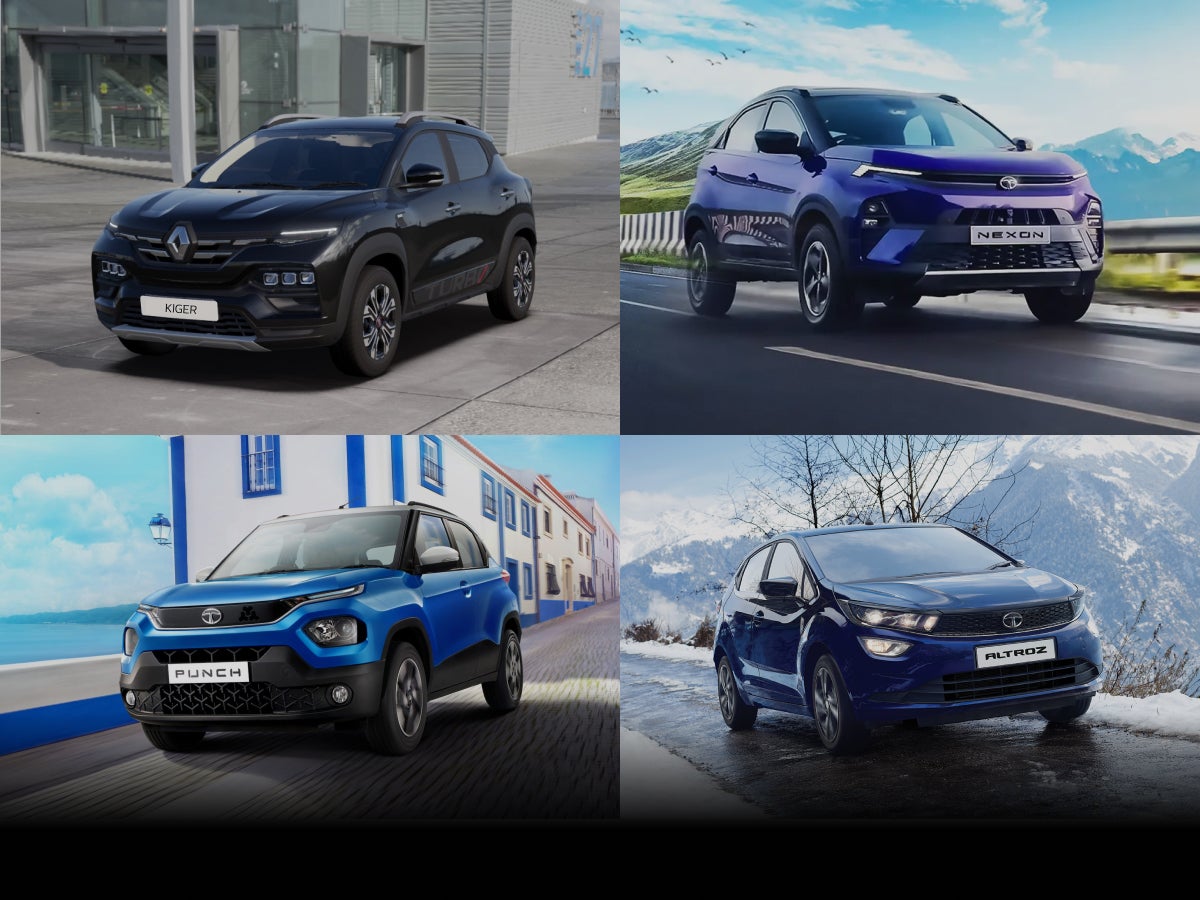
While the Tata Nexon uses the ALFA-ARC platform (which is also 5-star rated), the Sierra’s OMEGA-ARC is significantly heavier and more robust. It is designed to handle the higher mass of a larger SUV, offering a more "planted" feel on the highway. Compared to the smaller siblings, the Sierra provides better longitudinal crash protection simply because there is more metal between you and the barrier.
Segment Comparison
In the mid-size SUV segment, the Sierra competes with rivals that often prioritise features over structural weight. While some competitors use lighter materials to boost fuel efficiency, Tata has stuck to a safety-first heavy-gauge steel approach. This gives the Sierra a structural edge, especially in high-speed highway pile-ups where mass and rigidity determine the outcome.
Which Variant Was Tested? (And Why It Matters)
In a move that benefits the budget-conscious buyer, the variant tested by Bharat NCAP was the Smart (Base) Variant.
Tested Model Details
| Make & Model | Trim Level Tested | Kerb Weight | Safety Equipment on Board |
| Tata Sierra | Smart (Base) | 1,680 kg | 6 Airbags, ESC, ABS with EBD, ISOFIX |
This is a vital point for you as a buyer. Often, car manufacturers send their top-spec models with extra airbags for testing, but the base models on the road are less safe. Since the Sierra's base variant scored 5 stars, it means you don't have to spend 25 lakhs on the top-end "Empowered" trim just to get a safe car. Whether you buy the entry-level model or the one with all the bells and whistles, the structural safety remains identical.
Tata Sierra Safety Features: Standard vs. Advanced Features
Tata has adopted a no-compromise strategy regarding the safety kit. Here is how it breaks down:
The Non-Negotiables (Standard Features)
- 6 Airbags: Every Sierra comes with front, side, and curtain airbags. These provide a cushion not just for your head in a frontal crash, but also for your torso and head during a side impact.
- Electronic Stability Control (ESC): This is a lifesaver. It prevents skidding in sudden manoeuvres, such as when you have to swerve to avoid a stray animal on the road. It automatically applies brakes to individual wheels to keep the car on its intended path.
- ISOFIX Child Seat Mounts: Standardised points that allow you to plug in a child seat directly to the chassis, rather than relying on seatbelts which can be fitted incorrectly.
All-Wheel Disc Brakes: Provides superior stopping power and helps dissipate heat better than drum brakes during long downhill drives.
The Premium Upgrades (Higher Variants)
If you opt for the higher trims, you move from Passive Safety (protection during a crash) to Active Safety (preventing the crash in the first place). The Sierra features a Level 2 ADAS (Advanced Driver Assistance System) suite:
- Autonomous Emergency Braking (AEB): The car sees an obstacle and brakes for you if you’re distracted.
- Blind Spot Detection: Alerts you to vehicles in your blind zone before you change lanes.
360-Degree Camera: Eliminates blind spots while parking in tight urban spaces.
Tata Sierra Safety Rating vs. Competitors
| Car Model | NCAP Score (Testing Body) | Bodyshell Rating | Standard Safety Features | Starting Price |
| Tata Sierra | 5 Stars (BNCAP) | Stable | 6 Airbags, ESC, ISOFIX | ₹18.00 Lakh (Est) |
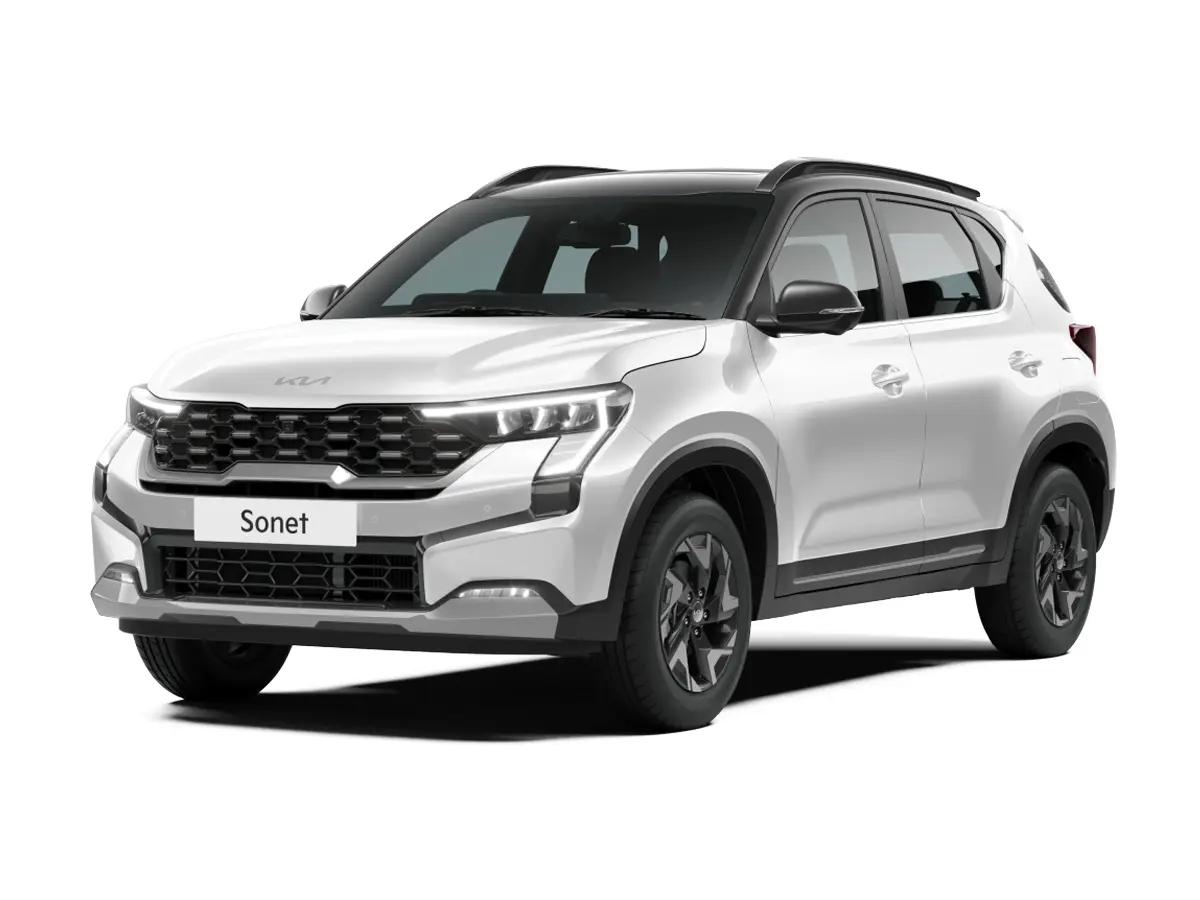
| Kia Seltos | 3 Stars (GNCAP - Old) | Unstable | 6 Airbags, ESC, VSM | ₹10.90 Lakh |
| Mahindra Scorpio-N | 5 Stars (GNCAP) | Stable | 2 Airbags (Base), ESC | ₹13.85 Lakh |
The Verdict: The Tata Sierra clearly dominates the safety battle in the premium SUV space. While the Kia Seltos Safety Rating has seen improvements in equipment, the Sierra’s Land Rover-derived platform and the "Stable" bodyshell rating give it a significant lead for highway use.
Final Verdict: Should You Trust the Tata Sierra with Your Family?
If your primary concern is the physical protection of your spouse and children during a long road trip, the Tata Sierra is arguably the most sensible choice in its class. It doesn't just rely on gadgets; it relies on a heavy-duty architecture that has been proven in the world's most demanding crash labs. The fact that Tata offers 6 airbags and ESC as standard across the board shows a level of commitment to consumer safety that is rare in the Indian market. It is a vehicle that feels heavy, solid, and reassuring.
Frequently Asked Questions
Expand all