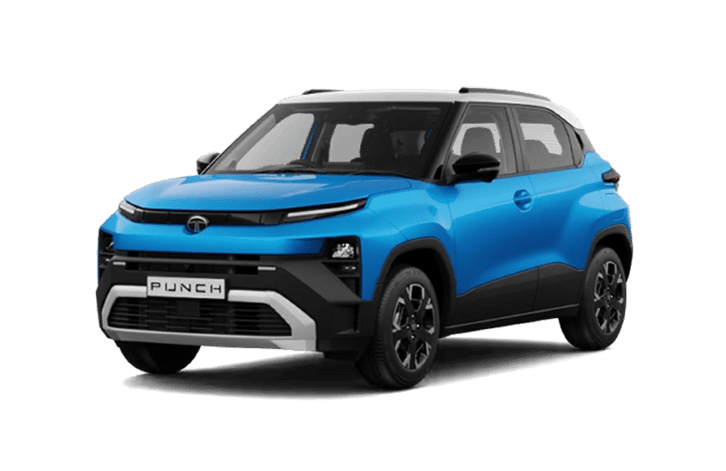
The Tata Punch has three powertrain choices, and each one suits a different type of buyer.
1.2L Petrol (NA)
The naturally aspirated 1.2-litre three-cylinder petrol engine is the sensible choice for buyers who mainly drive in the city. It produces 88 PS and 115 Nm and can be paired with a 5-speed manual or 5-speed AMT.
For everyday traffic, the engine is adequate and predictable. However, it does not have the punch of the turbo-petrol when the car is loaded or when a driver needs to accelerate quickly on a highway. Buyers who regularly drive long distances should consider the turbo before choosing the NA petrol.
1.2L Turbo-Petrol
The new 1.2-litre turbo-petrol is the performance-oriented engine in the Punch range. It produces about 120 PS and 170 Nm and comes with a 6-speed manual gearbox.
The additional torque makes the turbo-Punch more responsive during acceleration and highway overtakes. It is the better choice for buyers who enjoy driving or regularly take their Punch out on highways. The trade-off is that the turbo is positioned higher in the price range and is not offered with an automatic gearbox.
Tata Punch CNG
Tata Punch CNG makes sense for buyers with high daily running, particularly those who spend a lot of time driving in the city. The CNG powertrain prioritises running-cost efficiency over outright performance.
The 2026 Punch also gets a CNG-AMT combination, giving buyers the option of two-pedal driving without moving to petrol. Tata's twin-cylinder CNG layout helps retain usable luggage space, which has been one of the practical strengths of the Punch iCNG from the beginning.
The Punch's suspension is another useful attribute for Indian driving conditions. It handles broken surfaces and speed breakers with confidence, while the compact dimensions make the car relatively easy to place in traffic. The AMT is best suited to relaxed driving; it is not as smooth or immediate as a conventional torque-converter or dual-clutch automatic.